⏱️ Microwave Cooking Time Calculator
Convert cooking times between different microwave wattages and adjust for quantity changes
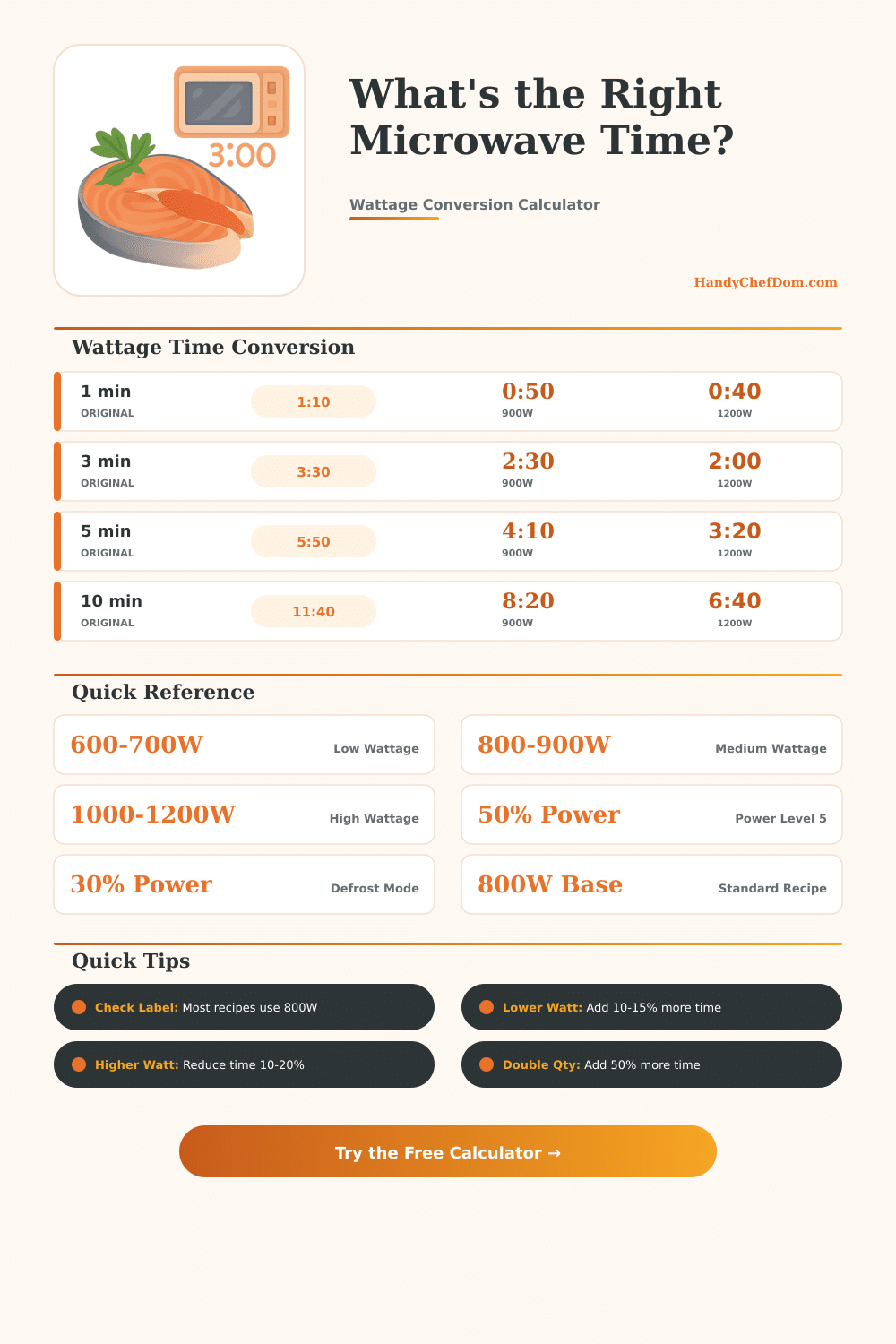
Based on an 800W recipe baseline. Times shown in minutes:seconds format.
| Recipe Time (800W) | 600W | 700W | 900W | 1000W | 1100W | 1200W |
|---|---|---|---|---|---|---|
| 0:30 | 0:40 | 0:34 | 0:27 | 0:24 | 0:22 | 0:20 |
| 1:00 | 1:20 | 1:09 | 0:53 | 0:48 | 0:44 | 0:40 |
| 2:00 | 2:40 | 2:17 | 1:47 | 1:36 | 1:27 | 1:20 |
| 3:00 | 4:00 | 3:26 | 2:40 | 2:24 | 2:11 | 2:00 |
| 5:00 | 6:40 | 5:43 | 4:27 | 4:00 | 3:38 | 3:20 |
| 8:00 | 10:40 | 9:09 | 7:07 | 6:24 | 5:49 | 5:20 |
| 10:00 | 13:20 | 11:26 | 8:53 | 8:00 | 7:16 | 6:40 |
| 15:00 | 20:00 | 17:09 | 13:20 | 12:00 | 10:54 | 10:00 |
| 20:00 | 26:40 | 22:51 | 17:47 | 16:00 | 14:33 | 13:20 |
When increasing food quantity, time does not scale linearly. Use these multipliers.
| Quantity Change | Time Multiplier | Example (5 min base) | Reason |
|---|---|---|---|
| ½x (Half) | 0.65x to 0.70x | 3:15 to 3:30 | Less mass absorbs energy faster |
| 1x (Same) | 1.00x | 5:00 | Baseline |
| 1.5x | 1.35x to 1.40x | 6:45 to 7:00 | More mass, slight overlap |
| 2x (Double) | 1.50x to 1.65x | 7:30 to 8:15 | Energy shared between items |
| 3x (Triple) | 2.00x to 2.25x | 10:00 to 11:15 | Significant energy distribution |
| 4x (Quadruple) | 2.50x to 2.80x | 12:30 to 14:00 | Consider batch cooking instead |
| Food Item | Weight / Amount | Time at 800W | Power Level |
|---|---|---|---|
| Reheat plate of food | 1 serving (300-400g) | 2:00 to 3:00 | 100% |
| Reheat soup (1 bowl) | 250ml / 1 cup | 2:00 to 2:30 | 100% |
| Baked potato (medium) | 200g / 7 oz | 5:00 to 7:00 | 100% |
| Frozen vegetables | 250g / 9 oz | 3:00 to 4:00 | 100% |
| Defrost ground meat | 450g / 1 lb | 8:00 to 10:00 | 30% |
| Melt butter | 50g / 2 oz | 0:30 to 1:00 | 50% |
| Warm milk | 250ml / 1 cup | 1:00 to 1:30 | 70% |
| Scrambled eggs (2) | 2 eggs | 1:30 to 2:00 | 100% |
| Frozen dinner/entree | 300-400g / 10-14 oz | 4:00 to 6:00 | 100% |
| Oatmeal (1 serving) | 40g oats + 200ml water | 2:00 to 2:30 | 100% |
| Rice (uncooked) | 200g / 7 oz + water | 10:00 to 12:00 | 100% then 50% |
| Corn on the cob (1 ear) | ~250g / 9 oz | 3:00 to 4:00 | 100% |
| Power Level | Wattage at 800W | Wattage at 1000W | Best For |
|---|---|---|---|
| 100% (High) | 800W | 1000W | Boiling water, reheating, cooking veggies |
| 80% | 640W | 800W | Gentle reheating, casseroles |
| 70% (Medium-High) | 560W | 700W | Slow cooking, sauces, warming milk |
| 50% (Medium) | 400W | 500W | Melting butter/chocolate, gentle cooking |
| 30% (Defrost) | 240W | 300W | Defrosting meat, fish, bread |
| 10% (Low) | 80W | 100W | Softening butter, keeping food warm |
Microwaves work by sending short radio waves that make molecules of water, sugar and fat in the food vibrate quickly. That vibration makes heat, that cooks the food. But microwaves go only around 2 to 4 centimetres into the food.
For thicker bits the centre does not get direct hit from the waves. In those cases, the inside cooking happens because of heat, that spreads from the outside.
How Microwaves Cook Food and Simple Tips
For cooking with a microwave, you need a bit of practice. The device gives strong pulses of energy, that must spread through the whole plate. A turntable that rotates, or a mode stand help with that.
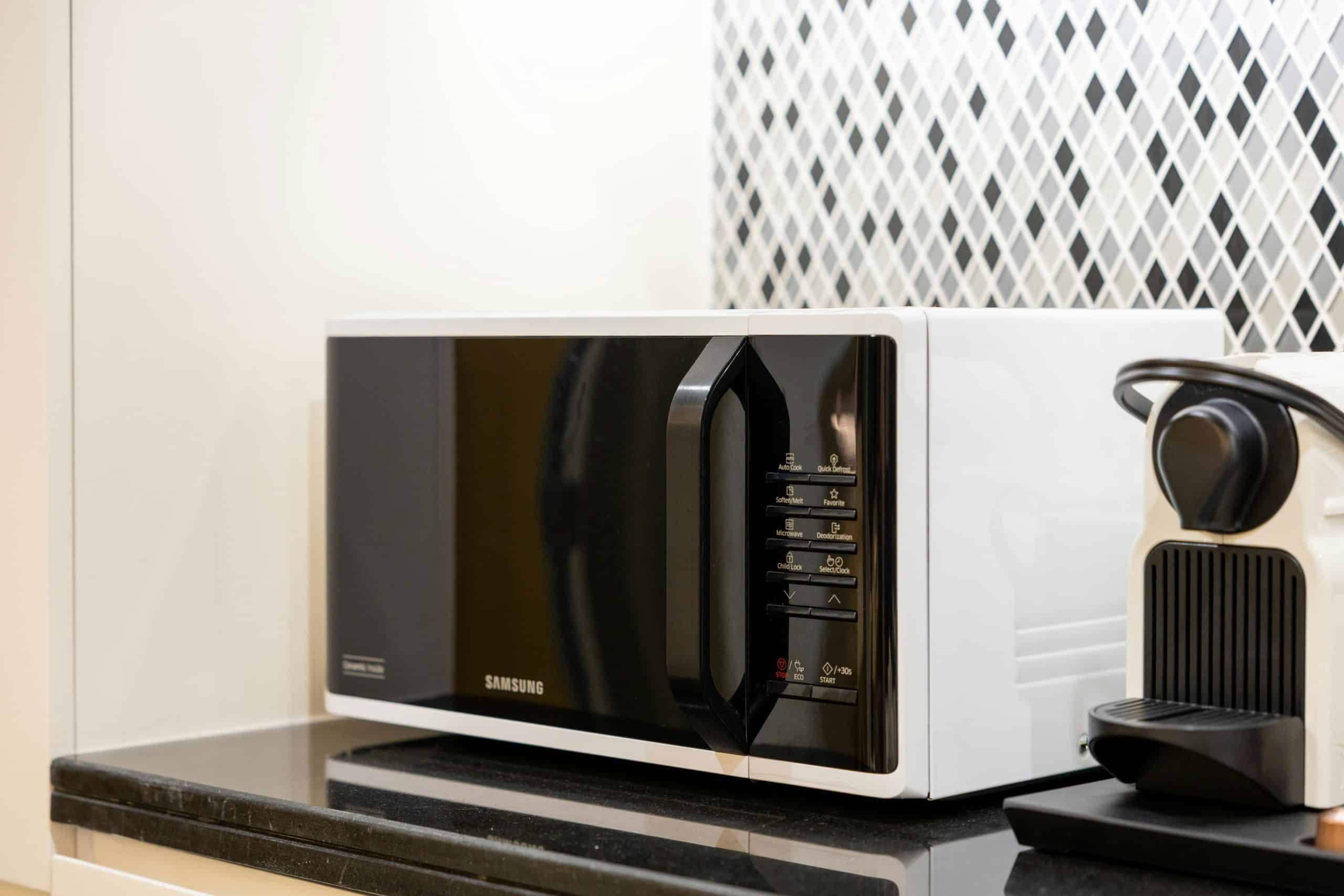
It is really important to understand the power settings. Too strong a pulse can burn the top and dry it, which changes the whole result.
To avoid uneven cooking, try to cut big bits of meat or cut the food in smaller parts. Arrange the food evenly on the plate, with the thickest parts on the edges, that works well. Stirring or turning the food now and then during the process makes a difference.
After the microwave cooking, leave it to rest two minutes, so that the heat spreads evenly. Meat and bird always must cook until the juices flow clearly, without any pink trace.
Add enough water during the cooking to stop the food getting too dry. Also, never leave the microwave running when it is empty.
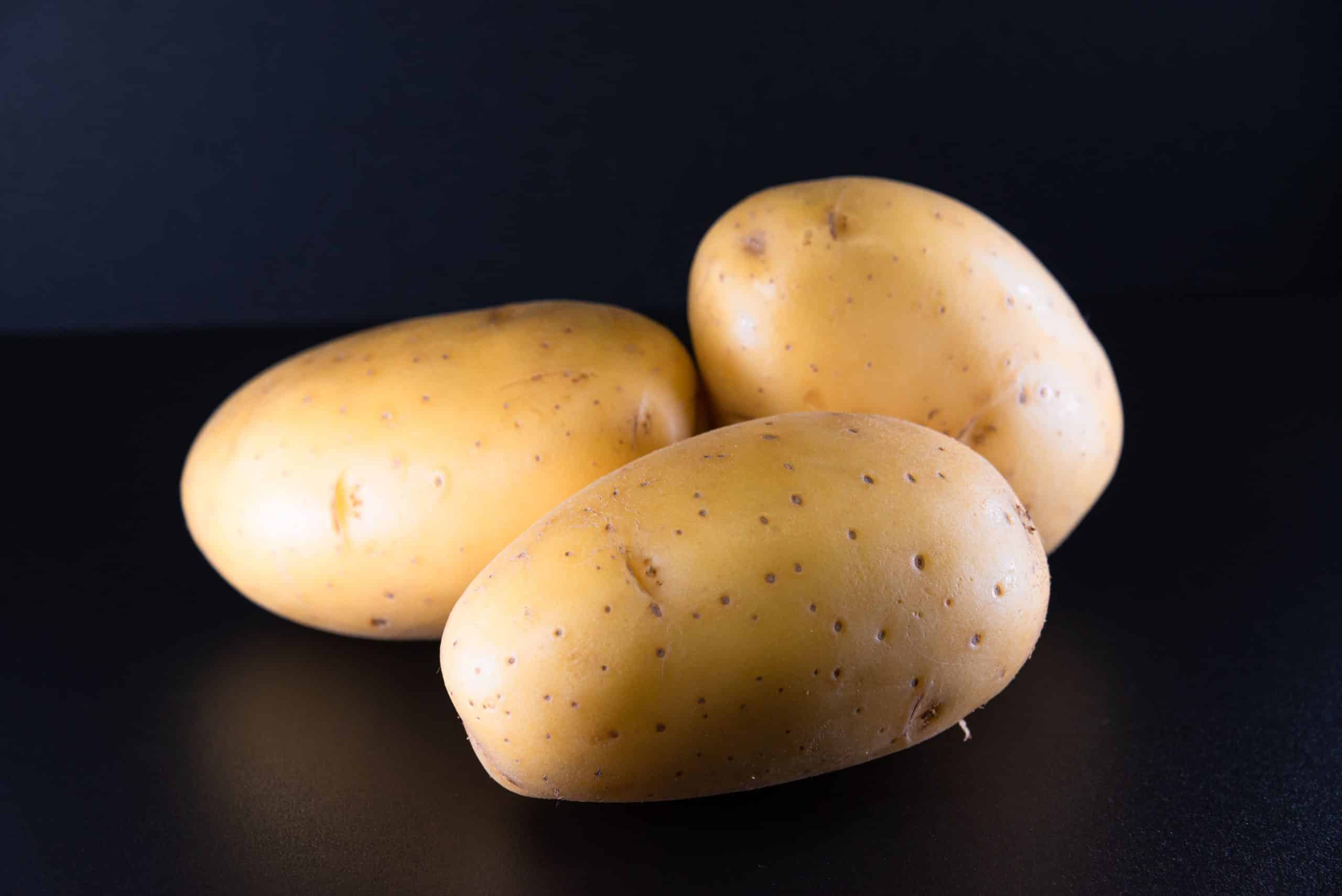
Vegetables, for instance potatoes, work great for the microwave. A plain potato cooks very well only in some minutes, with the skin on it. Poke a potato everywhere with a fork around ten times, wrap it with paper towel and microwave it for three minutes.
Rice you can cook in a glass covered plate, and broccoli works well in a steam bowl. Root vegetables in small amounts perfectly suit the device, because it is more energy saving then other methods. Even so, quickly cooked vegetables like broccoli florets can overcook or end uneven.
Pasta also cooks in the microwave. Just cover noodles with water and stir them every three minutes. Usually it is ready after nine to twelve minutes.
Macaroni in thick cheese sauce is ready in less than fifteen minutes. Jacket potatoes work for a fast and simple everyday meal.
One limit of the microwave is that it does not brown or crisp the food well. It cooks well, but does not burn or give a golden surface. Cooking without extra fat is possible here, and it keeps more nutrients than frying or boiling.
Combining the microwave with a grill can give meat a nice surface, while it stays soft and wellcooked through. Lay the plate on an upside down bowl to allow the energy to reach the bottom of the food.
Citrus fruits squeeze more easily after 20 to 30 seconds on high power. The skin of turmeric cuts more simply after one minute or two in the microwave on a paper towel. Microwaved apples taste like baked ones, but are ready in three minutes instead of forty-five.