🍗 Capon Cooking Time Calculator
Calculate precise roasting times for your capon based on weight, stuffing, and oven type
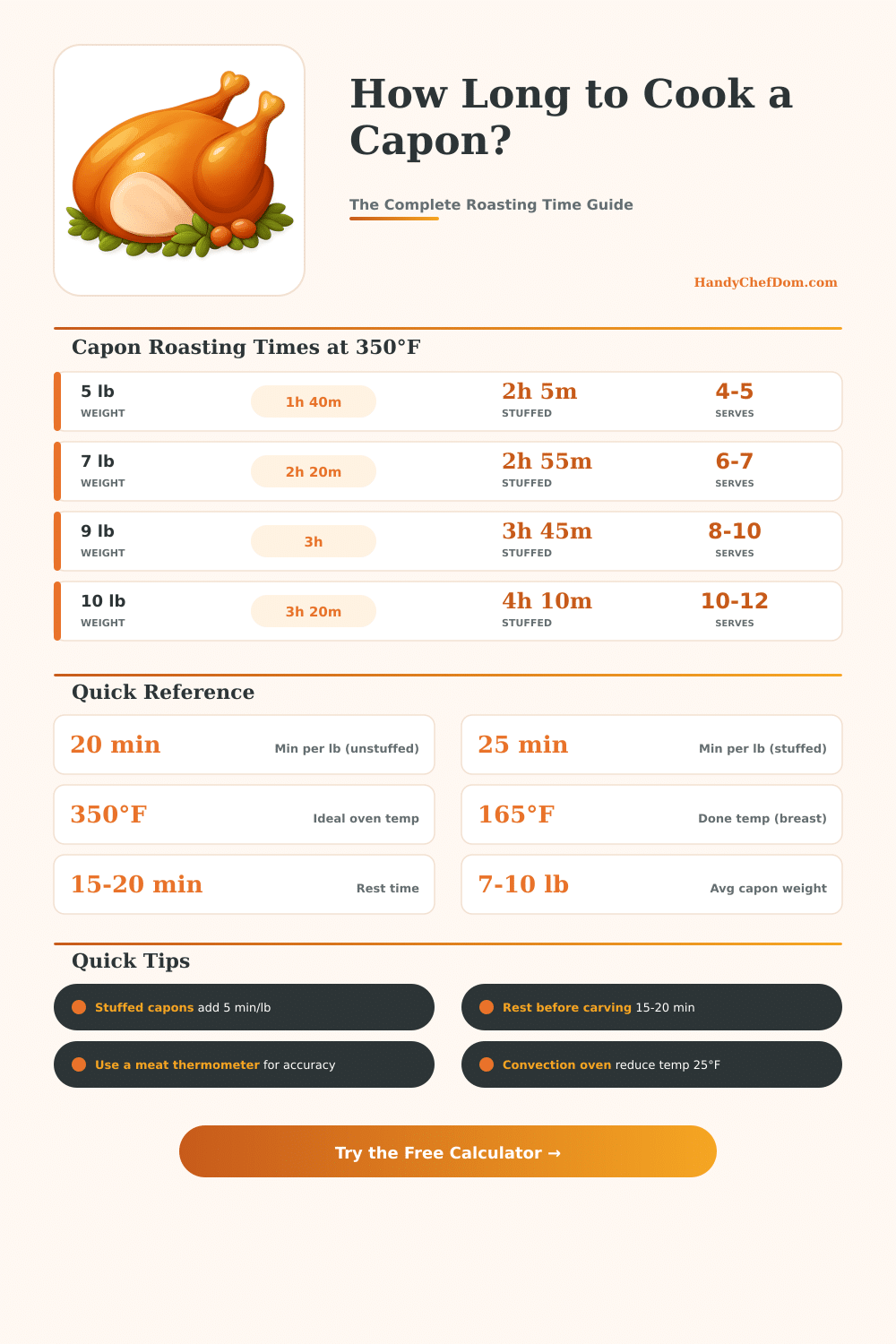
| Weight (lb) | Weight (kg) | Unstuffed | Stuffed | Serves |
|---|---|---|---|---|
| 4 lb | 1.8 kg | 1h 20m | 1h 40m | 3–4 |
| 5 lb | 2.3 kg | 1h 40m | 2h 5m | 4–5 |
| 6 lb | 2.7 kg | 2h 0m | 2h 30m | 5–6 |
| 7 lb | 3.2 kg | 2h 20m | 2h 55m | 6–7 |
| 8 lb | 3.6 kg | 2h 40m | 3h 20m | 7–8 |
| 9 lb | 4.1 kg | 3h 0m | 3h 45m | 8–10 |
| 10 lb | 4.5 kg | 3h 20m | 4h 10m | 10–12 |
| Context | Raw per Person | Cooked per Person | Bone-in Note |
|---|---|---|---|
| Main Course (bone-in) | 1 – 1.25 lb (454–567g) | 6–8 oz (170–227g) | ~45% meat yield |
| Formal Dinner | 1.25 – 1.5 lb (567–680g) | 8–10 oz (227–283g) | Generous portions |
| Buffet Serving | 0.75 – 1 lb (340–454g) | 5–6 oz (142–170g) | Multiple dishes |
| Children (4–12) | 0.5 – 0.75 lb (227–340g) | 3–4 oz (85–113g) | ~50% adult portion |
| Pounds (lb) | Kilograms (kg) | Ounces (oz) | Grams (g) |
|---|---|---|---|
| 4 lb | 1.81 kg | 64 oz | 1,814 g |
| 5 lb | 2.27 kg | 80 oz | 2,268 g |
| 6 lb | 2.72 kg | 96 oz | 2,722 g |
| 7 lb | 3.18 kg | 112 oz | 3,175 g |
| 8 lb | 3.63 kg | 128 oz | 3,629 g |
| 9 lb | 4.08 kg | 144 oz | 4,082 g |
| 10 lb | 4.54 kg | 160 oz | 4,536 g |
| Location | Target °F | Target °C | Notes |
|---|---|---|---|
| Breast (thickest part) | 165°F | 74°C | Remove from oven at 160°F for carryover |
| Thigh (inner) | 175°F | 80°C | Dark meat needs higher temp |
| Stuffing center | 165°F | 74°C | Critical if stuffed |
| After resting | +5–10°F | +3–5°C | Carryover cooking effect |
Capon is a male chicken, that one castrated physically or chemically to improve the quality of its meat. Usually one does the operation at early age occasionally during the third month of the bird’s life or even in three weeks. After castration, the bird can grow bigger than average chickens.
Because of absence of sex hormones, it has different taste and structure than normal chicken.
Capon: What It Is, How It Is Raised and How to Cook It
Some folks call the Capon “Extra Chicken” thanks to its rich and tender sauce. Its meat is more soft, juicy and less wild than that of other main birds, for instance ducks. After the procedure, one raises Capons by means of special meal plans.
Some receive diet based on cereals, while others fatten by means of bread, milk, corn and a bit of grain. In lands like Spain, one even uses strong nutrition for them. Diets strictly fat and corn-based do the meat fatter than that of usual chicken and much more delicous.
Regarding size, Capons surpass average chickens, but do not reach the weight of turkey. They can reach between six and twelve pounds, and some sell in nine to eleven pounds. They own terrific chests and high portion of juicy meat.
Capon of seven pounds suffice for six to eight individual rations.
Capons answer well for roasting. Because of his size, Capon answer for big dinner of group or even little Thanksgiving assembly instead of turkey. In the kitchen, they do not require special resources.
Main point is adapt the cooking Time, because they usually are bigger than normal chickens. One mode is roast the Capon in twenty-five minutes each pound plus extra twenty-five minutes. Like this, bird of around nine pounds require approximately three hours and forty-five minutes in the oven.
Simple method works well for roasting Capon. No need to use wild glazes or extras, that could surpass the natural taste of the bird. Butter is another grate option, that shortens the cooking Time and reduce risk of overcooking of the chest.
Capons do not cost a lot because of special breed or fancy nutrition. They are more expensive, because castration of the birds cause that. Reality is, that Capons also are more calm and behave like chickens.
History of castrated chickens are truly forgotten, and castration used to be common custom. Guides from the 1940s even instructed youngsters, how to do the procedure onhis chickens.