🥬 Protein in Spinach Calculator
Calculate exact protein content for any amount of raw, cooked, or baby spinach
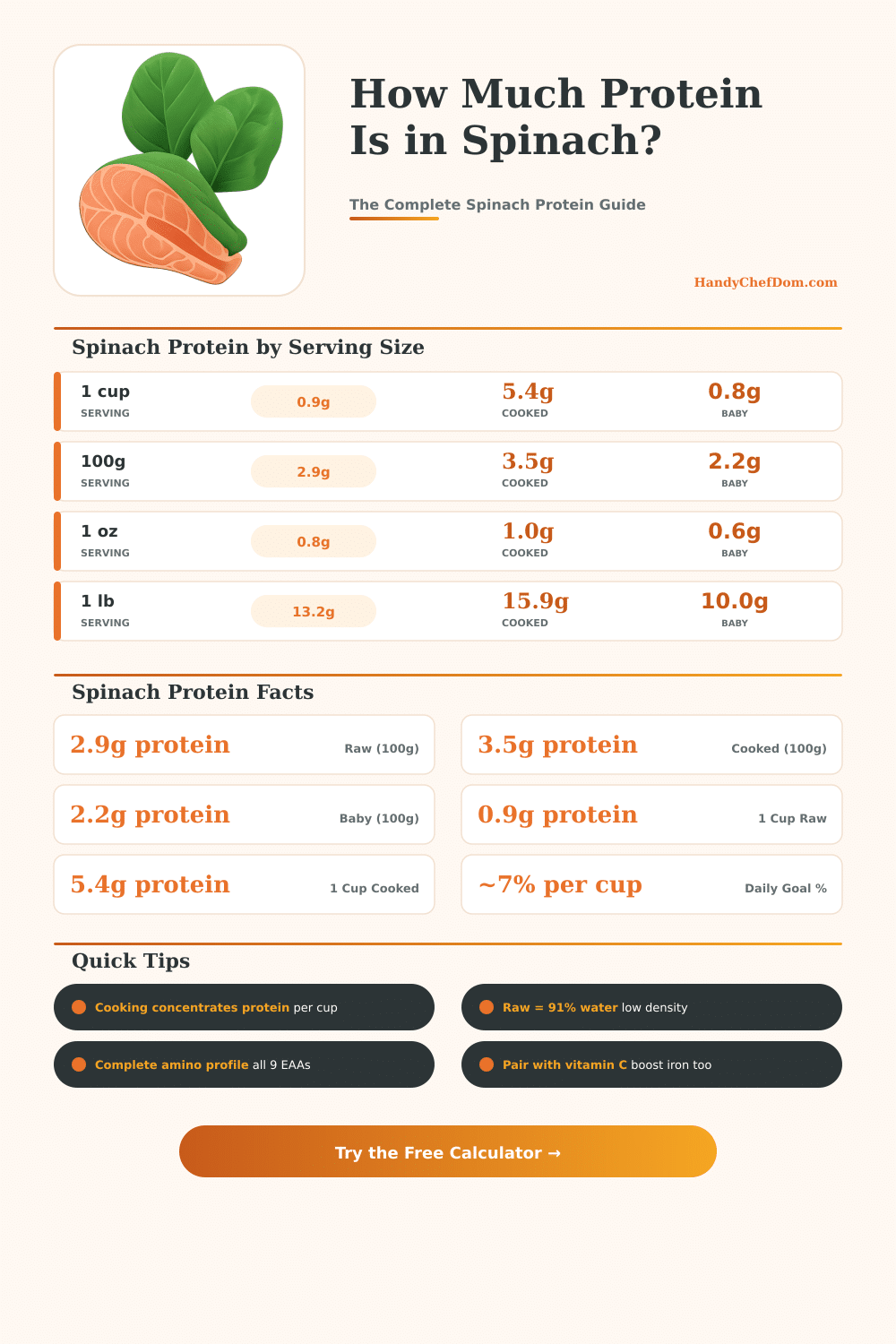
| Serving Size | Raw Spinach | Cooked Spinach | Baby Spinach | Frozen (Cooked) |
|---|---|---|---|---|
| 1 cup (raw ~30g) | 0.9g | — | 0.8g | — |
| 1 cup (cooked ~180g) | — | 6.3g | — | 5.4g |
| 1 oz (28g) | 0.8g | 1.0g | 0.6g | 0.9g |
| 100g | 2.9g | 3.5g | 2.2g | 3.0g |
| 200g | 5.8g | 7.0g | 4.4g | 6.0g |
| 1 lb (454g) | 13.2g | 15.9g | 10.0g | 13.6g |
| 1 kg (1000g) | 29.0g | 35.0g | 22.0g | 30.0g |
| Handful (~30g) | 0.9g | 1.1g | 0.7g | 0.9g |
| Spinach Type | Protein (g) | Calories (kcal) | Water (%) | Notes |
|---|---|---|---|---|
| Raw Spinach | 2.9g | 23 | 91% | Standard fresh leaves |
| Cooked Spinach (boiled) | 3.5g | 23 | 91% | Water lost during cooking |
| Baby Spinach (raw) | 2.2g | 20 | 92% | Younger, more tender leaves |
| Frozen Spinach (cooked) | 3.0g | 22 | 90% | Nutrient-dense, convenient |
| Canned Spinach (drained) | 2.5g | 24 | 91% | Slightly lower due to processing |
| Unit | Grams (Raw) | Grams (Cooked Cup) | Protein (Raw) |
|---|---|---|---|
| 1 cup raw spinach | ~30g | — | 0.9g |
| 1 cup cooked spinach | — | ~180g | 6.3g |
| 1 oz (ounce) | 28.35g | — | 0.82g |
| 1 lb (pound) | 453.6g | — | 13.2g |
| 1 handful | ~30g | — | 0.87g |
| 1 kg | 1000g | — | 29.0g |
spinach are green leafy plants that originally came from Persia, in the regions of Central and West Asia. The scientific name of it is Spinacia oleracea and it belongs to the family of amaranths. Spinach have relatives among other vegetables like beetroot, chard and quinoa.
It has taste close to those, with a bit bitter tone of beetroots and the little salty taste of chard.
What Is Spinach and How to Use It
Leaves of spinach one eats fresh, cooked or kept by means of various methods. It is a vegetable that grows from seed. Choosing spinach, one should check that the leaves look green and crispy.
Always wash it fully before use. The season of spinach lasts from March until June, although it commonly is found during the whole year.
Raw spinach can have tiny bitterness in the taste. Cooked spinach gives a fully different texture than the raw. It loses its crunch and becomes soft, silky and almost creamy, what brings pleasant mouth feeling to foods.
The cooking causes spinach to slightly shrink. One usually serves around one cup of raw or half a cup of cooked. Regarding leafy vegetables like spinach, two cups of raw or one of cooked match to a standard serving of vegetables.
spinach is rich in nutrients. It stores calcium, iron, protein, potassium and folate. Moreover, it is full of vitamins A, B, C, E and K, as well as niacin, zinc, fiber, thiamin, vitamin B6, magnesium, phosphorus, copper and manganese.
It is low in fat and even lower in cholesterol. Baby spinach does provide antioxidants and vitamin K, that is useful for bones, eyes and skin. The leaves of spinach support the bone health and immune strength, and it serves as faithful supply of plant proteins and iron four vegetarians and vegans.
Foods rich in potassium, for instance spinach, help to keep normal blood pressure.
spinach stores a lot of oxalates, that is the same substance what causes that teeth feel rough after too much rhubarb. If calcium feeds together with foods full in oxalates, the oxalic acid binds with it in the bowel and forms crystals, that leave the body without being absorbed.
There are many ways to eat spinach. It works well in salads, sandwiches, egg plates, smoothies and quickly fried foods. A simple way is to fry spinach with olive oil and garlic for a fast side dish.
Fresh spinach leaves blend easily in smoothies and become almost fully hidden. Banana together with peanut butter hides the taste very well. Creamed spinach is made from frozen spinach and one reheats it in the microwave.
Spinach also fits with curries, for instance tofu-spinach curry or saag paneer. Dip from spinach andartichoke is a popular choice for snacks.