☕ Kombucha Caffeine Calculator
Find out exactly how much caffeine is in your kombucha — by brand, serving size, or tea type
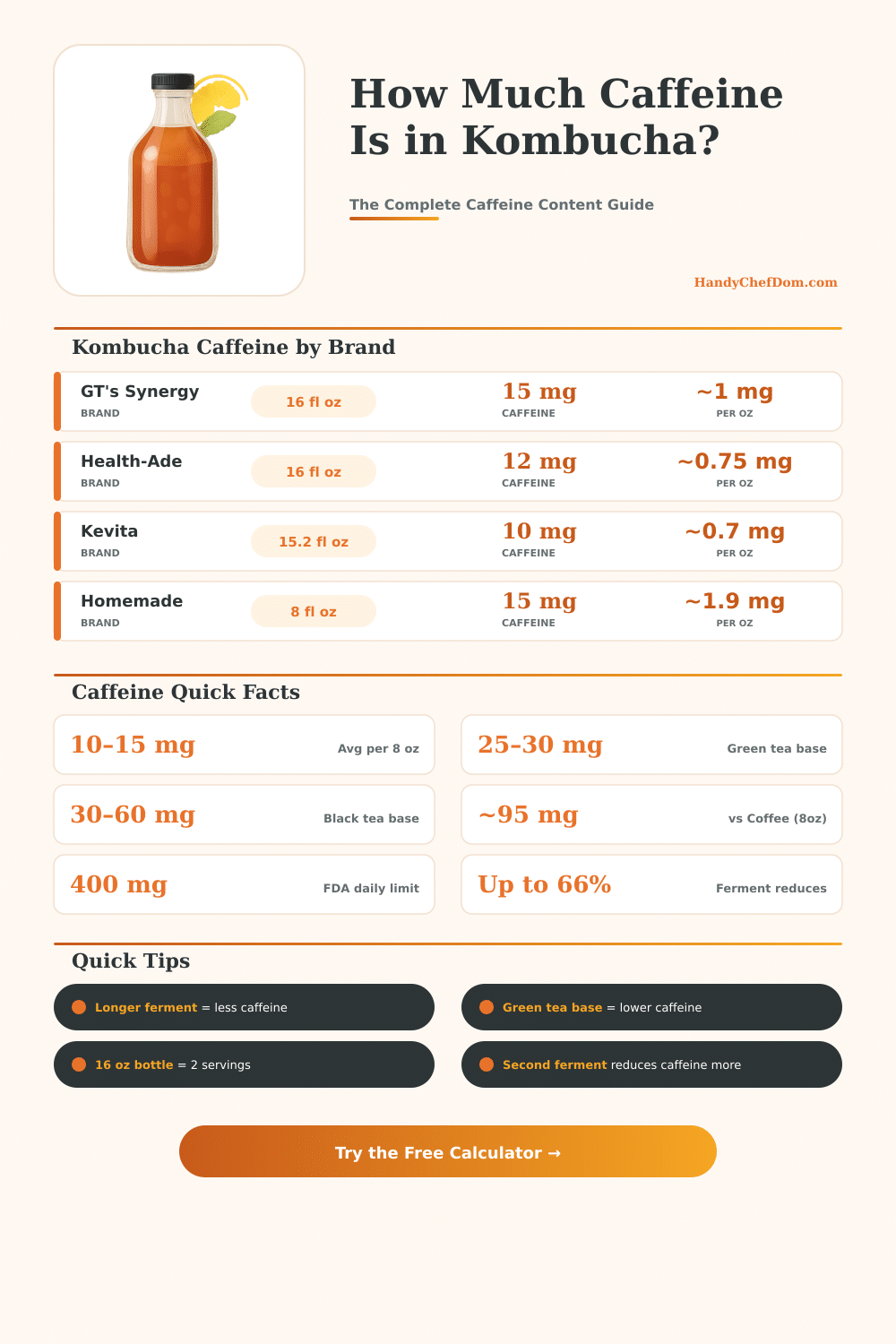
| Brand | Serving Size | Caffeine (mg) | Mg per oz | Level |
|---|---|---|---|---|
| GT's Synergy | 16 fl oz (473mL) | 15 mg | ~0.94 | Low |
| GT's Original (Raw) | 16 fl oz (473mL) | 24 mg | ~1.5 | Low |
| Health-Ade | 16 fl oz (473mL) | 12 mg | ~0.75 | Low |
| KeVita | 15.2 fl oz (450mL) | 10 mg | ~0.66 | Low |
| Wild Tonic Jun | 8 fl oz (237mL) | 8 mg | ~1.0 | Low |
| Humm Kombucha | 14 fl oz (414mL) | 9 mg | ~0.64 | Low |
| Live Soda | 12 fl oz (355mL) | 8 mg | ~0.67 | Low |
| Homemade (black tea) | 8 fl oz (237mL) | 15–30 mg | ~1.9–3.75 | Medium |
| Homemade (green tea) | 8 fl oz (237mL) | 8–14 mg | ~1.0–1.75 | Low |
| Jun Kombucha | 8 fl oz (237mL) | 8–12 mg | ~1.0–1.5 | Low |
| Ferment Time | Caffeine Reduction | Starting Tea (per 8oz) | Resulting Kombucha |
|---|---|---|---|
| 3–5 days | ~15–25% | 47 mg (black tea) | ~35–40 mg |
| 7 days | ~30–40% | 47 mg (black tea) | ~28–33 mg |
| 10–14 days | ~45–55% | 47 mg (black tea) | ~21–26 mg |
| 21+ days | ~60–66% | 47 mg (black tea) | ~16–19 mg |
| 7 days | ~25–35% | 28 mg (green tea) | ~18–21 mg |
| 14 days | ~50–60% | 28 mg (green tea) | ~11–14 mg |
Kombucha is made from fermented, bubbly and sweetened tea. One sometimes calls it tea fungus, tea mushroom or Manchurian fungus, although those terms mean more the culture that prepares it. Although it has the name of fungus, kombucha does not always carry fungi.
The “fungus” indeed is a symbiotic group of bacteria and yeasts, known as SCOBY. The scientific name of that culture is Medusomyces gisevii. Some folks say “kombucha tea” to identify the drink itself from the culture.
Kombucha: What It Is and How to Make It
The drink is usually prepared from green, black or oolong tea. The old method starts with dried black tea leaves. One adds sugar to the tea, that serves as base for the fermentation, and the SCOBY converts it.
The yeasts turn the sugar into alcohol, after which the bacteria turn that alochol into acids. Like this the longer the fermentation lasts, the less sweet it stays and more bitter in taste.
kombucha carries various active elements. Between them are organic acids, amino acids, vitamins, probiotics, sugars, polyphenols and antioxidants. It belongs to the group of functional drinks, so it is non-alcoholic and rich in vitamins, amino acids or other nutrients.
During the fermentation the natural caffeine of the tea declines, but around a third stays. For instance, one kind has between 8 mg and 14 mg of caffeine per 8 ounce serving.
In the last ten years kombucha became very popular. The global sales amounts jumped from millions too billions. Currently it is found in many stores.
A supermarket bottle of kombucha can hold more than 20 grams of added sugar, but many types have much less. Check the nutrition info on the label to know the number of servings in the package. To start it is best to drink 4 ounces a day for some days.
If it feels good, one can go to 8 ounces daily. Many healthy adults drink 12 to 16 ounces per day, split in two parts. Mixing kombucha with food can slow the sugar absorption, because fibers and nutrients slow the sugar reaction.
Stay at 4 to 8 ounces to limit the overall sugarload.
Home prepared kombucha is fairly easy because you do not need special tools or exotic materials. To start you must have a SCOBY and raw kombucha as starter liquid. The main ingredients are tea, sugar and the starter liquid.
Home fermentation can be a good entry to deeper study of teas.
kombucha works also as a key element in the kitchen. It can replace beer or wine in several recipes. When you cook with it, choose a fitting taste.
One can add herbs or grains to kombucha during the second fermentation.