🌰 Almond Protein Calculator
Calculate exact protein content in any amount of almonds — by count, weight, or serving size
| Serving | Weight | Almonds (approx) | Protein | Calories |
|---|---|---|---|---|
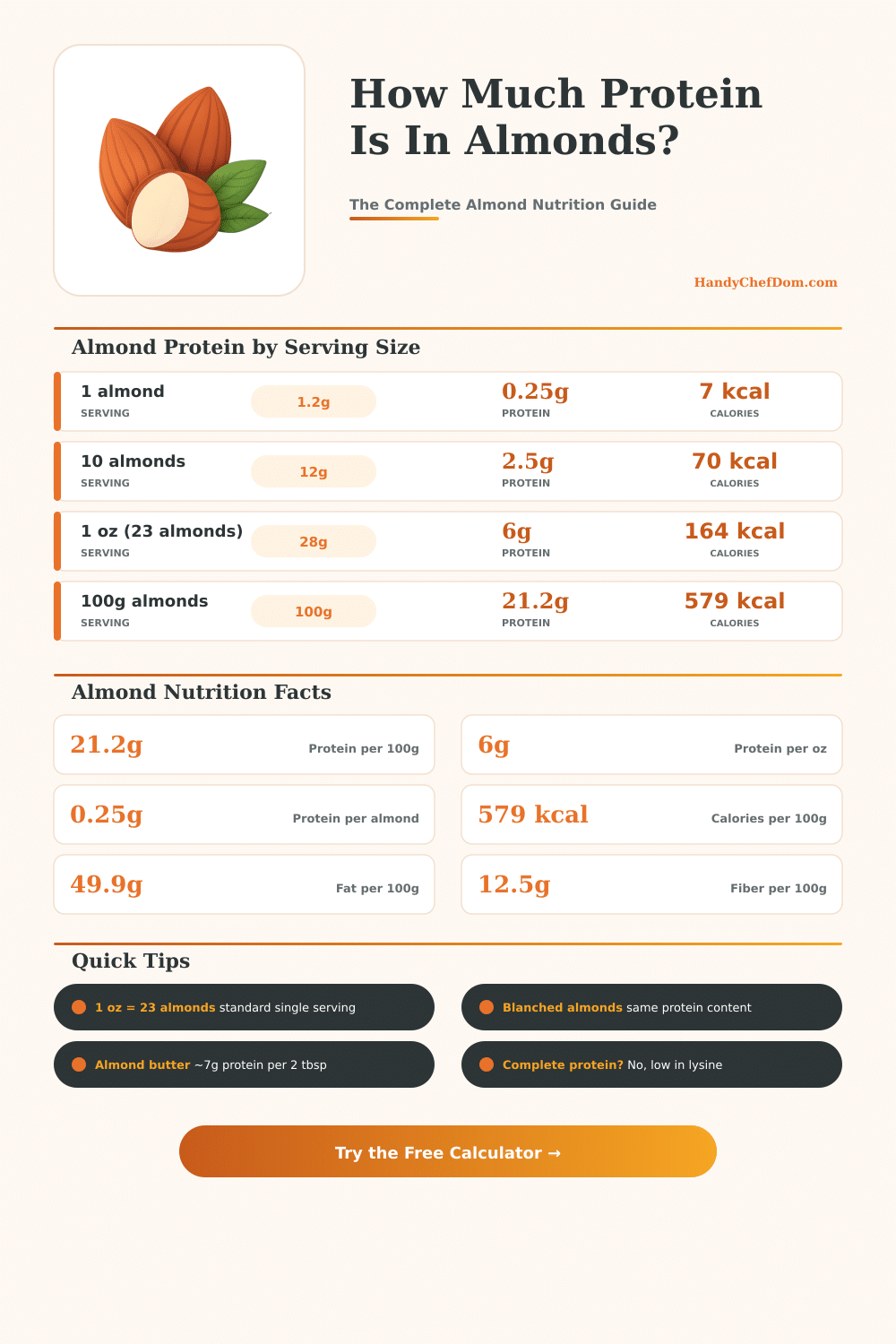
| 1 almond | 1.2g | 1 | 0.25g | 7 kcal |
| 5 almonds | 6g | 5 | 1.3g | 35 kcal |
| 10 almonds | 12g | 10 | 2.5g | 70 kcal |
| 1 oz (standard serving) | 28g | ~23 | 6.0g | 164 kcal |
| 1/4 cup | 36g | ~29 | 7.6g | 207 kcal |
| 1/2 cup | 71g | ~58 | 15.1g | 411 kcal |
| 1 cup | 142g | ~117 | 30.1g | 822 kcal |
| 100g | 100g | ~83 | 21.2g | 579 kcal |
| Type | Protein | Fat | Calories |
|---|---|---|---|
| Raw | 21.2g | 49.9g | 579 |
| Dry Roasted | 20.4g | 52.5g | 598 |
| Blanched | 21.0g | 50.6g | 575 |
| Almond Butter | 21.0g | 55.5g | 614 |
| Almond Flour | 21.4g | 52.5g | 590 |
| Almond Milk | 0.4g | 1.1g | 17 |
| Nut | Protein/oz | Calories/oz |
|---|---|---|
| Almonds | 6.0g | 164 |
| Peanuts | 7.3g | 166 |
| Pistachios | 6.0g | 159 |
| Cashews | 4.4g | 157 |
| Walnuts | 4.3g | 185 |
| Macadamia | 2.2g | 204 |
| Daily Goal | Oz of Almonds Needed | Grams Needed | Approx. Almonds |
|---|---|---|---|
| 30g protein/day | 5 oz | 141g | ~116 almonds |
| 50g protein/day | 8.3 oz | 236g | ~194 almonds |
| 75g protein/day | 12.5 oz | 354g | ~291 almonds |
| 100g protein/day | 16.7 oz | 472g | ~388 almonds |
The almond is a native nut of the Mediterranean area. Those trees first grew wild here and later people grew them already by 3000 BC In the Bible, in the book Genesis, they are mentioned as valued food. The almond tree belongs to the family Prunus.
Together with the peach, it sorts itself in the group Amygdalus, that differs from other groups because of the hairy coating on the bark.
Facts About Almonds
In California people grow around 30 different kinds of almonds. Only about 10 of them form the main part of the almonds eaten worldwide. The most important two are Nonpareil and Mission.
Between the most liked nuts around the globe, almonds hold fame. Each year people eat more than 1.2 millions of metric tons. They rank between the healthiest nuts available.
Almonds have antioxidants, calcium, riboflavin, magnesium and many otehr good things. Besides that, they store vitamin E, iron and potassium. One serving of one ounce carries around 6 grams of protein and also gives fiber.
In regular almonds, one serving has 2 grams of net carbs from 6 grams total carbs minus 4 grams of fiber. They work for paleo diets, do not have gluten and are kosher. 32 almonds match 222 calories.
almonds are the only nuts that are alkaline. All other nuts act acidic in the body. They carry healthy fat, which helps the heart.
Eating almonds can lower the LDL-cholesterol, reduce swelling and help to control the blood sugar. Also they support the health of the body and strengthen the immune system. An interesting study looked at there prebiotic effects on the gut bacteria, something unique between the nuts.
A serving of almonds is made up of 23 bits, which matches one ounce or a bit more than a handful. For cut almonds, a serving is around a quarter cup, while for almond butter it is two spoons. If you eat too many almonds, that can cause blockage.
It is good to mix the types of nuts. For instance, walnuts carry omega-3-fats, while almonds mainly have omega-6.
If you soak almonds in water and later remove the skin before eating, that eases the taking in of good things. Almonds of good quality should look clean, without damages or signs of disease. They should be crisp and not too hard to chew, with almost no smell.
almonds go well with many recipes. From cake to biscuit to smoothie, adding them brings extra crunch and flavor. They form a rich in fat and protein food, that helps between meals without dropping energy.
Nothingis truly bad about almonds as part of a balanced diet.