🐟 Ahi Tuna Protein Calculator
Calculate exact protein, calories & macros in your ahi tuna serving
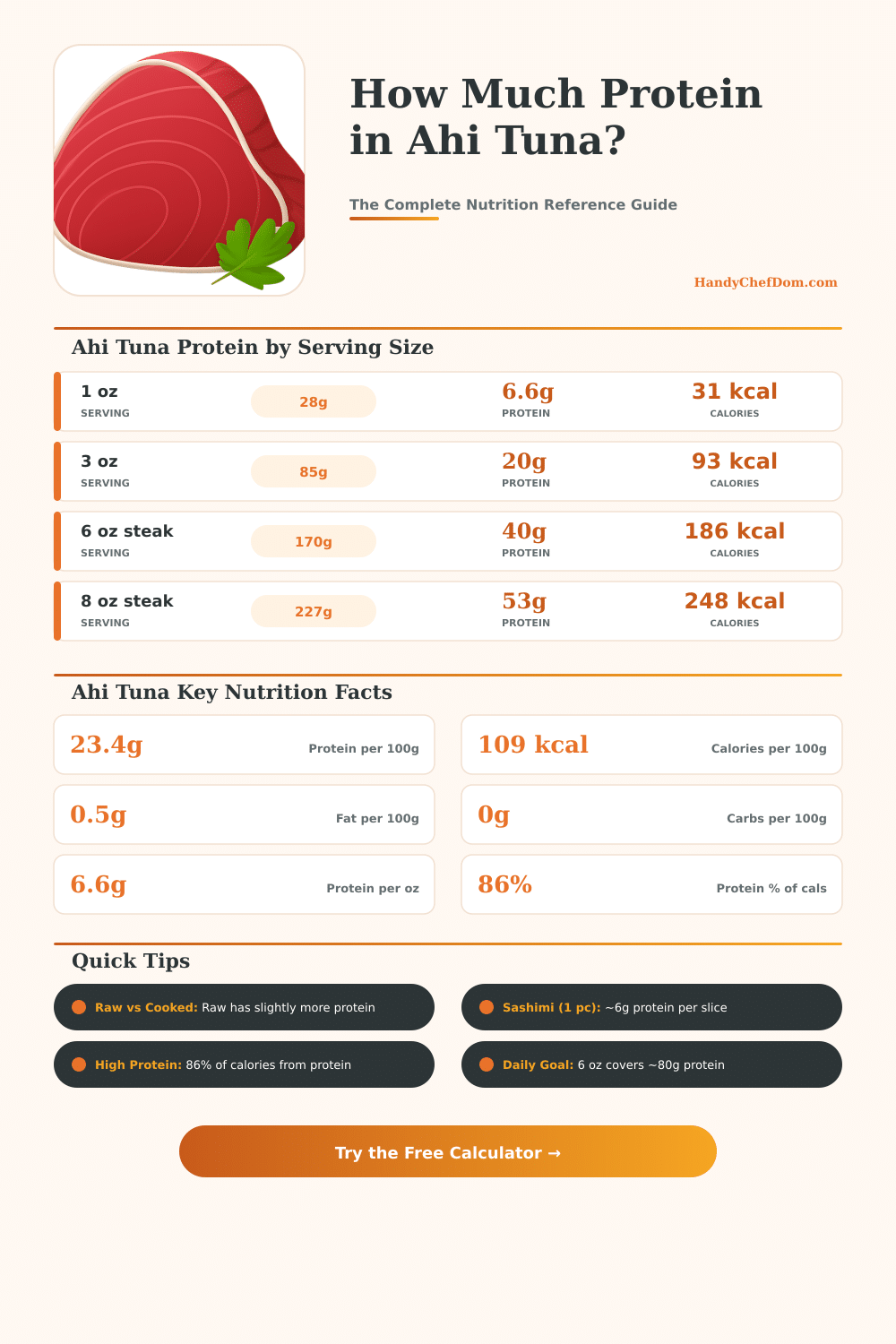
| Serving Description | Weight (g) | Weight (oz) | Protein (g) | Calories | Fat (g) |
|---|---|---|---|---|---|
| 1 sashimi slice | 30g | 1.06 oz | 7.0g | 33 kcal | 0.2g |
| Small portion (2 oz) | 57g | 2 oz | 13.3g | 62 kcal | 0.3g |
| Standard serving (3 oz) | 85g | 3 oz | 19.9g | 93 kcal | 0.4g |
| 4 oz steak | 113g | 4 oz | 26.4g | 123 kcal | 0.6g |
| Poke bowl portion | 150g | 5.3 oz | 35.1g | 164 kcal | 0.8g |
| 6 oz steak | 170g | 6 oz | 39.8g | 185 kcal | 0.9g |
| 8 oz steak | 227g | 8 oz | 53.1g | 248 kcal | 1.1g |
| 10 oz steak | 284g | 10 oz | 66.5g | 309 kcal | 1.4g |
| 12 oz large steak | 340g | 12 oz | 79.6g | 371 kcal | 1.7g |
| 1 lb fillet | 454g | 16 oz | 106.2g | 495 kcal | 2.3g |
| Preparation | Protein | Calories | Fat | Moisture Loss |
|---|---|---|---|---|
| Raw (sashimi-grade) | 23.4g | 109 kcal | 0.5g | — |
| Cooked (seared/grilled) | 25.8g | 120 kcal | 0.5g | ~10% |
| Canned in water (drained) | 23.6g | 116 kcal | 0.8g | Minimal |
| Canned in oil (drained) | 22.1g | 198 kcal | 8.2g | Minimal |
| Protein Goal | Raw Weight Needed | Approx. Serving | Calories |
|---|---|---|---|
| 20g protein | ~85g (3 oz) | 1 standard serving | ~93 kcal |
| 30g protein | ~128g (4.5 oz) | Medium steak | ~140 kcal |
| 40g protein | ~171g (6 oz) | Large steak | ~186 kcal |
| 50g protein | ~214g (7.5 oz) | Extra-large steak | ~233 kcal |
| 60g protein | ~256g (9 oz) | Two servings | ~279 kcal |
| 80g protein | ~342g (12 oz) | Very large portion | ~373 kcal |
| 100g protein | ~427g (15 oz) | Near 1 lb fillet | ~465 kcal |
Ahi tuna ranks among the most liked foods in the world. Here is a funny fact: the word “ahi” in the Hawaiian language simply means tuna so that “ahi tuna” sounds almost like “tuna tuna”. In Hawaii it refers to yellowfin and bigeye species.
Although they are not the same species, both have firm structure, meaty texture and rich flavor, which sets them apart from other fish.
Cooking and Eating Ahi Tuna
Compared with salmon, ahi shows its gentle taste and less oily character. Salmon has more strong and oily profile, on the other hand ahi shines in foods based on seared or raw preparation. When raw, the meat looks bright red, later it darkens during cooking.
Without doubt it is more delicous than albacore, but also thinner than bluefin tuna.
Fresh tuna bears that buttery, satisfying top quality. One can eat it raw. As sushi, sashimi, tartare or in poke bowls, your choice.
Grilling, pan-frying and searing all work well. But bake? No good idea.
The secret is in the love for raw state, truly. If cooked too long, it becomes dry, tough and loses its force, because it lacks enough fat to keep the moisture.
Seared Ahi Tuna does not require much time. A smoking hot pan does the trick. Give each side two to four minutes, according to the thickness of the piece.
The target is crisp golden surface outside, while the inside stays cool or almost raw. From start to finish, everything ends in six to fifteen minutes.
Marinades and crusts open new ways for flavor. A mix of soy sauce, sesame oil and fresh ginger works magic on seared or grilled ahi. Or try a sesame crust with a touch of brown sugar and a bit of spice.
Soy glaze with wasabi and lime also hits the mark. Here is the difference between tuna and beef steak: in tuna does not run fat threw the meat, so your spice or marinade becomes the star. Even so, sometimes you do not need to complicate.
Only salt, pepper, lemon zest and a dose of olive oil creates wonder. Less is better.
Fish tacos based on Ahi Tuna are hardly beat. Cilantro, red onion, avocado and salsa all go perfectly with the fish. Ceviche from tuna gives a fresh idea, if you want something surprising.
Ahi Tuna stores healthy fats, that help to control blood pressure and reduce risk of heart emergency or stroke. On the other hand, as a top predator, the meat builds up mercury. Eat it in moderation, especially if you are pregnant or feed little children.
Normal portions are between four and six units. A typical ahi steakportion usually weighs half a pound.