🥛 Kefir Milk Protein Calculator
Calculate protein, calories & full nutrition in any amount of kefir milk
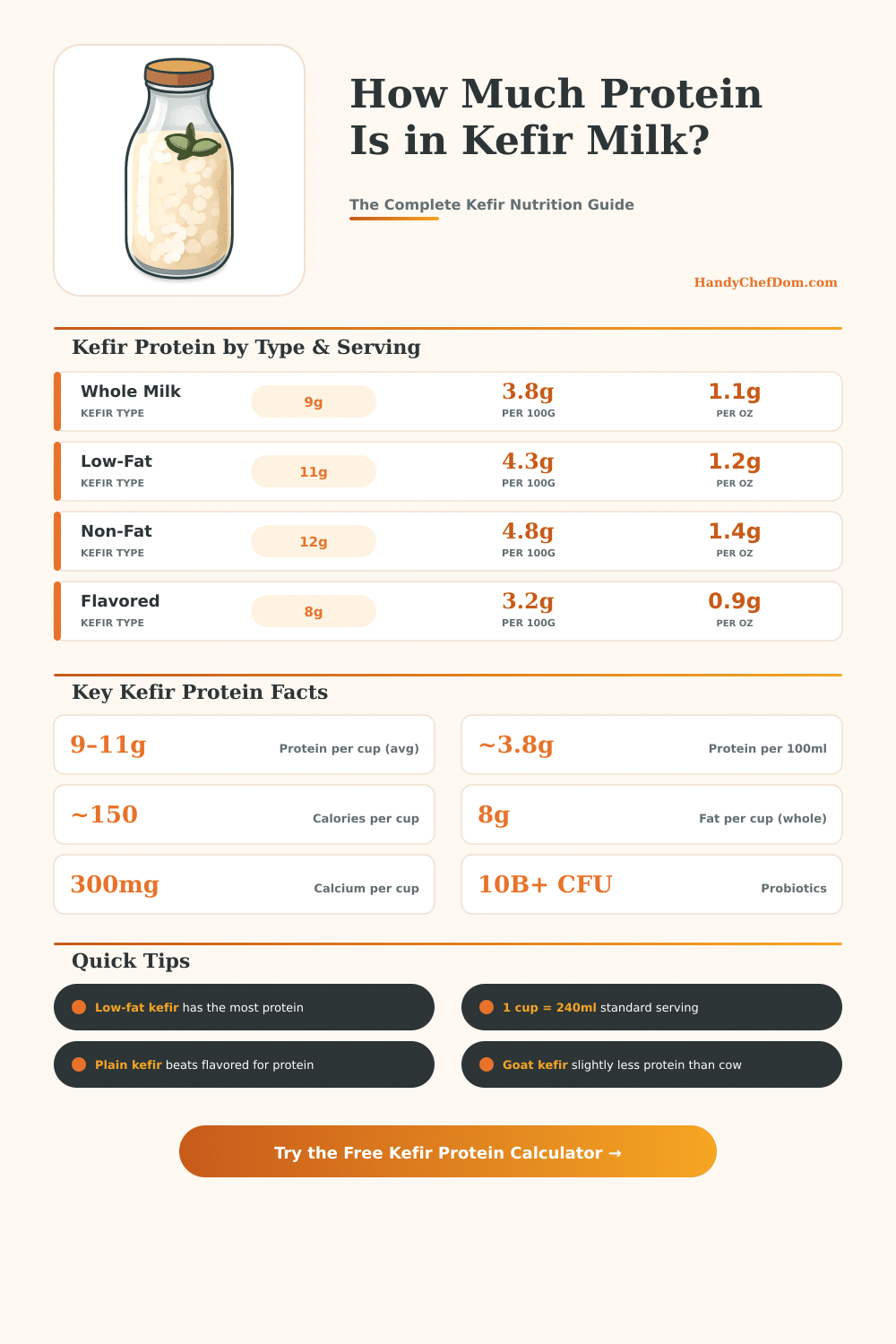
| Kefir Type | Per 100ml | Per Cup (240ml) | Per 8 fl oz | Per 500ml |
|---|---|---|---|---|
| Whole Milk Kefir | 3.8g | 9.1g | 8.9g | 19.0g |
| Low-Fat Kefir (1%–2%) | 4.3g | 10.3g | 10.1g | 21.5g |
| Non-Fat Kefir | 4.8g | 11.5g | 11.3g | 24.0g |
| Flavored Kefir | 3.2g | 7.7g | 7.5g | 16.0g |
| Goat Milk Kefir | 3.5g | 8.4g | 8.2g | 17.5g |
| Coconut Kefir | 0.8g | 1.9g | 1.9g | 4.0g |
| Serving | ml Equivalent | Protein (Whole) | Protein (Low-Fat) | Protein (Non-Fat) |
|---|---|---|---|---|
| 1 tablespoon (tbsp) | 15ml | 0.6g | 0.6g | 0.7g |
| 1 fl oz | 30ml | 1.1g | 1.3g | 1.4g |
| ½ cup | 120ml | 4.6g | 5.2g | 5.8g |
| 1 cup (standard) | 240ml | 9.1g | 10.3g | 11.5g |
| 1½ cups | 360ml | 13.7g | 15.5g | 17.3g |
| 2 cups | 480ml | 18.2g | 20.6g | 23.0g |
| 500ml bottle | 500ml | 19.0g | 21.5g | 24.0g |
| 1 liter | 1000ml | 38.0g | 43.0g | 48.0g |
| Nutrient | Whole Kefir | Low-Fat Kefir | Non-Fat Kefir | Flavored Kefir |
|---|---|---|---|---|
| Calories | 146 kcal | 101 kcal | 84 kcal | 156 kcal |
| Protein | 9.1g | 10.3g | 11.5g | 7.7g |
| Total Fat | 8.0g | 2.6g | 0.2g | 2.2g |
| Carbohydrates | 11.6g | 11.4g | 13.0g | 26.0g |
| Sugars | 11.4g | 11.2g | 12.8g | 24.0g |
| Calcium | 300mg | 310mg | 320mg | 290mg |
| Saturated Fat | 4.6g | 1.6g | 0.1g | 1.4g |
| Sodium | 125mg | 130mg | 135mg | 140mg |
Kefir Milk is a fermented dairy product that looks like thin yoghurt. One prepares it by means of special kefir grains that form a symbiotic culture. The milk one can use from cows, goats or sheep.
It has a creamy taste with bitterness, commonly more pleasant than drinking yoghurt. The flavor adjusts according to the fermenting time of the grains. The more time the grains pass in the milk, the more they consume the sugar and turn it into acids what gives more tart and a bit bitter taste.
Kefir Milk: What It Is and How to Make It
Kefir grains form a balanced living settlement from yeasts and bacteria. They stay bound in a rubbery matrix, called kefiran. It is normal if the grains look like white jelly nets.
They resemble a cordial community full of various tiny organisms. Unlike yoghurt and other dairy products, the fermentation of Kefir Milk involves bacteria and yeasts, that work together to convert milk into a probiotic drink.
There are various kinds of Kefir Milk from separate kefir grains. Milk kefir is the most common, even so water kefir also enjoys popularity. Water kefir works as a dairy-free alternative for lactose-intolerant folks.
Milk kefir originated centuries ago beside the Caucasus Mountains in East Europe and from hear has been part of the diet for a long period.
Kefir Milk works as a probiotic drink, that strengthens the amount of healthy bacteria in the digestive system. It stores up to 30 different species of probiotic bacteria and yeasts. It helps with gut health, immune system, bones, muscles and skin.
Home preparing kefir is simpler than making yoghurt. You do not need to warm the milk above room temperature, or preserve constant heat during the process. Simply put the grains in fresh milk and leave them between 12 and 36 hours according to your taste.
One can prepare a new batch almost every day. One bag of grains is enough for 4 cups a day. The advised ratio is one spoon of grains per liter of milk.
The grains grow on their own during the time.
Whole milk farms give kefir a more creamy taste, but they add calories. Low fat milk has more lactose compared to whole milk. The fat amount does not affect the fermentation, because the kefir consumes the sugar from the milk, not the fat.
Average pasteurised milk works well fordomestic kefir making.
One usually drinks around one cup. Kefir Milk one can store in the fridge for daily use. It is very flexible and can replace milk, yoghurt or butter in the kitchen.
It goes well with smoothies, ice cream, baked goods and salad dressings. But heating kefir kills the probiotic bacteria, so that it reduces its health benefit in foods like soups.