🧉 Yerba Mate Caffeine Calculator
Find out exactly how much caffeine is in your yerba mate serving — any method, any size
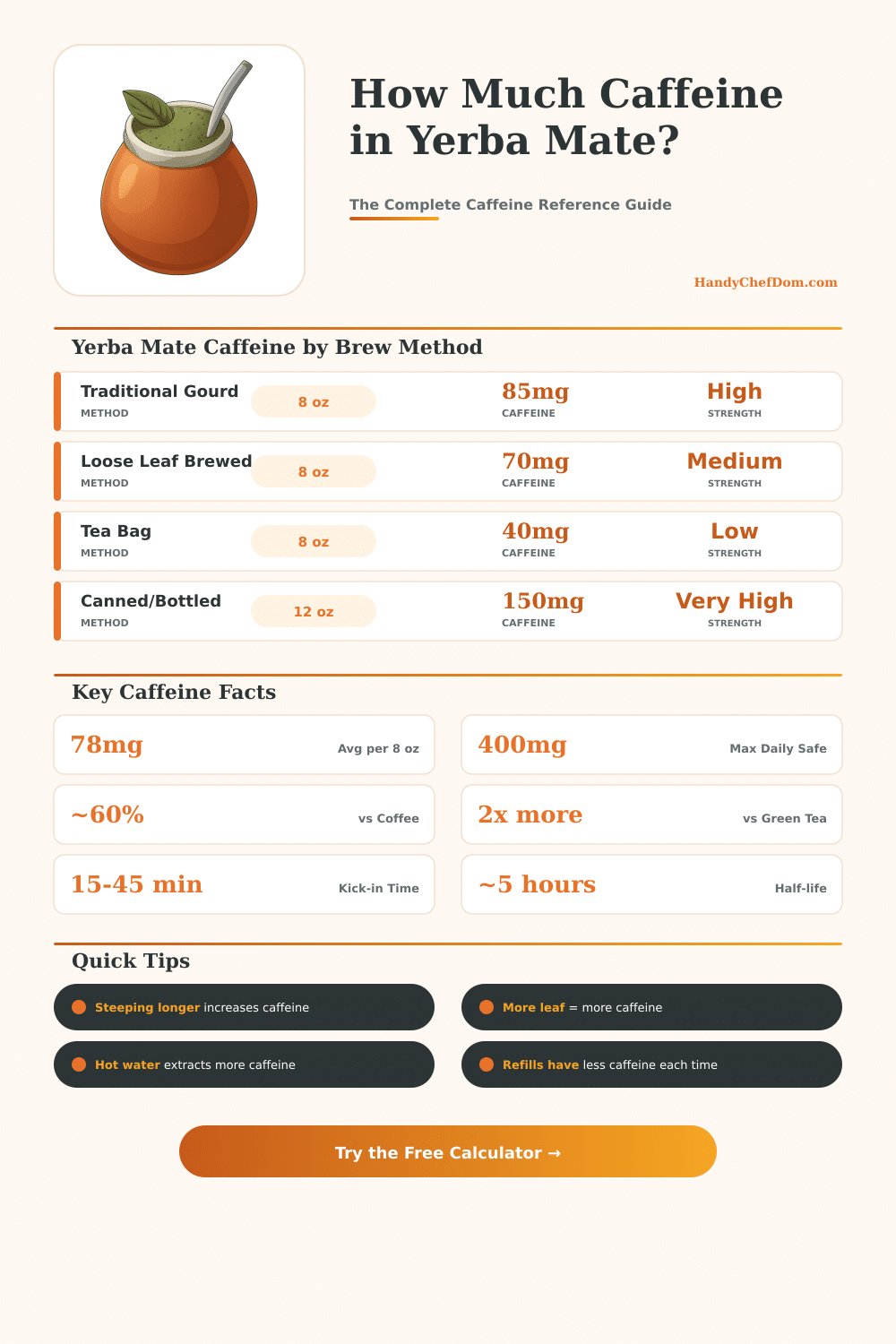
| Method | Caffeine (mg) | Range (mg) | Strength |
|---|---|---|---|
| Traditional Gourd (1st pour) | 85 mg | 65–105 mg | High |
| Loose Leaf Brewed | 70 mg | 55–90 mg | Medium-High |
| Tea Bag | 40 mg | 25–55 mg | Medium |
| Tereré (Cold Brew) | 60 mg | 45–80 mg | Medium |
| Canned / Bottled (12 oz) | 150 mg | 120–180 mg | Very High |
| Concentrate / Extract (2 oz) | 100 mg | 80–130 mg | Very High |
| Refill # | Approx. Caffeine (mg) | % of 1st Pour | Cumulative Total |
|---|---|---|---|
| 1st Pour | 85 mg | 100% | 85 mg |
| 2nd Pour | 55 mg | 65% | 140 mg |
| 3rd Pour | 35 mg | 41% | 175 mg |
| 4th Pour | 22 mg | 26% | 197 mg |
| 5th Pour | 14 mg | 16% | 211 mg |
| 6th+ Pour | <10 mg | <12% | ~220 mg |
| Brand / Product | Serving Size | Caffeine (mg) | Per oz |
|---|---|---|---|
| Guayakí Canned (Original) | 15.5 oz | 150 mg | 9.7 mg/oz |
| Guayakí Enlighten Mint | 15.5 oz | 140 mg | 9.0 mg/oz |
| Eco Teas Loose Leaf | 8 oz | 68 mg | 8.5 mg/oz |
| Cruz de Malta (Traditional) | 8 oz | 80 mg | 10 mg/oz |
| Twinings Mate Tea Bag | 8 oz | 30 mg | 3.75 mg/oz |
| Rosamonte Seleccionado | 8 oz | 90 mg | 11.25 mg/oz |
| Anna Park Organic | 8 oz | 75 mg | 9.4 mg/oz |
| Beverage | Serving Size | Caffeine (mg) | vs Yerba Mate |
|---|---|---|---|
| Yerba Mate (Traditional) | 8 oz | 85 mg | — Baseline — |
| Drip Coffee | 8 oz | 95 mg | +12% more |
| Espresso (single shot) | 1 oz | 63 mg | Similar per oz |
| Black Tea | 8 oz | 47 mg | 45% less |
| Green Tea | 8 oz | 28 mg | 67% less |
| Red Bull | 8.4 oz | 80 mg | ~Same |
| Monster Energy | 16 oz | 160 mg | 2x more (larger) |
| Matcha (prepared) | 8 oz | 70 mg | 18% less |
| Population | Max Daily Caffeine | Max Servings (8oz Mate) | Notes |
|---|---|---|---|
| Healthy Adults | 400 mg | ~4–5 cups | FDA & health authority guideline |
| Pregnant Women | 200 mg | ~2 cups | Lower limit recommended |
| Teens (12–18) | 100 mg | ~1 cup | Pediatric guideline |
| Children (under 12) | Not recommended | 0 | Avoid caffeine |
| Sensitive individuals | 100–200 mg | 1–2 cups | Anxiety, heart conditions |
The mate is done from the natural caffeine sheets of a plant that originates from South America. The plant, known as Ilex paraguariensis, belongs to the family of the hollies. A French botanist Augustin de Saint-Hilaire named it.
One can soak the sheets in warm water to prepare a drink that one calls mate. The native communities Guaraní first grew this plant, and they presented it to the Spaniards that arrived later.
What Yerba Mate Is and How to Make It
The yerba mate itself is made up of a mix of sheets, powder and stem of the plant. The word “mate” relates actually to the tin that one uses to prepare the drink, what causes a bit of confusion always. There is big variety of yerba mate.
With or without stem, well ground or roughly dug, added flavor, sweetened or mixed with other grasses. Some brands stress flavored versions with tastes like lemon, orange and melon.
The mate sits somewhere between coffee and tea. It is rich in caffeine, but also holds theobromine, a gentle stimulant, that happnes in bigger amounts than in coffee or tea. It owns also theophylline, that shows up chiefly in tea.
Thanks to its low bitterness, the mate is gentler for the stomach than coffee and does not leave that nervous feeling. The impact of the caffeine feels different than that of coffee or black tea.
Preparing yerba mate could seem hard at the start, but really only some main spots deserve to mind. The traditional mode uses a gourd and a straw, that is a metal tube with a filter. Gourds form the classic standard, although wooden or modern mate-tins work well also.
The tin one should fill only to more then half with light, dried yerba mate. Do not use hot water. Heat the water until around 165°F, so until when it starts to simmer, later turn off the warming.
Filtered water works best.
There are other ways to enjoy it. Mate cocido is prepared by boiling the yerba and later screening, almost like tea. There are also cold versions, called tereré.
For a warm version in a glass, double the amount of yerba mate works, soaked during four to six minutes in 170°F.
A good starting point to prepare it is around five grams of yerba mate for one cup. One kilo of yerba, shared in average portions of around 35 grams, delivers about 28 portions. That shows that a kilo is enough for one month at everyday use.
The taste at the first time can be bitter and grassy. It takes some tries to get used to it, but the bitter herb taste grows on people over time. The yerba mate holds small amounts of vitamins and has more antioxidants by volume than many other drinks.
One reason to becareful, yerba mate done by a smoking process can hold harmful stuff, so not smoked or air dried versions are safer.