🔥 Meat Smoking Calculator
Estimate smoking time, wood quantity & servings for any cut
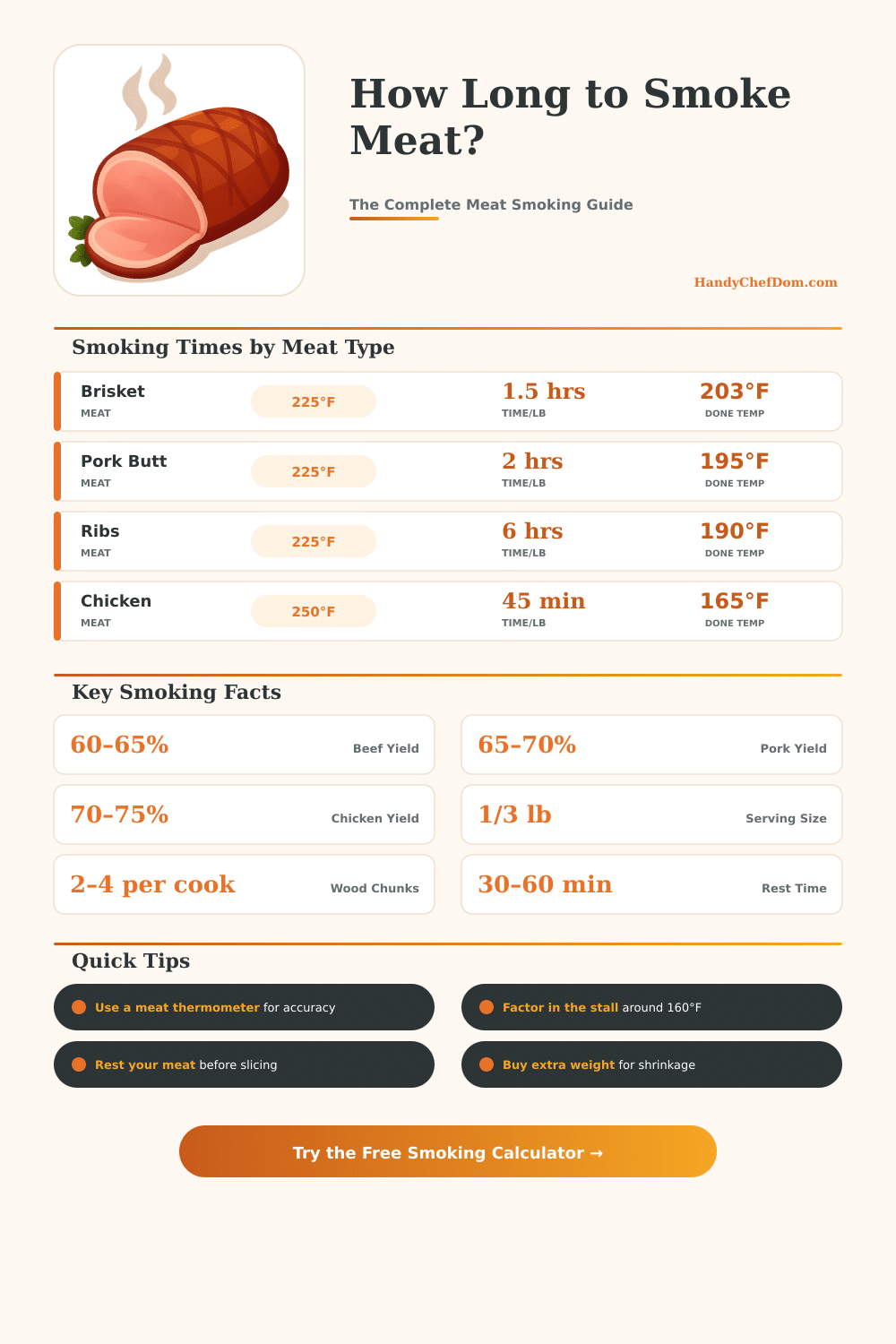
| Meat Cut | Smoker Temp | Time Per Lb | Finished Temp (°F) | Finished Temp (°C) |
|---|---|---|---|---|
| Beef Brisket | 225°F / 107°C | 1.25–1.75 hrs | 195–203°F | 91–95°C |
| Pork Butt / Shoulder | 225°F / 107°C | 1.5–2 hrs | 195–205°F | 91–96°C |
| Baby Back Ribs | 225°F / 107°C | 5–6 hrs total | 190–200°F | 88–93°C |
| Spare Ribs | 225°F / 107°C | 6–7 hrs total | 190–200°F | 88–93°C |
| Whole Chicken | 250°F / 121°C | 45–60 min | 165°F | 74°C |
| Whole Turkey | 250°F / 121°C | 30–40 min | 165°F | 74°C |
| Salmon / Fish | 175°F / 79°C | 1 hr total | 145°F | 63°C |
| Lamb Leg | 250°F / 121°C | 1–1.5 hrs | 145–160°F | 63–71°C |
| Chuck Roast | 225°F / 107°C | 1.5–2 hrs | 195–205°F | 91–96°C |
| Sausages | 225°F / 107°C | 2–3 hrs total | 165°F | 74°C |
| Wood | Flavor Profile | Best For | Chunks / 6-hr Cook |
|---|---|---|---|
| Hickory | Bold, bacon-like | Pork, beef, ribs | 4–6 chunks |
| Oak | Medium, earthy | Brisket, beef | 4–5 chunks |
| Applewood | Sweet, mild, fruity | Poultry, pork, fish | 3–5 chunks |
| Cherry | Mild, sweet, rich color | Poultry, lamb, pork | 3–4 chunks |
| Mesquite | Intense, earthy | Beef, short smokes | 2–3 chunks |
| Pecan | Mild, nutty, sweet | Poultry, pork, fish | 3–5 chunks |
| Alder | Delicate, slightly sweet | Fish, seafood, poultry | 2–4 chunks |
| Maple | Mild, slightly sweet | Poultry, pork, veggies | 3–4 chunks |
| Guests | Main Course (lb) | Buffet (lb) | Sandwiches (lb) |
|---|---|---|---|
| 4 guests | 2.5–3 lb | 2–2.5 lb | 1.5–2 lb |
| 6 guests | 4–4.5 lb | 3–3.5 lb | 2.5–3 lb |
| 8 guests | 5–6 lb | 4–5 lb | 3–4 lb |
| 10 guests | 6.5–7.5 lb | 5–6 lb | 4–5 lb |
| 15 guests | 10–11 lb | 7.5–9 lb | 6–7 lb |
| 20 guests | 13–15 lb | 10–12 lb | 8–10 lb |
At the core, meat is made up of animal tissues, mainly muscles; that we eat as food. Since ancient times in prehistory folks hunted and raised creatures to get it. About 11 000 years ago, the Neolithic Revolution allowed taming animals like chicken, sheep, goats, pigs, horses and cows.
The word «meat» technically points to solid food widely, rather than liquids. It most commonly relates to the flesh and other edible parts of creatures, that we eat. Here belong muscles, fat, sinews and ligaments, everything together.
Meat: what it is and how to cook it
Usually we talk about tamed cows, pigs and sheep.
meat provides natural protein. If one cooks, preserves and processes it right, it fits well into a healthy meal plan. Birds and red meat serve as great protein sources.
Moreover they give important minerals, iodine, iron, zinc. Together with B12-vitamins and useful fat acids, that the body truly requires. Eating organic meat one or two times weekly is a good strategy to receive the small nutrients and minerals, that are lacking.
There are a lot of choices, when dealing with meat. Chicken is flexible and cheap, about that none doubts. Red meat however has an entirely other tatse.
Imagine, if ribs and chicken thighs would cost the same per pound, the ribs would beat them clearly always. Even so beef, pig and bird stay the mainstream choices for most folks.
Ground meat gets much interest, and the ratio 80-20 seems to be the usual standard. Some folks insist on 85-15 and stay faithful to that in every use of ground meat. Meatballs offer real freedom through their ingredients.
Beef meatballs are classics, but mixing half of beef with half of pig adds fresh interest to the meal. Lamb and veal both work grate in meatballs.
Portion control truly matters more, than one believes. One ounce of meat, bird or fish matches the size of a small box. Three ounces reach around the weight of a card deck or a bar of soap, if that helps to describe.
For bigger groups or more lightweight meals, four to six ounces per folk usually suffice. If you cook boneless bits for ten folks, five pounds do the task. With bony cuts, one needs around seven and a half pounds.
Storage and shelf life range a lot based on the kind of meat. Bacon and other strongly salted or smoked products last forever. Regular ground beef needs more attention, it has big surface area without protection, which helps bacteria.
A meat thermometer helps to control the heat exactly and prevent roasts from slipping during cutting. A meatball mold creates equal balls and pairs well with rice or other textured sides. For serious meat tasks, sausage stuffers, axes and dryers for jerky areuseful for home cooks, butchers and hunters.