🥞 Crepe Nutrition Calculator
Calculate exact calories, protein, carbs & fat for your crepes by ingredient amounts
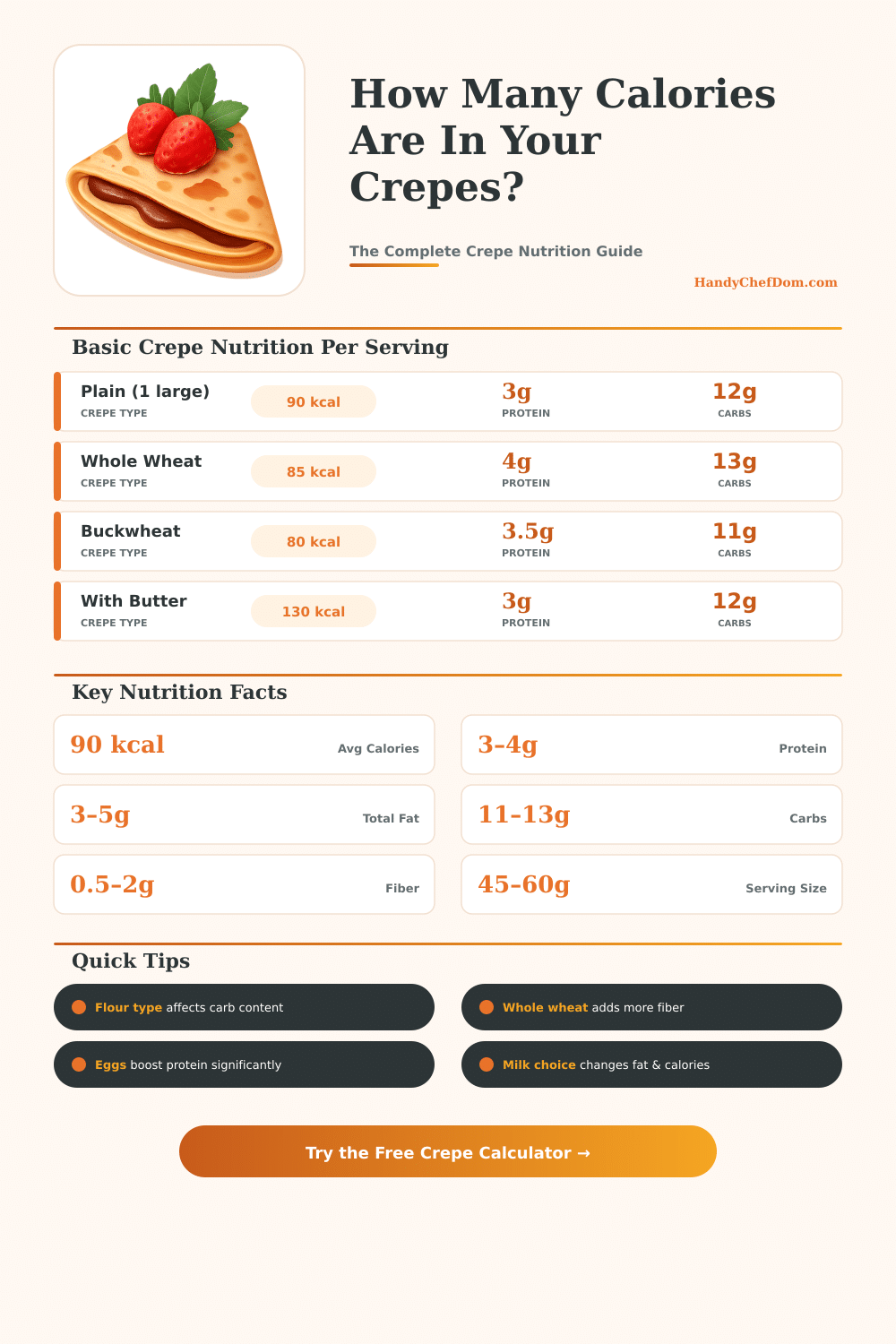
| Crepe Type | Cal (1 large) | Protein | Carbs | Fat | Fiber |
|---|---|---|---|---|---|
| Classic Plain (45g) | 92 kcal | 3.1g | 12.5g | 3.3g | 0.4g |
| Whole Wheat (45g) | 88 kcal | 3.8g | 12.0g | 2.9g | 1.4g |
| Buckwheat Galette (50g) | 83 kcal | 3.5g | 10.8g | 2.5g | 1.8g |
| Sweet Crepe w/Sugar (50g) | 128 kcal | 3.0g | 18.2g | 4.2g | 0.3g |
| Vegan (oat milk, no egg) (45g) | 78 kcal | 1.8g | 13.4g | 2.0g | 0.9g |
| Almond Flour Crepe (40g) | 115 kcal | 4.5g | 5.2g | 9.0g | 1.5g |
| High-Protein (protein powder) (50g) | 105 kcal | 9.2g | 10.5g | 2.8g | 0.5g |
| Crepe Suzette (with sauce, 80g) | 195 kcal | 3.2g | 24.5g | 8.5g | 0.3g |
| Ingredient | Calories | Protein | Carbs | Fat |
|---|---|---|---|---|
| All-Purpose Flour | 364 kcal | 10.3g | 76.3g | 1.0g |
| Whole Wheat Flour | 340 kcal | 13.2g | 72.0g | 1.9g |
| Buckwheat Flour | 335 kcal | 12.6g | 71.5g | 3.1g |
| Almond Flour | 571 kcal | 21.2g | 21.4g | 49.9g |
| Whole Milk | 61 kcal | 3.2g | 4.8g | 3.3g |
| Skim Milk | 34 kcal | 3.4g | 4.9g | 0.1g |
| Oat Milk | 45 kcal | 1.0g | 6.5g | 1.5g |
| Almond Milk (unsweetened) | 17 kcal | 0.6g | 0.6g | 1.1g |
| Whole Egg (per egg ~50g) | 143 kcal | 12.6g | 0.7g | 9.5g |
| Unsalted Butter | 717 kcal | 0.8g | 0.1g | 81.1g |
| Granulated Sugar | 387 kcal | 0g | 99.8g | 0g |
| Crepe Size | Diameter | Weight (approx) | Typical Use |
|---|---|---|---|
| Mini / Blini | 8–10 cm (3–4 in) | 15–20g | Party bites, appetizers |
| Small | 15 cm (6 in) | 25–35g | Kids, snack portions |
| Standard | 20–22 cm (8–9 in) | 40–55g | Most home recipes |
| Large / Restaurant | 26–28 cm (10–11 in) | 55–75g | Savory galettes, dinner |
| Extra-Large | 30+ cm (12+ in) | 75–100g | Crepe cake layers |
Crepes are thin pancakes that you can serve with many kinds of sweet and salty fillings or toppings. They are some of the simplest and loved French foods. Unlike typical American fluffy pancakes that are thick and cake-like thanks to leaveners like baking powder crepes stay thin and without any added leavening agents.
Well made, they are thin as lace with buttery crisp edges.
How to Make Crepes
Crepes usually come in two kinds: sweet crepes or salty galettes. The batter is basically pancake batter with extra milk. The most difficult part is reaching the right thickness.
Too thin batter does not cover the pan well and forms too many bubbles, while too thick simply becomes a panckke.
Recipe requires two cups of flour, four eggs, one cup of milk, one cup of water, half spoon of salt and four spoons of melted butter. Other way is first beat eggs with sugar until white, later mix in sifted flour and add the milk at room-temperature slowly to soak the flour without lumps. For eggs milk and flour, the amount is equal, so for every egg use two ounces of milk and two ounces of flour.
The thickness should be like whipping cream.
Before cooking, heat the crepe pan and add a bit of oil. Using a ladle pour batter on the pan and turn it to spread it well. Cook some minutes until the edges turn brown.
Brown the crepe on one side until brown edges appear, later turn with a narrow spatula to lightly brown the other side. The thickness is right if the crepes have holes. Use low heat during the whole process.
Do a test crepe first to find the right batter amount.
For fillings the possibilities do not end. The most basic is lemon juice with sugar. You can fill crepes with berries, Nutella or ham and cheese.
Warm crepes can be sprinkled with sugar and lemon or serve with whipped cream, ice and fruits. Tart rhubarb with custard form a wonderful pair. Even sourdough discards work for great crepes.
One crepe has around 120 calories, 14 grams of carbs, 6 grams of fat and 2 grams of protein. For a big group three crepes for people are a good size. Cooked crepes can be stacked, cover with plastic and cool until use.
They also can be kept in a bag with paper towels and frozen.
Crepes are rewarding when the technique and batter are right. Their flexibility makes them some of the most useful and delicious basic foods for sweet and salty cooking. Practice really helps to reach perfection with them.
Theseare great.