🍝 Pasta Per Person Calculator
Calculate exact dry & cooked pasta quantities for any group size
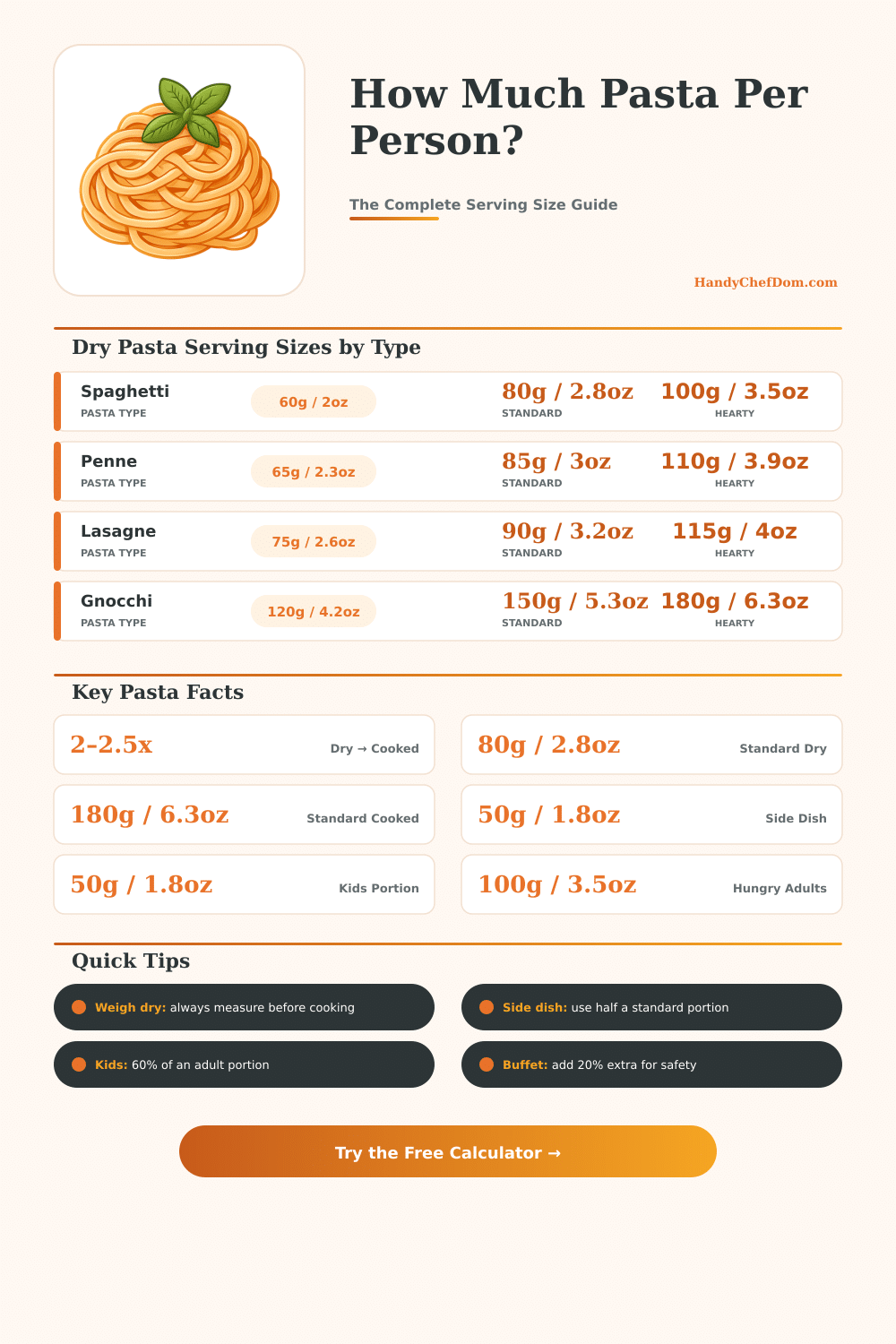
| Pasta Type | Side Dish | Light | Standard | Hearty |
|---|---|---|---|---|
| Spaghetti / Linguine | 50g / 1.8oz | 60g / 2.1oz | 80g / 2.8oz | 100g / 3.5oz |
| Penne / Rigatoni | 55g / 1.9oz | 65g / 2.3oz | 85g / 3.0oz | 110g / 3.9oz |
| Fettuccine / Tagliatelle | 50g / 1.8oz | 65g / 2.3oz | 85g / 3.0oz | 105g / 3.7oz |
| Fusilli / Rotini | 55g / 1.9oz | 65g / 2.3oz | 85g / 3.0oz | 110g / 3.9oz |
| Farfalle (Bow Ties) | 55g / 1.9oz | 65g / 2.3oz | 80g / 2.8oz | 105g / 3.7oz |
| Lasagne Sheets | 60g / 2.1oz | 75g / 2.6oz | 90g / 3.2oz | 115g / 4.1oz |
| Orzo / Small Pasta | 55g / 1.9oz | 65g / 2.3oz | 80g / 2.8oz | 100g / 3.5oz |
| Gnocchi (fresh) | 100g / 3.5oz | 120g / 4.2oz | 150g / 5.3oz | 180g / 6.3oz |
| Pasta Type | Conversion Factor | 80g Dry → Cooked | 100g Dry → Cooked |
|---|---|---|---|
| Spaghetti / Linguine | × 2.2 | ≈ 176g / 6.2oz | ≈ 220g / 7.8oz |
| Penne / Rigatoni | × 2.3 | ≈ 184g / 6.5oz | ≈ 230g / 8.1oz |
| Fettuccine / Tagliatelle | × 2.2 | ≈ 176g / 6.2oz | ≈ 220g / 7.8oz |
| Fusilli / Rotini | × 2.3 | ≈ 184g / 6.5oz | ≈ 230g / 8.1oz |
| Farfalle (Bow Ties) | × 2.1 | ≈ 168g / 5.9oz | ≈ 210g / 7.4oz |
| Lasagne Sheets | × 2.5 | ≈ 200g / 7.1oz | ≈ 250g / 8.8oz |
| Orzo / Small Pasta | × 2.0 | ≈ 160g / 5.6oz | ≈ 200g / 7.1oz |
| Gnocchi (fresh) | × 1.0 | ≈ 150g / 5.3oz | ≈ 150g / 5.3oz |
| Guest Type | Multiplier | Standard (80g) Becomes | Notes |
|---|---|---|---|
| Adults | × 1.0 | 80g / 2.8oz | Standard reference portion |
| Children (under 12) | × 0.6 | 48g / 1.7oz | Rounded to 50g in practice |
| Mixed (50/50) | × 0.8 | 64g / 2.3oz avg | Average per head across group |
| Buffet Style | × 0.75 | 60g / 2.1oz | People eat less at buffets |
Pasta is made from dough of wheat flour mixed with water or eggs and formed into sheets or various shapes that are then cooked by boiling or baking. It was originally made only with durum wheat. There are two main types: fresh and dried.
Fresh pasta cooks more quickly, while dried pasta is what you find everywhere in stores.
How to Make and Cook Pasta
Making homemade pasta is actually not hard. A simple recipe for fresh pasta needs only four ingredients: flour, eggs, olive oil, and salt. Some versions mix all-purpose flour with semolina.
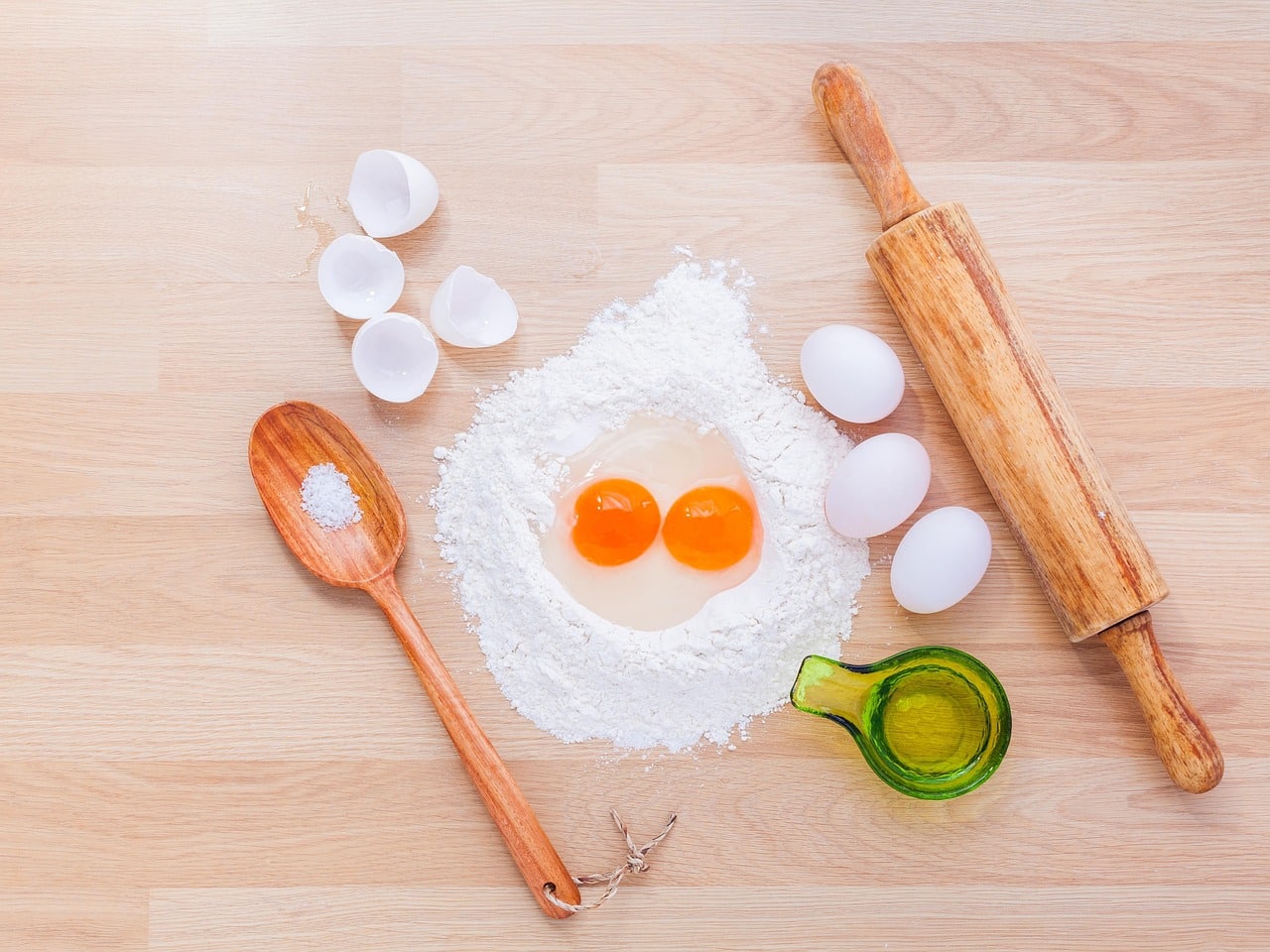
For example, one recipe uses one part semolina, one part durum flour, and two parts 00 flour, with one egg for every 100 grams of flour, a bit of salt, and warm water to adjust the thickness. The dough needs to be kneaded for about five minutes until it comes together well.
In many families pasta making is a labor of love and a group event where children take part. A roller helps make good fresh pasta. Extruded pasta needs different dough, and homemade extruded pasta commonly does not have strong construction so homemade extruded pasta does not texture as well as factory dried.
Dried pasta made with bronze extruders costs more because that gives a rough surface rather than teflon. The drying process itself is a more careful method which helps for good texture after cooking. De Cecco is a good brand for everyday stores.
Among the best Italian pasta brands in the United States come those from Gragnano, Italy such as Garofalo, Liguori, and Di Martino.
To cook pasta well you need only some basics. Use a big pot with a lot of boiling water, not just simmering. Water must be salty as the sea.
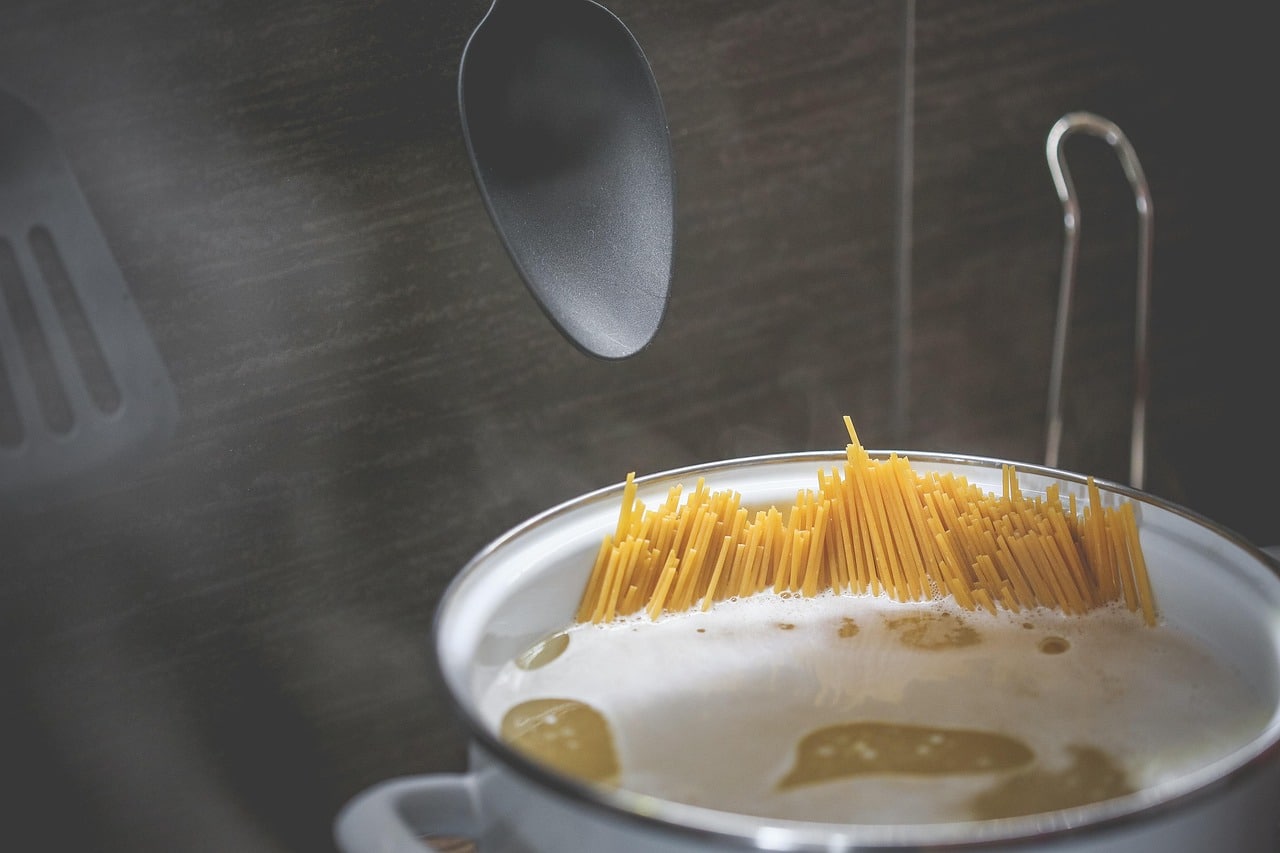
A serving of dried pasta is around two ounces per person which gives roughly a cup after cooking. Depending on the shape it almost doubles.
In Italy pasta is commonly served as a first course before meat, seafood or vegetables in a second course. Italians care about portions so people commonly ask how many grams you want. Shapes like spaghetti and penne always lead dried pasta.
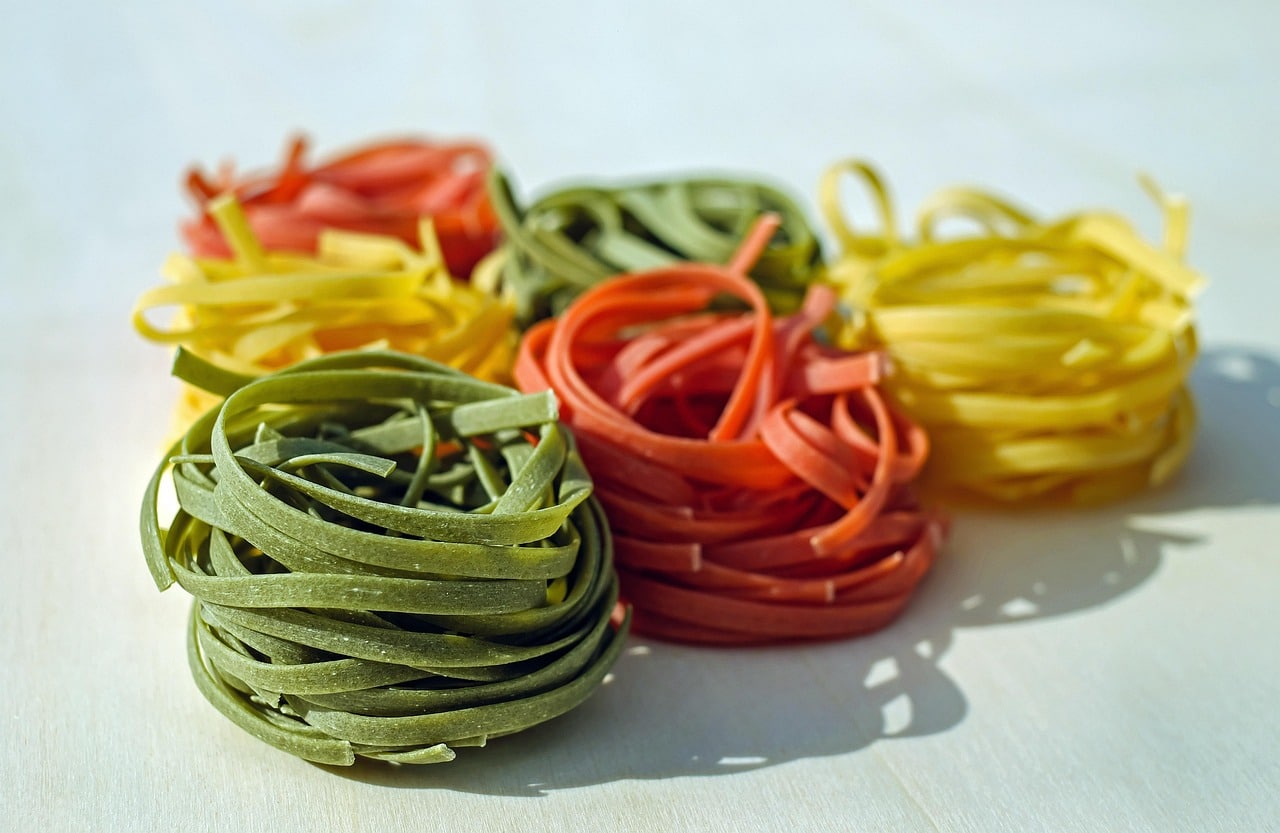
Even something simple as cooking too long or using a wrong pot can make the difference between a wonderful Italian meal and a bad one. Colorful spiral pasta is fun because it is bright and has vegetables insideit.