🥛 Chocolate Milk Sugar Calculator
Estimate grams, cups, and teaspoons of sugar by milk style, serving size, and added syrup for a glass, carton, or family batch.
Use the serving size and serving count to total the batch. Chocolate intensity, syrup add-ins, and dilution all move the final sugar number.
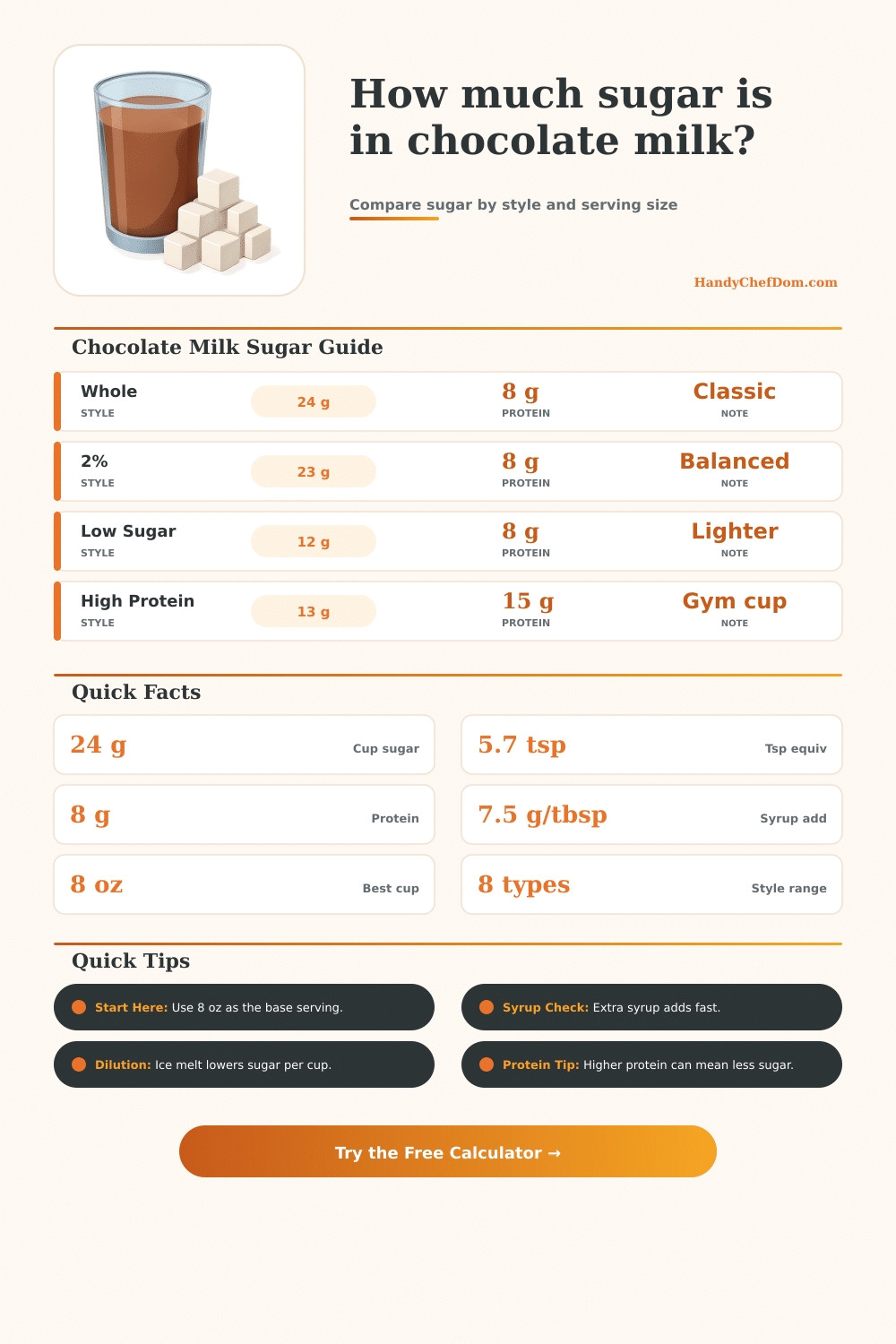
| Style | Sugar | Protein | Note |
|---|---|---|---|
| Whole | 24 g | 8 g | Classic |
| 2% | 23 g | 8 g | Balanced |
| Low sugar | 12 g | 8 g | Lighter |
| High protein | 13 g | 15 g | Gym cup |
| Serving | Oz | ml | Use |
|---|---|---|---|
| Kids | 6 | 177 | Small cup |
| Standard | 8 | 237 | Home pour |
| Big glass | 12 | 355 | Thirsty day |
| Bottle | 16 | 473 | Workout |
| Add in | tbsp | Sugar | Note |
|---|---|---|---|
| Light | 0.5 | 3.8 g | Gentle |
| Classic | 1.0 | 7.5 g | Normal |
| Rich | 1.5 | 12.8 g | Bold |
| Dessert | 2.0 | 20 g | Sweet |
| Batch | Size | Sugar | Note |
|---|---|---|---|
| Glass | 8 oz | 1 cup | Single pour |
| Carton | 250 ml | 1 cup | Lunch size |
| Pitcher | 1 L | 4 cups | Share size |
| Family | 64 oz | 8 cups | Party bowl |
Use the calculator to compare a single glass, carton, or batch, then see how style, syrup, and serving size change the sugar count.
Chocolate milk contains varying amount of sugar depending on the specific type of chocolate milk and the ingredient used to make the chocolate milk. Many types of chocolate milk use different levels of sugar in there recipe due to the relation between the fat content of the milk used to make the chocolate milk and the intensity of the chocolate flavor in the chocolate milk. For example, chocolate milk made with whole milk will typicaly contain more sugar than chocolate milk made with skim milk.
The fat in the whole milk is responsible for carrying the flavor of the chocolate in the milk, so the cook adds more sugar to the milk to balance the flavor of the chocolate in the milk. Omitting fat from the milk in chocolate milk products like skim milk or low-fat chocolate milk products allows for the reduction of the sugar content in those products to provide more realistic flavor to the milk product. Additionally, plant-based milk products, such as chocolate milk made with oat milk, will contain different amounts of sugar then other types of chocolate milk because the plant milk base contains its own sugars.
How Much Sugar Is in Chocolate Milk
The intensity of the chocolate flavor in the chocolate milk will also change the amount of sugar in the chocolate milk product. Chocolate milk products with a light flavor to the chocolate will contain less sugar than chocolate milk products with an intense flavor of chocolate. The more intense flavor of chocolate in chocolate milk products require more sugar to balance the bitterness of the cocoa powder in the chocolate.
Additionally, adding syrup to chocolate milk will increase the total sugar content of the chocolate milk; one tablespoon of syrup will add approximately 8 gram of sugar to the chocolate milk. The size of the chocolate milk servings will also impact the total amount of sugar consumed with each serving. A standard serving of chocolate milk is 8 ounces, but many servings of chocolate milk are larger than this standard serving.
For example, many people may order a 12 ounce or even 64 ounce (pitcher) serving of chocolate milk. Therefore, if the serving size of chocolate milk are increased, the total amount of sugar that people consume with each serving will increase as well. For example, a 12 ounce serving of chocolate milk will contain more sugar than an 8 ounce serving.
If chocolate milk is iced, the melting of the ice will dilute the chocolate milk, which will decrease the amount of sugar in each cup of chocolate milk. Chocolate milk that contains a higher amount of protein will typicaly contain less sugar. For example, high-protein chocolate milk is typically consumed after exercise to aid in muscle recovery.
These products typically contain around 15 grams of protein per cup of liquid. The carbohydrates from the sugar in that high-protein chocolate milk can aid in muscle repair. Additionally, the fat content of chocolate milk will impact the feeling that the body have after consuming chocolate milk.
Products that contain more fat, like whole milk chocolate milk, will provide a feeling of fullness in the body after consumption than chocolate milk products with less fat content, like skim milk chocolate milk. To avoid common mistakes in the consumption of chocolate milk, there is a few step that can be taken. Firstly, avoid pouring chocolate milk directly from its carton; some brands add sugar to chocolate milk to increase the appeal of the product.
Secondly, avoid adding syrup to any batch of homemade chocolate milk; adding syrup to chocolate milk will increase it’s sugar content, so measuring the amount of syrup that you add will ensure that the amount of sugar isnt too much for the body. Finally, using a sugar cap will allow the body to monitor its sugar intake; the sugar cap will allow the body and its owners decide when to consume chocolate milk that contains less sugar than classic chocolate milk products and when to consume chocolate milk in its classic form.