☕ Espresso Ratio Calculator
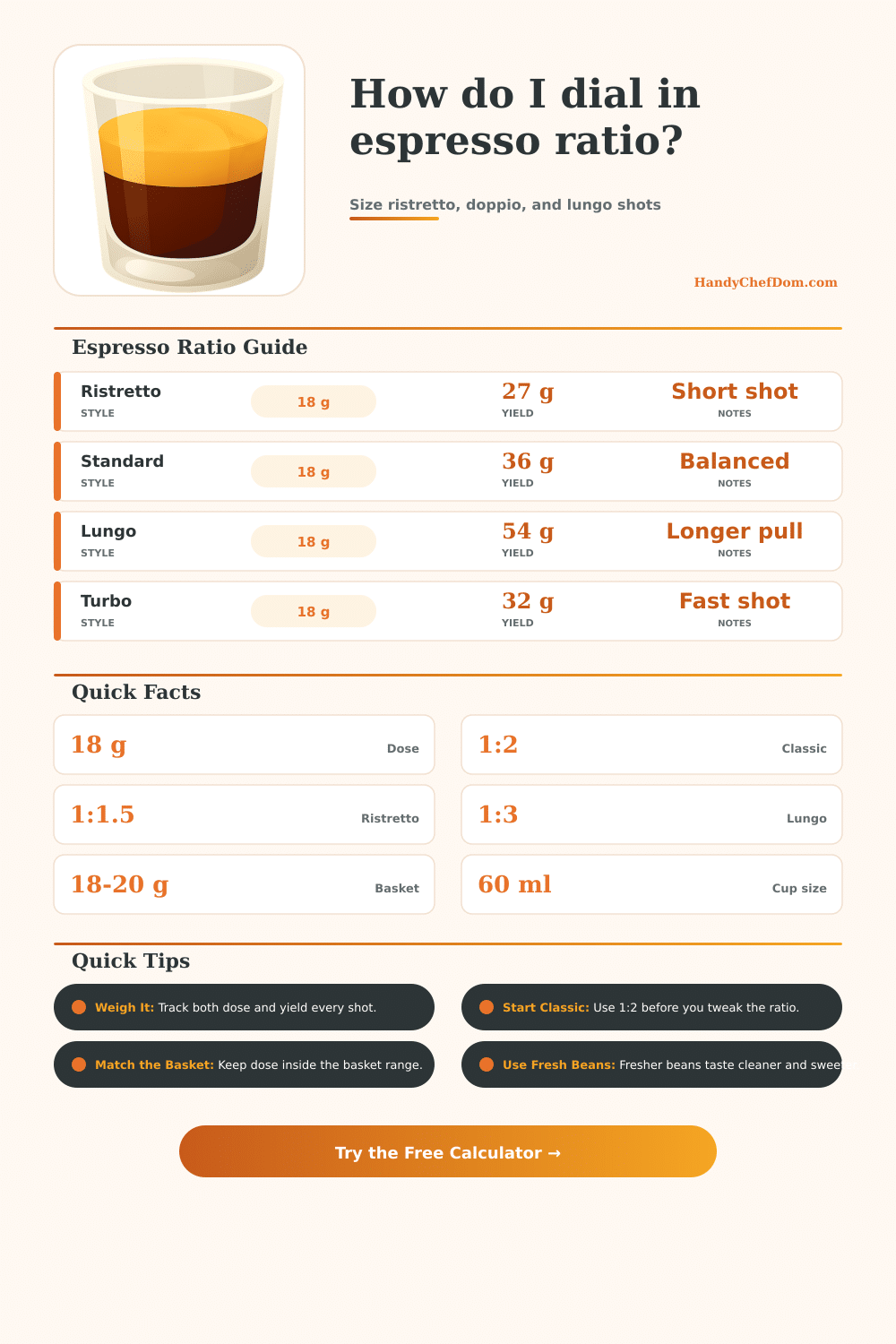
Size ristretto, doppio, and lungo shots by dose, yield, basket, and shot count with a calculator built for real espresso dialing.
We calculate in grams and milliliters internally, then convert the display to ounces and fluid ounces when you flip the unit toggle.
| Style | Ratio | Yield | Note |
|---|---|---|---|
| Ristretto | 1:1-1.5 | 18-27 g | Short shot |
| Standard | 1:1.75-2.25 | 32-41 g | Balanced |
| Lungo | 1:2.5-3.5 | 45-63 g | Long pull |
| Turbo | 1:1.6-2.2 | 29-40 g | Fast shot |
| Basket | Dose | Size | Use |
|---|---|---|---|
| Single | 7-10 g | 30-35 mm | Solo |
| Double | 16-20 g | 54-58 mm | Doppio |
| Triple | 21-24 g | 58-64 mm | High yield |
| Bottomless | 18-22 g | 58 mm | Flow check |
| Shots | Dose | Yield | Serve |
|---|---|---|---|
| 1 | 18 g | 36 g | 1 cup |
| 2 | 36 g | 72 g | Latte base |
| 3 | 54 g | 108 g | Travel cup |
| 4 | 72 g | 144 g | Large serve |
| Measure | Metric | Imperial | Note |
|---|---|---|---|
| 1 g | 1 ml | 0.04 oz | Close enough |
| 18 g | 18 ml | 0.63 oz | Classic dose |
| 36 g | 36 ml | 1.27 oz | Doppio yield |
| 60 g | 60 ml | 2.11 oz | Cup target |
Espresso ratio is the relationship between the weight of the coffee grounds that are dry in the basket and the weight of the liquid espresso that those coffee grounds produce. The espresso ratio is important to espresso makers because the ratio will determine the flavor, the strength, and the body (thick or thin nature) of the espresso. By controlling the espresso ratio, espresso makers can control how many flavor is extracted from the coffee beans.
Thus, by changing the espresso ratio, the taste of the espresso will change. There is different ratios that can be used to make different styles of espresso. A 1:2 espresso ratio, for instance, means that for every part of coffee ground that is placed in the machine, there will be two part of liquid espresso that that coffee produces.
What Is the Espresso Ratio and Why It Matters
If you used eighteen grams of coffee grounds for the espresso shot, then the shot will produce thirty-six grams of liquid espresso if the espresso has a 1:2 ratio. A ratio of 1:1.5 is a shorter ratio than espresso ratios are typically made, and will produce a ristretto (a syrupy espresso). A 1:3 ratio will produce a lungo (a lighter form of espresso).
Using too little liquid for the coffee grounds will produce an espresso that is too intense in flavor. Using too much liquid will produce an espresso shot that has a bitterer flavor due to the excessive extraction of the tannins from the coffee beans. Because of the way espresso machines work, the size of the basket within the machine is a factor that must be considered in determining the dose (weight) of ground coffee that will be used.
A double espresso basket will hold between sixteen and twenty grams of ground coffee. A triple espresso basket will hold between twenty-one and twenty-four grams of ground coffee. If there is too much ground coffee in the basket, the water will not be able to properly pass through the grounds to extract the coffee liquid.
If there is too little ground coffee in the basket, the water will pass through the coffee too quickly for proper extraction of the flavor from the bean. The type of coffee bean that is used in brewing espresso will impact the type of espresso ratio that is used. Coffee beans that are light roast tend to be denser and take longer to extract the flavor.
Thus, a longer ratio should of been used. Dark roast coffee beans tend to extract more quickly, so a shorter ratio is used to prevent the espresso from being too bitter. Using pre-infusion before brewing espresso will aid in the extraction of the coffee flavor.
Preinfusion is a process of wetting the coffee grounds prior to brewing to allow the water to properly reach all of the ground. Another reason to measure espresso by weight rather than volume is that espresso contains crema (foam) on the top of the espresso. Because the crema contains air, measuring espresso by volume may result in inaccuracy in the measurement of the espresso.
By weighing the espresso, however, the barista can measure the weight of the liquid espresso and ensure it’s consistencies with the specifications required to achieve the desired ratio of coffee grounds to espresso. The time it takes to brew an espresso shot also matters. Standard espresso shots take between twenty-five and thirty seconds to brew.
If an espresso shot takes less than twenty-five seconds to brew, the ground coffee may be ground too finely or there may not be enough coffee grounds. If an espresso shot takes more than thirty seconds to brew, the coffee grounds may be ground too finely or there may not enough coffee grounds by weight. Only one variable should be changed at a time in the espresso brewing process to determine the effect that one variable has on the taste of the espresso.
Espresso ratio is the relationship between the weight of the coffee grounds that are dry in the basket and the weight of the liquid espresso that those coffee grounds produce. The espresso ratio is important to espresso makers because the ratio will determine the flavor, the strength, and the body (thick or thin nature) of the espresso. By controlling the espresso ratio, espresso makers can control how many flavor is extracted from the coffee beans.
Thus, by changing the espresso ratio, the taste of the espresso will change. There is different ratios that can be used to make different styles of espresso. A 1:2 espresso ratio, for instance, means that for every part of coffee ground that is placed in the machine, there will be two part of liquid espresso that that coffee produces.
If you used eighteen grams of coffee grounds for the espresso shot, then the shot will produce thirty-six grams of liquid espresso if the espresso has a 1:2 ratio. A ratio of 1:1.5 is a shorter ratio than espresso ratios are typically made, and will produce a ristretto (a syrupy espresso). A 1:3 ratio will produce a lungo (a lighter form of espresso).
Using too little liquid for the coffee grounds will produce an espresso that is too intense in flavor. Using too much liquid will produce an espresso shot that has a bitterer flavor due to the excessive extraction of the tannins from the coffee beans. Because of the way espresso machines work, the size of the basket within the machine is a factor that must be considered in determining the dose (weight) of ground coffee that will be used.
A double espresso basket will hold between sixteen and twenty grams of ground coffee. A triple espresso basket will hold between twenty-one and twenty-four grams of ground coffee. If there is too much ground coffee in the basket, the water will not be able to properly pass through the grounds to extract the coffee liquid.
If there is too little ground coffee in the basket, the water will pass through the coffee too quickly for proper extraction of the flavor from the bean. The type of coffee bean that is used in brewing espresso will impact the type of espresso ratio that is used. Coffee beans that are light roast tend to be denser and take longer to extract the flavor.
Thus, a longer ratio should be used. Dark roast coffee beans tend to extract more quickly, so a shorter ratio is used to prevent the espresso from being too bitter. Using pre-infusion before brewing espresso will aid in the extraction of the coffee flavor.
Preinfusion is a process of wetting the coffee grounds prior to brewing to allow the water to properly reach all of the ground. Another reason to measure espresso by weight rather than volume is that espresso contains crema (foam) on the top of the espresso. Because the crema contains air, measuring espresso by volume may result in inaccuracy in the measurement of the espresso.
By weighing the espresso, however, the barista can measure the weight of the liquid espresso and ensure it is consistencies with the specifications required to achieve the desired ratio of coffee grounds to espresso. The time it takes to brew an espresso shot also matters. Standard espresso shots take between twenty-five and thirty seconds to brew.
If an espresso shot takes less than twenty-five seconds to brew, the ground coffee may be ground too finely or there may not be enough coffee grounds. If an espresso shot takes more than thirty seconds to brew, the coffee grounds may be ground too finely or there may not enough coffee grounds by weight. Only one variable should be changed at a time in the espresso brewing process to determine the effect that one variable has on the taste of the espresso.
Espresso ratio is the relationship between the weight of the coffee grounds that are dry in the basket and the weight of the liquid espresso that those coffee grounds produce. The espresso ratio is important to espresso makers because the ratio will determine the flavor, the strength, and the body (thick or thin nature) of the espresso. By controlling the espresso ratio, espresso makers can control how many flavor is extracted from the coffee beans.
Thus, by changing the espresso ratio, the taste of the espresso will change. There is different ratios that can be used to make different styles of espresso. A 1:2 espresso ratio, for instance, means that for every part of coffee ground that is placed in the machine, there will be two part of liquid espresso that that coffee produces.
If you used eighteen grams of coffee grounds for the espresso shot, then the shot will produce thirty-six grams of liquid espresso if the espresso has a 1:2 ratio. A ratio of 1:1.5 is a shorter ratio than espresso ratios are typically made, and will produce a ristretto (a syrupy espresso). A 1:3 ratio will produce a lungo (a lighter form of espresso).
Using too little liquid for the coffee grounds will produce an espresso that is too intense in flavor. Using too much liquid will produce an espresso shot that has a bitterer flavor due to the excessive extraction of the tannins from the coffee beans. Because of the way espresso machines work, the size of the basket within the machine is a factor that must be considered in determining the dose (weight) of ground coffee that will be used.
A double espresso basket will hold between sixteen and twenty grams of ground coffee. A triple espresso basket will hold between twenty-one and twenty-four grams of ground coffee. If there is too much ground coffee in the basket, the water will not be able to properly pass through the grounds to extract the coffee liquid.
If there is too little ground coffee in the basket, the water will pass through the coffee too quickly for proper extraction of the flavor from the bean. The type of coffee bean that is used in brewing espresso will impact the type of espresso ratio that is used. Coffee beans that are light roast tend to be denser and take longer to extract the flavor.
Thus, a longer ratio should be used. Dark roast coffee beans tend to extract more quickly, so a shorter ratio is used to prevent the espresso from being too bitter. Using pre-infusion before brewing espresso will aid in the extraction of the coffee flavor.
Preinfusion is a process of wetting the coffee grounds prior to brewing to allow the water to properly reach all of the ground. Another reason to measure espresso by weight rather than volume is that espresso contains crema (foam) on the top of the espresso. Because the crema contains air, measuring espresso by volume may result in inaccuracy in the measurement of the espresso.
By weighing the espresso, however, the barista can measure the weight of the liquid espresso and ensure it is consistencies with the specifications required to achieve the desired ratio of coffee grounds to espresso. The time it takes to brew an espresso shot also matters. Standard espresso shots take between twenty-five and thirty seconds to brew.
If an espresso shot takes less than twenty-five seconds to brew, the ground coffee may be ground too finely or there may not be enough coffee grounds. If an espresso shot takes more than thirty seconds to brew, the coffee grounds may be ground too finely or there may not enough coffee grounds by weight. Only one variable should be changed at a time in the espresso brewing process to determine the effect that one variable has on the taste of the espresso.
Espresso ratio is the relationship between the weight of the coffee grounds that are dry in the basket and the weight of the liquid espresso that those coffee grounds produce. The espresso ratio is important to espresso makers because the ratio will determine the flavor, the strength, and the body (thick or thin nature) of the espresso. By controlling the espresso ratio, espresso makers can control how many flavor is extracted from the coffee beans.
Thus, by changing the espresso ratio, the taste of the espresso will change. There is different ratios that can be used to make different styles of espresso. A 1:2 espresso ratio, for instance, means that for every part of coffee ground that is placed in the machine, there will be two part of liquid espresso that that coffee produces.
If you used eighteen grams of coffee grounds for the espresso shot, then the shot will produce thirty-six grams of liquid espresso if the espresso has a 1:2 ratio. A ratio of 1:1.5 is a shorter ratio than espresso ratios are typically made, and will produce a ristretto (a syrupy espresso). A 1:3 ratio will produce a lungo (a lighter form of espresso).
Using too little liquid for the coffee grounds will produce an espresso that is too intense in flavor. Using too much liquid will produce an espresso shot that has a bitterer flavor due to the excessive extraction of the tannins from the coffee beans. Because of the way espresso machines work, the size of the basket within the machine is a factor that must be considered in determining the dose (weight) of ground coffee that will be used.
A double espresso basket will hold between sixteen and twenty grams of ground coffee. A triple espresso basket will hold between twenty-one and twenty-four grams of ground coffee. If there is too much ground coffee in the basket, the water will not be able to properly pass through the grounds to extract the coffee liquid.
If there is too little ground coffee in the basket, the water will pass through the coffee too quickly for proper extraction of the flavor from the bean. The type of coffee bean that is used in brewing espresso will impact the type of espresso ratio that is used. Coffee beans that are light roast tend to be denser and take longer to extract the flavor.
Thus, a longer ratio should be used. Dark roast coffee beans tend to extract more quickly, so a shorter ratio is used to prevent the espresso from being too bitter. Using pre-infusion before brewing espresso will aid in the extraction of the coffee flavor.
Preinfusion is a process of wetting the coffee grounds prior to brewing to allow the water to properly reach all of the ground. Another reason to measure espresso by weight rather than volume is that espresso contains crema (foam) on the top of the espresso. Because the crema contains air, measuring espresso by volume may result in inaccuracy in the measurement of the espresso.
By weighing the espresso, however, the barista can measure the weight of the liquid espresso and ensure it is consistencies with the specifications required to achieve the desired ratio of coffee grounds to espresso. The time it takes to brew an espresso shot also matters. Standard espresso shots take between twenty-five and thirty seconds to brew.
If an espresso shot takes less than twenty-five seconds to brew, the ground coffee may be ground too finely or there may not be enough coffee grounds. If an espresso shot takes more than thirty seconds to brew, the coffee grounds may be ground too finely or there may not enough coffee grounds by weight. Only one variable should be changed at a time in the espresso brewing process to determine the effect that one variable has on the taste of the espresso.
Espresso ratio is the relationship between the weight of the coffee grounds that are dry in the basket and the weight of the liquid espresso that those coffee grounds produce. The espresso ratio is important to espresso makers because the ratio will determine the flavor, the strength, and the body (thick or thin nature) of the espresso. By controlling the espresso ratio, espresso makers can control how many flavor is extracted from the coffee beans.
Thus, by changing the espresso ratio, the taste of the espresso will change. There is different ratios that can be used to make different styles of espresso. A 1:2 espresso ratio, for instance, means that for every part of coffee ground that is placed in the machine, there will be two part of liquid espresso that that coffee produces.
If you used eighteen grams of coffee grounds for the espresso shot, then the shot will produce thirty-six grams of liquid espresso if the espresso has a 1:2 ratio. A ratio of 1:1.5 is a shorter ratio than espresso ratios are typically made, and will produce a ristretto (a syrupy espresso). A 1:3 ratio will produce a lungo (a lighter form of espresso).
Using too little liquid for the coffee grounds will produce an espresso that is too intense in flavor. Using too much liquid will produce an espresso shot that has a bitterer flavor due to the excessive extraction of the tannins from the coffee beans. Because of the way espresso machines work, the size of the basket within the machine is a factor that must be considered in determining the dose (weight) of ground coffee that will be used.
A double espresso basket will hold between sixteen and twenty grams of ground coffee. A triple espresso basket will hold between twenty-one and twenty-four grams of ground coffee. If there is too much ground coffee in the basket, the water will not be able to properly pass through the grounds to extract the coffee liquid.
If there is too little ground coffee in the basket, the water will pass through the coffee too quickly for proper extraction of the flavor from the bean. The type of coffee bean that is used in brewing espresso will impact the type of espresso ratio that is used. Coffee beans that are light roast tend to be denser and take longer to extract the flavor.
Thus, a longer ratio should be used. Dark roast coffee beans tend to extract more quickly, so a shorter ratio is used to prevent the espresso from being too bitter. Using pre-infusion before brewing espresso will aid in the extraction of the coffee flavor.
Preinfusion is a process of wetting the coffee grounds prior to brewing to allow the water to properly reach all of the ground. Another reason to measure espresso by weight rather than volume is that espresso contains crema (foam) on the top of the espresso. Because the crema contains air, measuring espresso by volume may result in inaccuracy in the measurement of the espresso.
By weighing the espresso, however, the barista can measure the weight of the liquid espresso and ensure it is consistencies with the specifications required to achieve the desired ratio of coffee grounds to espresso. The time it takes to brew an espresso shot also matters. Standard espresso shots take between twenty-five and thirty seconds to brew.
If an espresso shot takes less than twenty-five seconds to brew, the ground coffee may be ground too finely or there may not be enough coffee grounds. If an espresso shot takes more than thirty seconds to brew, the coffee grounds may be ground too finely or there may not enough coffee grounds by weight. Only one variable should be changed at a time in the espresso brewing process to determine the effect that one variable has on the taste of the espresso.
Espresso ratio is the relationship between the weight of the coffee grounds that are dry in the basket and the weight of the liquid espresso that those coffee grounds produce. The espresso ratio is important to espresso makers because the ratio will determine the flavor, the strength, and the body (thick or thin nature) of the espresso. By controlling the espresso ratio, espresso makers can control how many flavor is extracted from the coffee beans.
Thus, by changing the espresso ratio, the taste of the espresso will change. There is different ratios that can be used to make different styles of espresso. A 1:2 espresso ratio, for instance, means that for every part of coffee ground that is placed in the machine, there will be two part of liquid espresso that that coffee produces.
If you used eighteen grams of coffee grounds for the espresso shot, then the shot will produce thirty-six grams of liquid espresso if the espresso has a 1:2 ratio. A ratio of 1:1.5 is a shorter ratio than espresso ratios are typically made, and will produce a ristretto (a syrupy espresso). A 1:3 ratio will produce a lungo (a lighter form of espresso).
Using too little liquid for the coffee grounds will produce an espresso that is too intense in flavor. Using too much liquid will produce an espresso shot that has a bitterer flavor due to the excessive extraction of the tannins from the coffee beans. Because of the way espresso machines work, the size of the basket within the machine is a factor that must be considered in determining the dose (weight) of ground coffee that will be used.
A double espresso basket will hold between sixteen and twenty grams of ground coffee. A triple espresso basket will hold between twenty-one and twenty-four grams of ground coffee. If there is too much ground coffee in the basket, the water will not be able to properly pass through the grounds to extract the coffee liquid.
If there is too little ground coffee in the basket, the water will pass through the coffee too quickly for proper extraction of the flavor from the bean. The type of coffee bean that is used in brewing espresso will impact the type of espresso ratio that is used. Coffee beans that are light roast tend to be denser and take longer to extract the flavor.
Thus, a longer ratio should be used. Dark roast coffee beans tend to extract more quickly, so a shorter ratio is used to prevent the espresso from being too bitter. Using pre-infusion before brewing espresso will aid in the extraction of the coffee flavor.
Preinfusion is a process of wetting the coffee grounds prior to brewing to allow the water to properly reach all of the ground. Another reason to measure espresso by weight rather than volume is that espresso contains crema (foam) on the top of the espresso. Because the crema contains air, measuring espresso by volume may result in inaccuracy in the measurement of the espresso.
By weighing the espresso, however, the barista can measure the weight of the liquid espresso and ensure it is consistencies with the specifications required to achieve the desired ratio of coffee grounds to espresso. The time it takes to brew an espresso shot also matters. Standard espresso shots take between twenty-five and thirty seconds to brew.
If an espresso shot takes less than twenty-five seconds to brew, the ground coffee may be ground too finely or there may not be enough coffee grounds. If an espresso shot takes more than thirty seconds to brew, the coffee grounds may be ground too finely or there may not enough coffee grounds by weight. Only one variable should be changed at a time in the espresso brewing process to determine the effect that one variable has on the taste of the espresso.
Espresso ratio is the relationship between the weight of the coffee grounds that are dry in the basket and the weight of the liquid espresso that those coffee grounds produce. The espresso ratio is important to espresso makers because the ratio will determine the flavor, the strength, and the body (thick or thin nature) of the espresso. By controlling the espresso ratio, espresso makers can control how many flavor is extracted from the coffee beans.
Thus, by changing the espresso ratio, the taste of the espresso will change. There is different ratios that can be used to make different styles of espresso. A 1:2 espresso ratio, for instance, means that for every part of coffee ground that is placed in the machine, there will be two part of liquid espresso that that coffee produces.
If you used eighteen grams of coffee grounds for the espresso shot, then the shot will produce thirty-six grams of liquid espresso if the espresso has a 1:2 ratio. A ratio of 1:1.5 is a shorter ratio than espresso ratios are typically made, and will produce a ristretto (a syrupy espresso). A 1:3 ratio will produce a lungo (a lighter form of espresso).
Using too little liquid for the coffee grounds will produce an espresso that is too intense in flavor. Using too much liquid will produce an espresso shot that has a bitterer flavor due to the excessive extraction of the tannins from the coffee beans. Because of the way espresso machines work, the size of the basket within the machine is a factor that must be considered in determining the dose (weight) of ground coffee that will be used.
A double espresso basket will hold between sixteen and twenty grams of ground coffee. A triple espresso basket will hold between twenty-one and twenty-four grams of ground coffee. If there is too much ground coffee in the basket, the water will not be able to properly pass through the grounds to extract the coffee liquid.
If there is too little ground coffee in the basket, the water will pass through the coffee too quickly for proper extraction of the flavor from the bean. The type of coffee bean that is used in brewing espresso will impact the type of espresso ratio that is used. Coffee beans that are light roast tend to be denser and take longer to extract the flavor.
Thus, a longer ratio should be used. Dark roast coffee beans tend to extract more quickly, so a shorter ratio is used to prevent the espresso from being too bitter. Using pre-infusion before brewing espresso will aid in the extraction of the coffee flavor.
Preinfusion is a process of wetting the coffee grounds prior to brewing to allow the water to properly reach all of the ground. Another reason to measure espresso by weight rather than volume is that espresso contains crema (foam) on the top of the espresso. Because the crema contains air, measuring espresso by volume may result in inaccuracy in the measurement of the espresso.
By weighing the espresso, however, the barista can measure the weight of the liquid espresso and ensure it is consistencies with the specifications required to achieve the desired ratio of coffee grounds to espresso. The time it takes to brew an espresso shot also matters. Standard espresso shots take between twenty-five and thirty seconds to brew.
If an espresso shot takes less than twenty-five seconds to brew, the ground coffee may be ground too finely or there may not be enough coffee grounds. If an espresso shot takes more than thirty seconds to brew, the coffee grounds may be ground too finely or there may not enough coffee grounds by weight. Only one variable should be changed at a time in the espresso brewing process to determine the effect that one variable has on the taste of the espresso.
Espresso ratio is the relationship between the weight of the coffee grounds that are dry in the basket and the weight of the liquid espresso that those coffee grounds produce. The espresso ratio is important to espresso makers because the ratio will determine the flavor, the strength, and the body (thick or thin nature) of the espresso. By controlling the espresso ratio, espresso makers can control how many flavor is extracted from the coffee beans.
Thus, by changing the espresso ratio, the taste of the espresso will change. There is different ratios that can be used to make different styles of espresso. A 1:2 espresso ratio, for instance, means that for every part of coffee ground that is placed in the machine, there will be two part of liquid espresso that that coffee produces.
If you used eighteen grams of coffee grounds for the espresso shot, then the shot will produce thirty-six grams of liquid espresso if the espresso has a 1:2 ratio. A ratio of 1:1.5 is a shorter ratio than espresso ratios are typically made, and will produce a ristretto (a syrupy espresso). A 1:3 ratio will produce a lungo (a lighter form of espresso).
Using too little liquid for the coffee grounds will produce an espresso that is too intense in flavor. Using too much liquid will produce an espresso shot that has a bitterer flavor due to the excessive extraction of the tannins from the coffee beans. Because of the way espresso machines work, the size of the basket within the machine is a factor that must be considered in determining the dose (weight) of ground coffee that will be used.
A double espresso basket will hold between sixteen and twenty grams of ground coffee. A triple espresso basket will hold between twenty-one and twenty-four grams of ground coffee. If there is too much ground coffee in the basket, the water will not be able to properly pass through the grounds to extract the coffee liquid.
If there is too little ground coffee in the basket, the water will pass through the coffee too quickly for proper extraction of the flavor from the bean. The type of coffee bean that is used in brewing espresso will impact the type of espresso ratio that is used. Coffee beans that are light roast tend to be denser and take longer to extract the flavor.
Thus, a longer ratio should be used. Dark roast coffee beans tend to extract more quickly, so a shorter ratio is used to prevent the espresso from being too bitter. Using pre-infusion before brewing espresso will aid in the extraction of the coffee flavor.
Preinfusion is a process of wetting the coffee grounds prior to brewing to allow the water to properly reach all of the ground. Another reason to measure espresso by weight rather than volume is that espresso contains crema (foam) on the top of the espresso. Because the crema contains air, measuring espresso by volume may result in inaccuracy in the measurement of the espresso.
By weighing the espresso, however, the barista can measure the weight of the liquid espresso and ensure it is consistencies with the specifications required to achieve the desired ratio of coffee grounds to espresso. The time it takes to brew an espresso shot also matters. Standard espresso shots take between twenty-five and thirty seconds to brew.
If an espresso shot takes less than twenty-five seconds to brew, the ground coffee may be ground too finely or there may not be enough coffee grounds. If an espresso shot takes more than thirty seconds to brew, the coffee grounds may be ground too finely or there may not enough coffee grounds by weight. Only one variable should be changed at a time in the espresso brewing process to determine the effect that one variable has on the taste of the espresso.
Espresso ratio is the relationship between the weight of the coffee grounds that are dry in the basket and the weight of the liquid espresso that those coffee grounds produce. The espresso ratio is important to espresso makers because the ratio will determine the flavor, the strength, and the body (thick or thin nature) of the espresso. By controlling the espresso ratio, espresso makers can control how many flavor is extracted from the coffee beans.
Thus, by changing the espresso ratio, the taste of the espresso will change. There is different ratios that can be used to make different styles of espresso. A 1:2 espresso ratio, for instance, means that for every part of coffee ground that is placed in the machine, there will be two part of liquid espresso that that coffee produces.
If you used eighteen grams of coffee grounds for the espresso shot, then the shot will produce thirty-six grams of liquid espresso if the espresso has a 1:2 ratio. A ratio of 1:1.5 is a shorter ratio than espresso ratios are typically made, and will produce a ristretto (a syrupy espresso). A 1:3 ratio will produce a lungo (a lighter form of espresso).
Using too little liquid for the coffee grounds will produce an espresso that is too intense in flavor. Using too much liquid will produce an espresso shot that has a bitterer flavor due to the excessive extraction of the tannins from the coffee beans. Because of the way espresso machines work, the size of the basket within the machine is a factor that must be considered in determining the dose (weight) of ground coffee that will be used.
A double espresso basket will hold between sixteen and twenty grams of ground coffee. A triple espresso basket will hold between twenty-one and twenty-four grams of ground coffee. If there is too much ground coffee in the basket, the water will not be able to properly pass through the grounds to extract the coffee liquid.
If there is too little ground coffee in the basket, the water will pass through the coffee too quickly for proper extraction of the flavor from the bean. The type of coffee bean that is used in brewing espresso will impact the type of espresso ratio that is used. Coffee beans that are light roast tend to be denser and take longer to extract the flavor.
Thus, a longer ratio should be used. Dark roast coffee beans tend to extract more quickly, so a shorter ratio is used to prevent the espresso from being too bitter. Using pre-infusion before brewing espresso will aid in the extraction of the coffee flavor.
Preinfusion is a process of wetting the coffee grounds prior to brewing to allow the water to properly reach all of the ground. Another reason to measure espresso by weight rather than volume is that espresso contains crema (foam) on the top of the espresso. Because the crema contains air, measuring espresso by volume may result in inaccuracy in the measurement of the espresso.
By weighing the espresso, however, the barista can measure the weight of the liquid espresso and ensure it is consistencies with the specifications required to achieve the desired ratio of coffee grounds to espresso. The time it takes to brew an espresso shot also matters. Standard espresso shots take between twenty-five and thirty seconds to brew.
If an espresso shot takes less than twenty-five seconds to brew, the ground coffee may be ground too finely or there may not be enough coffee grounds. If an espresso shot takes more than thirty seconds to brew, the coffee grounds may be ground too finely or there may not enough coffee grounds by weight. Only one variable should be changed at a time in the espresso brewing process to determine the effect that one variable has on the taste of the espresso.
Espresso ratio is the relationship between the weight of the coffee grounds that are dry in the basket and the weight of the liquid espresso that those coffee grounds produce. The espresso ratio is important to espresso makers because the ratio will determine the flavor, the strength, and the body (thick or thin nature) of the espresso. By controlling the espresso ratio, espresso makers can control how many flavor is extracted from the coffee beans.
Thus, by changing the espresso ratio, the taste of the espresso will change. There is different ratios that can be used to make different styles of espresso. A 1:2 espresso ratio, for instance, means that for every part of coffee ground that is placed in the machine, there will be two part of liquid espresso that that coffee produces.
If you used eighteen grams of coffee grounds for the espresso shot, then the shot will produce thirty-six grams of liquid espresso if the espresso has a 1:2 ratio. A ratio of 1:1.5 is a shorter ratio than espresso ratios are typically made, and will produce a ristretto (a syrupy espresso). A 1:3 ratio will produce a lungo (a lighter form of espresso).
Using too little liquid for the coffee grounds will produce an espresso that is too intense in flavor. Using too much liquid will produce an espresso shot that has a bitterer flavor due to the excessive extraction of the tannins from the coffee beans. Because of the way espresso machines work, the size of the basket within the machine is a factor that must be considered in determining the dose (weight) of ground coffee that will be used.
A double espresso basket will hold between sixteen and twenty grams of ground coffee. A triple espresso basket will hold between twenty-one and twenty-four grams of ground coffee. If there is too much ground coffee in the basket, the water will not be able to properly pass through the grounds to extract the coffee liquid.
If there is too little ground coffee in the basket, the water will pass through the coffee too quickly for proper extraction of the flavor from the bean. The type of coffee bean that is used in brewing espresso will impact the type of espresso ratio that is used. Coffee beans that are light roast tend to be denser and take longer to extract the flavor.
Thus, a longer ratio should be used. Dark roast coffee beans tend to extract more quickly, so a shorter ratio is used to prevent the espresso from being too bitter. Using pre-infusion before brewing espresso will aid in the extraction of the coffee flavor.
Preinfusion is a process of wetting the coffee grounds prior to brewing to allow the water to properly reach all of the ground. Another reason to measure espresso by weight rather than volume is that espresso contains crema (foam) on the top of the espresso. Because the crema contains air, measuring espresso by volume may result in inaccuracy in the measurement of the espresso.
By weighing the espresso, however, the barista can measure the weight of the liquid espresso and ensure it is consistencies with the specifications required to achieve the desired ratio of coffee grounds to espresso. The time it takes to brew an espresso shot also matters. Standard espresso shots take between twenty-five and thirty seconds to brew.
If an espresso shot takes less than twenty-five seconds to brew, the ground coffee may be ground too finely or there may not be enough coffee grounds. If an espresso shot takes more than thirty seconds to brew, the coffee grounds may be ground too finely or there may not enough coffee grounds by weight. Only one variable should be changed at a time in the espresso brewing process to determine the effect that one variable has on the taste of the espresso.
Espresso ratio is the relationship between the weight of the coffee grounds that are dry in the basket and the weight of the liquid espresso that those coffee grounds produce. The espresso ratio is important to espresso makers because the ratio will determine the flavor, the strength, and the body (thick or thin nature) of the espresso. By controlling the espresso ratio, espresso makers can control how many flavor is extracted from the coffee beans.
Thus, by changing the espresso ratio, the taste of the espresso will change. There is different ratios that can be used to make different styles of espresso. A 1:2 espresso ratio, for instance, means that for every part of coffee ground that is placed in the machine, there will be two part of liquid espresso that that coffee produces.
If you used eighteen grams of coffee grounds for the espresso shot, then the shot will produce thirty-six grams of liquid espresso if the espresso has a 1:2 ratio. A ratio of 1:1.5 is a shorter ratio than espresso ratios are typically made, and will produce a ristretto (a syrupy espresso). A 1:3 ratio will produce a lungo (a lighter form of espresso).
Using too little liquid for the coffee grounds will produce an espresso that is too intense in flavor. Using too much liquid will produce an espresso shot that has a bitterer flavor due to the excessive extraction of the tannins from the coffee beans. Because of the way espresso machines work, the size of the basket within the machine is a factor that must be considered in determining the dose (weight) of ground coffee that will be used.
A double espresso basket will hold between sixteen and twenty grams of ground coffee. A triple espresso basket will hold between twenty-one and twenty-four grams of ground coffee. If there is too much ground coffee in the basket, the water will not be able to properly pass through the grounds to extract the coffee liquid.
If there is too little ground coffee in the basket, the water will pass through the coffee too quickly for proper extraction of the flavor from the bean. The type of coffee bean that is used in brewing espresso will impact the type of espresso ratio that is used. Coffee beans that are light roast tend to be denser and take longer to extract the flavor.
Thus, a longer ratio should be used. Dark roast coffee beans tend to extract more quickly, so a shorter ratio is used to prevent the espresso from being too bitter. Using pre-infusion before brewing espresso will aid in the extraction of the coffee flavor.
Preinfusion is a process of wetting the coffee grounds prior to brewing to allow the water to properly reach all of the ground. Another reason to measure espresso by weight rather than volume is that espresso contains crema (foam) on the top of the espresso. Because the crema contains air, measuring espresso by volume may result in inaccuracy in the measurement of the espresso.
By weighing the espresso, however, the barista can measure the weight of the liquid espresso and ensure it is consistencies with the specifications required to achieve the desired ratio of coffee grounds to espresso. The time it takes to brew an espresso shot also matters. Standard espresso shots take between twenty-five and thirty seconds to brew.
If an espresso shot takes less than twenty-five seconds to brew, the ground coffee may be ground too finely or there may not be enough coffee grounds. If an espresso shot takes more than thirty seconds to brew, the coffee grounds may be ground too finely or there may not enough coffee grounds by weight. Only one variable should be changed at a time in the espresso brewing process to determine the effect that one variable has on the taste of the espresso.
Espresso ratio is the relationship between the weight of the coffee grounds that are dry in the basket and the weight of the liquid espresso that those coffee grounds produce. The espresso ratio is important to espresso makers because the ratio will determine the flavor, the strength, and the body (thick or thin nature) of the espresso. By controlling the espresso ratio, espresso makers can control how many flavor is extracted from the coffee beans.
Thus, by changing the espresso ratio, the taste of the espresso will change. There is different ratios that can be used to make different styles of espresso. A 1:2 espresso ratio, for instance, means that for every part of coffee ground that is placed in the machine, there will be two part of liquid espresso that that coffee produces.
If you used eighteen grams of coffee grounds for the espresso shot, then the shot will produce thirty-six grams of liquid espresso if the espresso has a 1:2 ratio. A ratio of 1:1.5 is a shorter ratio than espresso ratios are typically made, and will produce a ristretto (a syrupy espresso). A 1:3 ratio will produce a lungo (a lighter form of espresso).
Using too little liquid for the coffee grounds will produce an espresso that is too intense in flavor. Using too much liquid will produce an espresso shot that has a bitterer flavor due to the excessive extraction of the tannins from the coffee beans. Because of the way espresso machines work, the size of the basket within the machine is a factor that must be considered in determining the dose (weight) of ground coffee that will be used.
A double espresso basket will hold between sixteen and twenty grams of ground coffee. A triple espresso basket will hold between twenty-one and twenty-four grams of ground coffee. If there is too much ground coffee in the basket, the water will not be able to properly pass through the grounds to extract the coffee liquid.
If there is too little ground coffee in the basket, the water will pass through the coffee too quickly for proper extraction of the flavor from the bean. The type of coffee bean that is used in brewing espresso will impact the type of espresso ratio that is used. Coffee beans that are light roast tend to be denser and take longer to extract the flavor.
Thus, a longer ratio should be used. Dark roast coffee beans tend to extract more quickly, so a shorter ratio is used to prevent the espresso from being too bitter. Using pre-infusion before brewing espresso will aid in the extraction of the coffee flavor.
Preinfusion is a process of wetting the coffee grounds prior to brewing to allow the water to properly reach all of the ground. Another reason to measure espresso by weight rather than volume is that espresso contains crema (foam) on the top of the espresso. Because the crema contains air, measuring espresso by volume may result in inaccuracy in the measurement of the espresso.
By weighing the espresso, however, the barista can measure the weight of the liquid espresso and ensure it is consistencies with the specifications required to achieve the desired ratio of coffee grounds to espresso. The time it takes to brew an espresso shot also matters. Standard espresso shots take between twenty-five and thirty seconds to brew.
If an espresso shot takes less than twenty-five seconds to brew, the ground coffee may be ground too finely or there may not be enough coffee grounds. If an espresso shot takes more than thirty seconds to brew, the coffee grounds may be ground too finely or there may not enough coffee grounds by weight. Only one variable should be changed at a time in the espresso brewing process to determine the effect that one variable has on the taste of the espresso.
Espresso ratio is the relationship between the weight of the coffee grounds that are dry in the basket and the weight of the liquid espresso that those coffee grounds produce. The espresso ratio is important to espresso makers because the ratio will determine the flavor, the strength, and the body (thick or thin nature) of the espresso. By controlling the espresso ratio, espresso makers can control how many flavor is extracted from the coffee beans.
Thus, by changing the espresso ratio, the taste of the espresso will change. There is different ratios that can be used to make different styles of espresso. A 1:2 espresso ratio, for instance, means that for every part of coffee ground that is placed in the machine, there will be two part of liquid espresso that that coffee produces.
If you used eighteen grams of coffee grounds for the espresso shot, then the shot will produce thirty-six grams of liquid espresso if the espresso has a 1:2 ratio. A ratio of 1:1.5 is a shorter ratio than espresso ratios are typically made, and will produce a ristretto (a syrupy espresso). A 1:3 ratio will produce a lungo (a lighter form of espresso).
Using too little liquid for the coffee grounds will produce an espresso that is too intense in flavor. Using too much liquid will produce an espresso shot that has a bitterer flavor due to the excessive extraction of the tannins from the coffee beans. Because of the way espresso machines work, the size of the basket within the machine is a factor that must be considered in determining the dose (weight) of ground coffee that will be used.
A double espresso basket will hold between sixteen and twenty grams of ground coffee. A triple espresso basket will hold between twenty-one and twenty-four grams of ground coffee. If there is too much ground coffee in the basket, the water will not be able to properly pass through the grounds to extract the coffee liquid.
If there is too little ground coffee in the basket, the water will pass through the coffee too quickly for proper extraction of the flavor from the bean. The type of coffee bean that is used in brewing espresso will impact the type of espresso ratio that is used. Coffee beans that are light roast tend to be denser and take longer to extract the flavor.
Thus, a longer ratio should be used. Dark roast coffee beans tend to extract more quickly, so a shorter ratio is used to prevent the espresso from being too bitter. Using pre-infusion before brewing espresso will aid in the extraction of the coffee flavor.
Preinfusion is a process of wetting the coffee grounds prior to brewing to allow the water to properly reach all of the ground. Another reason to measure espresso by weight rather than volume is that espresso contains crema (foam) on the top of the espresso. Because the crema contains air, measuring espresso by volume may result in inaccuracy in the measurement of the espresso.
By weighing the espresso, however, the barista can measure the weight of the liquid espresso and ensure it is consistencies with the specifications required to achieve the desired ratio of coffee grounds to espresso. The time it takes to brew an espresso shot also matters. Standard espresso shots take between twenty-five and thirty seconds to brew.
If an espresso shot takes less than twenty-five seconds to brew, the ground coffee may be ground too finely or there may not be enough coffee grounds. If an espresso shot takes more than thirty seconds to brew, the coffee grounds may be ground too finely or there may not enough coffee grounds by weight. Only one variable should be changed at a time in the espresso brewing process to determine the effect that one variable has on the taste of the espresso.
Espresso ratio is the relationship between the weight of the coffee grounds that are dry in the basket and the weight of the liquid espresso that those coffee grounds produce. The espresso ratio is important to espresso makers because the ratio will determine the flavor, the strength, and the body (thick or thin nature) of the espresso. By controlling the espresso ratio, espresso makers can control how many flavor is extracted from the coffee beans.
Thus, by changing the espresso ratio, the taste of the espresso will change. There is different ratios that can be used to make different styles of espresso. A 1:2 espresso ratio, for instance, means that for every part of coffee ground that is placed in the machine, there will be two part of liquid espresso that that coffee produces.
If you used eighteen grams of coffee grounds for the espresso shot, then the shot will produce thirty-six grams of liquid espresso if the espresso has a 1:2 ratio. A ratio of 1:1.5 is a shorter ratio than espresso ratios are typically made, and will produce a ristretto (a syrupy espresso). A 1:3 ratio will produce a lungo (a lighter form of espresso).
Using too little liquid for the coffee grounds will produce an espresso that is too intense in flavor. Using too much liquid will produce an espresso shot that has a bitterer flavor due to the excessive extraction of the tannins from the coffee beans. Because of the way espresso machines work, the size of the basket within the machine is a factor that must be considered in determining the dose (weight) of ground coffee that will be used.
A double espresso basket will hold between sixteen and twenty grams of ground coffee. A triple espresso basket will hold between twenty-one and twenty-four grams of ground coffee. If there is too much ground coffee in the basket, the water will not be able to properly pass through the grounds to extract the coffee liquid.
If there is too little ground coffee in the basket, the water will pass through the coffee too quickly for proper extraction of the flavor from the bean. The type of coffee bean that is used in brewing espresso will impact the type of espresso ratio that is used. Coffee beans that are light roast tend to be denser and take longer to extract the flavor.
Thus, a longer ratio should be used. Dark roast coffee beans tend to extract more quickly, so a shorter ratio is used to prevent the espresso from being too bitter. Using pre-infusion before brewing espresso will aid in the extraction of the coffee flavor.
Preinfusion is a process of wetting the coffee grounds prior to brewing to allow the water to properly reach all of the ground. Another reason to measure espresso by weight rather than volume is that espresso contains crema (foam) on the top of the espresso. Because the crema contains air, measuring espresso by volume may result in inaccuracy in the measurement of the espresso.
By weighing the espresso, however, the barista can measure the weight of the liquid espresso and ensure it is consistencies with the specifications required to achieve the desired ratio of coffee grounds to espresso. The time it takes to brew an espresso shot also matters. Standard espresso shots take between twenty-five and thirty seconds to brew.
If an espresso shot takes less than twenty-five seconds to brew, the ground coffee may be ground too finely or there may not be enough coffee grounds. If an espresso shot takes more than thirty seconds to brew, the coffee grounds may be ground too finely or there may not enough coffee grounds by weight. Only one variable should be changed at a time in the espresso brewing process to determine the effect that one variable has on the taste of the espresso.
Espresso ratio is the relationship between the weight of the coffee grounds that are dry in the basket and the weight of the liquid espresso that those coffee grounds produce. The espresso ratio is important to espresso makers because the ratio will determine the flavor, the strength, and the body (thick or thin nature) of the espresso. By controlling the espresso ratio, espresso makers can control how many flavor is extracted from the coffee beans.
Thus, by changing the espresso ratio, the taste of the espresso will change. There is different ratios that can be used to make different styles of espresso. A 1:2 espresso ratio, for instance, means that for every part of coffee ground that is placed in the machine, there will be two part of liquid espresso that that coffee produces.
If you used eighteen grams of coffee grounds for the espresso shot, then the shot will produce thirty-six grams of liquid espresso if the espresso has a 1:2 ratio. A ratio of 1:1.5 is a shorter ratio than espresso ratios are typically made, and will produce a ristretto (a syrupy espresso). A 1:3 ratio will produce a lungo (a lighter form of espresso).
Using too little liquid for the coffee grounds will produce an espresso that is too intense in flavor. Using too much liquid will produce an espresso shot that has a bitterer flavor due to the excessive extraction of the tannins from the coffee beans. Because of the way espresso machines work, the size of the basket within the machine is a factor that must be considered in determining the dose (weight) of ground coffee that will be used.
A double espresso basket will hold between sixteen and twenty grams of ground coffee. A triple espresso basket will hold between twenty-one and twenty-four grams of ground coffee. If there is too much ground coffee in the basket, the water will not be able to properly pass through the grounds to extract the coffee liquid.
If there is too little ground coffee in the basket, the water will pass through the coffee too quickly for proper extraction of the flavor from the bean. The type of coffee bean that is used in brewing espresso will impact the type of espresso ratio that is used. Coffee beans that are light roast tend to be denser and take longer to extract the flavor.
Thus, a longer ratio should be used. Dark roast coffee beans tend to extract more quickly, so a shorter ratio is used to prevent the espresso from being too bitter. Using pre-infusion before brewing espresso will aid in the extraction of the coffee flavor.
Preinfusion is a process of wetting the coffee grounds prior to brewing to allow the water to properly reach all of the ground. Another reason to measure espresso by weight rather than volume is that espresso contains crema (foam) on the top of the espresso. Because the crema contains air, measuring espresso by volume may result in inaccuracy in the measurement of the espresso.
By weighing the espresso, however, the barista can measure the weight of the liquid espresso and ensure it is consistencies with the specifications required to achieve the desired ratio of coffee grounds to espresso. The time it takes to brew an espresso shot also matters. Standard espresso shots take between twenty-five and thirty seconds to brew.
If an espresso shot takes less than twenty-five seconds to brew, the ground coffee may be ground too finely or there may not be enough coffee grounds. If an espresso shot takes more than thirty seconds to brew, the coffee grounds may be ground too finely or there may not enough coffee grounds by weight. Only one variable should be changed at a time in the espresso brewing process to determine the effect that one variable has on the taste of the espresso.
Espresso ratio is the relationship between the weight of the coffee grounds that are dry in the basket and the weight of the liquid espresso that those coffee grounds produce. The espresso ratio is important to espresso makers because the ratio will determine the flavor, the strength, and the body (thick or thin nature) of the espresso. By controlling the espresso ratio, espresso makers can control how many flavor is extracted from the coffee beans.
Thus, by changing the espresso ratio, the taste of the espresso will change. There is different ratios that can be used to make different styles of espresso. A 1:2 espresso ratio, for instance, means that for every part of coffee ground that is placed in the machine, there will be two part of liquid espresso that that coffee produces.
If you used eighteen grams of coffee grounds for the espresso shot, then the shot will produce thirty-six grams of liquid espresso if the espresso has a 1:2 ratio. A ratio of 1:1.5 is a shorter ratio than espresso ratios are typically made, and will produce a ristretto (a syrupy espresso). A 1:3 ratio will produce a lungo (a lighter form of espresso).
Using too little liquid for the coffee grounds will produce an espresso that is too intense in flavor. Using too much liquid will produce an espresso shot that has a bitterer flavor due to the excessive extraction of the tannins from the coffee beans. Because of the way espresso machines work, the size of the basket within the machine is a factor that must be considered in determining the dose (weight) of ground coffee that will be used.
A double espresso basket will hold between sixteen and twenty grams of ground coffee. A triple espresso basket will hold between twenty-one and twenty-four grams of ground coffee. If there is too much ground coffee in the basket, the water will not be able to properly pass through the grounds to extract the coffee liquid.
If there is too little ground coffee in the basket, the water will pass through the coffee too quickly for proper extraction of the flavor from the bean. The type of coffee bean that is used in brewing espresso will impact the type of espresso ratio that is used. Coffee beans that are light roast tend to be denser and take longer to extract the flavor.
Thus, a longer ratio should be used. Dark roast coffee beans tend to extract more quickly, so a shorter ratio is used to prevent the espresso from being too bitter. Using pre-infusion before brewing espresso will aid in the extraction of the coffee flavor.
Preinfusion is a process of wetting the coffee grounds prior to brewing to allow the water to properly reach all of the ground. Another reason to measure espresso by weight rather than volume is that espresso contains crema (foam) on the top of the espresso. Because the crema contains air, measuring espresso by volume may result in inaccuracy in the measurement of the espresso.
By weighing the espresso, however, the barista can measure the weight of the liquid espresso and ensure it is consistencies with the specifications required to achieve the desired ratio of coffee grounds to espresso. The time it takes to brew an espresso shot also matters. Standard espresso shots take between twenty-five and thirty seconds to brew.
If an espresso shot takes less than twenty-five seconds to brew, the ground coffee may be ground too finely or there may not be enough coffee grounds. If an espresso shot takes more than thirty seconds to brew, the coffee grounds may be ground too finely or there may not enough coffee grounds by weight. Only one variable should be changed at a time in the espresso brewing process to determine the effect that one variable has on the taste of the espresso.
Espresso ratio is the relationship between the weight of the coffee grounds that are dry in the basket and the weight of the liquid espresso that those coffee grounds produce. The espresso ratio is important to espresso makers because the ratio will determine the flavor, the strength, and the body (thick or thin nature) of the espresso. By controlling the espresso ratio, espresso makers can control how many flavor is extracted from the coffee beans.
Thus, by changing the espresso ratio, the taste of the espresso will change. There is different ratios that can be used to make different styles of espresso. A 1:2 espresso ratio, for instance, means that for every part of coffee ground that is placed in the machine, there will be two part of liquid espresso that that coffee produces.
If you used eighteen grams of coffee grounds for the espresso shot, then the shot will produce thirty-six grams of liquid espresso if the espresso has a 1:2 ratio. A ratio of 1:1.5 is a shorter ratio than espresso ratios are typically made, and will produce a ristretto (a syrupy espresso). A 1:3 ratio will produce a lungo (a lighter form of espresso).
Using too little liquid for the coffee grounds will produce an espresso that is too intense in flavor. Using too much liquid will produce an espresso shot that has a bitterer flavor due to the excessive extraction of the tannins from the coffee beans. Because of the way espresso machines work, the size of the basket within the machine is a factor that must be considered in determining the dose (weight) of ground coffee that will be used.
A double espresso basket will hold between sixteen and twenty grams of ground coffee. A triple espresso basket will hold between twenty-one and twenty-four grams of ground coffee. If there is too much ground coffee in the basket, the water will not be able to properly pass through the grounds to extract the coffee liquid.
If there is too little ground coffee in the basket, the water will pass through the coffee too quickly for proper extraction of the flavor from the bean. The type of coffee bean that is used in brewing espresso will impact the type of espresso ratio that is used. Coffee beans that are light roast tend to be denser and take longer to extract the flavor.
Thus, a longer ratio should be used. Dark roast coffee beans tend to extract more quickly, so a shorter ratio is used to prevent the espresso from being too bitter. Using pre-infusion before brewing espresso will aid in the extraction of the coffee flavor.
Preinfusion is a process of wetting the coffee grounds prior to brewing to allow the water to properly reach all of the ground. Another reason to measure espresso by weight rather than volume is that espresso contains crema (foam) on the top of the espresso. Because the crema contains air, measuring espresso by volume may result in inaccuracy in the measurement of the espresso.
By weighing the espresso, however, the barista can measure the weight of the liquid espresso and ensure it is consistencies with the specifications required to achieve the desired ratio of coffee grounds to espresso. The time it takes to brew an espresso shot also matters. Standard espresso shots take between twenty-five and thirty seconds to brew.
If an espresso shot takes less than twenty-five seconds to brew, the ground coffee may be ground too finely or there may not be enough coffee grounds. If an espresso shot takes more than thirty seconds to brew, the coffee grounds may be ground too finely or there may not enough coffee grounds by weight. Only one variable should be changed at a time in the espresso brewing process to determine the effect that one variable has on the taste of the espresso.
Espresso ratio is the relationship between the weight of the coffee grounds that are dry in the basket and the weight of the liquid espresso that those coffee grounds produce. The espresso ratio is important to espresso makers because the ratio will determine the flavor, the strength, and the body (thick or thin nature) of the espresso. By controlling the espresso ratio, espresso makers can control how many flavor is extracted from the coffee beans.
Thus, by changing the espresso ratio, the taste of the espresso will change. There is different ratios that can be used to make different styles of espresso. A 1:2 espresso ratio, for instance, means that for every part of coffee ground that is placed in the machine, there will be two part of liquid espresso that that coffee produces.
If you used eighteen grams of coffee grounds for the espresso shot, then the shot will produce thirty-six grams of liquid espresso if the espresso has a 1:2 ratio. A ratio of 1:1.5 is a shorter ratio than espresso ratios are typically made, and will produce a ristretto (a syrupy espresso). A 1:3 ratio will produce a lungo (a lighter form of espresso).
Using too little liquid for the coffee grounds will produce an espresso that is too intense in flavor. Using too much liquid will produce an espresso shot that has a bitterer flavor due to the excessive extraction of the tannins from the coffee beans. Because of the way espresso machines work, the size of the basket within the machine is a factor that must be considered in determining the dose (weight) of ground coffee that will be used.
A double espresso basket will hold between sixteen and twenty grams of ground coffee. A triple espresso basket will hold between twenty-one and twenty-four grams of ground coffee. If there is too much ground coffee in the basket, the water will not be able to properly pass through the grounds to extract the coffee liquid.
If there is too little ground coffee in the basket, the water will pass through the coffee too quickly for proper extraction of the flavor from the bean. The type of coffee bean that is used in brewing espresso will impact the type of espresso ratio that is used. Coffee beans that are light roast tend to be denser and take longer to extract the flavor.
Thus, a longer ratio should be used. Dark roast coffee beans tend to extract more quickly, so a shorter ratio is used to prevent the espresso from being too bitter. Using pre-infusion before brewing espresso will aid in the extraction of the coffee flavor.
Preinfusion is a process of wetting the coffee grounds prior to brewing to allow the water to properly reach all of the ground. Another reason to measure espresso by weight rather than volume is that espresso contains crema (foam) on the top of the espresso. Because the crema contains air, measuring espresso by volume may result in inaccuracy in the measurement of the espresso.
By weighing the espresso, however, the barista can measure the weight of the liquid espresso and ensure it is consistencies with the specifications required to achieve the desired ratio of coffee grounds to espresso. The time it takes to brew an espresso shot also matters. Standard espresso shots take between twenty-five and thirty seconds to brew.
If an espresso shot takes less than twenty-five seconds to brew, the ground coffee may be ground too finely or there may not be enough coffee grounds. If an espresso shot takes more than thirty seconds to brew, the coffee grounds may be ground too finely or there may not enough coffee grounds by weight. Only one variable should be changed at a time in the espresso brewing process to determine the effect that one variable has on the taste of the espresso.
Espresso ratio is the relationship between the weight of the coffee grounds that are dry in the basket and the weight of the liquid espresso that those coffee grounds produce. The espresso ratio is important to espresso makers because the ratio will determine the flavor, the strength, and the body (thick or thin nature) of the espresso. By controlling the espresso ratio, espresso makers can control how many flavor is extracted from the coffee beans.
Thus, by changing the espresso ratio, the taste of the espresso will change. There is different ratios that can be used to make different styles of espresso. A 1:2 espresso ratio, for instance, means that for every part of coffee ground that is placed in the machine, there will be two part of liquid espresso that that coffee produces.
If you used eighteen grams of coffee grounds for the espresso shot, then the shot will produce thirty-six grams of liquid espresso if the espresso has a 1:2 ratio. A ratio of 1:1.5 is a shorter ratio than espresso ratios are typically made, and will produce a ristretto (a syrupy espresso). A 1:3 ratio will produce a lungo (a lighter form of espresso).
Using too little liquid for the coffee grounds will produce an espresso that is too intense in flavor. Using too much liquid will produce an espresso shot that has a bitterer flavor due to the excessive extraction of the tannins from the coffee beans. Because of the way espresso machines work, the size of the basket within the machine is a factor that must be considered in determining the dose (weight) of ground coffee that will be used.
A double espresso basket will hold between sixteen and twenty grams of ground coffee. A triple espresso basket will hold between twenty-one and twenty-four grams of ground coffee. If there is too much ground coffee in the basket, the water will not be able to properly pass through the grounds to extract the coffee liquid.
If there is too little ground coffee in the basket, the water will pass through the coffee too quickly for proper extraction of the flavor from the bean. The type of coffee bean that is used in brewing espresso will impact the type of espresso ratio that is used. Coffee beans that are light roast tend to be denser and take longer to extract the flavor.
Thus, a longer ratio should be used. Dark roast coffee beans tend to extract more quickly, so a shorter ratio is used to prevent the espresso from being too bitter. Using pre-infusion before brewing espresso will aid in the extraction of the coffee flavor.
Preinfusion is a process of wetting the coffee grounds prior to brewing to allow the water to properly reach all of the ground. Another reason to measure espresso by weight rather than volume is that espresso contains crema (foam) on the top of the espresso. Because the crema contains air, measuring espresso by volume may result in inaccuracy in the measurement of the espresso.
By weighing the espresso, however, the barista can measure the weight of the liquid espresso and ensure it is consistencies with the specifications required to achieve the desired ratio of coffee grounds to espresso. The time it takes to brew an espresso shot also matters. Standard espresso shots take between twenty-five and thirty seconds to brew.
If an espresso shot takes less than twenty-five seconds to brew, the ground coffee may be ground too finely or there may not be enough coffee grounds. If an espresso shot takes more than thirty seconds to brew, the coffee grounds may be ground too finely or there may not enough coffee grounds by weight. Only one variable should be changed at a time in the espresso brewing process to determine the effect that one variable has on the taste of the espresso.
Espresso ratio is the relationship between the weight of the coffee grounds that are dry in the basket and the weight of the liquid espresso that those coffee grounds produce. The espresso ratio is important to espresso makers because the ratio will determine the flavor, the strength, and the body (thick or thin nature) of the espresso. By controlling the espresso ratio, espresso makers can control how many flavor is extracted from the coffee beans.
Thus, by changing the espresso ratio, the taste of the espresso will change. There is different ratios that can be used to make different styles of espresso. A 1:2 espresso ratio, for instance, means that for every part of coffee ground that is placed in the machine, there will be two part of liquid espresso that that coffee produces.
If you used eighteen grams of coffee grounds for the espresso shot, then the shot will produce thirty-six grams of liquid espresso if the espresso has a 1:2 ratio. A ratio of 1:1.5 is a shorter ratio than espresso ratios are typically made, and will produce a ristretto (a syrupy espresso). A 1:3 ratio will produce a lungo (a lighter form of espresso).
Using too little liquid for the coffee grounds will produce an espresso that is too intense in flavor. Using too much liquid will produce an espresso shot that has a bitterer flavor due to the excessive extraction of the tannins from the coffee beans. Because of the way espresso machines work, the size of the basket within the machine is a factor that must be considered in determining the dose (weight) of ground coffee that will be used.
A double espresso basket will hold between sixteen and twenty grams of ground coffee. A triple espresso basket will hold between twenty-one and twenty-four grams of ground coffee. If there is too much ground coffee in the basket, the water will not be able to properly pass through the grounds to extract the coffee liquid.
If there is too little ground coffee in the basket, the water will pass through the coffee too quickly for proper extraction of the flavor from the bean. The type of coffee bean that is used in brewing espresso will impact the type of espresso ratio that is used. Coffee beans that are light roast tend to be denser and take longer to extract the flavor.
Thus, a longer ratio should be used. Dark roast coffee beans tend to extract more quickly, so a shorter ratio is used to prevent the espresso from being too bitter. Using pre-infusion before brewing espresso will aid in the extraction of the coffee flavor.
Preinfusion is a process of wetting the coffee grounds prior to brewing to allow the water to properly reach all of the ground. Another reason to measure espresso by weight rather than volume is that espresso contains crema (foam) on the top of the espresso. Because the crema contains air, measuring espresso by volume may result in inaccuracy in the measurement of the espresso.
By weighing the espresso, however, the barista can measure the weight of the liquid espresso and ensure it is consistencies with the specifications required to achieve the desired ratio of coffee grounds to espresso. The time it takes to brew an espresso shot also matters. Standard espresso shots take between twenty-five and thirty seconds to brew.
If an espresso shot takes less than twenty-five seconds to brew, the ground coffee may be ground too finely or there may not be enough coffee grounds. If an espresso shot takes more than thirty seconds to brew, the coffee grounds may be ground too finely or there may not enough coffee grounds by weight. Only one variable should be changed at a time in the espresso brewing process to determine the effect that one variable has on the taste of the espresso.
Espresso ratio is the relationship between the weight of the coffee grounds that are dry in the basket and the weight of the liquid espresso that those coffee grounds produce. The espresso ratio is important to espresso makers because the ratio will determine the flavor, the strength, and the body (thick or thin nature) of the espresso. By controlling the espresso ratio, espresso makers can control how many flavor is extracted from the coffee beans.
Thus, by changing the espresso ratio, the taste of the espresso will change. There is different ratios that can be used to make different styles of espresso. A 1:2 espresso ratio, for instance, means that for every part of coffee ground that is placed in the machine, there will be two part of liquid espresso that that coffee produces.
If you used eighteen grams of coffee grounds for the espresso shot, then the shot will produce thirty-six grams of liquid espresso if the espresso has a 1:2 ratio. A ratio of 1:1.5 is a shorter ratio than espresso ratios are typically made, and will produce a ristretto (a syrupy espresso). A 1:3 ratio will produce a lungo (a lighter form of espresso).
Using too little liquid for the coffee grounds will produce an espresso that is too intense in flavor. Using too much liquid will produce an espresso shot that has a bitterer flavor due to the excessive extraction of the tannins from the coffee beans. Because of the way espresso machines work, the size of the basket within the machine is a factor that must be considered in determining the dose (weight) of ground coffee that will be used.
A double espresso basket will hold between sixteen and twenty grams of ground coffee. A triple espresso basket will hold between twenty-one and twenty-four grams of ground coffee. If there is too much ground coffee in the basket, the water will not be able to properly pass through the grounds to extract the coffee liquid.
If there is too little ground coffee in the basket, the water will pass through the coffee too quickly for proper extraction of the flavor from the bean. The type of coffee bean that is used in brewing espresso will impact the type of espresso ratio that is used. Coffee beans that are light roast tend to be denser and take longer to extract the flavor.
Thus, a longer ratio should be used. Dark roast coffee beans tend to extract more quickly, so a shorter ratio is used to prevent the espresso from being too bitter. Using pre-infusion before brewing espresso will aid in the extraction of the coffee flavor.
Preinfusion is a process of wetting the coffee grounds prior to brewing to allow the water to properly reach all of the ground. Another reason to measure espresso by weight rather than volume is that espresso contains crema (foam) on the top of the espresso. Because the crema contains air, measuring espresso by volume may result in inaccuracy in the measurement of the espresso.
By weighing the espresso, however, the barista can measure the weight of the liquid espresso and ensure it is consistencies with the specifications required to achieve the desired ratio of coffee grounds to espresso. The time it takes to brew an espresso shot also matters. Standard espresso shots take between twenty-five and thirty seconds to brew.
If an espresso shot takes less than twenty-five seconds to brew, the ground coffee may be ground too finely or there may not be enough coffee grounds. If an espresso shot takes more than thirty seconds to brew, the coffee grounds may be ground too finely or there may not enough coffee grounds by weight. Only one variable should be changed at a time in the espresso brewing process to determine the effect that one variable has on the taste of the espresso.
Espresso ratio is the relationship between the weight of the coffee grounds that are dry in the basket and the weight of the liquid espresso that those coffee grounds produce. The espresso ratio is important to espresso makers because the ratio will determine the flavor, the strength, and the body (thick or thin nature) of the espresso. By controlling the espresso ratio, espresso makers can control how many flavor is extracted from the coffee beans.
Thus, by changing the espresso ratio, the taste of the espresso will change. There is different ratios that can be used to make different styles of espresso. A 1:2 espresso ratio, for instance, means that for every part of coffee ground that is placed in the machine, there will be two part of liquid espresso that that coffee produces.
If you used eighteen grams of coffee grounds for the espresso shot, then the shot will produce thirty-six grams of liquid espresso if the espresso has a 1:2 ratio. A ratio of 1:1.5 is a shorter ratio than espresso ratios are typically made, and will produce a ristretto (a syrupy espresso). A 1:3 ratio will produce a lungo (a lighter form of espresso).
Using too little liquid for the coffee grounds will produce an espresso that is too intense in flavor. Using too much liquid will produce an espresso shot that has a bitterer flavor due to the excessive extraction of the tannins from the coffee beans. Because of the way espresso machines work, the size of the basket within the machine is a factor that must be considered in determining the dose (weight) of ground coffee that will be used.
A double espresso basket will hold between sixteen and twenty grams of ground coffee. A triple espresso basket will hold between twenty-one and twenty-four grams of ground coffee. If there is too much ground coffee in the basket, the water will not be able to properly pass through the grounds to extract the coffee liquid.
If there is too little ground coffee in the basket, the water will pass through the coffee too quickly for proper extraction of the flavor from the bean. The type of coffee bean that is used in brewing espresso will impact the type of espresso ratio that is used. Coffee beans that are light roast tend to be denser and take longer to extract the flavor.
Thus, a longer ratio should be used. Dark roast coffee beans tend to extract more quickly, so a shorter ratio is used to prevent the espresso from being too bitter. Using pre-infusion before brewing espresso will aid in the extraction of the coffee flavor.
Preinfusion is a process of wetting the coffee grounds prior to brewing to allow the water to properly reach all of the ground. Another reason to measure espresso by weight rather than volume is that espresso contains crema (foam) on the top of the espresso. Because the crema contains air, measuring espresso by volume may result in inaccuracy in the measurement of the espresso.
By weighing the espresso, however, the barista can measure the weight of the liquid espresso and ensure it is consistencies with the specifications required to achieve the desired ratio of coffee grounds to espresso. The time it takes to brew an espresso shot also matters. Standard espresso shots take between twenty-five and thirty seconds to brew.
If an espresso shot takes less than twenty-five seconds to brew, the ground coffee may be ground too finely or there may not be enough coffee grounds. If an espresso shot takes more than thirty seconds to brew, the coffee grounds may be ground too finely or there may not enough coffee grounds by weight. Only one variable should be changed at a time in the espresso brewing process to determine the effect that one variable has on the taste of the espresso.
Espresso ratio is the relationship between the weight of the coffee grounds that are dry in the basket and the weight of the liquid espresso that those coffee grounds produce. The espresso ratio is important to espresso makers because the ratio will determine the flavor, the strength, and the body (thick or thin