🍷 Wine Pairing Calculator
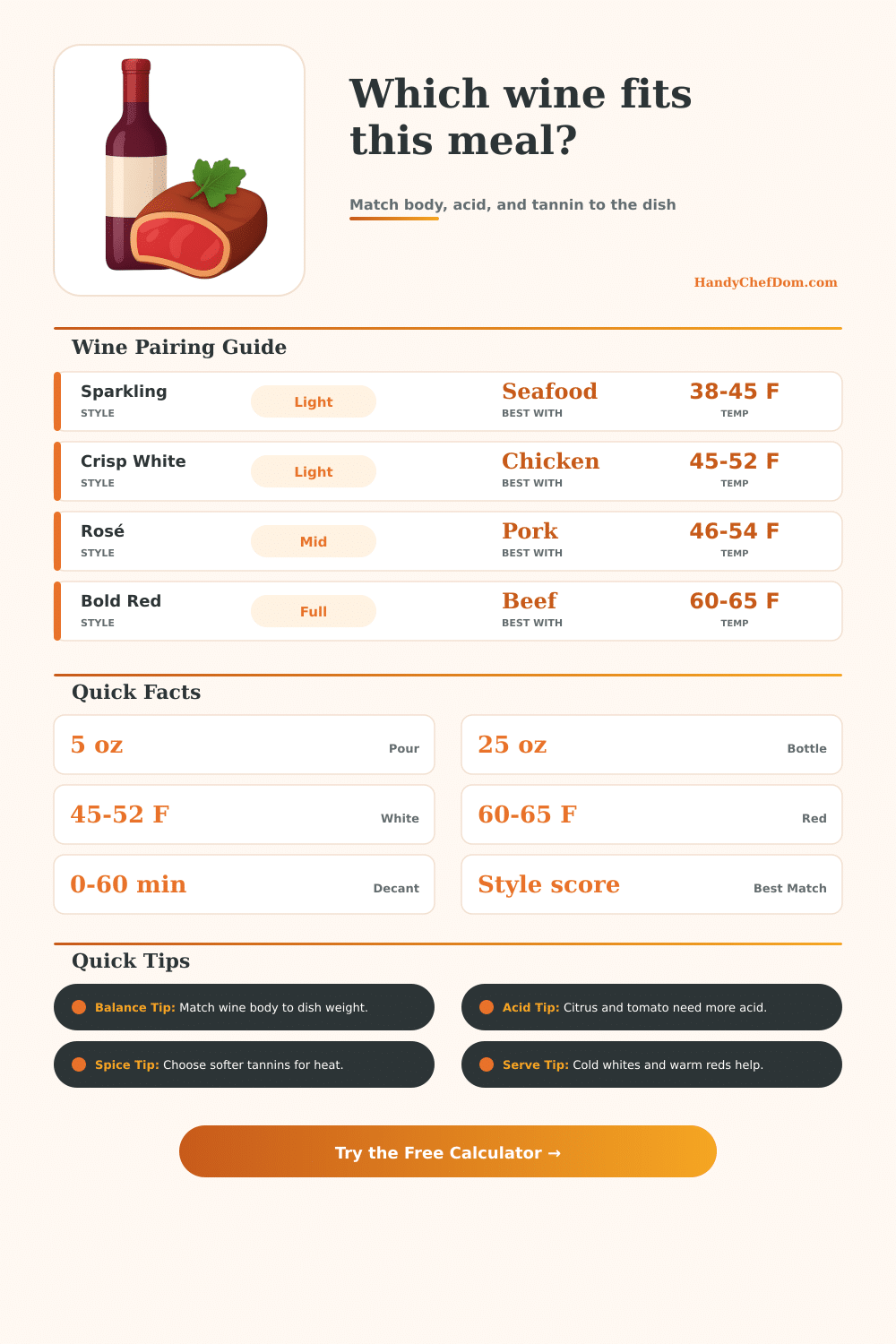
Match body, acidity, tannin, and sweetness to the meal, then size bottles and serving temperature for a cleaner pairing.
The calculator scores wine styles against dish structure, then adjusts for sauce, spice, and your preferred direction.
| Style | Body | Best With | Temp |
|---|---|---|---|
| Sparkling | Light | Seafood | 38-45 F |
| Crisp White | Light | Chicken | 45-52 F |
| Rosé | Mid | Pork | 46-54 F |
| Light Red | Mid | Mushroom | 55-60 F |
| Medium Red | Full | Roast Meat | 58-64 F |
| Dessert | Sweet | Chocolate | 45-50 F |
| Dish Type | Body | Acid | Match |
|---|---|---|---|
| Seafood | 1-2 | 4-5 | White |
| Chicken | 2-3 | 3-4 | White/Rosé |
| Pork | 3 | 3 | Rosé/Red |
| Beef | 4-5 | 2 | Red |
| Spicy | 2-3 | 3-4 | Off-dry |
| Dessert | 2 | 1-2 | Sweet |
| Style | Temp | Decant | Glass |
|---|---|---|---|
| Sparkling | 40 F | 0 min | Flute |
| White | 48 F | 0 min | Tulip |
| Rosé | 50 F | 0 min | Universal |
| Light Red | 58 F | 15 min | Burgundy |
| Red | 62 F | 30 min | Bordeaux |
| Dessert | 48 F | 0 min | Small tulip |
| Structure | Wine Cue | Avoid | Lean On |
|---|---|---|---|
| Fat | More body | Thin reds | Round whites |
| Acid | Higher acid | Flat wine | Bright white |
| Heat | Low tannin | Big tannin | Off-dry styles |
| Sweet | Sweet wine | Dry reds | Fruit forward |
| Smoke | Bold red | Light white | Earthy notes |
| Cream | Higher acid | Very sweet | Leesy whites |
Wine pairing involve finding a way to pair wine with food so that the two food and wines work well together. While many people will try to pair wine and food based on the names of the grape used to produce the wine, the best wine pairings involve finding a way to balance the structure of the wine with the weight and component of the food. Factors to consider when pairing wine and food include the weight of the food, the acidity of the food, the tannin in the wine, and the sweetness in the wine.
If these component are not balanced correctly, the wine may taste badly when consumed with the food. One of the first factor to consider in wine and food pairing is the weight of the food. The weight of the wine to be paired with the food should be balanced with the weight of the food.
How to Pair Wine with Food
Foods that are considered light, such as oysters or fried calamari, should be paired with light wines, like sparkling wine. Foods that are heavy, like roast pork, should be paired with wines of mid-weight, like rosé wines or light red wines. Additionally, you should also consider the fat content of the food.

Foods that contain a high amount of fat require wines with a higher degree of body. For instance, lean fish products require wines that are very light in flavor and body, while foods that contain creamy sauce or mushrooms should be paired with rounder white wines. Another component to consider in wine and food pairing involve the acidity of the food.
Acidity in wines act as a cleaning agent for the palate. Foods that contain high amounts of acidity, like foods with tomato sauce or salmon prepared with lemon, should be paired with wines that are high in acidity. These high acidity wines will balance out the flavor of the food, preventing it from becoming overwhelming for the palate.
Foods that are low in acidity, like butter-poached chicken, can be paired with wines that contain less acidity than the food. In these instance, the acidity of the wine should echo the acidity of the food or be slightly stronger. Tannins are another component of wine that can be considered when pairing wine and food.
Tannins are elements of wine that create a drying sensation in the mouth, and they are contained within the skins and the oak that wines are often aged in. Tannins tend to work well with foods that contain proteins, like beef. The tannins in the wine will bind to the protein in the food and tame the metallic elements of the wine.
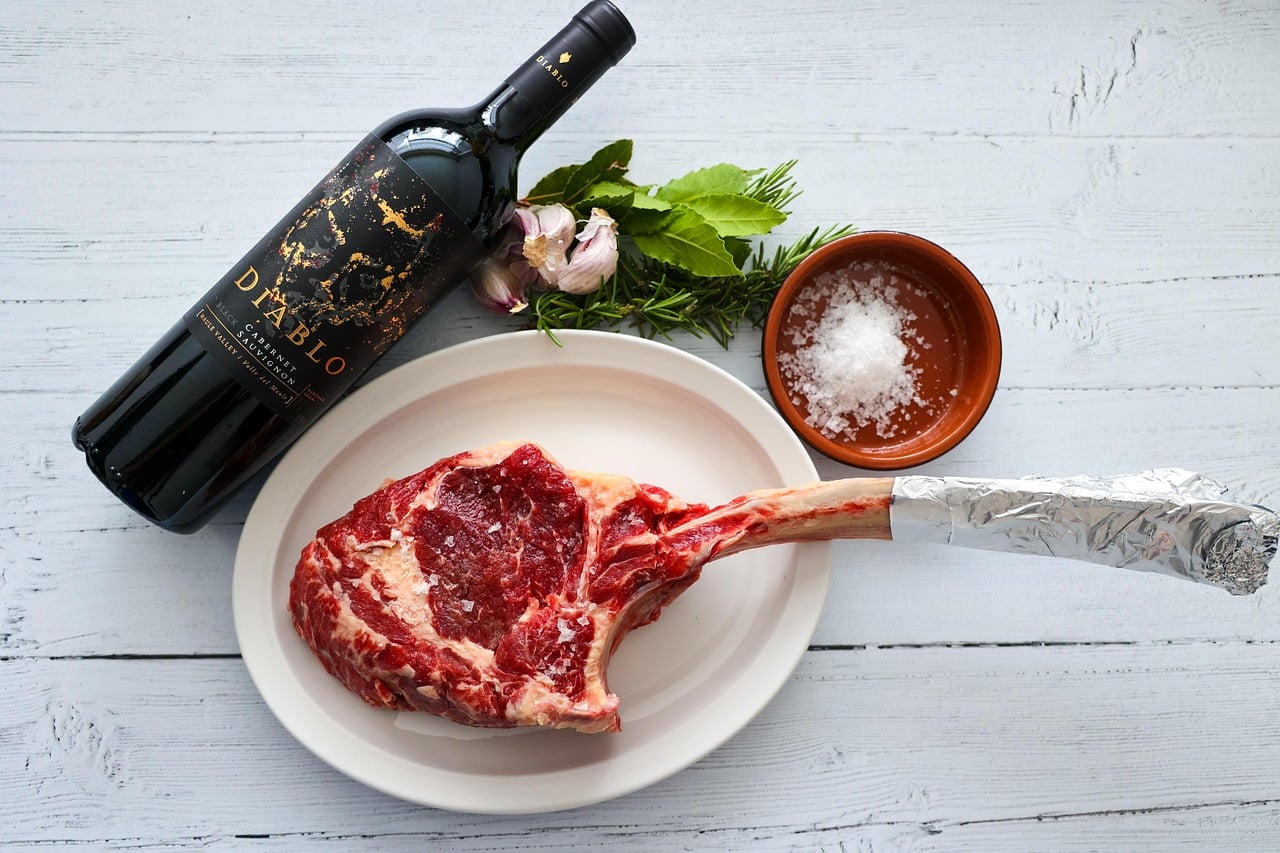
However, wines that contain high amount of tannins should not be paired with foods that are spicy, like Thai noodles or lamb prepared with black pepper. The tannins will interact with the spice in the food and create a sensation of fire in the palate. Instead, you should pair spicy foods with wines that contain soft tannins, or off-dry white wines that contain sweetness to neutralize the spice.
Another factor that must be considered when pairing wine and food is the sweetness of the food and the wine. Foods that contain sweetness require wines with sweetness to balance the flavor of the food. For instance, if a dessert that contains chocolate is to be served, it is better to avoid dry red wines as they may taste harsh when eating the dessert.
Instead, dessert wines that contain more concentrated sweetness should be paired with the dessert. Additionally, if food that contains salt, like a cheese board, is to be served, a wine that contains sweet fruit flavor should be selected to balance the creaminess of the cheese. Finally, if the food contains sweetness in its glaze or soy sauce, wines that are also sweet can be selected for the same reason.
The number of people that are to be served and the temperature at which the wine is to be served are also factor that must be considered in the wine pairing process. For example, if six people are to be served, the amount of wine that is calculated should be based on five ounce of wine per person. For main course, two bottles of wine may be needed for six people.
However, less wine may be needed for dessert. Additionally, wines that are lighter in color should be chilled to temperatures between 45 and 52 degrees Fahrenheit. Red wines should be served at approximately 60 degrees Fahrenheit.
If red wines are too cold, they may taste stemmy when drunk by individual. Similarly, if white wines are too warm, they may taste flabby. One way to simplify the wine pairing process is to use the presets that are available to wine server.
For instance, salmon that contains citrus component can be paired with a light seafood wine that contains high amount of acidity, like a sparkling wine. BBQ ribs can be paired with bold red wines due to the fat content of the ribs and the smoke that is associated with the preparation of ribs. Using these type of logical pairings for food and wine will allow server to quickly determine which wines to pair with which foods.
Additionally, if no high degree of harmony exist between the food and the wine, a fallback option may be selected for wine to serve with the food.