Basmati Rice Water Ratio Rice Cooker Calculator
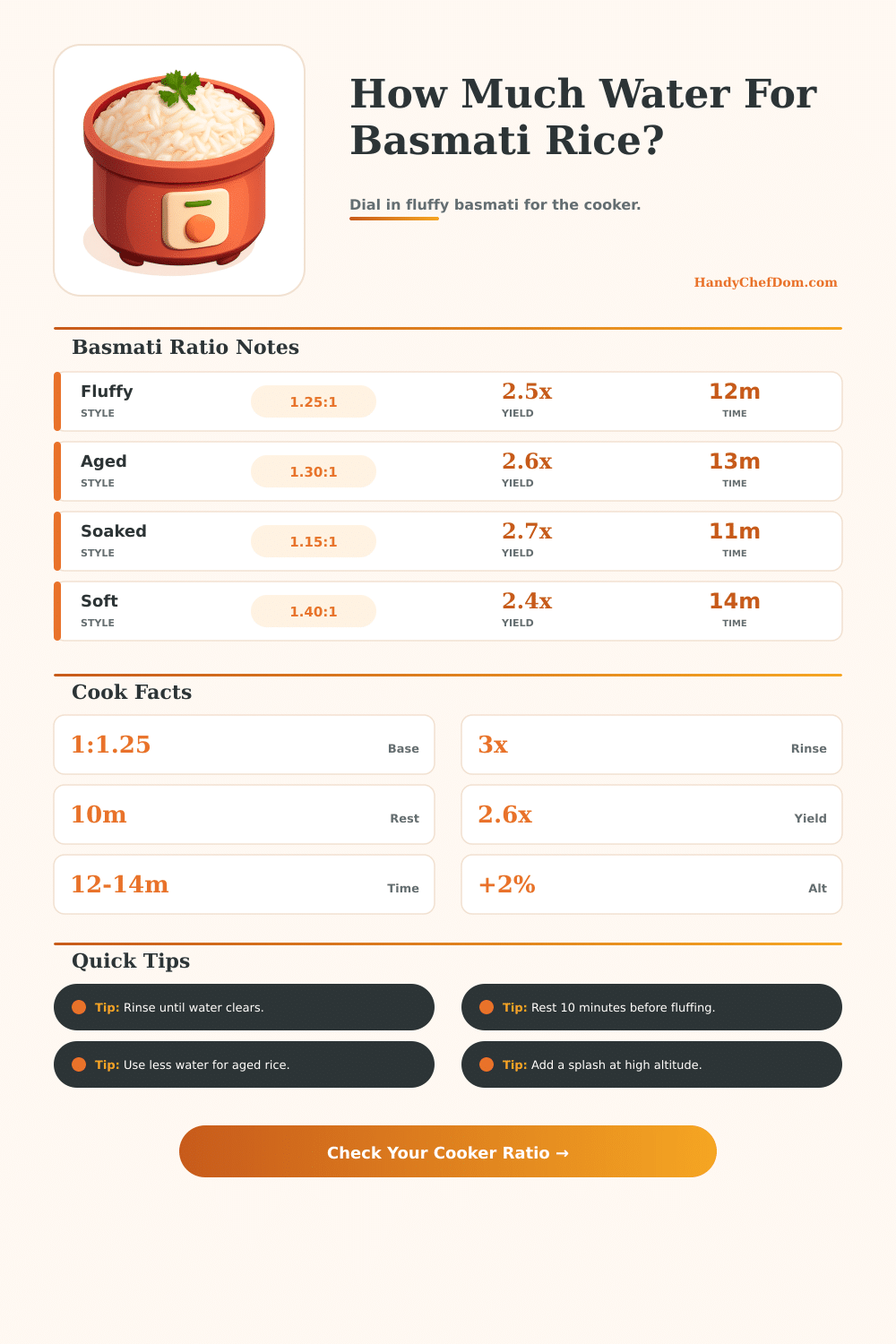
Use a lighter hand for basmati, keep the grains separate, and var the cooker finish with a short rest after the steam settles.
Style Ratios
| Style | Ratio | Yield | Time |
|---|---|---|---|
| Fluffy | 1.25:1 | 2.5x | 12m |
| Aged | 1.30:1 | 2.6x | 13m |
| Soaked | 1.15:1 | 2.7x | 11m |
| Soft | 1.40:1 | 2.4x | 14m |
Rinse Guide
| Passes | Water | Look | Note |
|---|---|---|---|
| 2x | Quick | Cloudy | Soft |
| 3x | Normal | Clear | Best |
| 4x | Deep | Very clear | Light |
| 5x | Full | Near clear | Dry |
Altitude Guide
| Altitude | Water | Time | Note |
|---|---|---|---|
| Sea | Base | Base | Normal |
| 1k+ | +2% | +1m | Minor |
| 3k+ | +4% | +2m | Dry air |
| 5k+ | +6% | +4m | Thin air |
Batch Guide
| Dry | Water | Cooked | Note |
|---|---|---|---|
| 1 cup | 1.25 c | 2.5 c | Solo |
| 2 cups | 2.50 c | 5.0 c | Pair |
| 4 cups | 5.00 c | 10.0 c | Family |
| 6 cups | 7.50 c | 15.0 c | Bulk |
Rinse for separation
Basmati sheds surface starch quickly. Three rinses usually give you a cleaner pot, lighter grains, and a more even cooker finish.
Let steam settle
After the cycle ends, keep the lid closed for ten minutes. That pause helps moisture redistribute before you fluff the rice.
Basmati rice is an long-grain rice variety that require specific water ratios because the rice grains has a different shape than other varieties of rice. Using too much water may result in the rice grains becoming sticky and mushy, while using too little water will result in the rice staying dry and hard to chew. Understanding the relationship between basmati rice and water will ultimatey allow you to achieve the separate grain that are desired with this rice variety.
Rinsing basmati rice is an first step in the cooking process for preparing basmati rice. Basmati rice is often coated in starch on the surface, which will cause the rice to become sticky. Rinsing the rice several times under cold water will remove this excesses starch.
How Much Water for Basmati Rice
If you dont rinse the rice, these starch molecule will cause the rice to clump together during the cooking process. You may also soak the basmati rice before cook. Soaking will make the rice more tender, but ensure that you do not soak the rice for too long or you will lose the aroma of the rice.
The amount of water you will use when cooking basmati rice will depend on the style of basmati rice you are cooking. If you would like your basmati rice to be fluffy, you will use a leaner ratio of water to basmati rice. However, ensure you dont use so little water that the rice will be crunchy.
For soft basmati rice, use a higher ratio of water. Aged basmati rice tend to be dry when cooked, so you will have to use slightly more water then for fresh basmati rice. Lastly, if you live at a high altitude, water will evaporate more quick, so you will need to add more water to the rice.
The size of the batch of basmati rice will affect how it will cook within the rice cooker. Small batch of basmati rice will take longer to cook than large batches. Additionally, if you load your rice cooker with too much basmati rice, the rice will not be able to steam and cook even.
Allow room for the steam to circulate by not filling the rice cooker to it’s maximum capacity. Let the basmati rice rest for around ten minute once the rice cooker cycle is complete. Allowing the rice to rest permits the moisture to be evenly distributed throughout the rice grains.
Otherwise, the rice will become more gummy at the bottom of the rice cooker. Common mistake when cooking basmati rice include not rinsing the rice enough. This will introduce the starch that will make the rice sticky.
People also do not account for the altitude at which they lives, leading to dry basmati rice. Other mistakes are not allowing the rice to rest after the cycle on the rice cooker. This will make the rice uneven in texture.
Another common mistake is measuring the basmati rice while it is pack into the cup. Always measure when the rice is loose. By avoiding these mistake, you will have better results with your basmati rice when you adjust the water ratio based off your environment and the texture you would like to achieve with your cooked rice.
You should of checked the water ratio first.