Refrigerator Cubic Feet Calculator
Estimate gross cabinet volume, usable liner space, shelf reach, and zone allocation so a fridge footprint makes sense before you load it with groceries.
Enter the liner dimensions, not the outside cabinet. The calculator uses a usable-volume factor plus food-storage shares to show what the fridge can truly hold after shelves, drawers, and air space take their cut.
| Type | Gross | Usable | Shelf |
|---|---|---|---|
| Dorm cube | 3.4 | 2.8 | 10.5 |
| Studio top | 11.9 | 9.8 | 15.6 |
| Top-freez | 14.8 | 12.0 | 16.0 |
| Bottom-fre | 17.6 | 14.4 | 16.8 |
| Counter-de | 22.0 | 17.6 | 17.2 |
| Side-by-si | 27.0 | 23.0 | 16.5 |
| Depth | Fit | Space | Best |
|---|---|---|---|
| 11 in | 0.65x | Shallow | Snacks |
| 13 in | 0.77x | Lean | Milk |
| 15 in | 0.88x | Strong | Boxes |
| 17 in | 1.00x | Full | Trays |
| 19 in | 1.00x | Deep | Platters |
| 21 in | 1.00x | Long | Meal prep |
| Zone | Share | Sample | Use |
|---|---|---|---|
| Shelf | 46% | 8.4 | Daily |
| Door | 24% | 4.4 | Sauces |
| Crisp | 14% | 2.5 | Produce |
| Bulk | 18% | 3.3 | Tray |
| Item | Depth | Zone | Cue |
|---|---|---|---|
| Milk | 6.5 | Door | Upright |
| Salsa | 4.5 | Door | Front |
| Lettuce | 11.0 | Crisp | Dry |
| Leftovers | 12.0 | Shelf | Stack |
| Sheet pan | 16.5 | Bulk | Rear |
| Pitcher | 10.0 | Door | Cold |
When you are selecting a refrigerator for your kitchen, you must understand the difference between the gross capacity and the usable capacity of that appliance. The gross capacity is the total numbers of cubic feet in the refrigerator’s interior. Manufacturers use this number to advertise the appliances size.
However, this does not take into account the space used for the refrigerator’s hardware, shelf, and air vents. To find the usable capacity, you must subtract the space for these components from the gross capacity. People often make the mistake of only considering the gross capacity.
How to Measure Gross and Usable Fridge Space
However, the usable capacity indicates how many grocery item the refrigerator can hold. To determine the gross capacity of a refrigerator, you must measure the interior’s width, height, and depth in inches. Multiplying these dimensions will provide the volume of the refrigerator in inches.
To find the number of cubic feet, divide that number by 1728. That division will be the gross capacity. To find the usable capacity, you must subtract more approximately 18 to 20% of that capacity.
The reason for this is that refrigerators requires space for air to circulate around the appliances components to ensure the food remains cold and fresh. If an appliance does not allow for air to circulate around the refrigerators components, the refrigerator will not be able to maintain the foods temperature. Another important measurement to consider is the depth of the refrigerators shelves.
This will determine how many kitchen container can be stored on each shelf. The deeper the depth of the shelf, the more room there is for large platters or sheet pans to be stored. On the other hand, if the shelf is shallowly, only small containers can be stored on that shelf.
For instance, to store a gallon of milk, there must be at least 10.5 inches of shelf depth to allow the gallon container to stand upright in the refrigerator. Measuring the depth of the refrigerators shelves will allow you to determine whether the refrigerator can hold your meal prep container and platters. Depending on the type of person who will use the refrigerator, there will be different needs for refrigerator capacity.
For instance, a person who does grocery shopping every week will need refrigerator compartment for different types of groceries. A balanced refrigerator features shelves for groceries, a drawer for crisper bags to hold vegetable, and shelves along the door for condiments. A person who cooks in advance may require deeper bulk area to accommodate the containers in which meals are stored.
However, a family may require more tall area to accommodate the dairy product that the family consumes. Each of these designated areas takes up a percentage of the total usable volume of the refrigerator. By increasing the size of the door bin, the size of the main shelves will decrease due to the same total usable volume for both area.
When measuring refrigerators, it is common for individuals to make the mistake of measuring the exterior of the refrigerator to determine how much it will take up in the kitchen. However, the exterior measurements also include the thickness of the refrigerator door and the depth of the refrigerator. The style of the refrigerator also impacts the amount of storage it offers.
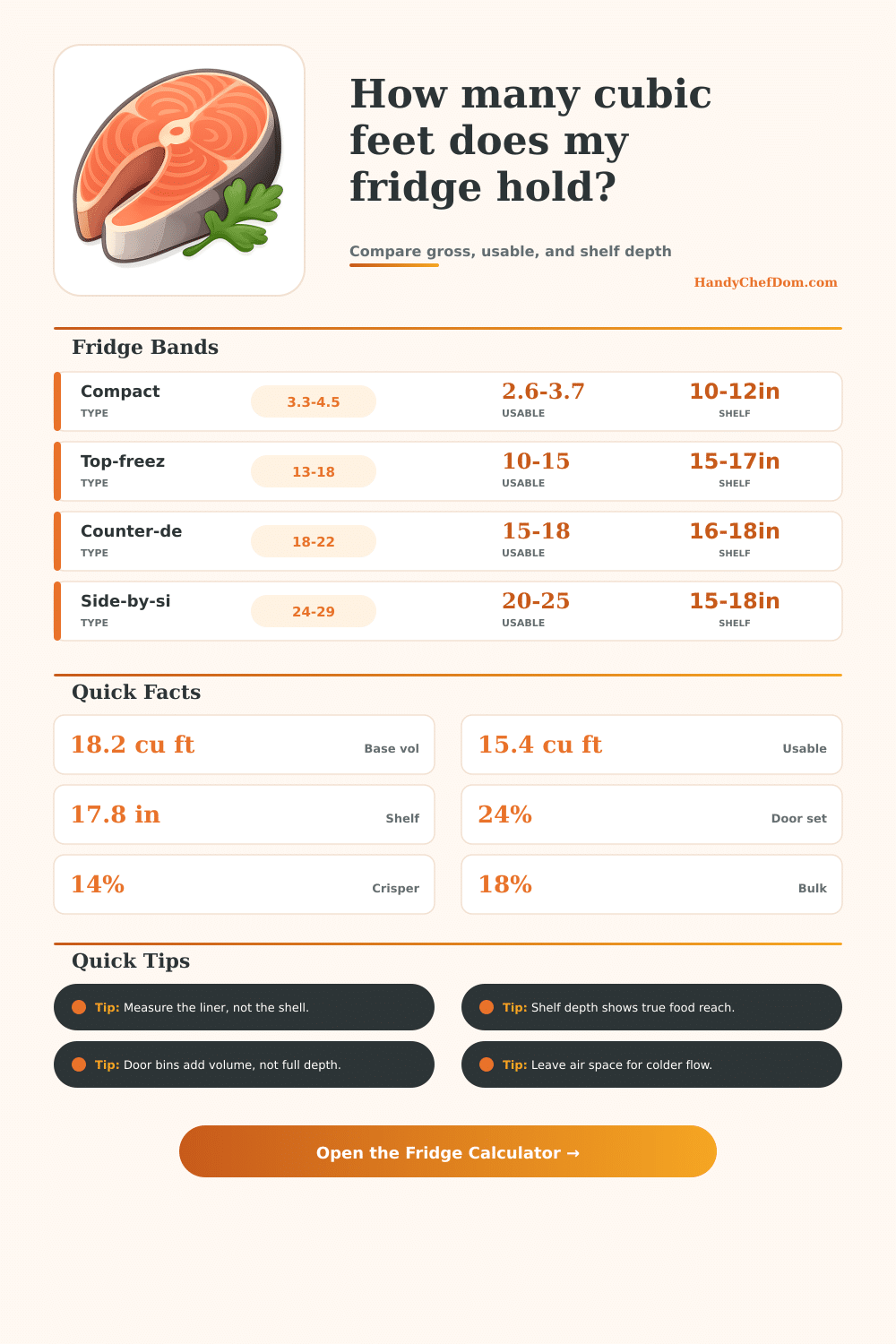
For example, a refrigerator with a freezer compartment located at the top of the refrigerator may have a gross capacity of 13 to 18 cubic feet of storage space. In contrast, a side-by-side refrigerator may have a gross capacity of 24 to 29 cubic feet, despite the narrower spaces in which to place the groceries in each of the refrigerator lane. In planning the layout of the refrigerator, there are different designated zones for storing different types of grocery items.
The crisper drawer in the refrigerator should be used to store vegetable and herb to help keep the vegetables from wilting. The door bin can be used to store item that will not need to be stored at the coldest temperature in the refrigerator, such as salsa or water pitcher. Bulk area at the back of the refrigerator can be used to store large item, such as leftovers or sheet pans used in baking.
In comparing refrigerators of similar gross capacity, it is important to ensure that the models that are compared have similar feature. For example, one of the feature that is important to consider is whether the refrigerator features adjustable shelf that will permit the refrigerator to be arranged in a way that will allow for the efficient storage of groceries. Another feature to consider is whether the refrigerator is a counter-depth refrigerator.
A counter-depth refrigerator may be beneficial if the countertop in the kitchen are relatively narrow, as the counter-depth refrigerator will take up less space in the kitchen. However, it will offer less storage volume for the groceries. By measuring the interior of the fridge and calculating how many usable cubic feet of space it will provide, the individual can ensure that the refrigerator will provide enough space to store their grocery.