☕ V60 Coffee Ratio Calculator
Lock in dose, water, bloom, grind, and brew time for cleaner V60 cups with less guessing and more repeatable pours.
📌Preset Batches
⚙Brew Controls
The calculator uses grams, milliliters, and Celsius internally, then converts the output if you switch to imperial units.
V60 brew snapshot
See the dose, charge water, finish yield, and extraction estimate in one clean pass.
📋Reference Tables
| Lane | Ratio | Bloom | Note |
|---|---|---|---|
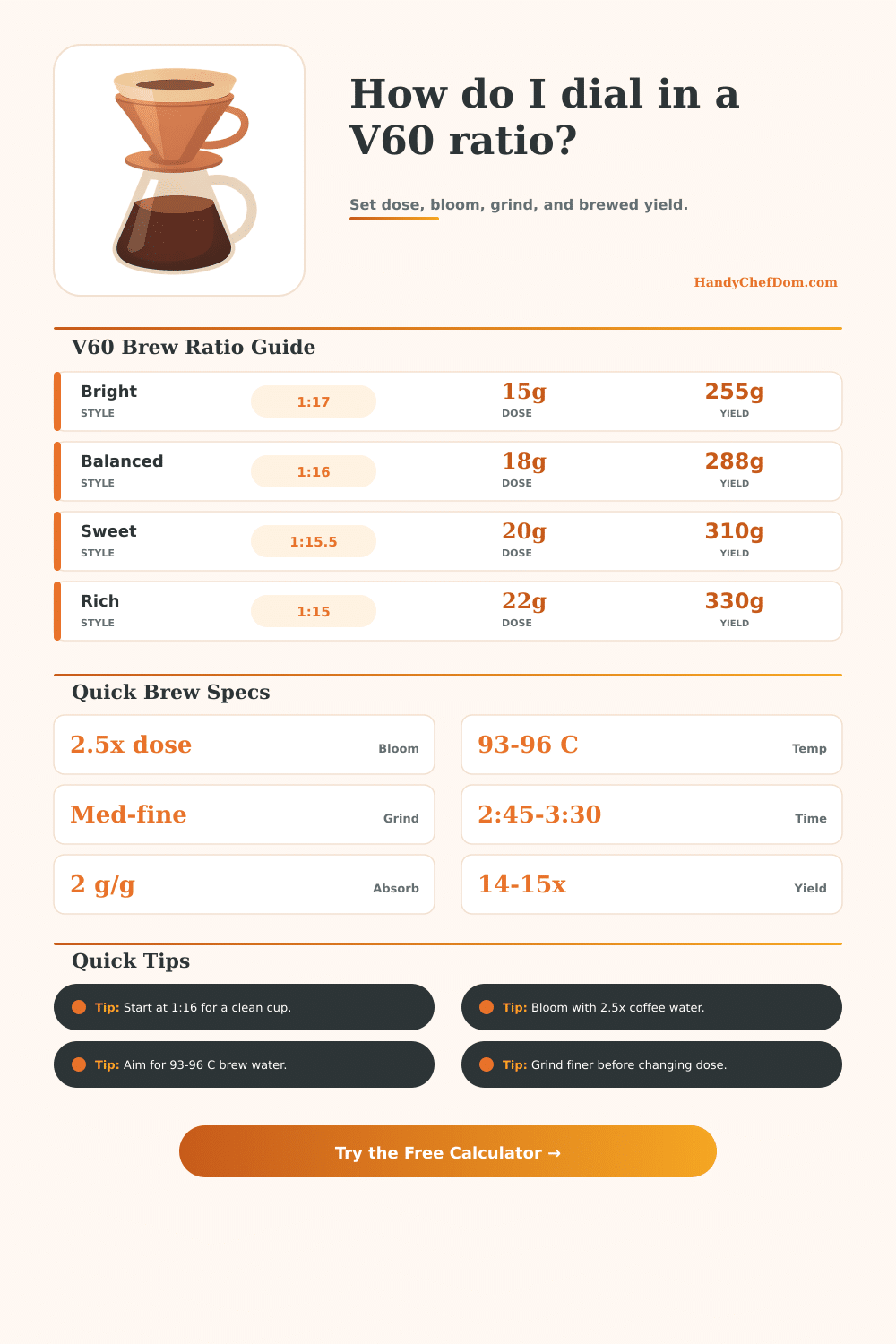
| Clarity | 1:17 | 2.5x | Bright cup |
| Balanced | 1:16 | 2.5x | Daily mug |
| Sweet | 1:15.5 | 2.75x | Rounder body |
| Rich | 1:15 | 3x | Denser pour |
| Grind | Time | Extract | Cup cue |
|---|---|---|---|
| Finer lace | 2:20-2:50 | 20-21% | Quick lift |
| V60 norm | 2:40-3:10 | 19-20% | Clean sip |
| Medium-fine | 3:00-3:30 | 18.5-19.5% | Softer body |
| Open draw | 3:20-3:50 | 18-19% | Round finish |
| Target | Dose | Water | Retain |
|---|---|---|---|
| 240 ml | 17 g | 274 ml | 34 ml |
| 300 ml | 21 g | 343 ml | 43 ml |
| 360 ml | 26 g | 411 ml | 51 ml |
| 480 ml | 34 g | 548 ml | 68 ml |
| Roast | Temp | Bloom | Finish |
|---|---|---|---|
| Light | 95-96 C | 2.75x | Brighter lift |
| Medium | 93-95 C | 2.5x | Even balance |
| Med-dark | 92-94 C | 2.5x | Sweet body |
| Dark / decaf | 90-93 C | 2.25x | Shorter pull |
📊Brew Comparison
🍵Practical Tips
To brew coffee using an V60 brewer, there are several variable that you must manage as the variables of coffee brewing will directly determine the taste of your coffee. One of the most important variable is the coffee-to-water ratio. This ratio will determine the strength and body of the coffee.
For example, a coffee-to-water ratio of 1:17 will produce a light coffee compared to a coffee-to-water ratio of 1:15, which will produce a richer coffee beverage. In addition to manage the coffee-to-water ratio, you must also account for the fact that coffee grounds will retain water. Coffee grounds will retain approximately two gram of water for every one gram of coffee grounds.
How to Brew Coffee with a V60
Thus, if you want to brew 300 milliliters of coffee, you will need to add more than 300 milliliters of water to the V60 brewer to account for the water that the coffee grounds will retain. Another of the variable to manage in brewing coffee in a V60 brewer is the grind size of the coffee beans. The grind size will impact the rate at which the water pass through the ground coffee.
Using a medium-fine grind is often the best choice as it will allow for even saturation of the ground coffee. Using a finer grind will allow the water to move more quick through the coffee grounds as it will require less time to brew the coffee. Furthermore, a finer grind will extract more flavor from the coffee grounds.
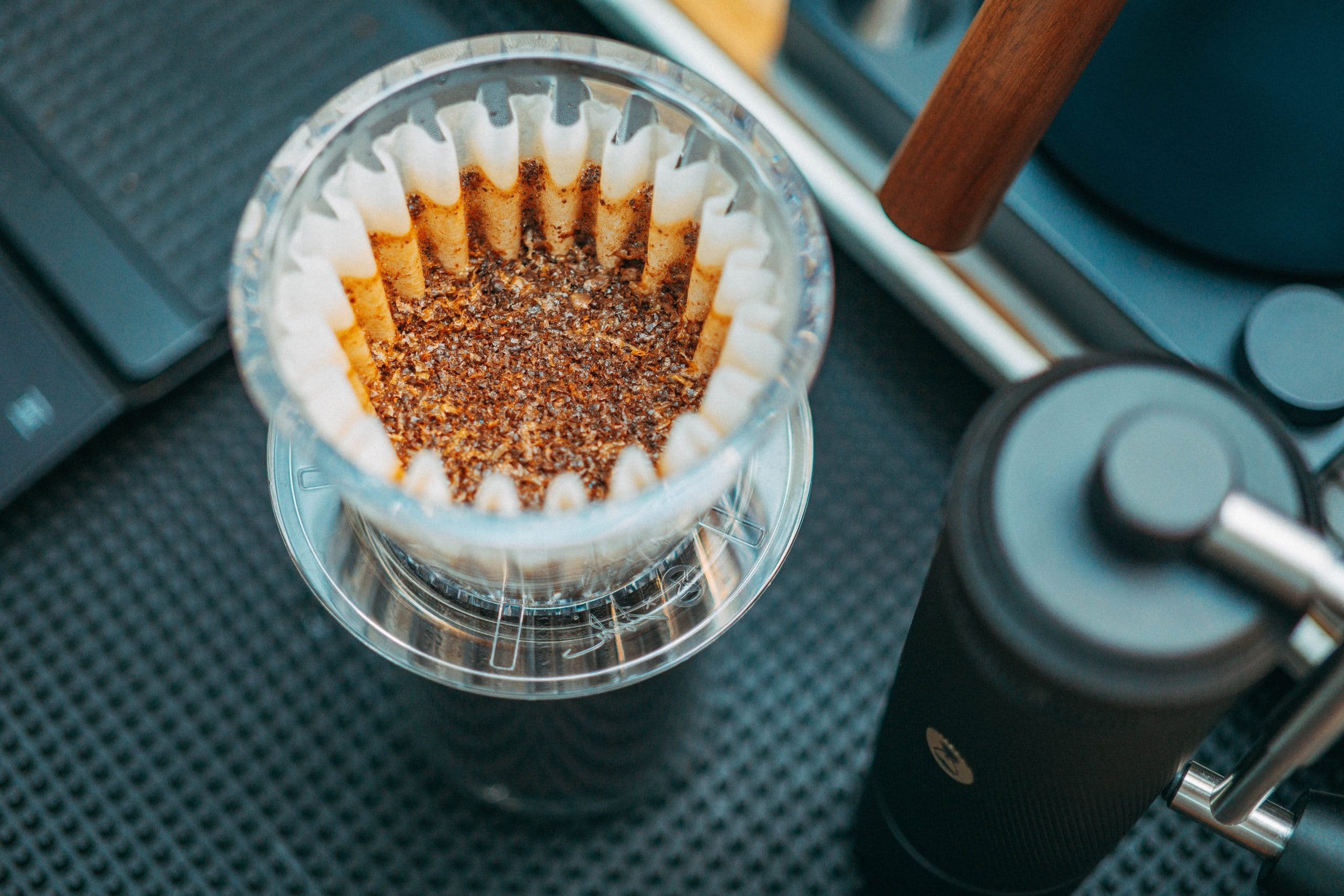
Using a coarser grind will allow the water to move more quick through the coffee grounds and will result in less extraction of flavor from the coffee grounds. Using agitation to help move the water through the coffee grounds will result in the formation of channels in the coffee grounds. These channels will result in the movement of water through the coffee grounds at uneven rate, which will impact the flavor of the brewed coffee.
Another of the important steps in brewing coffee in a V60 brewer is the blooming of the coffee grounds. To bloom the coffee grounds, you will pour an amount of water that is approximately two and a half times the weight of the coffee grounds over the coffee grounds. You will then allow the coffee grounds to sit for 30 to 45 seconds.
This step allow the coffee grounds to release the carbon dioxide that is contained within them. If you do not allow the coffee grounds to bloom, the carbon dioxide will cause the brewed water to move in an unpredictable manner through the coffee grounds. The water temperature is another variable in brewing coffee using a V60 brewer.
The water temperature impacts the amount of flavor that is extract from the coffee grounds. The recommended water temperature for brewing coffee in a V60 brewer is between 93 and 96 degrees Celsius. For darker roasts, however, you can use water that is 92 degrees Celsius as the darker roasted coffee beans will become bitter if brew with water that is too hot.
Another of the variable in brewing coffee using a V60 brewer is the structure of how the water is added to the brewer. Many V60 brewers uses a three-pulse method for adding water to the brewer. This method involves pouring water in three separate pulse into the V60 brewer after blooming the coffee grounds.
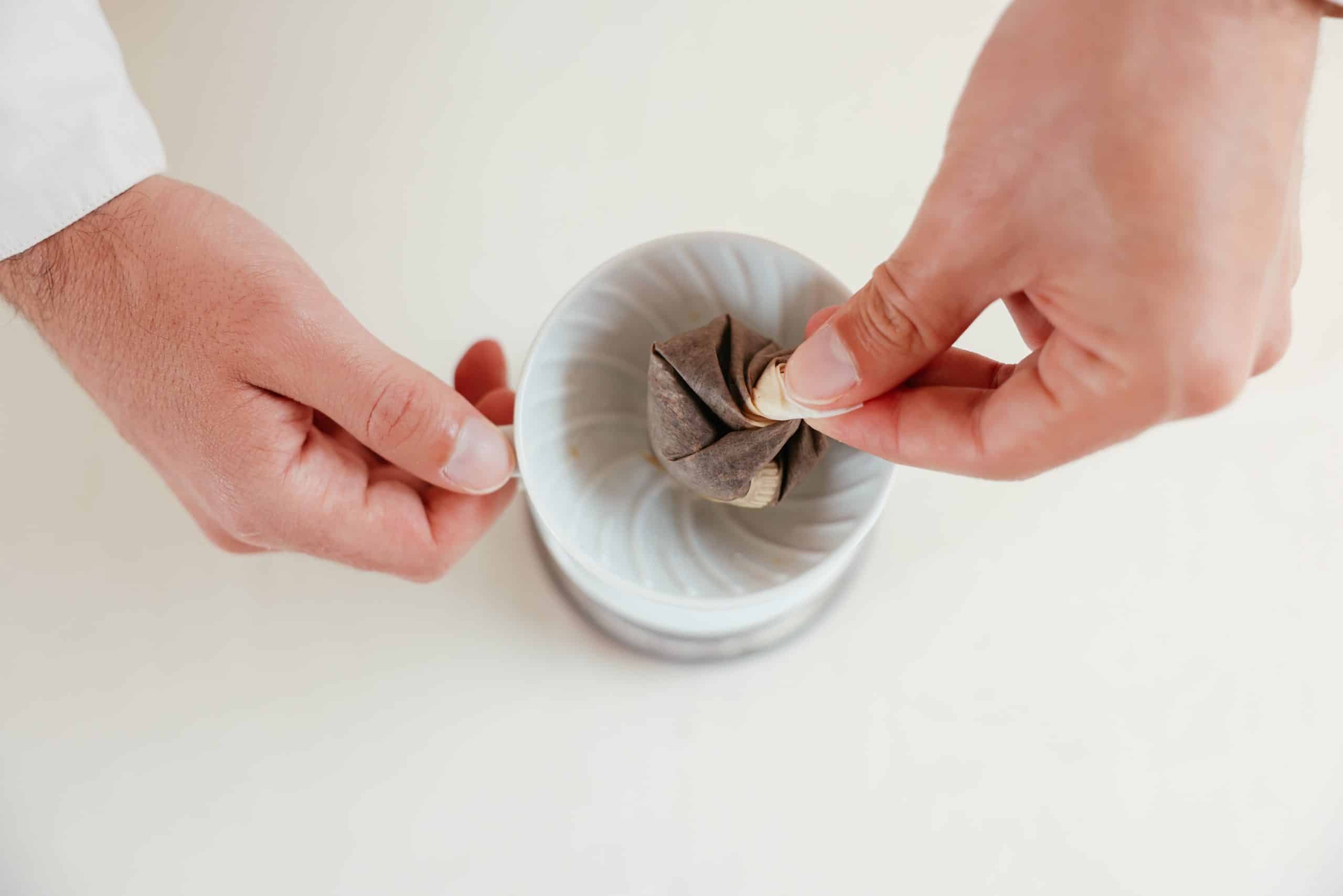
Additionally, another variable in brewing coffee is rinsing the paper filter with hot water prior to add the coffee grounds to the brewer. Rinsing the filter will preheat the V60 brewer and remove any flavor of the paper from the coffee. Brewed coffee that taste sour indicates that the coffee was under-extracted.
You can fix under-extraction by using a finer grind of coffee beans or by using water that is hotter then recommended. Brewed coffee that tastes bitter indicates that the coffee was over-extracted. You can fix over-extraction by using a coarser grind of coffee beans or by using water that is cooler then recommended.
In brewing coffee using a V60 brewer, it is important to use a scale to measure both the coffee and water. Using scales will help ensure that the coffee and water maintains the same ratio. Finally, it is important to use fresh coffee beans in your V60 brewer as stale coffee beans will produce brewed coffee with a lesser degree of flavor then fresh coffee beans.