🍖 Sous Vide Steak Calculator
Set doneness, thickness, and finish style to get a practical bath temp, minimum cook time, hold window, and ready-to-plate plan.
📌Quick Presets
⚙Calculator Inputs
Sous vide time tracks thickness first. Use the cut type to tune the hold window, then pick a finish method for the crust you want.
Sous vide steak snapshot
Pick a cut and start temp to see the bath target, minimum cook time, hold window, and ready time.
📑Reference Tables
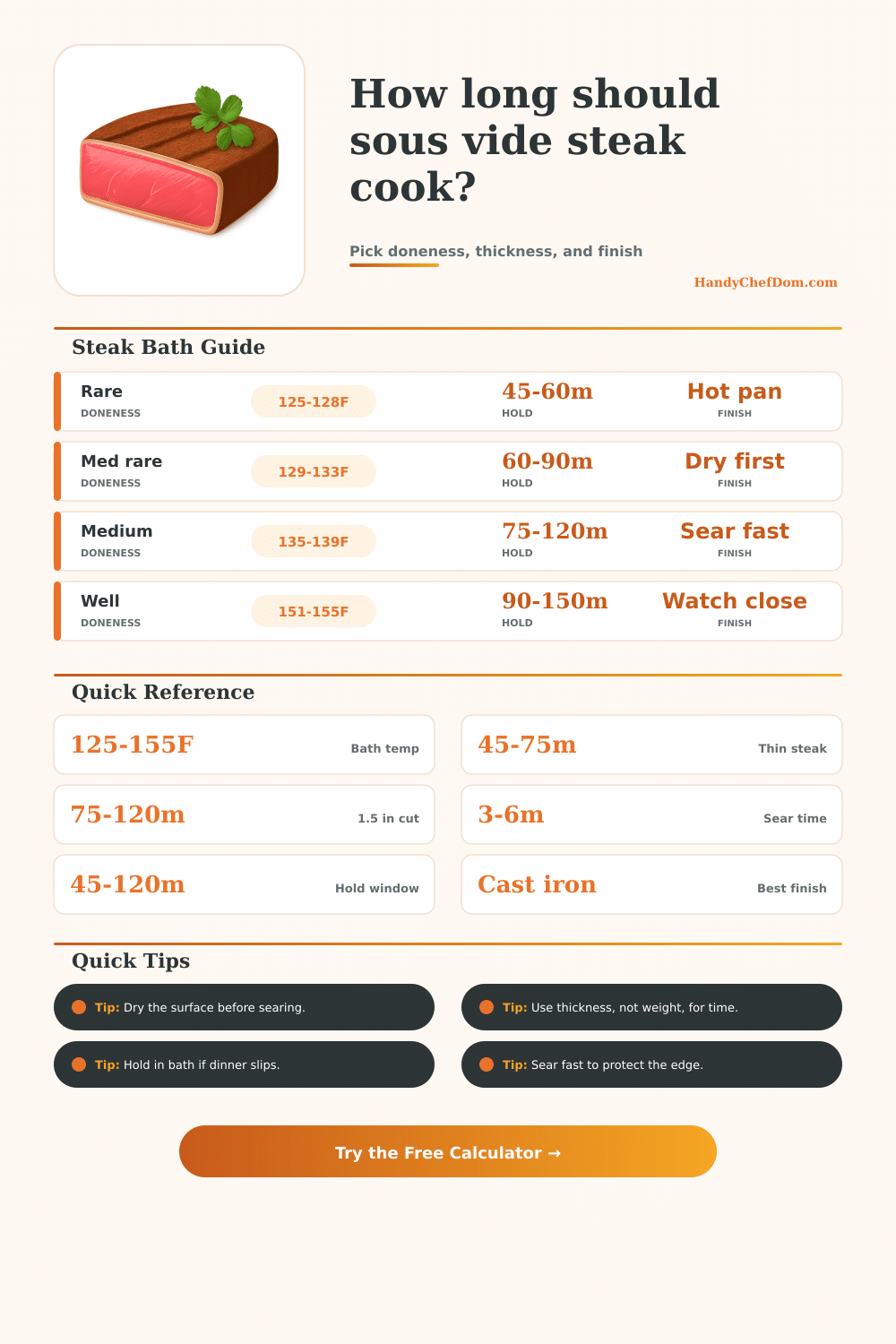
| Doneness | Bath | Slice | Best use |
|---|---|---|---|
| Rare | 125-128F | Cool red | Fast sear |
| Med rare | 129-133F | Warm red | Most cuts |
| Medium | 135-139F | Pink core | Lean cuts |
| Med well | 143-147F | Light pink | Firm bite |
| Well | 151-155F | Even don | Not ideal |
| Thickness | Min bath | Hold window | Note |
|---|---|---|---|
| 0.75 in | 45-60m | +45m | Thin and fast |
| 1.0 in | 60-75m | +60m | Weeknight cut |
| 1.5 in | 75-120m | +90m | Classic steak |
| 2.0 in | 105-150m | +105m | Thicker center |
| 2.5 in | 135-180m | +120m | Big showpiece |
| Cut | Bias | Hold | Note |
|---|---|---|---|
| Ribeye | 0 F | 85m | Marbled and forgiving |
| Strip | 0 F | 78m | Lean and steady |
| Filet | +1 F | 64m | Soft, tender center |
| Sirloin | +1 F | 74m | Beefy and practical |
| Skirt | +2 F | 44m | Very fast and thin |
| Tomahawk | 0 F | 96m | Bone-in showpiece |
| Finish | Crust | Time | Note |
|---|---|---|---|
| Cast iron | Bold | 4m | Best crust |
| Grill | Smoky | 5m | Outdoor edge |
| Torch | Even | 3m | Fast color |
| Combo | Deep | 6m | Pan plus butter |
| Batch | Mixed | +1m | Multiple plates |
🧰Kitchen Kit
💡Tips
Sous vide is an cooking method that utilizes precise water temperatures to cook meat evenly. When cooking a steak with sous vide, the heat evenly distribute through the steak because the water maintains a constant temperature. Additionally, sous vide eliminate hot spots in the steak and prevents the edges of the steak from being overcooked.
This cooking method is reliable when cooking steak because the cook can adjust the temperature of the water to account for the thickness of the steak and how rare or well-done the steak is to be cooked. The thickness of the steak will change the length of time that the steak must cook in the sous vide water bath. Thin cut of steak will require less cooking time than thick cuts of steak.
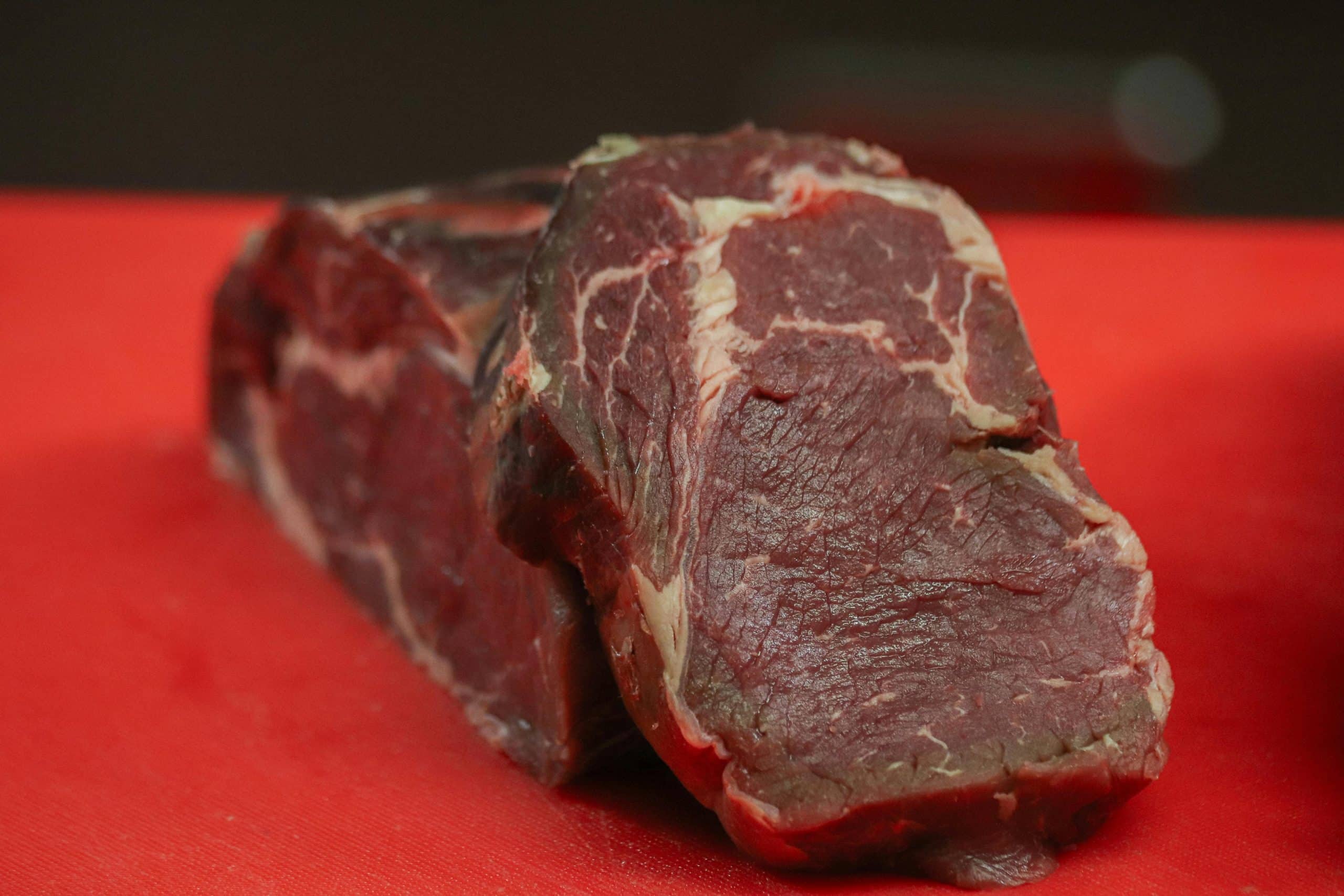
How to Cook Steak with Sous Vide
However, thin cuts of steak has the risk of overcooking the steak if the cooking time is too long. Thick cuts of steak will take longer to cook, but they will not overcook as quick than thin cuts of steak. The starting temperature of the steak will also change the length of time required for the sous vide bath.
If the steak is already frozen, it will require more time to reach the target temperature than if the steak was started at room temperature. To account for the thickness of the steak, the steak will cook until it reaches the target temperature without becoming too mushy. The doneness of the steak will determine the temperature of the water in the sous vide bath.
The lower the level of doneness for the steak, the more lower the temperature of the water. For instance, a rare steak will have a cool red center. For a medium-rare steak, the temperature will be slightly higher than a rare steak.
Medium-rare steak is the preferred choice for a ribeye cut of steak. For a medium steak, the temperature of the water will be even higher than medium-rare. For well-done steak, the temperature will be the highest.
Sous vide methods allow the cook to choose the temperature that corresponds to the doneness level they would like for the steak. The cut of steak will also change the requirements for the sousvide method. For instance, a ribeye steak will contain marbling throughout the steak, which will allow the steak to retain its moisture.
A flank or skirt steak will be leaner in its composition, so it will require a shorter cooking time in the sous vide water bath to prevent it from becoming too tough. A tomahawk steak will be thick, so it will require a longer cooking time in the water bath. Each cut of steak has a different composition and thickness, so the cook must adjust the cooking time according to each cut of steak.
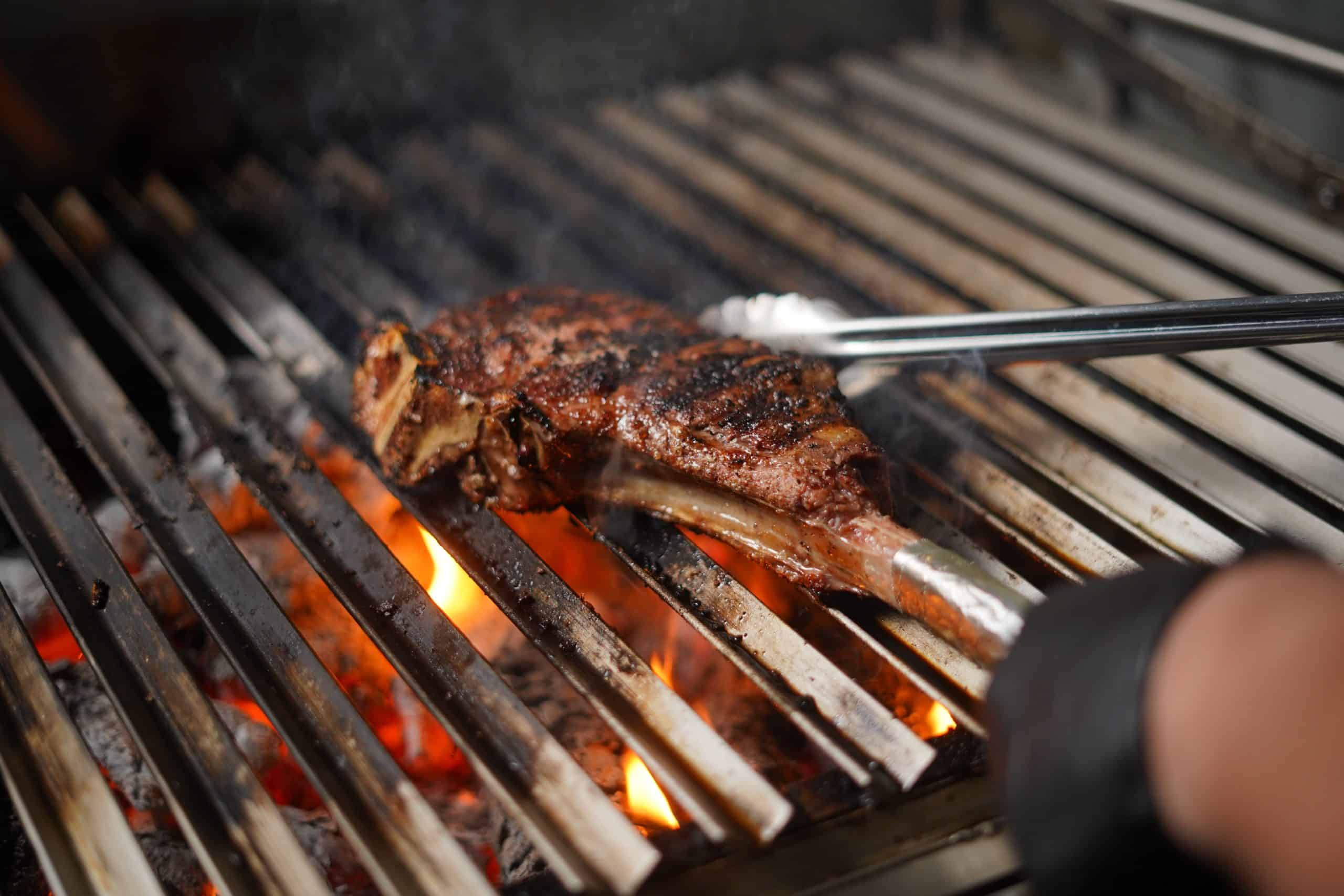
After the steak is cooked in the sous vide bath, the steak will need to be cooked again outside of the water bath to create a crust on the steak. You can use a cast iron pan to sear the steak. Cast iron pans hold high heat.
Before searing the steak, the steak needs to be patted dry with a paper towel to remove excess moisture. If the steak is too moist, it will steam in the pan instead of searing. The steak should also be seared for only a short period of time; one minute per side is a good starting point.
Searing the steak for too long will cook the steak to a higher temperature than desired. If the cook sears the steak for too long, it will ruin the benefit of the sous vide method. In order to ensure the steak correctly with the sous vide method, there are several technical details to consider.
First, you should ensure the vacuum seal on the steak is tight. If the seal isnt vacuum sealed properly, the steak will be ruined. Additionally, the steak should be seasoned with salt and pepper.
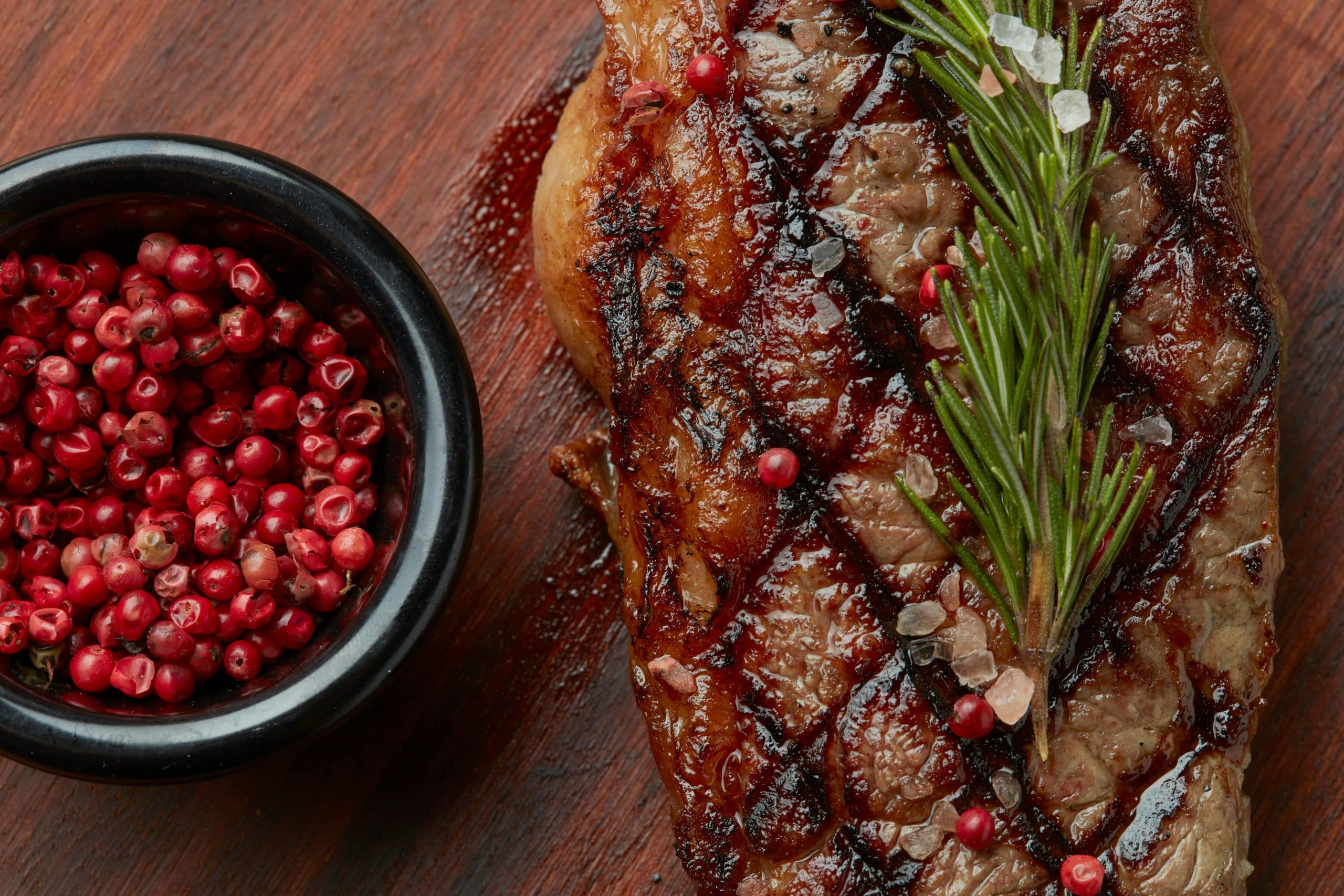
However, care must be taken to not use too many aromatics like garlic or thyme in the seasoning of the steak, as these ingredients can mute the flavor of the beef. Lastly, the steak should be allowed to rest after it is cooked. Allowing the steak to rest permits the juices to settle within the steak.
Following these technical details will ensure that the sous vide method produce a consistent and reliable steak.