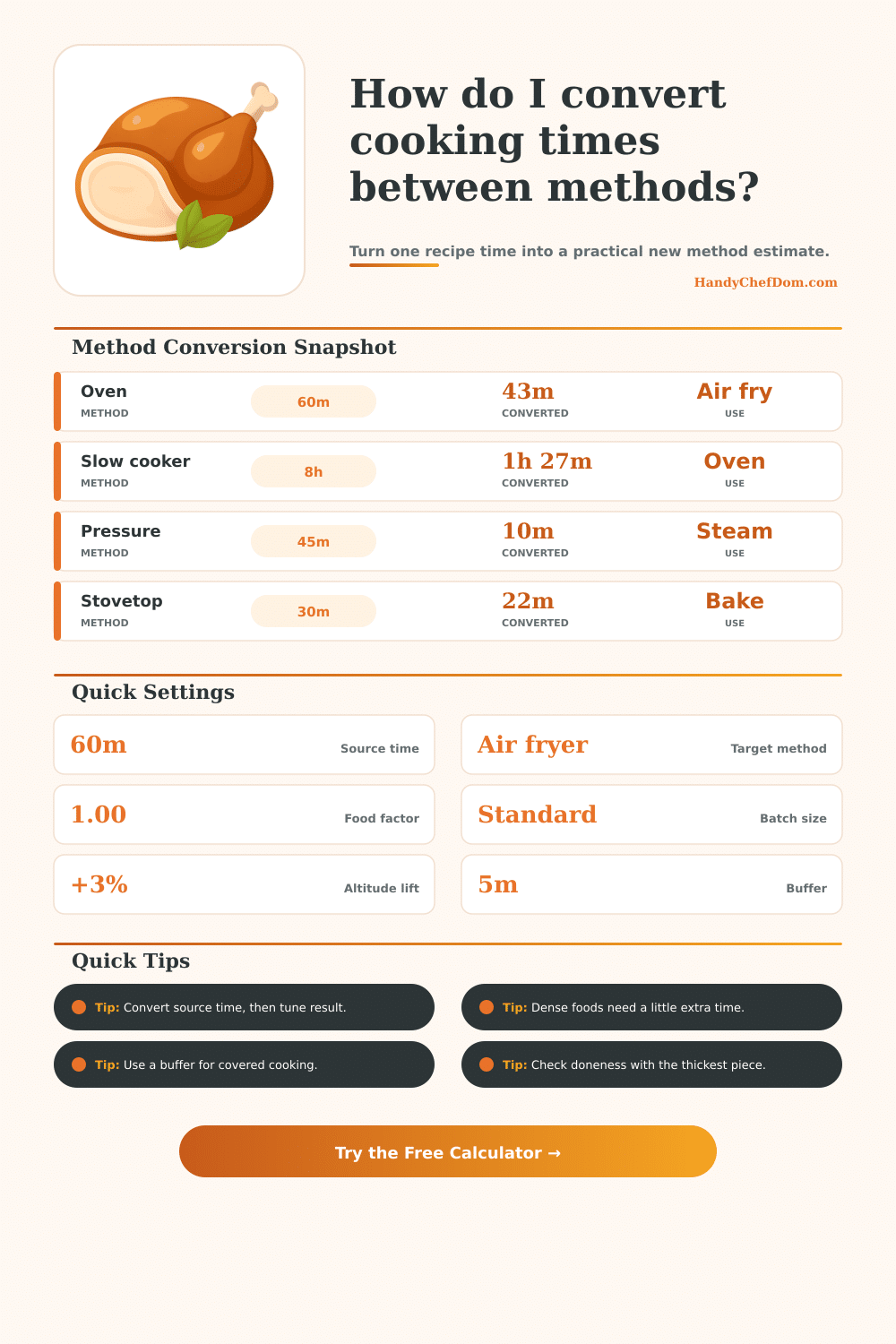
Cooking Time Conversion Calculator
Convert cooking times between oven, air fryer, slow cooker, pressure cooker, and stovetop methods with a practical time estimate you can trust.
Start with the recipe's original time, then convert it to your target method and tune the result for food type, batch size, thickness, and altitude.
| Method | Factor | Best For | Note |
|---|---|---|---|
| Oven bake | 1.00x | Cakes | Baseline reference |
| Air fryer | 0.70x | Fast crisping | Shorter cooking time |
| Slow cooker low | 5.50x | Braises | Long, gentle heat |
| Pressure high | 0.22x | Beans | Very fast cook cycle |
| Broil / grill | 0.35x | Finish browning | Watch closely |
| Microwave | 0.18x | Reheat | Best for speed only |
| Food | Factor | Conversion Bias | Note |
|---|---|---|---|
| Chicken | 1.00x | Neutral | Everyday baseline |
| Beef roast | 1.15x | Longer | Dense cuts need more time |
| Salmon | 0.72x | Shorter | Delicate proteins cook fast |
| Vegetables | 0.60x | Shorter | Use for crisp-tender results |
| Cookies | 0.85x | Shorter | Watch browning at the edges |
| Dry beans | 1.30x | Longer | Needs hydration and patience |
| Batch Size | Factor | Use | Portion Cue |
|---|---|---|---|
| Small | 0.88x | 1 to 2 servings | Short pans |
| Standard | 1.00x | Family baseline | Most recipes |
| Large | 1.16x | Big casseroles | Wider pans |
| Family | 1.30x | Bulk cooking | Multiple pieces |
| Altitude | Factor | Effect | Cooking Cue |
|---|---|---|---|
| 0 to 1000 ft | 1.00x | Baseline | No change needed |
| 1000 to 3000 ft | 1.02x | Slightly longer | Add a small buffer |
| 3000 to 6000 ft | 1.04x | More evaporation | Watch moisture |
| 6000+ ft | 1.06x | Extra lift | Check early and often |
Cooking times is not a fixed number for each recipe. Cooking times change based on the factor that affect heat transfer into the food. An oven use radiant warmth to cook the food and takes a long time for that warmth to penetrate the food.
An air fryer uses hot air to cook the food and heats the edge of the food faster than an oven can cook the same food. Because of the way an air fryer cooks the food, the cooking time will be less for an air fryer than in an oven. A pressure cooker use steam to cook the food from all sides at the same time.
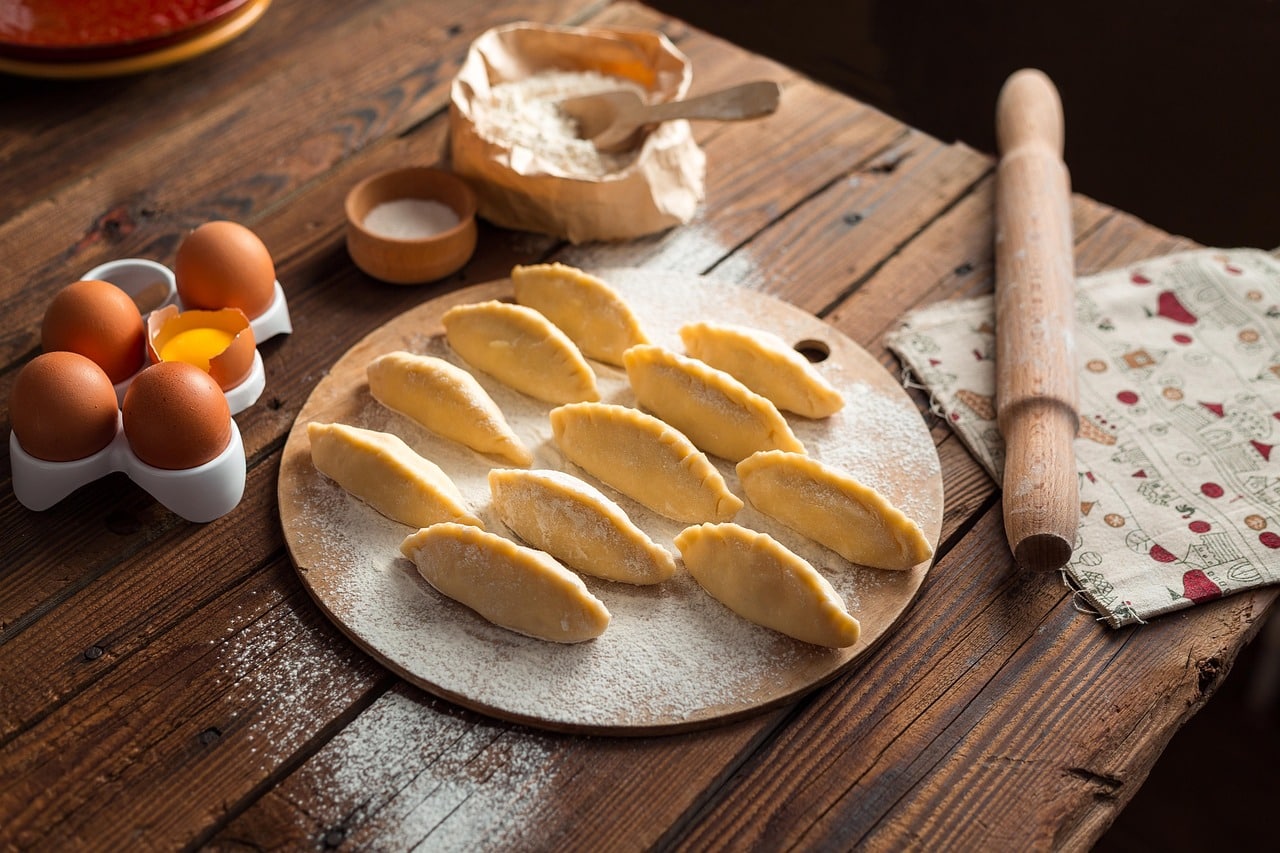
What Affects Cooking Time
The use of steam allow the food to cook in a shorter period of time in a pressure cooker. A slow cooker use low and moist heat to cook the food over a long period. This slow cooking allows the fibers of the food to break down without drying out the food during the cooking process.
The size of the batch of food affect the time required for the food to cook. A pork chop cooked alone will take less time to cook than four pork chops cooked at the same time. The four pork chops will crowding the cooking area and trapping steam, which will slow the cooking process of the pork chop.
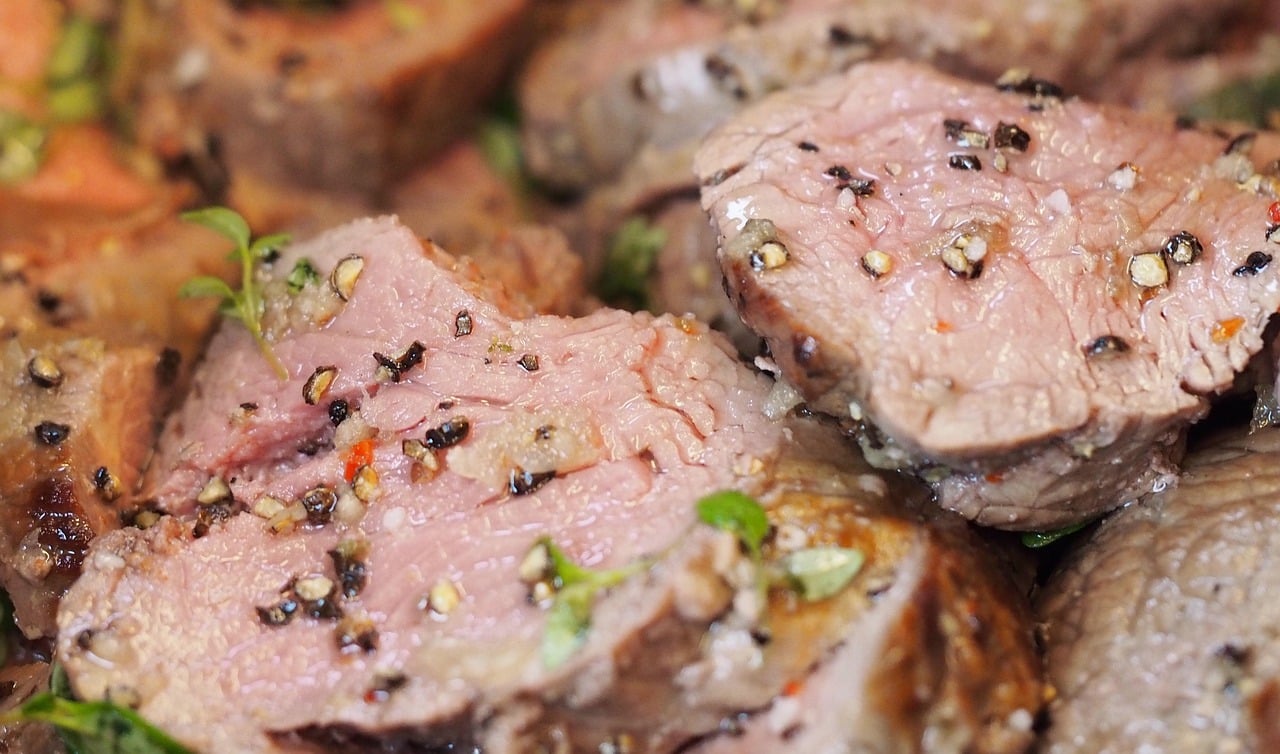
The thickness of the food will also change the cooking time. A 1.5 centimeter salmon fillet will cook faster than a 3-centimeter beef roast slice. The heat will take longer to travel from one side to the other of the thick cut of beef.
The altitude where the cooking takes place will impact the cooking time. Cooking times change with altitude due to the thinner air at higher altitude. Water will boil at a lower temperature at high altitude, so it will take longer to cook the food.
When changing cooking methods, consider the logic of the original recipe as well as the factor related to your new cooking method. If you are changing a recipe from a slow cooker to an oven, you will have to change the cooking time. You can use method ratio to calculate the new cooking time.
An air fryer runs at 70 percent of the speed of an oven. Add a buffer to the cooking time to ensure you dont remove the food from the appliance too soon. Many people make mistake in cooking with different appliance.
Many people do not account for the thickness of the food they are preparing. If you check the food only on the thin side, the food might be removed from the heat source before the thicker part is fully cooked. People also often forget that crowding the food together will increase the cooking time.
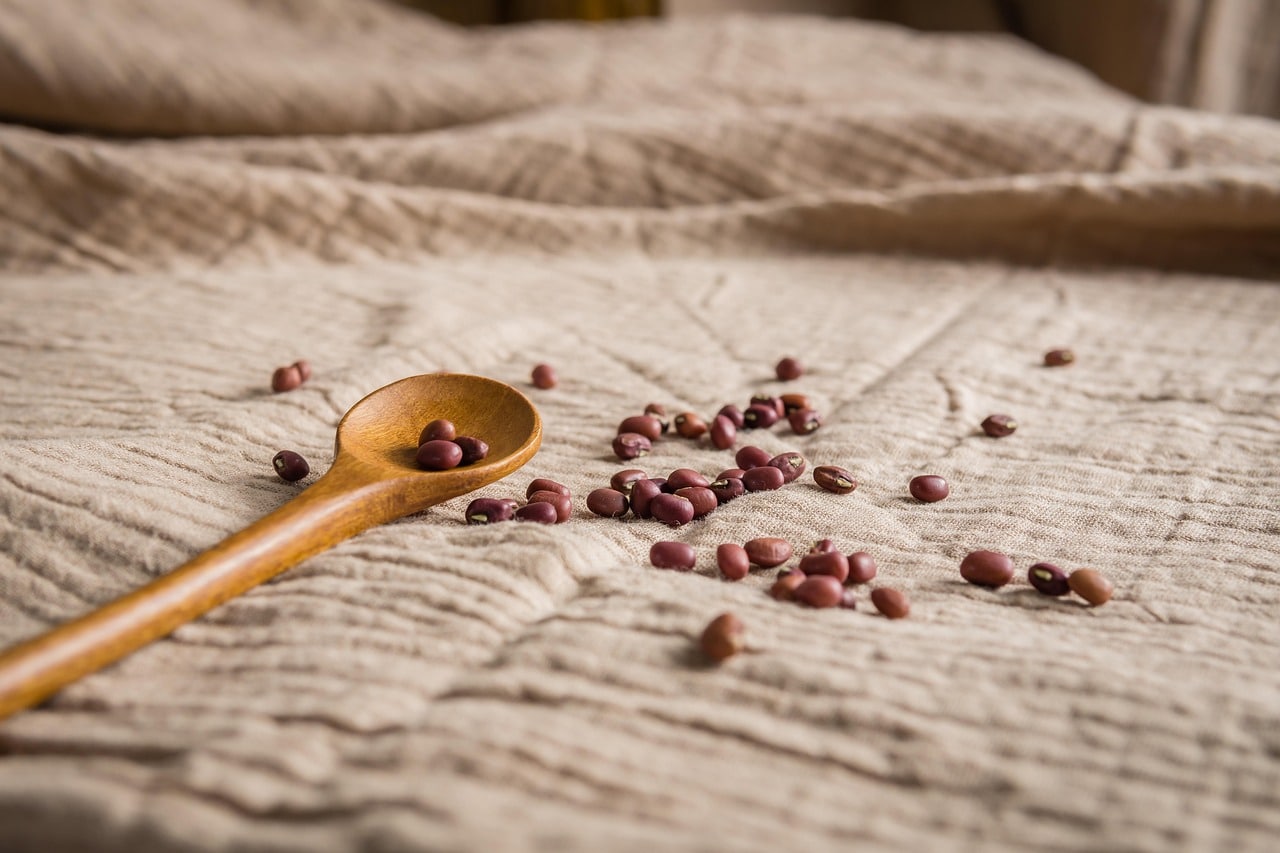
Dense food, like dry beans, will always take longer to cook. When cooking with fast appliances, it is always best to start with a conservative cooking time. Always probe the thickest part of the food to determine if it is cooked.
The shape of the pan will impact the cooking of food. A shallow tray will allow food to crisp more better in an air fryer. However, a deep pot is better for a pressure cooker to allow for cooking with high pressure.
If the food contains moisture, the cooking time will change. Foods cooked in a covered pan will take longer than food cooked in an uncovered pan. If the food is frozen, add 50 percent of the cooking time to allow for the food to thaw before cooking.
The internal temperature and texture of the food are more important to note than the timer on the appliance. Presets is common in moddern cooking appliances. These presets use many recipe to identify the factor that impact cooking time.
For example, when roasting vegetables, the air fryer will preset the cooking time and temperature for the vegetables. If you are cooking cookies in an air fryer, cook for a shorter time than the cookie recipe state and add a one minute buffer to prevent the cookies from cooking too long. Slow cooker recipes can be easily converted to high-pressure recipe for a pressure cooker.
However, adjust the time for the beans to rehydrate. When converting recipe, you gain a better understanding of each appliance. For example, a pressure cooker can cook food quickly but might cook fish to a too soft texture.
Although a stovetop simmer takes longer, it is better for sauce due to evaporation. Depending on the ratio used for cooking, you can prepare food with different trade-off. Some appliances offer more speed but require the food to be more tender.
Others require more care to maintain moisture in the food. When cooking with any appliance, always use your judgment after performing the recipe conversion. While the recipe conversion will come close to the proper cooking time, you must use your sense to determine if the food is done cooking.
If you are not sure if the food is done, undercook the food to allow for resting of the food once you remove it from the appliance heating source. Overcooking of food cannot easily be fixed. By using the time ratio, adding the buffer time, and ensuring the thickest part of the food is fully cooked, you can successfully adapt a recipe to any cooking appliance.