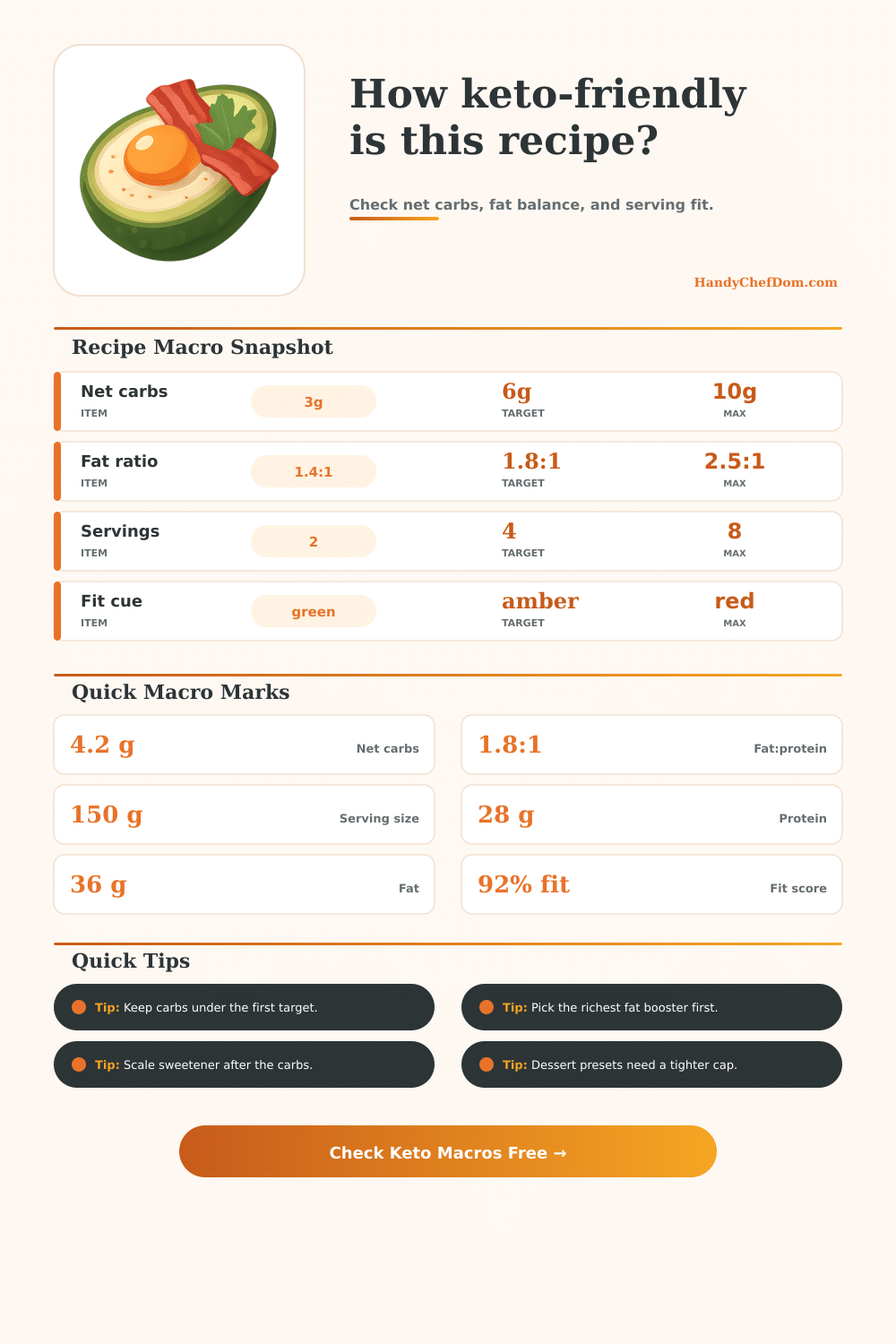
Keto Recipe Calculator
Build a keto-friendly recipe balance by checking net carbs, fat ratio, and portion size before the meal hits the table.
Choose a batch style, pick the main ingredients, then tune the carb cap and fat ratio so the result stays in a keto lane.
| Protein | Cal | P / F | Note |
|---|---|---|---|
| Chicken thighs | 209 | 26 / 11 | Even base |
| Salmon | 208 | 20 / 13 | Rich omega-3 |
| Ground beef | 254 | 26 / 17 | Deep flavor |
| Eggs | 143 | 13 / 10 | Easy binder |
| Pork belly | 518 | 9 / 53 | Very rich |
| Shrimp | 99 | 24 / 0 | Very lean |
| Fat Booster | Cal | Fat | Note |
|---|---|---|---|
| Butter | 717 | 81 | Classic |
| Olive oil | 884 | 100 | Clean finish |
| Cream cheese | 342 | 34 | Silky body |
| Mayo | 680 | 75 | Cold prep |
| Avocado | 160 | 15 | Mild texture |
| Heavy cream | 340 | 36 | Soft richness |
| Veg Base | Carbs | Fiber | Net |
|---|---|---|---|
| Cauliflower rice | 5.0 | 2.0 | 3.0 |
| Zucchini | 3.1 | 1.0 | 2.1 |
| Spinach | 3.6 | 2.2 | 1.4 |
| Broccoli | 6.6 | 2.6 | 4.0 |
| Mushroom | 3.3 | 1.0 | 2.3 |
| Asparagus | 3.9 | 2.1 | 1.8 |
| Sweetener | Use | Net | Note |
|---|---|---|---|
| Erythritol | Blend | 0 | Cool finish |
| Allulose | Syrup | 0.4 | Soft browning |
| Monk fruit | Blend | 0 | Very small dose |
| Stevia | Drop-in | 0 | Strong taste |
| Xylitol | Blend | 8 | Counts more |
| None | Skip | 0 | Savory route |
Use this calculator to shape a keto recipe before cooking. Compare net carbs, fat balance, and portion size so the dish lands closer to your daily macro target cleanly.
Ketogenic cooking require precision with the macronutrient that you consume to ensure that your body remain in a state of ketosis. Ketosis is the state in which your body burn fat for fuel. To maintain ketosis, many people must consume between 20 and 50 gram of carbohydrates per day.
When preparing recipe, you must calculate the net carbohydrates in the recipe. The net carbohydrates is the total carbohydrates in a food item minus the fiber in that food item. Since net carbohydrates are the type of carbohydrate that will raise the blood sugar in your body, it is important to calculate this value for each recipe that you prepare.
How to Cook for a Keto Diet
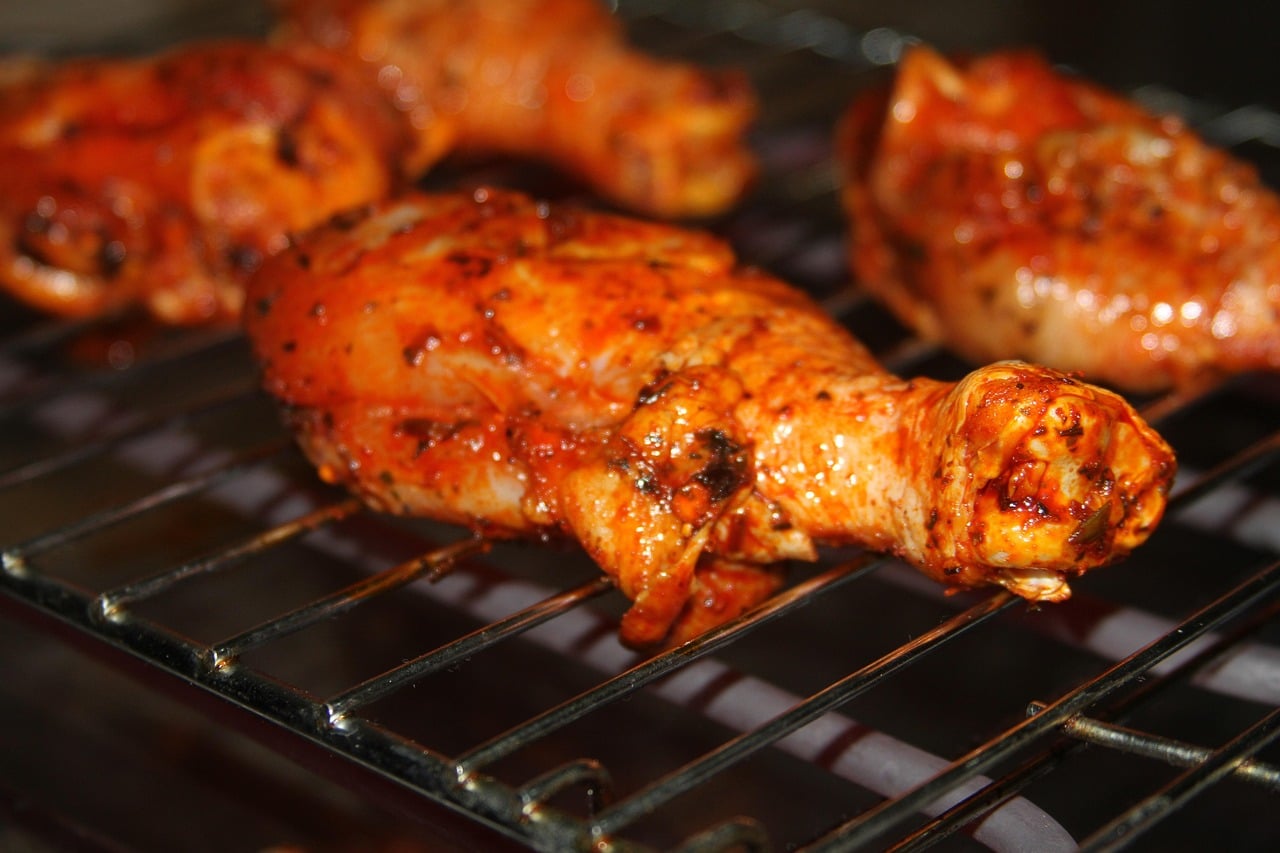
The first ingredient that you should consider when preparing an ketogenic recipe is the protein that you will use in the recipe. Chicken thigh contain 26 grams of protein and 11 grams of fat per 100 grams of chicken thighs. Pork belly contain 53 grams of fat and only 9 grams of protein per 100 grams of pork belly.
Shrimp is a lean protein alternative that contain nearly zero fat per 100 grams of shrimp. However, you will need to add fat to the recipe if you use shrimp as your protein source. Too much protein may prevent your body from remaining in ketosis because the liver will metabolize excess protein into glucose through an process of gluconeogenesis.
Selecting a protein for your recipe, you can then add a fat booster to your recipe. Cooking for ketosis require that the fat-to-protein ratio of your meal be at least 1.8:1. Butter contains 81 grams of fat per 100 grams of butter.
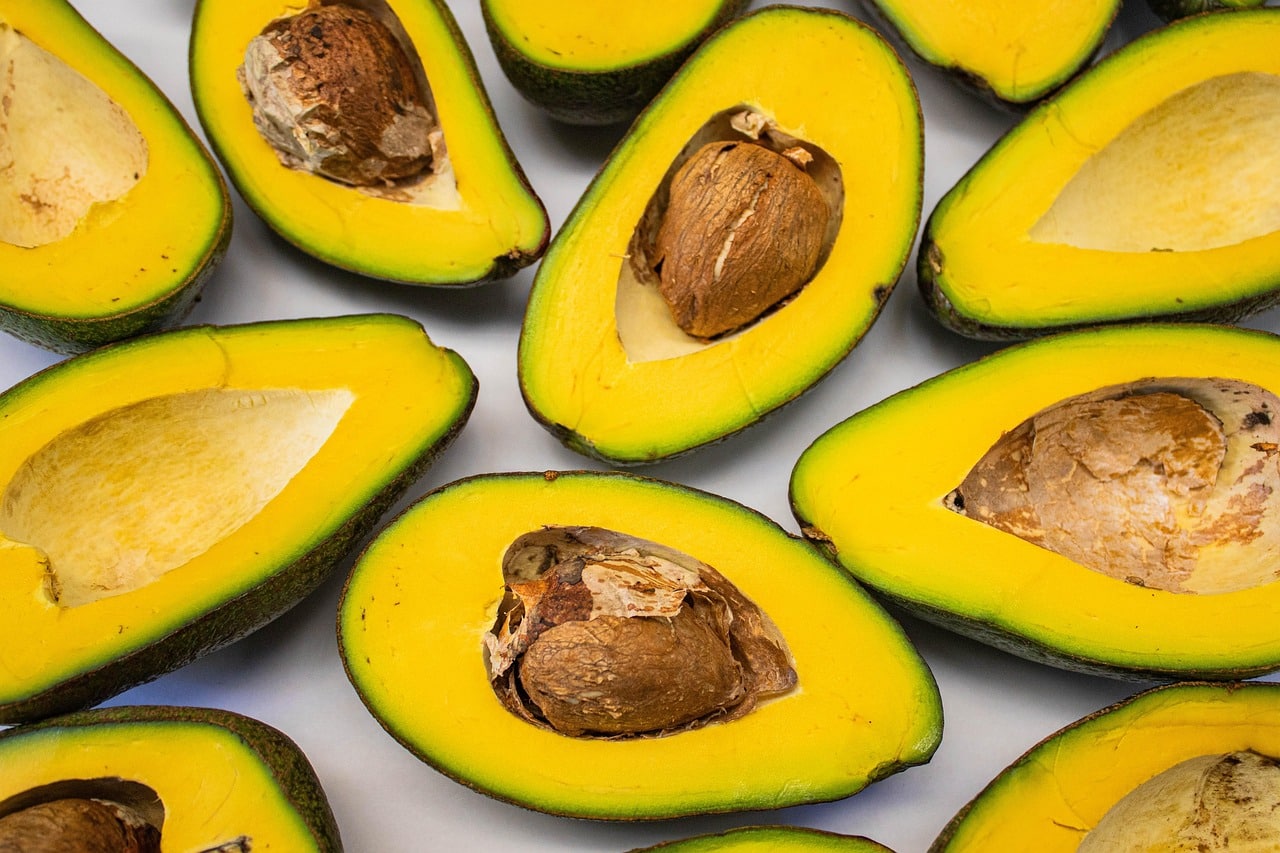
Heavy cream contain 36 grams of fat per 100 grams of heavy cream, but heavy cream also contain carbohydrates. Avocado contains healthy fat and fiber. The fiber in the avocado will lower the net carbohydrate count of the avocado.
Adding these type of fat boosters to your recipe will increase the satiety of the meal and help to stabilize your energy level. After adding your protein and fat boosters, you can begin to add vegetable to increase the volume of the recipe. However, you must ensure that the vegetables that you use contain low amount of net carbohydrates.
Cauliflower rice contain 5 grams of total carbohydrates and 2 grams of fiber for a net carbohydrate count of 3 grams per 100 grams of cauliflower rice. Broccoli contain 4 grams of net carbohydrates per 100 grams of broccoli. Almond flour is useful for bake substitutes for traditional flour.
However, almond flour contain 11 grams of net carbohydrates per 100 grams of almond flour. You can use these vegetables in your recipe, but you must control the portion of vegetable that you use to maintain ketosis. The last ingredient to consider when preparing a ketogenic recipe are sweeteners.
The best sweetener for ketoses diets are erythritol and monk fruit because these sweetener contain zero grams of net carbohydrates. Xylitol, another sweetener, contain 8 grams of carbohydrates per 100 grams of product so it should be used in moderation in your recipes. Calculating the net carbohydrate count and fat-to-protein ratio of your recipe before adding sweeteners will ensure that you do not go over the carbohydrate limit for ketogenic diets.
If you want a fat-to-protein ratio of 1.8:1, you will consume 36 grams of fat for every 20 grams of protein in your recipe. Despite the precision that you may have considered for the preparation of your ketogenic recipes, there are a couple of the most common mistake that can be made with ketogenic cooking. These mistakes include overlooking the fiber content of food and ignoring the importance of satiety in ketogenic diets.
If you overlook the fiber content of food, you will incorrectly calculate the carbohydrate content of your recipes. Additionally, if you focus too much on the fat-to-protein ratio of your recipes, you may ignore the importance of feeling full after eat. Using presets for your ketogenic recipes can help you to avoid these mistakes.
Presets can provide you with a starting point for creating recipes like a creamy chicken skillet. Using a creamy chicken skillet that contain chicken thighs, cream cheese, and cauliflower will provide you with a high fit score for your ketogenic cooking goals. This recipe can be prepared using both imperial unit and metric units for ease of measuring both sweet and savory ingredient.