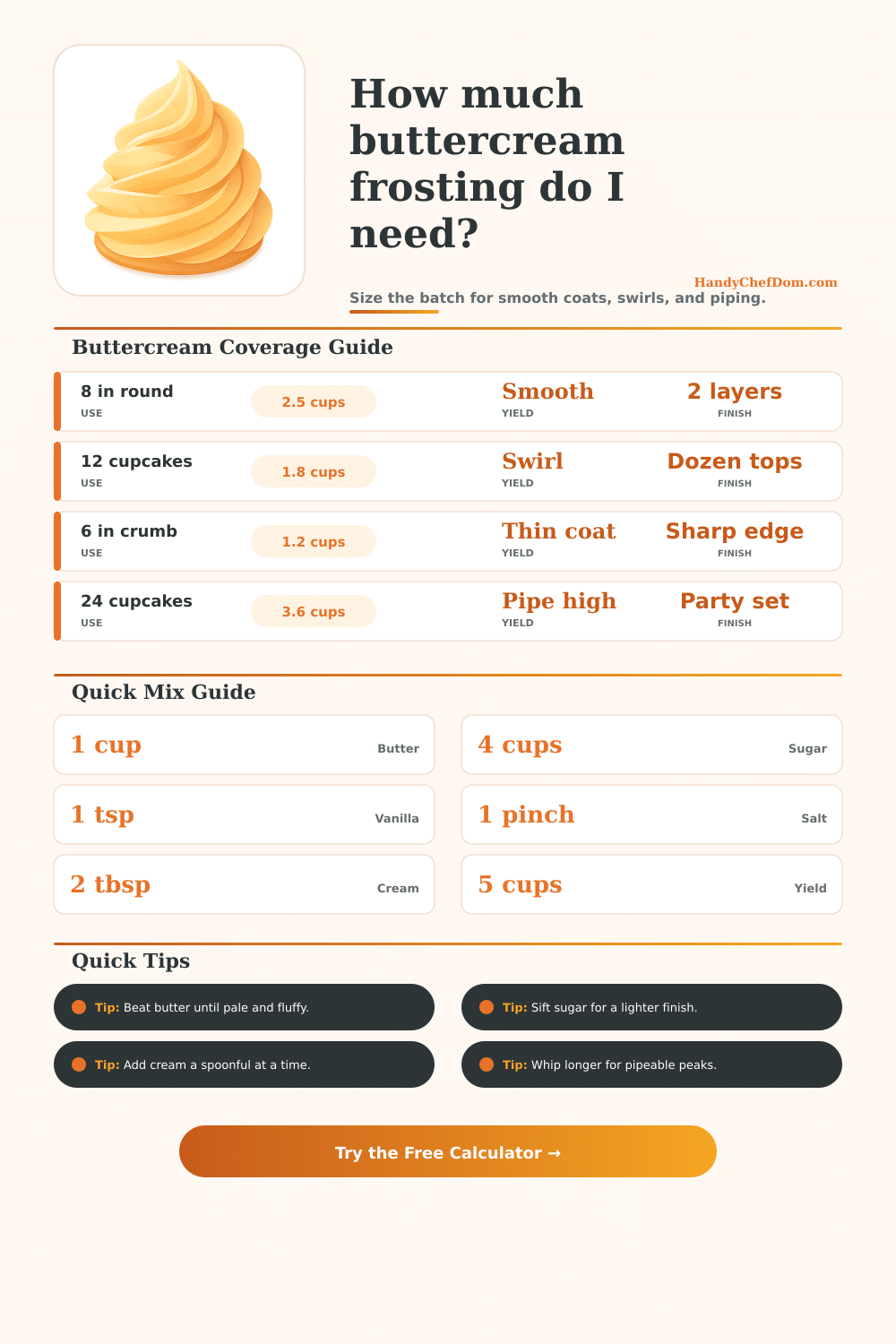
Buttercream Frosting Calculator
Estimate a buttercream batch for cake coats, cupcake swirls, and piping work with a finish-aware mix that follows your pan size and style.
Choose the cake shape, buttercream style, and finish target. The calculator adjusts for layers, thickness, and reserve frosting so the batch stays practical.
| Style | Factor | Use | Note |
|---|---|---|---|
| Smooth coat | 1.00x | Clean sides | Classic finish |
| Crumb coat | 0.62x | Thin shell | Locks loose crumbs |
| Layer fill | 0.78x | Between tiers | Gentle spread |
| Tall swirl | 1.22x | Cupcakes | High dome look |
| Rosette top | 1.32x | Decor work | Pipe generous peaks |
| Rustic swipe | 0.84x | Loose finish | Quick and soft |
| Pan | Layers | Base | Need |
|---|---|---|---|
| 6 in round | 2 | 1.7 c | Thin coat |
| 8 in round | 2 | 2.5 c | Most cakes |
| 9x13 sheet | 1 | 3.2 c | Tray finish |
| 12 cupcakes | 1 | 1.8 c | Dozen tops |
| 24 cupcakes | 1 | 3.5 c | Party set |
| 10 in round | 3 | 4.8 c | Wedding build |
| Type | Butter | Sugar | Liquid |
|---|---|---|---|
| Classic American | 1 part | 4 parts | 2 tbsp |
| Pipeable American | 1 part | 3.8 parts | 2 tbsp |
| Whipped Vanilla | 1 part | 3.4 parts | 3 tbsp |
| Cream Cheese | 1 part | 2.8 parts | 1 tbsp |
| Chocolate | 1 part | 3.6 parts | 2 tbsp |
| Ermine Style | 1 part | 2.6 parts | 3 tbsp |
| Texture | Feel | Finish | Use |
|---|---|---|---|
| Sifted fine | Light | Silky | Sharp edges |
| Fine grind | Soft | Even | Daily cakes |
| Standard | Dense | Robust | Heavier piping |
| Ultra silky | Airy | Glossy | Fancy swirls |
Calculating an amount of buttercream that are needed for a cake requires that you consider the shape of the cake, the type of buttercream, and the amount of decorating that you will have to do on the cake. If you dont calculate the amount of buttercream that you will need for your cake, you may find that you run out of buttercream before you are through with frosting the cake, or you may make to much buttercream and find yourself with some excess buttercream that you will have to discard. The ratio of butter to sugar will determine the texture that the buttercream will have.
American style buttercream, for example, uses a ratio of one cup of butter to four cups of powdered sugar. This ratio work well for American buttercream because it allows the buttercream to have a texture that is relatively sturdy and easy to spreading on a cake. However, if you are piping the buttercream, it may be necesary to use a slightly different ratio of butter to sugar, or to add small amounts of cream to help the buttercream hold its peak.
How Much Buttercream Do You Need?
The amount of buttercream that is needed for round cakes are not the same as the amount needed for sheet cakes. Additionally, the amount of buttercream needed for a tiered cake will differ from that needed for cakes that has tall layers. Finally, the amount of buttercream needed for cupcakes are different than that needed for other types of cakes.
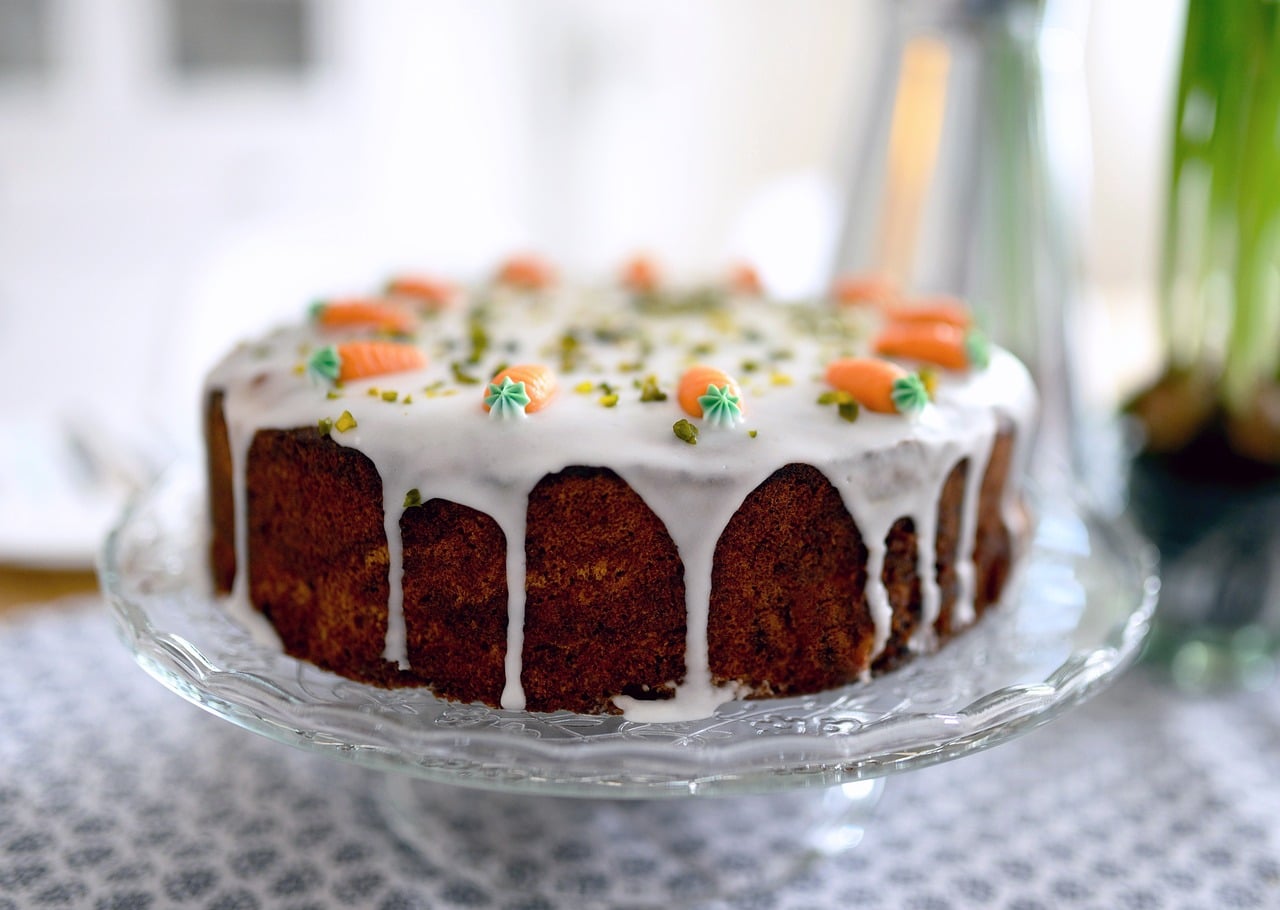
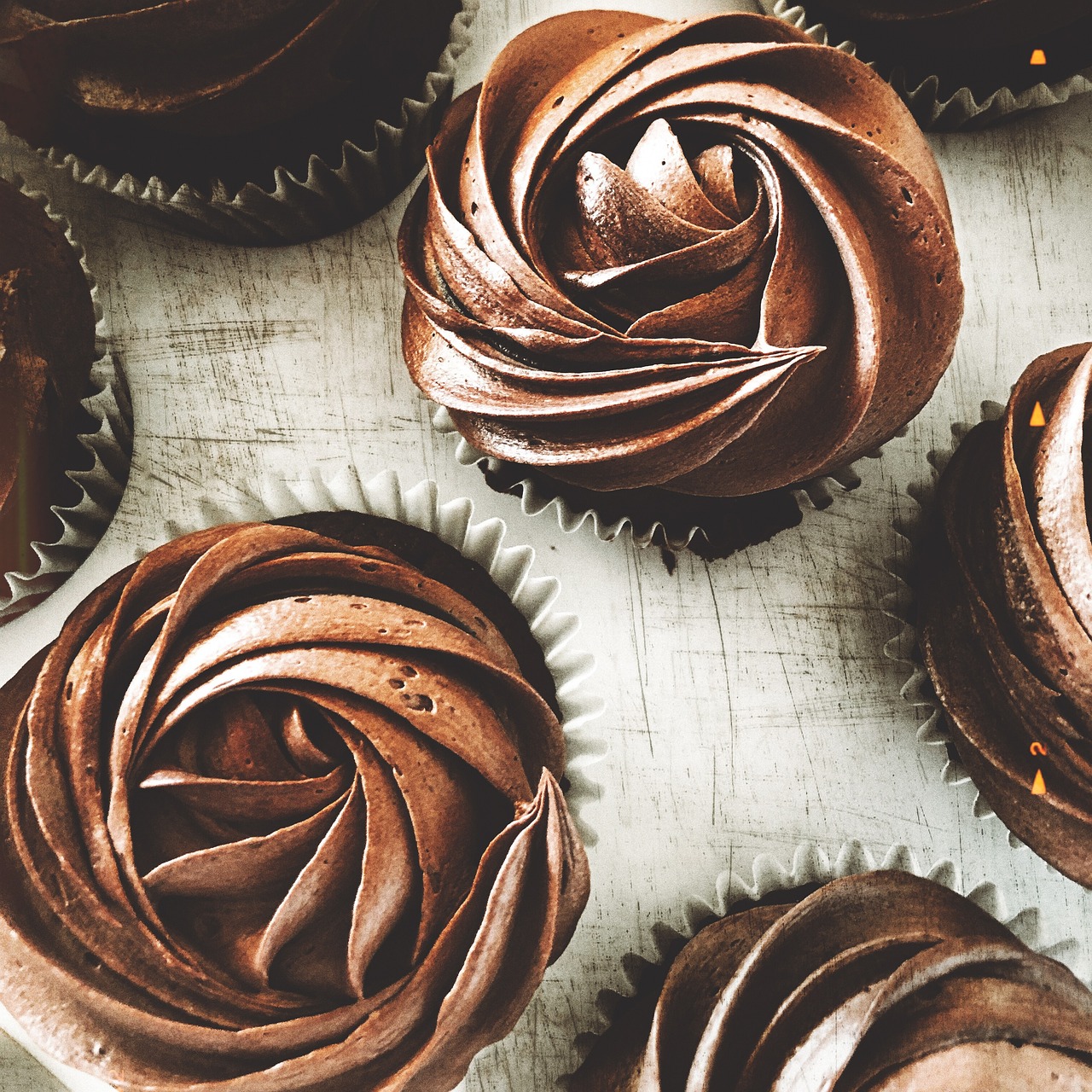
Depending upon the decoration that you will use on the cake, the amount of buttercream will change. For example, if the frosting that you use on the cake is to be of a rustic style, you will need less buttercream than, say, if you were to use rosette decorations of a smooth style. Additionally, if you plan on piping large rosettes or swirls onto the cake, you will need approximately thirty percent more buttercream than you would for a smoothly buttercream.
The temperature of the butter that is used will also affect the buttercream. If you use butter that is warm, the buttercream will melt. Cool butter that is at room temperature will provide buttercream that is silky to the touch.
Regardless of the type of buttercream that you use for your cake, you should always prepare an overage margin of buttercream. An overage margin ensure that you will have some extra buttercream should you need to make touch-ups in any part of the decorating process. Touch-ups may be necessary after the cake has been chilled, for instance, as the edges of the cake may become dull with cooling.
Having a small amount of extra buttercream prepared in a separate bowl will allow you to correct any mistake that you may make in frosting the cake. Different types of buttercream require different amounts of ingredients. Cream cheese frosting, for instance, requires the addition of cream cheese to the frosting ingredients.
The cream cheese provides a tangy flavor to the frosting that balance the sweetness of the cake. Chocolate buttercream include cocoa powder in the recipe. Cocoa powder creates a buttercream that is more denser than other types of buttercream.
Ermine frosting includes cooked flour in place of powdered sugar. This allows the frosting to have a silky texture to the touch that does not contain the grit of powdered sugar. The type of buttercream that you create will determine the purpose for which you use the buttercream.
Buttercream that is fluffy will not pipe as well as buttercream that is firm. Common mistakes in the preparation of buttercream include skipping the beating of the buttercream. Beating the buttercream create a fluffy texture.
Additionally, you should always sift powdered sugar before you mix it with the butter. This prevent any lumps from forming in the buttercream. Cream should also be added to the buttercream in increments of a single spoonful at a time.
Adding all of the cream at once could change the texture of the buttercream in an undesirable way. Overmixing the buttercream will cause the buttercream to curdle, while undermixing the buttercream will result in a heavy buttercream. A pinch of salt can be added to the buttercream for each cup of buttercream that is prepared.
Salt can enhance the flavor of the buttercream. When frosting the layers of a cake, you should use a dam of buttercream between the cake layer to prevent the layers from sliding. Additionally, you should use less buttercream for the cake filling than for the buttercream that will be used for the outside of the cake.
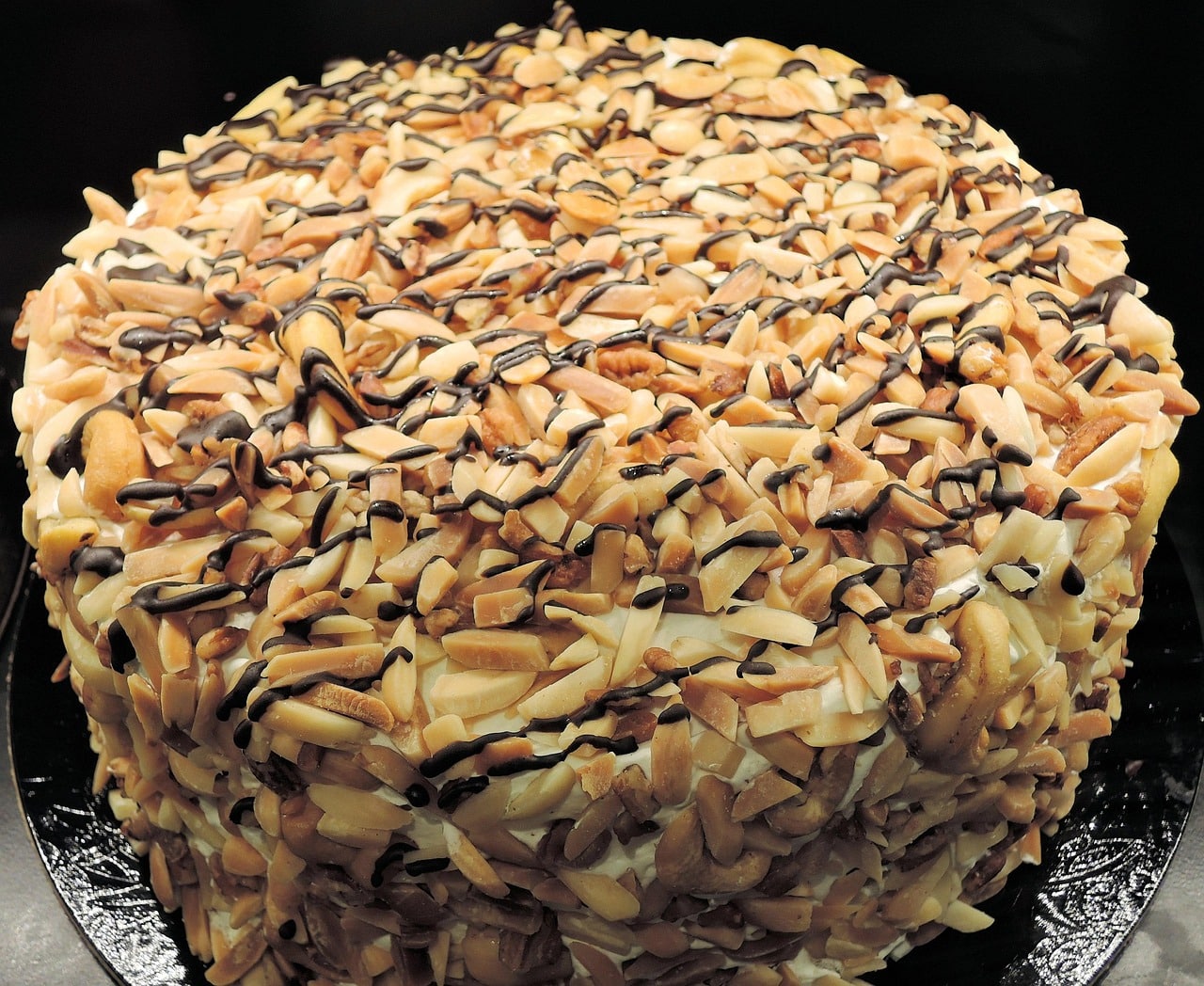
Sheet cakes will require a relatively large amount of buttercream due to the large surface area of these cakes. A 9×13 inch sheet cake, for instance, may require three cup of buttercream. You can use tools to convert buttercream measurements from cups to gram.
Being able to manage the measurements of ingredients will ensure that you have the correct amount of buttercream for your cake recipe.