Shortcrust Pastry Calculator
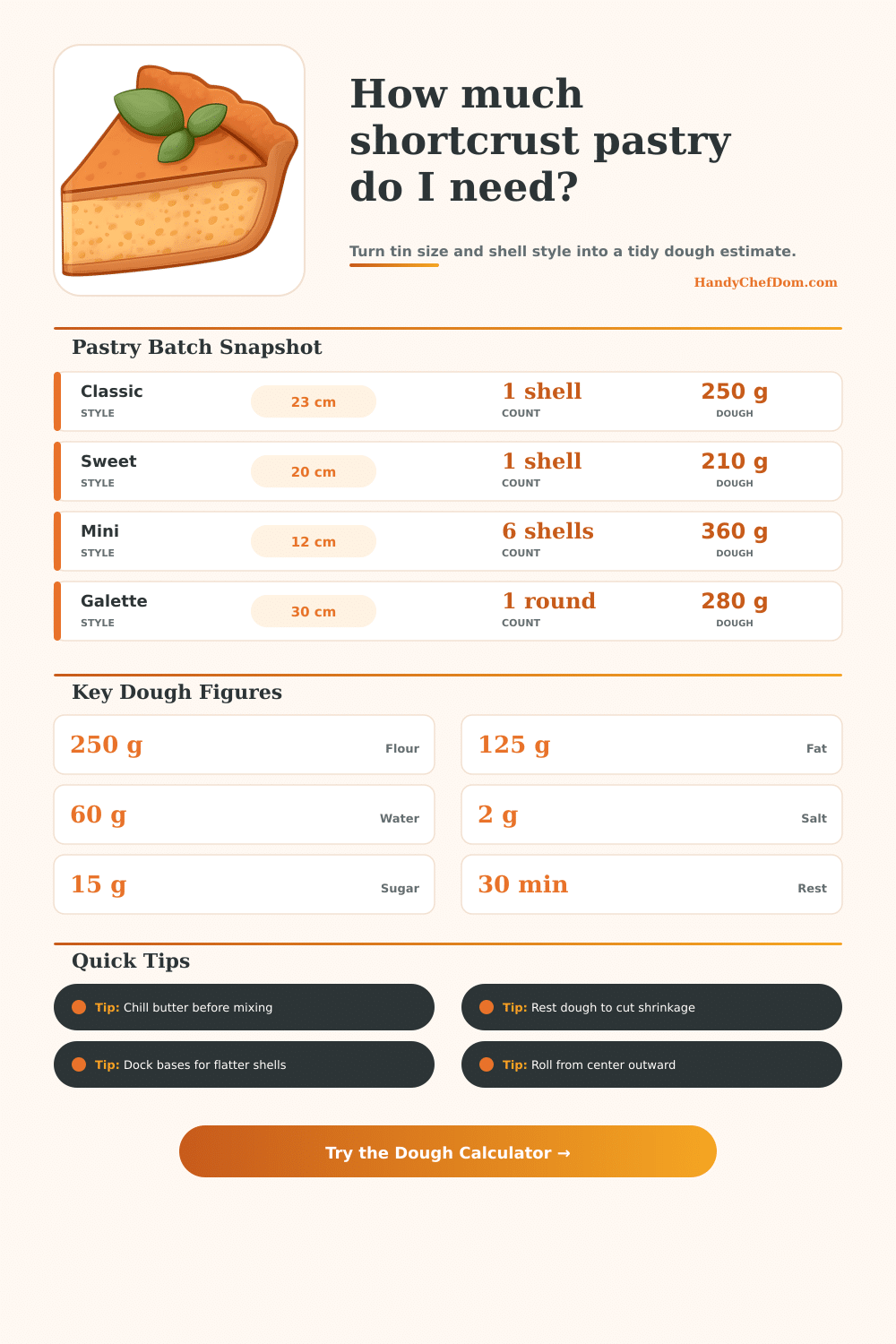
Scale pastry dough for tarts, pies, and mini shells with a clean batch estimate built around tin size, thickness, and style.
| Shell | Span | Wall | Use |
|---|---|---|---|
| 23 cm tart | 23 cm | 2.5 cm | Fruit tart |
| 20 cm quiche | 20 cm | 3.0 cm | Savoury fill |
| 24 cm pie | 24 cm | 3.5 cm | Deep pie |
| Mini tartlets | 12 cm | 1.8 cm | Small bites |
| Style | Fat | Water | Trait |
|---|---|---|---|
| Classic savory | 50 g | 24 g | Balanced |
| Sweet tart | 55 g | 22 g | Fine crumb |
| Rich pate | 62 g | 18 g | Short bite |
| Vegan blend | 48 g | 26 g | Gentle roll |
| Thickness | Roll | Feel | Cue |
|---|---|---|---|
| 2 mm | Thin | Delicate | Grease line |
| 3 mm | Standard | Neat | Most tarts |
| 4 mm | Thick | Sturdy | Deep pies |
| 5 mm | Chunky | Rustic | Hand pies |
| Bake stage | Temp | Time | Finish |
|---|---|---|---|
| Chill lined tin | Fridge | 20 min | Firm shell |
| Blind bake | 190 C | 15 min | Set base |
| Weight off | 190 C | 8 min | Dry edges |
| Gold finish | 180 C | 6 min | Even color |
Use this calculator to size shortcrust pastry for tarts, pies, and mini shells. It turns tin measurements into a tidy dough estimate.
Compare styles, then chill, roll, and trim with a more consistent result.
Shortcrust pastry is used to make tarts and pies, and the amount of shortcrust pastry that you use will depend upon the size of a tin that you plan to use for teh pastry. If you use too little shortcrust pastry, the edges of the shortcrust pastry will be thin and may crack during the baking process. If you use too much shortcrust pastry, you will have scraps of shortcrust pastry left over after you have lined the tin with the pastry.
Therefore, calculating the weight of the shortcrust pastry that you will need before you begin lining the tin with the shortcrust pastry is essential to the recipe. The dimension of the tin will also affect the amount of shortcrust pastry that you need; tins with tall walls will require more shortcrust pastry than those with a shallow tart ring. This is due to the fact that deep pies will have tall walls of shortcrust pastry that must be baked versus those with a shallow tart ring that has shorter walls of shortcrust pastry.
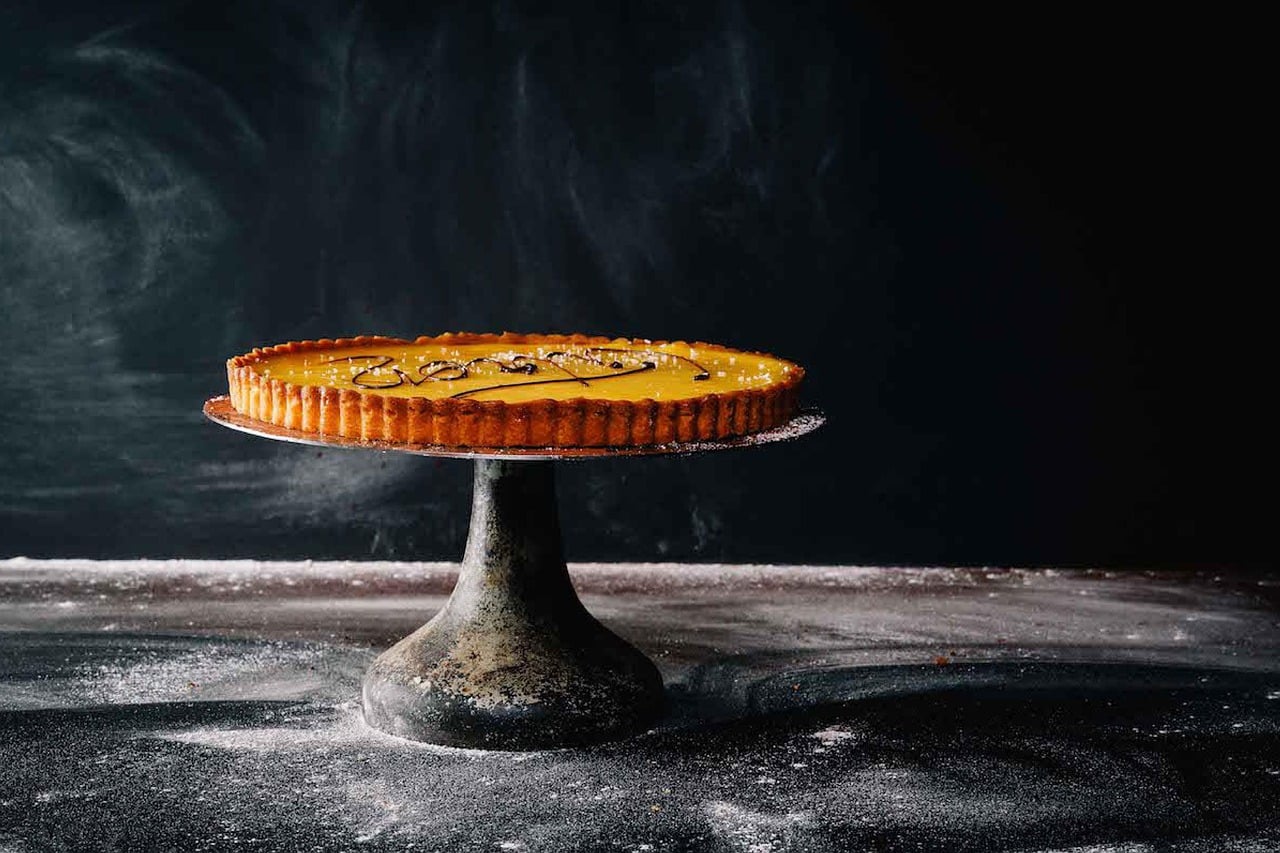
How to Make and Bake Shortcrust Pastry
Shortcrust pastry contains ingredient like fat, flour, and water. The fat will help to create a crumb like texture of the shortcrust pastry, while the water will help to hold the shortcrust pastry together. It is important to use care in the amount of water that you use in the shortcrust pastry recipe, as using too much water will activate the gluten in the shortcrust pastry, which will lead to the shortcrust pastry containing more chewiness than desirable.
The ratio of fat to flour can differ in shortcrust pastry depending upon the flavor of the shortcrust pastry. For instance, savory shortcrust pastry may use a ratio of fat to the weight of the flour of half the weight of the flour, while sweet shortcrust pastry recipes often contains both sugar and extra fat to the shortcrust pastry to create a finer crumb that is often desired for sweet fillings. Shortcrust pastry should be rolled to specific thicknesses; two millimeters if the shortcrust pastry will be used for a delicate shell, and four millimeters for deep pies.
Most tart recipe work best with three millimeters of shortcrust pastry. If you roll the shortcrust pastry to a thin thickness, it will bake more quickly and become crisp. However, thin shortcrust pastry is more likely to tear when you place it into the tin.
Thicker shortcrust pastry will hold the filling of the pie more effective; however, it will not crisp as well as shortcrust pastry that is rolled to a thinner thickness. Shortcrust pastry should also be rolled with a ten percent margin of extra dough; the shortcrust pastry will shrink while baking. Before rolling the shortcrust pastry, it is essential for the shortcrust pastry to rest in the refrigerator.
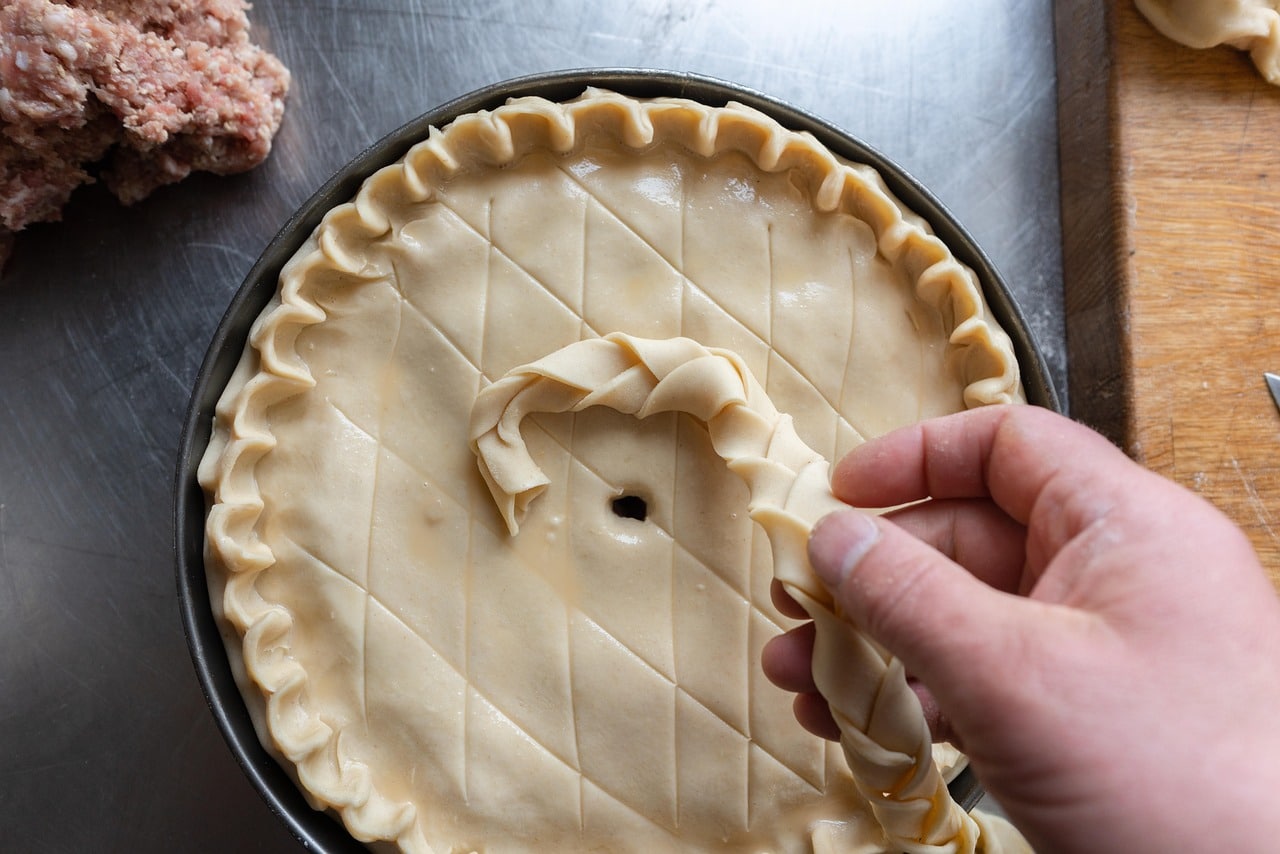
Shortcrust pastry should rest for twenty to forty minutes while rolling; this resting period allows the gluten in the pastry to relax, and the fat to firm up. If you roll shortcrust pastry without allowing it to rest, it can become sticky while baking, and may also shrink in the oven. Cold fat will create flakes in the shortcrust pastry, while rested shortcrust pastry will drape over the tin rather than spring back when pressed.
There are some mistake that should be avoided when preparing shortcrust pastry. One of the most important mistake to avoid is overworking the shortcrust pastry while preparing the fat and flour to create the shortcrust pastry. Overworking the shortcrust pastry will warm the shortcrust pastry fat, which can melt the flour and lead to a tough shortcrust pastry.
Additionally, it is also important to avoid adding too much water to the shortcrust pastry. Too much water will also activate the gluten, and additionally cause the shortcrust pastry to shrink significantly when baked. To avoid a soggy bottom for tart shells, you can use blind baking.
Blind baking is a process in which you place weights into the lined tart shell while baking to hold the tart shell in place. A fork can also be used to dock the shortcrust pastry base; this will create small hole in the base of the pastry that will allow steam to escape during baking, rather than creating bubbles with the steam. Following the shortcrust pastry recipe, there are certain steps that should be followed.
First, the shortcrust pastry will need to be chilled for twenty minutes while baking; this will ensure that the shortcrust pastry is firm before baking. Second, you should blind bake the shortcrust pastry at 190 Celsius for fifteen minutes with the weights in the tart shell, then bake for eight minutes at the same temperature without the weights. This will ensure that the tart shells edges are dry.
Finally, the tart should be baked to complete doneness while blind baking at 180 Celsius. Following this baking sequence will result in shortcrust pastry that is crisp and stable, and can contain various type of fillings. You should of used alot of care with the dough.