Alcohol Servings Calculator for Cocktails and Parties
Estimate standard drinks, mixed ABV, and bottle planning from real pour sizes so prep stays accurate from first round to last call.
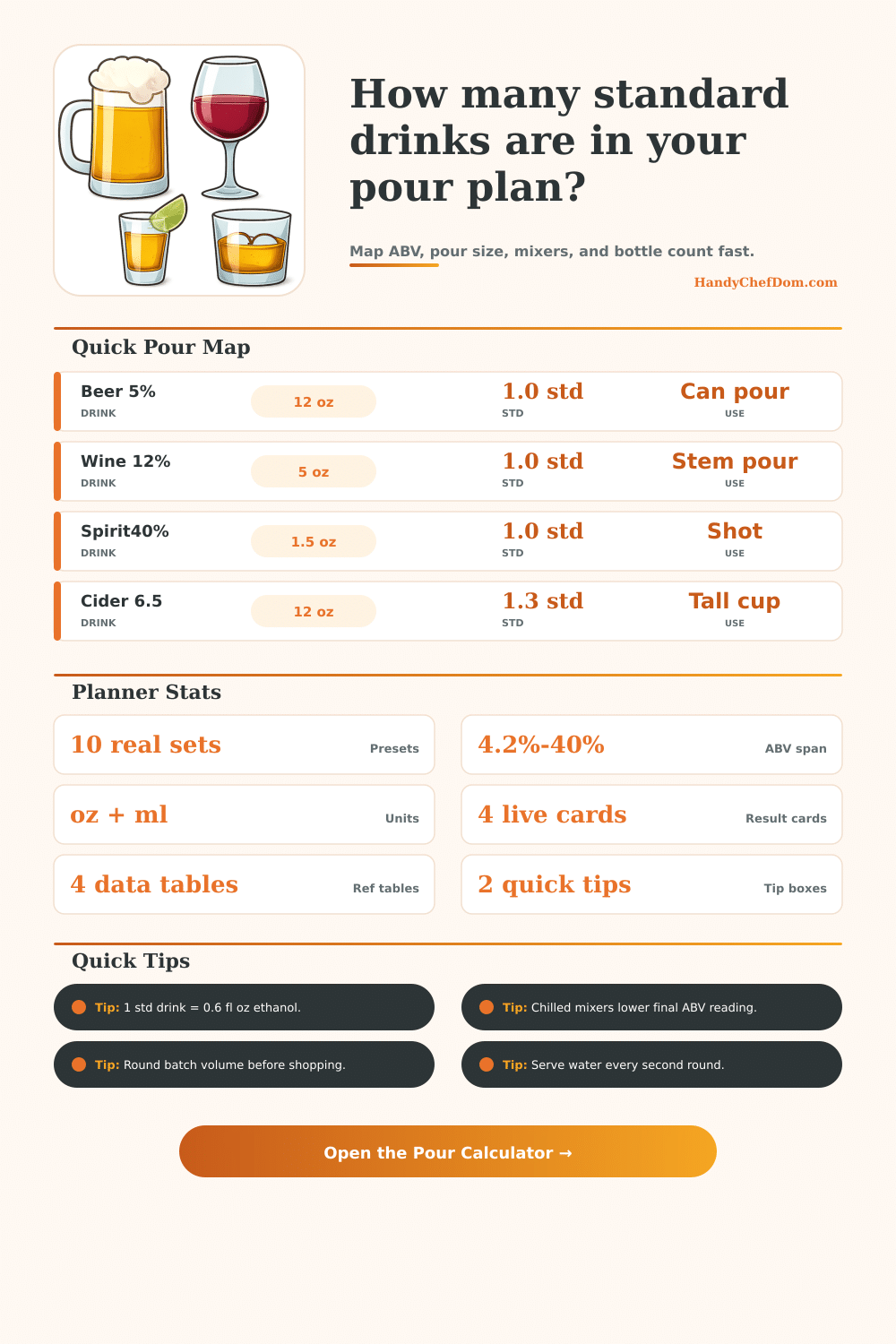
Choose a beverage profile, then tune ABV, pour volume, and mixer details. Standard drink math: pure alcohol ounces divided by 0.6.
| Beverage | Typical pour | ABV | Std drinks |
|---|---|---|---|
| Light lager | 12 oz | 4.2% | 0.84 |
| IPA | 16 oz pint | 6.8% | 1.81 |
| Red wine | 5 oz | 13.5% | 1.13 |
| Sparkling wine | 5 oz | 12% | 1.00 |
| Whiskey | 1.5 oz | 40% | 1.00 |
| Sake | 6 oz | 15% | 1.50 |
| Coffee liqueur | 2 oz | 24% | 0.80 |
| Dry cider | 12 oz | 6.5% | 1.30 |
| Measure | US fl oz | Milliliters | Kitchen cue |
|---|---|---|---|
| 1 tsp | 0.17 oz | 5 ml | Syrup add-in |
| 1 tbsp | 0.5 oz | 15 ml | Citrus lift |
| 1 jigger | 1.5 oz | 44 ml | Shot measure |
| Half jigger | 0.75 oz | 22 ml | Split base |
| 1 cup | 8 oz | 237 ml | Punch batch |
| Quart | 32 oz | 946 ml | Mixer jug |
| 1 liter | 33.8 oz | 1000 ml | Prep bottle |
| Dash | 0.03 oz | 1 ml | Bitters cue |
| Package | Volume | 1.5 oz pours | 5 oz pours |
|---|---|---|---|
| Half bottle | 375 ml | 8 shots | 2 glasses |
| Standard bottle | 750 ml | 16 shots | 5 glasses |
| Liter bottle | 1000 ml | 22 shots | 6 glasses |
| Magnum | 1500 ml | 33 shots | 10 glasses |
| Growler | 64 oz | 43 shots | 13 glasses |
| Mini keg | 5 liters | 113 shots | 33 glasses |
| Half keg | 15.5 gal | 1322 shots | 397 glasses |
| Case beer | 24 x 12 oz | 192 shots | 58 glasses |
| Serve type | Mixer add | Ice melt | Final ABV cue |
|---|---|---|---|
| Neat spirit | 0 oz | 0-2% | Near label ABV |
| On the rocks | 0 oz | 8-15% | Softer finish |
| Highball | 3-6 oz | 5-12% | Lower strength |
| Spritz | 2-4 oz | 4-10% | Session friendly |
| Wine spritzer | 2-3 oz | 2-6% | Cut to half-ish |
| Cocktail up | 0-1 oz | 15-25% | Shaken dilution |
| Punch bowl | 4-8 oz | 5-10% | Long service |
| Tasting flight | 0-1 oz | 0-5% | Concentrated |
When planning a party, it is possible that the supply of alcohol will run out. People often estimate the amount of alcohol in drinks based off the size of the glass that the drink comes in. However, the size of the glass dont necessarily indicate the amount of alcohol that comes in the glass.
To plan for alcohol at a party, each person must understand the concept of a “standard drink.” A standard drink contain a specific amount of pure ethanol (alcohol). The amount of pure ethanol in a standard drink is approximately 0.6 fluid ounces of pure ethanol. Regardless of the types of drink that is consumed (shot of whiskey, glass of wine, can of beer), a standard drink will contain the same amount of ethanol.
How to Plan Alcohol for a Party
A variety of ingredients can alter the amount of ethanol in a drink. For instance, the addition of ingredients like soda or lime will decrease the alcohol by volume (ABV) of the drink. If a shot of gin are mixed with six ounces of tonic water, the tonic water both increases the volume of the drink and lowers the ABV of the drink.
Additionally, the addition of ice both increases the volume of the drink and lowers its ABV. Because these ingredient can alter the ABV of the drink, it is important to calculate the ABV of each drink prior to mixing them with these ingredients. Each ingredient has the potential to alter the ABV of the drink, so calculating the ABV will allow the host to ensure that each guest recieve the drink that is prepared.
Because some error is likely to occur when preparing alcohol for guests, it is important to purchase extra alcohol to account for this human error. When pouring alcohol for guests, people do not always follow the same measurement as the standard drink. For instance, people may pour more alcohol for their guests than the number of standard drinks calculate.
Some drinks may also spill when poured into glasses. To allow for this error, the host should purchase extra alcohol for the party (known as “safety stock”). It is better for there to be extra alcohol that remains after the party than for the host to have no alcohol for the guests while they are drinking.
Additionally, the way that the alcohol is served will alter the amount of alcohol that must be purchased for the guests. For instance, if small amount of alcohol are served to the guests (such as a tasting flight), less alcohol will be consumed than if large cocktails are served to the guests in highball glasses. The pace at which alcohol is served to the guests will also alter the amount of alcohol that is consumed.
For instance, if alcohol is served slow to the guests, the guests will consume less alcohol than if the alcohol is served quickly. By calculating the number of “pours” of alcohol that will be served per hour, the host can calculate the amount of alcohol that will be consumed for the entire party. By planning the pace at which alcohol will be served, the host can ensure that they do not run out of alcohol during the party.
Additionally, if preparing a large batch of a cocktail, the way that the host will dilute the batch will impact the amount of alcohol that must be prepared. Dilution is the addition of water to the alcohol. Water may be added to a batch of alcohol up front, or the alcohol may be mixed with ice that will melt in the glasses.
If the batch of alcohol is to be diluted, more alcohol must be prepared than if the batch is to be served undiluted. Planning for the alcohol supply at a party with specific calculations will allow the host to calculate the exact number of standard drink that will be prepared. By calculating the number of standard drinks that will be prepared, the host will know how many bottles of alcohol are required to purchase.
Using mathematics to plan the supply of alcohol for guests will ensure that the proportions of the drinks are correct, and that there is a steady supply of alcohol at the party. By calculating the volume of alcohol that the guests will consume, the dilution of the alcohol, and the total number of guests, the host can serve their guests with confidence. Youll should of used alot of extra alcohol to be safe.
It is a moddern problem when peoples supply of drinks runs out too soon. Its actualy easier to just buy too much than to run out. When you’re planning, make sure you dont forget the wines or the beer.
You’re guests will be happy.