Cookie Per Pound Dough Calculator
Estimate cookies per pound from dough weight, cookie size, and dough type, then map tray loads and bake rounds for smoother prep and more predictable batch output.
Use total dough weight, choose a cookie style and size, then apply a waste factor for scooping and pan loss. Add a custom portion if your scoop size differs.
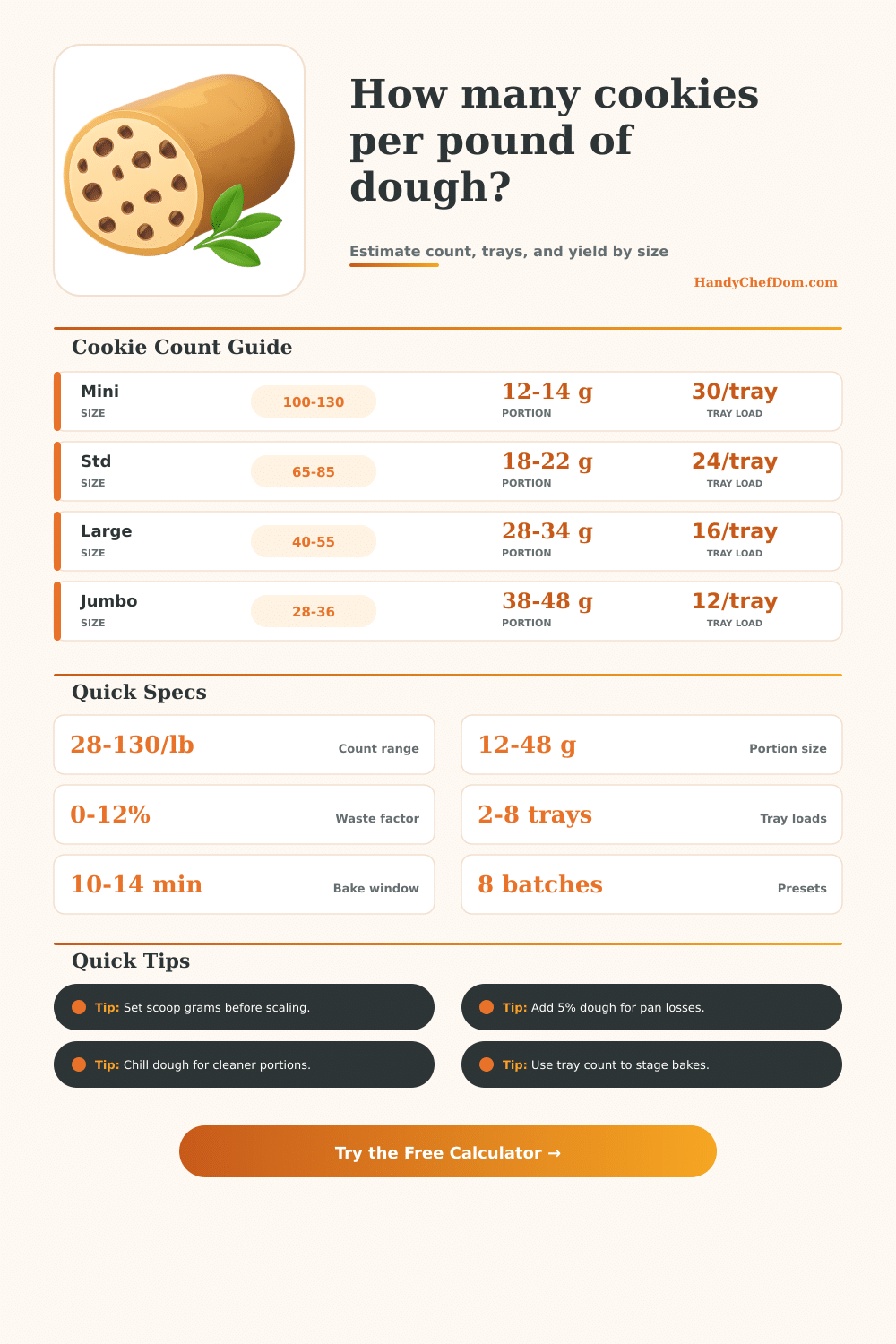
| Size | Portion g | Count/lb | Tray fit |
|---|---|---|---|
| Mini | 12-14 g | 33-38 | 30 per tray |
| Standard | 18-22 g | 21-25 | 24 per tray |
| Large | 28-34 g | 13-16 | 16 per tray |
| Jumbo | 38-48 g | 9-12 | 12 per tray |
| Dough | Mini | Standard | Large |
|---|---|---|---|
| 1 lb | 34 | 23 | 14 |
| 2 lb | 68 | 46 | 29 |
| 5 lb | 170 | 115 | 72 |
| 9 lb | 306 | 207 | 130 |
Calculating the number of cookies produce from a specific amount of dough is a task that many people will eventually have to perform. Whether you are looking to produce a specific number of cookies for a lunchbox, a bake sale, or even holiday tin gift wrapping, it is important to know whether your dough will produce enough cookie to fill those containers. The total amount of dough that you use is the most important variable in calculating the number of cookies that can be produced.
If you begin with a two pound block of dough, for instance, you can calculate how many cookies will be produced based on the weight of each individual cookie portion. The types of dough that you use will also affect the number of cookies that can be produced. Oatmeal dough contains element like oats that give the dough a certain amount of bulk, and the dough tends to hold its shape more better than other types of cookie doughs.
How to Calculate How Many Cookies You Can Make from Dough
For these reason, the same weight of oatmeal dough will contain fewer cookies than the same weight of sugar cookie dough. Other doughs, like peanut butter dough, contain ingredients like fat that affect how the dough spreads on the baking tray. The spread of the peanut butter dough will fall somewhere in between that of oatmeal and sugar cookie dough.
Shortbread dough is another type of dough that will remain substantial in its portions, even if the portion weight are small. It is important to select the correct style of cookie in any cookie calculator for the best match for your baking situation. The portion size that you use for the dough will also have an impact upon the final number of cookies that you can produce.
It is common for cookie scoops to contain slightly different weight of dough throughout the same batch of cookies. These difference will impact the total number of cookies that can be produced. Using a custom portion field to input the weight of each scoop allows for accurate calculation of the total number of cookies.
In addition to considering the portion size, it is also important to account for the waste that occurs in the cookie production process. Some waste will be eliminated when scooping dough with the scoop, but some waste will occur when transferring the dough to the baking tray. A waste factor of 3-8% is introduced if using chilled cookie dough; however, if the dough is warm, you can lose 12% of the total weight.
Beyond calculating the total number of cookies that will be produced, it is also important to calculate the number of tray load of cookies that need to be baked. By knowing how many cookies will fit on a baking tray, you can calculate the total number of times that the oven will need to be used. For instance, if the oven holds two trays at a time and if there are seven total trays of cookies to bake, the total baking timeline can be calculated.
By knowing how many bake rounds will be required, it is also possible to make a decision about whether the oven should be preheated while the dough is resting, or whether the cookie dough should be portioned prior to the baking process beginning. Environmental variables will affect how the dough spreads on the baking tray. Higher humidity in the environment will cause the dough to spread more than intended.
This can lead to fewer cookies being able to be placed on a baking tray. The alternative situation is the use of butter that is very cold in the dough batches. Cold butter will prevent the dough from spreading on the baking tray.
This makes it possible to place more cookies on each baking tray. These variables indicate the importance of using an adjustable waste factor in the cookie dough calculator, instead of a fixed waste factor that cannot be manipulated. The way that the cookies are to be used may also have an impact upon the size of the cookies that are baked.
If the cookies are to be used for school lunchboxes, for instance, smaller cookies may be the best choice for those situations. Fewer portions of each lunchbox container will require smaller cookies. However, if the baked cookies are for a cookie exchange between friends and family members, larger cookies may be the best choice for those situations.
Baking calculator software package make it possible for individuals to see these numbers, and to make the size of the cookies a deliberate decision rather than a random one. The use of chilled dough will also have an impact upon the baking process. Dough that rests for a period of time holds its shape better than warm dough.
Warm dough will spread out across the parchment paper baking sheets. This spreading of warm dough will reduce the total number of cookies that can be placed on each baking tray. The size of the cookies will also impact the nutritional content of each cookie.
A single jumbo cookie will contain more calories than several mini cookies that are baked at the same time. The nutritional content of baked goods is an estimate, but the size of the cookie will impact the number of calories and the amount of fat that is contained within each cookie. Using a cookie calculator will allow individuals to determine the total number of cookies that will be produced from a specific amount of dough.