🌰 Magnesium in Almonds Calculator
Estimate almond magnesium by grams, ounces, cups, form, prep style, servings, and daily value comparison for snacks or recipes.
Use this as an informational nutrition estimator. Values are based on common almond nutrition data per 100 g and the selected daily comparison target.
| Almond form | Approx g per cup | Magnesium per oz | Best calculator use |
|---|---|---|---|
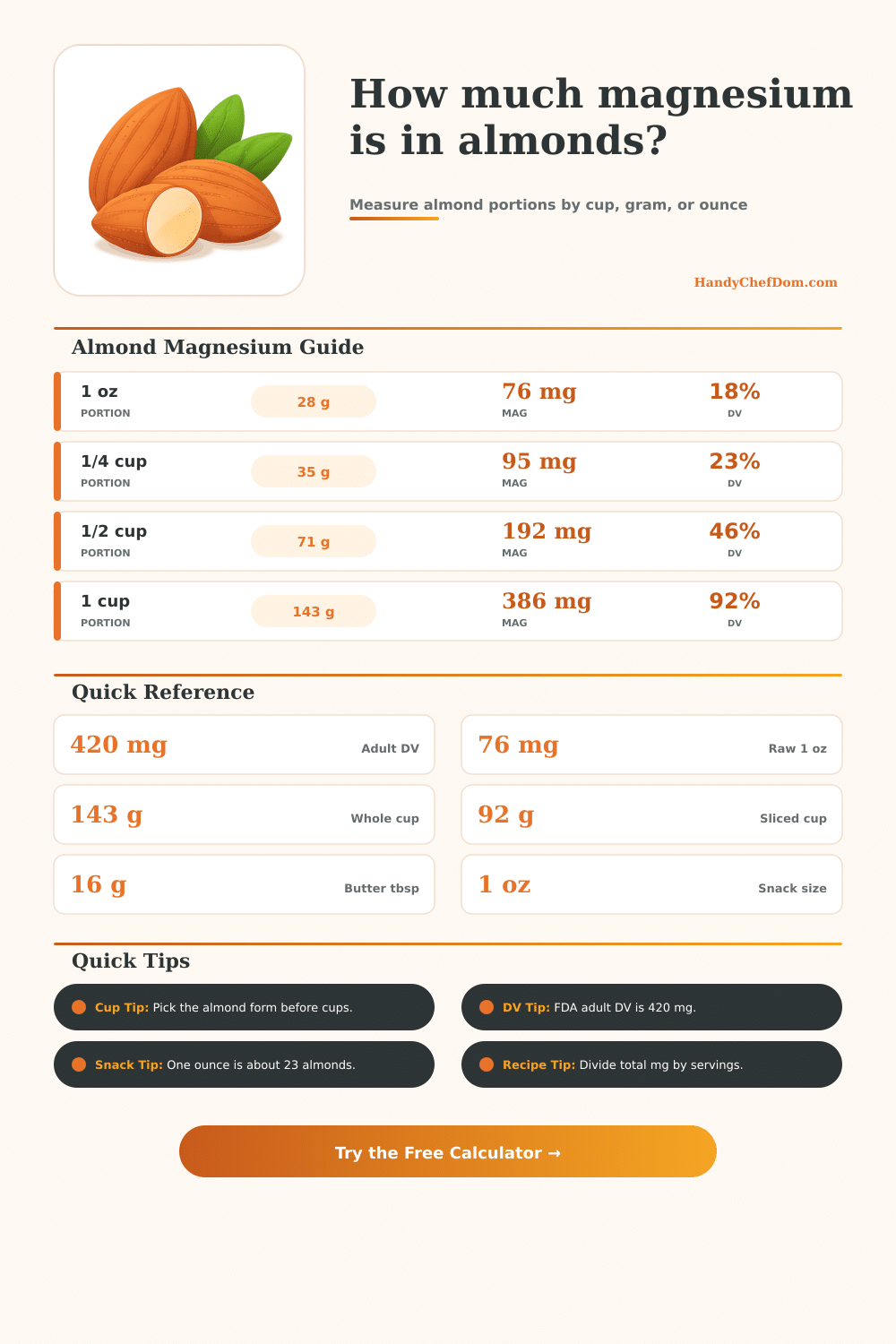
| Whole natural almonds | 143 g | 76 mg | Snack bowls, jars, and measured cups |
| Whole roasted almonds | 138 g | 79 mg | Roasted snack mixes and party bowls |
| Sliced almonds | 92 g | 76 mg | Salads, oatmeal, yogurt, and garnishes |
| Slivered almonds | 108 g | 76 mg | Rice dishes, green beans, and toppings |
| Chopped almonds | 95 g | 76 mg | Cookie dough, cereal blends, and crusts |
| Almond flour or meal | 96 g | 76 mg | Baking recipes divided by servings |
| Almond butter | 256 g | 76 mg | Smoothies, toast, dressings, and sauces |
| Blanched whole almonds | 142 g | 73 mg | Decorating, desserts, and pale almond mixes |
| Comparison target | Target used | 1 oz raw almonds | 1/4 cup whole almonds |
|---|---|---|---|
| FDA adult Daily Value | 420 mg | 18% | 23% |
| Adult woman RDA guide | 320 mg | 24% | 30% |
| Adult man RDA guide | 420 mg | 18% | 23% |
| Pregnancy or lactation guide | 400 mg | 19% | 24% |
| Teen guide | 410 mg | 19% | 23% |
| Nutrient | Per 1 oz raw almonds | Per 100 g raw almonds | Why it matters in the calculator |
|---|---|---|---|
| Magnesium | 76 mg | 270 mg | Main mineral result and daily target comparison |
| Calcium | 76 mg | 269 mg | Helps place almond minerals in context |
| Potassium | 208 mg | 733 mg | Useful when comparing nuts and snack portions |
| Phosphorus | 136 mg | 481 mg | Common mineral paired with nuts and seeds |
| Manganese | 0.62 mg | 2.18 mg | Small amount by weight but meaningful per serving |
| Calories | 164 kcal | 579 kcal | Shows why serving count matters for recipes |
| Protein | 6.0 g | 21.2 g | Separate from the magnesium estimate |
| Fiber | 3.5 g | 12.5 g | Separate from the magnesium estimate |
| Portion scenario | Approx weight | Magnesium | Adult DV share |
|---|---|---|---|
| Small sprinkle of sliced almonds | 1 tbsp or 6 g | 16 mg | 4% |
| Yogurt bowl topping | 2 tbsp or 12 g | 32 mg | 8% |
| Classic one-ounce snack | 28 g | 76 mg | 18% |
| Quarter cup whole almonds | 35 g | 95 mg | 23% |
| Half cup whole almonds | 71 g | 192 mg | 46% |
| Recipe cup whole almonds | 143 g | 386 mg | 92% |
Nutrition values are rounded for kitchen planning. Roasting, brand variation, moisture, grind size, and how tightly cups are filled can shift final numbers.
Almonds contain magnesium. The amount of magnesium in almonds that a person consume depends on the form in which the almonds are available and the portion of almonds that a person consumes. Because different forms of almonds contain different amounts of weights, the amount of magnesium that a person consumes from almonds in different forms can vary.
To prepare for the consumption of almonds, a person can use a calculator to determine the amount of magnesium that is contained in a specific portion of almonds. Using such a calculator, a person can input the portion of almonds that they will consume, and the calculator will display the comparison between that portion of almonds and the daily magnesium target for that person. The form in which the almonds are available is a critical aspect of the magnesium content that the almonds contain.
How to find magnesium in almonds
For instance, a cup of whole almonds is going to contain a different weight than a cup of sliced almonds. Additionally, the magnesium content in almonds can vary based off the preparation of those almonds. For instance, roasting almonds may lead to a more higher magnesium content than blanching them.
Furthermore, the way in which a person consume those almonds can impact the amount of magnesium that they consume. For instance, using almonds as a garnish may result in the waste of more almonds than if they is blended into a smoothie. Such a calculator takes into consideration these different factors to provide the person with an accurate representation of the amount of magnesium that is contained in the portion of almonds that they will consume.
The daily targets of magnesium are not the same for all individuals. For instance, the daily targets may differ based on the age and sex of the individual. An adult woman may have a daily magnesium target of 320 milligrams, while an adult man may have a daily target of 4220 milligrams.
Based on these differences in daily magnesium targets, a portion of almonds will account for a different percentage of that target for a woman than for a man. The calculator can account for these different magnesium targets so that the calculator can allow a person to view how a portion of almonds can contribute to that individual’s daily magnesium target. One of the most common mistakes that people make when calculating the amount of almonds that they consume is in the portion sizes.
Many people are unfamiliar with the measurements of almonds. For instance, one ounce of almonds contains approximately twenty-three whole almonds. Additionally, recipes use cups as a unit of measurement for the portion sizes of ingredients like almonds.
However, the cup is not a reliable unit of measurement because a cup of one form of almonds will not have the same weight as a cup of another form of almonds. Two cups of almond flour will contain fewer milligrams of magnesium than two cups of whole almonds because the weight of each form of almonds is different. A calculator can convert the amount of almonds from ounces to grams, cups, and tablespoons, so that a person doesnt have to memorize how many grams of almonds is in a cup or a tablespoon.
A person may also lose some of those almonds during the preparation of a recipe. The portion of almonds that a person measures will not necessarily contain the same amount as the amount that they consume into their body. For instance, if a person measures almonds to use in a cake recipe, they may lose some of those almonds when cutting them.
A calculator can account for the loss of almonds during preparation. Additionally, a person can use a calculator to compare the magnesium content of different portions of snacks that they consume. For instance, they may use the calculator to compare the amount of magnesium that two different snacks contains.
Such a comparison allows a person to determine how many almonds they will need to consume later in the day to reach their daily target for magnesium intake without consuming too many calories. Almonds are a good source of magnesium. Additionally, almonds also contain protein and fiber.
The fiber and protein in almonds can aid in the slow digestion of the almonds, which allows the body to absorb the minerals in the almonds. Because almonds contain fiber and protein, a person may feel full after consuming almonds instead of other types of refined snacks. Almonds are not the only food source of magnesium, though.
To maintain a steady intake of that mineral, a person should also consume other foods that contain magnesium, such as leafy greens, beans, and seeds. Using a calculator that determines the amount of magnesium that is contained in a portion of almonds will allow that person to move away from estimates to accurate plans for the amount of almonds that they will consume each day. Using the calculator, a person will be able to envision how many almonds of each type will provide the amount of magnesium that will account for their daily target.
For instance, a person can envision how a small portion of almonds used as a garnish will contain a small amount of magnesium, but a large portion of almond flour used in baking will contain a small amount of magnesium per serving of the baked good. Using such a calculator allows a person to incorporate almonds into their daily routine in a way that is reliable and provides the amount of magnesium that their body need to function properly. You’ll find that its moddern approach helps alot.
It should of been used sooner. People often recieve the wrong info. Theyre always looking for the right nutrition.
There goals is to eat well. A armchair is not needed here, but the furnitures in the room should be comfortabley placed. One of the most common mistakes is when people eats too much.
You’re portion size matters. One should of checked the label. It is actualy quite simple.