🥛 Protein in Sour Cream Calculator
Estimate protein from tablespoons, cups, or grams of sour cream, then adjust for fat level, Greek-style thickness, servings, dip use, and protein goals.
Choose the measured amount first. The calculator converts tablespoons, cups, or grams into a gram weight using your density setting, then estimates protein and serving totals.
| Measure | Typical Weight | Regular Protein | Greek-Style Protein |
|---|---|---|---|
| 1 tablespoon | 12 g | 0.3 g | 0.7 g |
| 2 tablespoons | 24 g | 0.6 g | 1.4 g |
| 4 tablespoons | 48 g | 1.2 g | 2.9 g |
| 1/2 cup | 96 g | 2.3 g | 5.8 g |
| 3/4 cup | 144 g | 3.5 g | 8.6 g |
| 1 cup | 192 g | 4.6 g | 11.5 g |
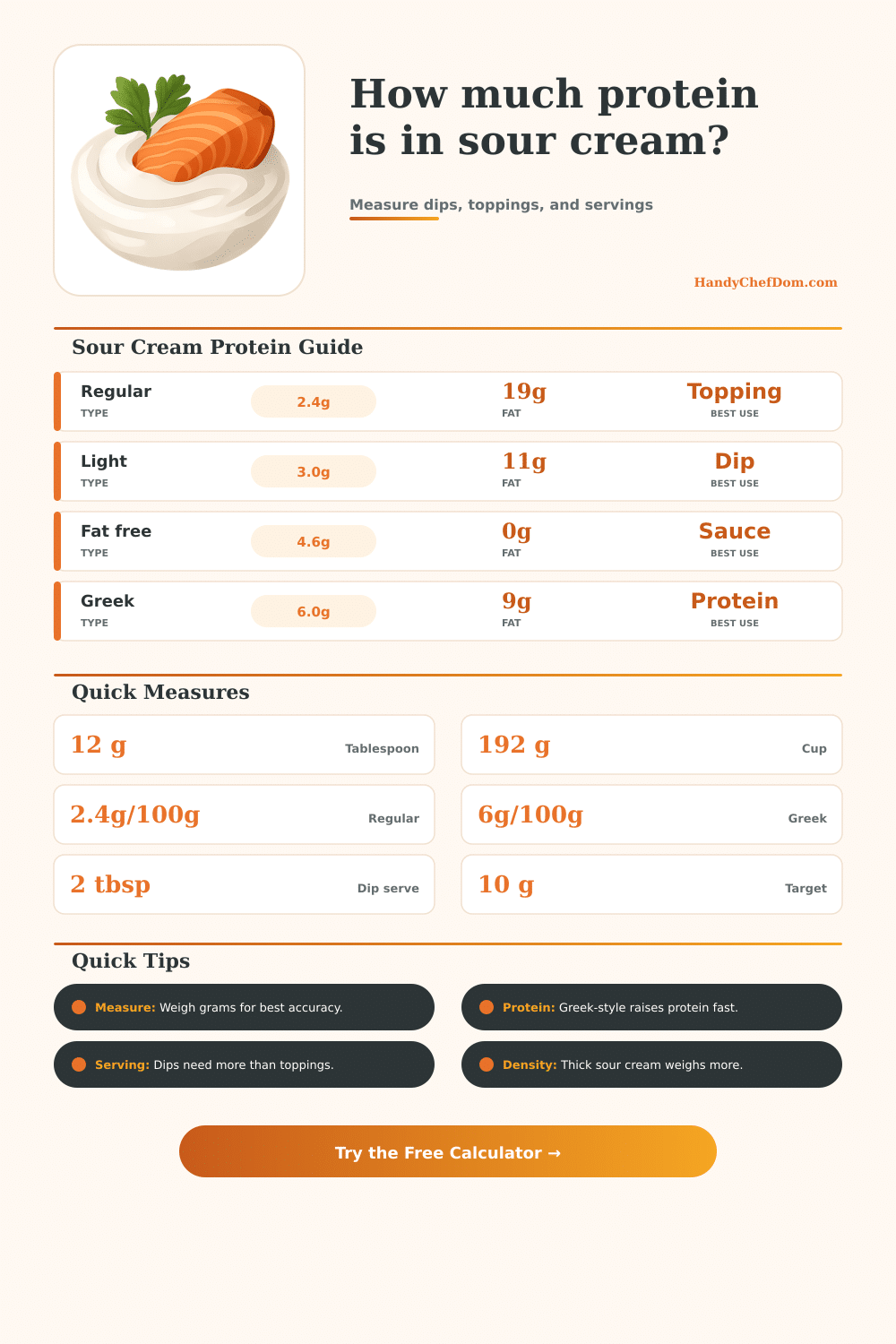
| Sour Cream Type | Protein per 100 g | Calories per 100 g | Fat per 100 g |
|---|---|---|---|
| Regular cultured sour cream | 2.4 g | 198 kcal | 19.4 g |
| Reduced-fat sour cream | 3.1 g | 136 kcal | 10.6 g |
| Light sour cream | 3.0 g | 160 kcal | 14.0 g |
| Fat-free sour cream | 4.6 g | 74 kcal | 0.3 g |
| Organic whole sour cream | 2.5 g | 205 kcal | 20.0 g |
| Mexican-style crema | 2.0 g | 250 kcal | 25.0 g |
| Extra-thick cultured cream | 2.7 g | 214 kcal | 21.0 g |
| Greek-style sour cream base | 6.0 g | 145 kcal | 9.0 g |
| Use Case | Typical Portion | Grams per Person | Protein with Regular |
|---|---|---|---|
| Taco bar topping | 1 tablespoon | 12 g | 0.3 g |
| Loaded potato finish | 2 tablespoons | 24 g | 0.6 g |
| Chili or soup swirl | 1.5 tablespoons | 18 g | 0.4 g |
| Nacho tray dots | 3 tablespoons | 36 g | 0.9 g |
| Dip bowl serving | 4 tablespoons | 48 g | 1.2 g |
| Dressing base serving | 2.5 tablespoons | 30 g | 0.7 g |
| Protein Target | Regular Sour Cream | Fat-Free Sour Cream | Greek-Style Sour Cream |
|---|---|---|---|
| 3 g protein | 125 g or 10.4 tbsp | 65 g or 5.4 tbsp | 50 g or 4.2 tbsp |
| 5 g protein | 208 g or 17.4 tbsp | 109 g or 9.1 tbsp | 83 g or 6.9 tbsp |
| 8 g protein | 333 g or 27.8 tbsp | 174 g or 14.5 tbsp | 133 g or 11.1 tbsp |
| 10 g protein | 417 g or 34.7 tbsp | 217 g or 18.1 tbsp | 167 g or 13.9 tbsp |
| 15 g protein | 625 g or 52.1 tbsp | 326 g or 27.2 tbsp | 250 g or 20.8 tbsp |
| 20 g protein | 833 g or 69.4 tbsp | 435 g or 36.2 tbsp | 333 g or 27.8 tbsp |
Nutrition values are practical kitchen estimates for planning portions. Check your dairy label when exact protein or macro tracking is required.
Sour cream are used in various meal by many people around the world. Sour cream contains different amount of protein depending on the type of sour cream that is use. Many people adds sour cream to there tacos or chili.
However, many people do not consider the type of sour cream that they use and how this can affect the protein content of these meal. Both the amount of sour cream and the type of sour cream contain protein. The type of sour cream will determine the amount of protein that is contain in the dish that includes the sour cream.
How to Calculate the Protein in Sour Cream
A calculator can help people to determining the amount of protein that is contained in the sour cream that is used in a meal. One of the factor that will impact the protein content of the sour cream is the weight of the sour cream. A tablespoon of regular sour cream weigh around twelve grams.
However, a tablespoon of Greek-style sour cream weigh more grams because it is denser than regular sour cream. Because Greek-style sour cream is denser than regular sour cream, a serving of Greek-style sour cream will contain more protein than regular sour cream. In order to determine the protein content of the sour cream that is to be used in a recipe, the user should use the density setting on the calculator to ensure the accuracy of the amount of protein that will be calculate.
The fat level of sour cream will also impact the protein content of the sour cream. Full-fat sour cream will contain more fat than fat free sour cream. Fat-free sour cream will contain more protein per gram of sour cream than full-fat sour cream because fat-free sour cream will contain water and thickeners instead of fat.
In order to increase the amount of protein in a meal that contains sour cream, individual can use either fat-free sour cream or Greek-style sour cream. However, using either of these type of sour cream will change the texture of the sour cream that is used in the recipe. Thus, individuals must consider the effect that altering the texture of the sour cream will have on the meal that is being prepare.
Greek-style sour cream will contain a higher amount of protein than regular sour cream. Therefore, individuals can increase the protein in their recipe by using Greek-style sour cream. Additionally, mixing regular sour cream with Greek yogurt can also increase the amount of protein.
The result of this mixture will contain more protein than regular sour cream alone. The calculator allow individuals to model these different types of sour cream to determine how many grams of protein each type of sour cream will contain. Another factor that will impact the protein content of the sour cream is the portion size of the sour cream that is used in the meal.
Individuals often underthought the portion size of sour cream. For example, individuals may use a large portion of sour cream on a baked potato but use a small portion of sour cream when serving multiple individual at a taco bar. To account for these different portion sizes, the user can use the serving-style adjustment in the calculator.
This adjustment will ensure that the protein content number is correct for the portion size of sour cream that is to be used in the meal. If the portion size is underthought, the amount of protein in the sour cream will be incorrectly estimate. Many individual make mistakes when using sour cream.
Individuals may use a thick sour cream and a thin Mexican crema in the same amount but not realize that the protein content will not be the same. Additionally, individuals may not consider that the portion of sour cream that is used in a dip will be larger than the portion that may be used on top of other dish. To account for these mistakes, the user should use the density and portion size setting when calculating the amount of protein that will be provided by the sour cream in a recipe.
Using the sour cream protein calculator, individuals can compare the protein content of the different types of sour cream. Additionally, the calculator can be used to plan meal for the week. Using the calculator, individuals can determine if they want the flavor of full-fat sour cream or if they would like the added protein content of Greek-style sour cream.
By using the calculator, individuals can determine the exact amount of protein that is contained in the sour cream that they use in their recipe. Thus, using the calculator will make the protein content of sour cream a measurable component of the diet of individuals.