🍜 Protein in Buckwheat Calculator
Estimate buckwheat protein from groats, kasha, flour, soba, dry cups, cooked cups, or grams, then compare each serving with your meal target.
Pick the buckwheat form, enter the amount you measured, and use cooking yield when cooked cups or cooked grams need to be translated back to dry-weight protein.
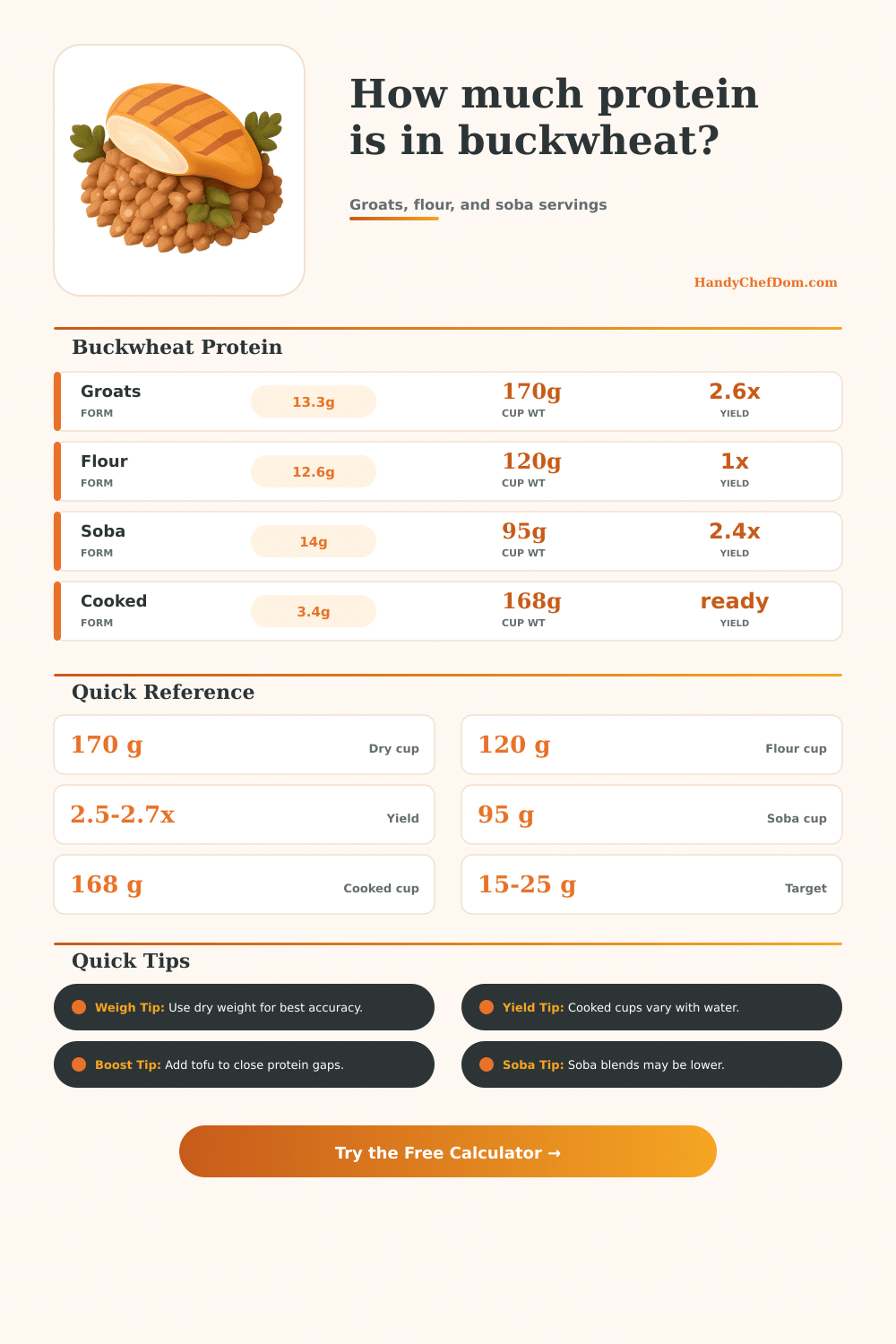
| Buckwheat Form | Protein / 100 g | Typical Cup Weight | Yield Note |
|---|---|---|---|
| Raw hulled groats | 13.25 g dry | 170 g dry cup | 2.6x to 2.8x cooked |
| Toasted kasha groats | 13.25 g dry | 170 g dry cup | 2.4x to 2.7x cooked |
| Buckwheat flour | 12.62 g dry | 120 g spooned cup | Use dry-weight math |
| 100% buckwheat soba | 14.0 g dry | 95 g dry bundle cup | 2.3x to 2.5x cooked |
| Buckwheat-wheat soba blend | 11.0 g dry | 95 g dry bundle cup | Protein depends on blend |
| Cooked buckwheat groats | 3.38 g cooked | 168 g cooked cup | Ready-to-eat basis |
| Sprouted buckwheat | 4.8 g drained | 155 g drained cup | Water content is higher |
| Buckwheat flakes | 11.0 g dry | 60 g dry cup | Fast hydration |
| Dry Measure | Dry Grams | Cooked Yield | Protein Estimate |
|---|---|---|---|
| 1/4 cup groats | 43 g | 110 g cooked | 5.6 g |
| 1/3 cup groats | 57 g | 148 g cooked | 7.5 g |
| 1/2 cup groats | 85 g | 221 g cooked | 11.3 g |
| 1 cup groats | 170 g | 442 g cooked | 22.5 g |
| 75 g dry soba | 75 g | 180 g cooked | 10.5 g |
| 1 cup flour | 120 g | Dry mix only | 15.1 g |
| Meal Role | Common Target | Buckwheat Strategy | Useful Add-In |
|---|---|---|---|
| Breakfast bowl base | 12-18 g | Use groats plus yogurt | Greek yogurt |
| Side dish portion | 5-10 g | Keep dry groats moderate | Seeds or beans |
| Main meal starch | 15-25 g | Pair with legumes or tofu | Tofu cubes |
| Training meal base | 25-35 g | Use soba plus lean protein | Chicken strips |
| Snack or topping | 4-8 g | Use flakes or sprouted groats | Hemp seeds |
| Shared potluck scoop | 6-12 g | Plan from serving count | White beans |
| Serving Group | Groats For Side | Soba For Main | Protein Range |
|---|---|---|---|
| Solo bowl | 45 g dry | 75 g dry | 6-11 g |
| Dinner for 2 | 90 g dry | 160 g dry | 12-22 g |
| Family of 4 | 170 g dry | 320 g dry | 23-45 g |
| Meal prep 6 | 255 g dry | 480 g dry | 34-67 g |
| Potluck 10 | 425 g dry | 800 g dry | 56-112 g |
| Batch lunch 12 | 510 g dry | 960 g dry | 68-134 g |
Buckwheat are a food that contains protein, and buckwheat is also a food that can be used as the base for many meal. Buckwheat is often used as a base for meals because buckwheat is gluten-free and because buckwheat is easy to prepare. Because buckwheat is a pseudo-grain instead of a true grain, buckwheat contains a differently nutritional composition than wheat.
Buckwheat is used as a food that helps people to feel satisfy and to eat enough to meet they dietary needs. Additionally, buckwheat contains different forms of the food that allow for the protein content of buckwheat to be measured. Using the calculator, it is possible to determine the amount of protein that are in buckwheat.
How to Calculate Protein in Buckwheat
To use the protein calculator for buckwheat, a user will have to select the form of buckwheat that they are using. The protein content of buckwheat change depending on the form of buckwheat that is being measured. For instance, dry buckwheat will have a more different protein content than cooked buckwheat.
This is because dry buckwheat is a dry grain and does not contain any additional water to the buckwheat. However, cooked buckwheat will have a significant amount of water mixing with the buckwheat. As a result, one cup of cooked buckwheat will contain less protein than one cup of dry buckwheat.
The field for yield for cooked buckwheat can be used to account for the additional water content of cooked buckwheat. Using this field allow the protein calculator to determine the amount of protein that would be provided if the cooked buckwheat was dehydrated to it’s dry weight. The type of buckwheat that you use will change the amount of protein that are consumed.
Buckwheat products that contains whole buckwheat groats and toasted kasha will contain a certain amount of protein. However, buckwheat flour will contain less protein because the milling process remove some of the bran from the buckwheat. Lastly, soba noodles may contain varying amounts of protein because many soba noodles contains wheat flour in addition to buckwheat.
Use the form selector to choose the type of buckwheat you are eating. The role that buckwheat play in the meal will determine the amount of protein that buckwheat should provide to that meal. If you use the buckwheat as a side dish, it will contain less protein than if the buckwheat was to be used as a main course in that meal.
The role setting for the calculator will allow you to adjust for the protein that the meal should contain based off it role in the meal. If the buckwheat does not contain enough protein for the meal, you can add other sources of protein to that meal, such as tofu, bean, or eggs. The calculator will allow you to see how much protein is contributed by the buckwheat and by the other component of the meal to determine if the meal contains the amount of protein that you require for your diet.
Another factor to consider in the calculation of the protein content of buckwheat is in what type of cup you measure that buckwheat. If you use a cup that is loose filled with buckwheat, you will contain less buckwheat than if you packed that cup with buckwheat. The packing adjustment field for the calculator will allow you to adjust the protein calculation to account for the different density of buckwheat.
In addition to the calculation of the protein content of buckwheat, the calculator will also provide estimates for the calories and fiber that will be contained within the buckwheat. Finally, knowing the amount of protein that is contained within buckwheat can help you to understand whether or not the portion of buckwheat that you are including in your diet is large enough to keep you satisfy. If you know the protein content of the buckwheat, you can determine if additional food need to be added to your meal.
Through understanding each of these factor that influence the protein content of buckwheat, you can create effective meal plans.