🌰 Magnesium in Pumpkin Seeds Calculator
Estimate magnesium from raw seeds, roasted seeds, pepitas, or salted pumpkin seeds using grams, ounces, tablespoons, or cups.
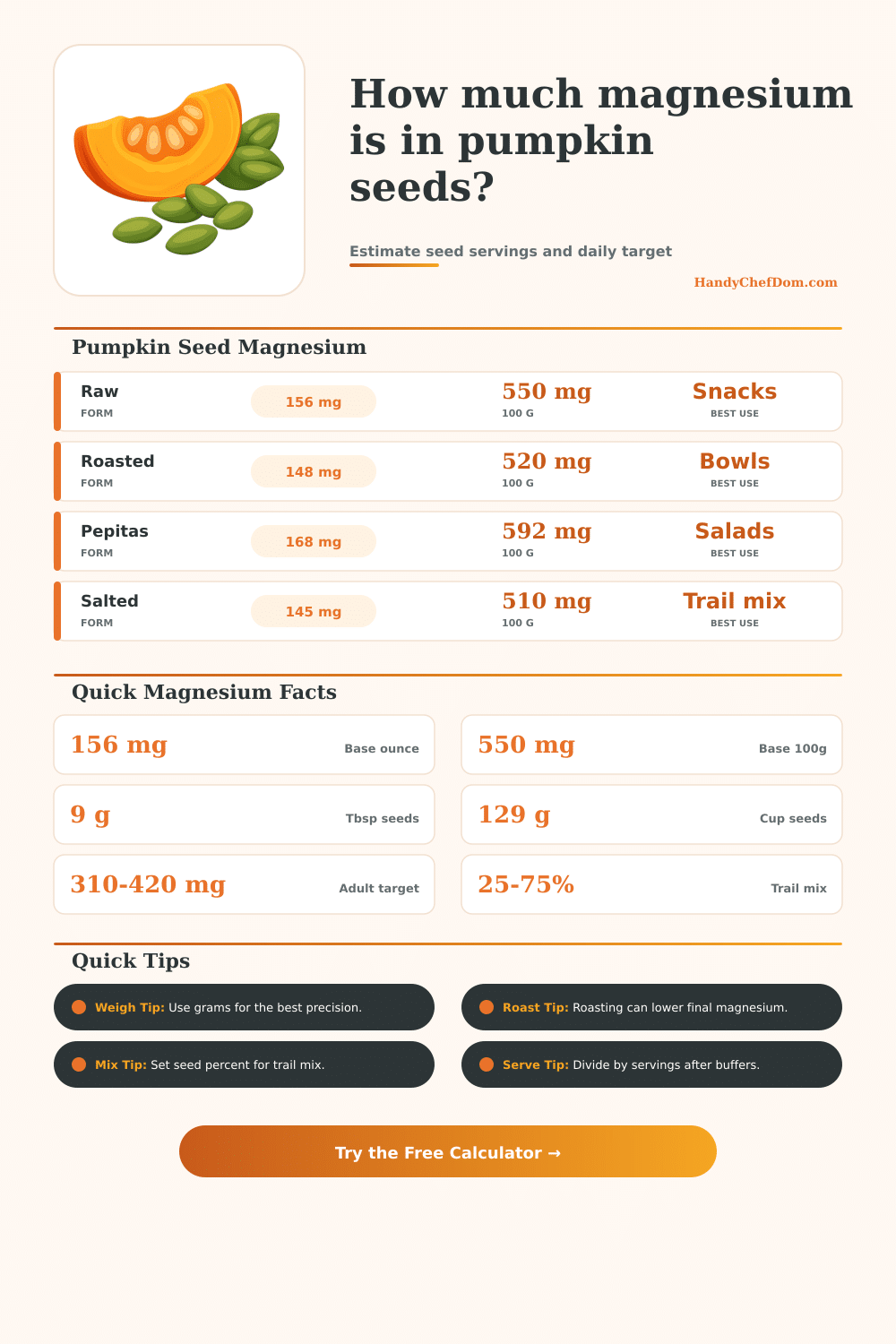
Base references are about 156 mg magnesium per 1 oz pumpkin seeds and 550 mg per 100 g. Choose the form, amount unit, target, mix percent, and buffer to estimate usable magnesium.
| Seed Form | Mg Per Oz | Mg Per 100 g | Calculator Note |
|---|---|---|---|
| Raw pumpkin seeds | 156 mg | 550 mg | Baseline reference |
| Roasted seeds | 148 mg | 520 mg | Lower with heat |
| Shelled pepitas | 168 mg | 592 mg | Dense kernels |
| Salted roasted | 145 mg | 510 mg | Snack blend style |
| Serving Measure | Approx Weight | Raw Mg | Use Case |
|---|---|---|---|
| 1 tablespoon | 9 g | 50 mg | Yogurt topping |
| 2 tablespoons | 18 g | 99 mg | Salad crunch |
| 1 ounce | 28 g | 156 mg | Snack serving |
| 1/4 cup | 32 g | 177 mg | Oatmeal bowl |
| 1/2 cup | 65 g | 355 mg | Shared bowl |
| 1 cup | 129 g | 710 mg | Batch prep |
| Nut or Seed | Mg Per Oz | Rank | Portion Note |
|---|---|---|---|
| Pumpkin seeds | 156 mg | Very high | Strong source |
| Chia seeds | 95 mg | High | Small spoonfuls |
| Almonds | 76 mg | Moderate | Nut snack |
| Cashews | 83 mg | Moderate | Creamy mixes |
| Sunflower seeds | 91 mg | High | Seed blends |
| Walnuts | 45 mg | Lower | Omega blend |
| Daily Target Range | Mg Per Day | 1 oz Raw Covers | Context |
|---|---|---|---|
| Adult women | 310-320 mg | 49-50% | Common RDA range |
| Adult men | 400-420 mg | 37-39% | Common RDA range |
| Pregnancy | 350-360 mg | 43-45% | Varies by age |
| Custom target | Any mg | Calculated | Use your label goal |
Magnesium is a mineral that can found within pumpkin seeds. Pumpkin seeds are one of the food sources that provides magnesium to the human body. Many people consumes pumpkin seeds in an attempt to increase the amount of magnesium that is contained within their bodies.
However, the amount of magnesium that is contained within pumpkin seeds may change depending upon the preparation of those pumpkin seeds. For instance, pumpkin seeds that have been roasted will contain a different amount of magnesium than those raw pumpkin seeds. Furthermore, pumpkin seeds that still contain their shells will contain a different amount of magnesium than those whose shells has been removed.
How to Measure Magnesium in Pumpkin Seeds
One of the tools that can help people to understand the amount of magnesium that is contained within their portion of pumpkin seeds is referred to as a magnesium calculator. Magnesium calculators are helpful in that they can convert the different measurements of the portion of pumpkin seeds that is to be consumed; grams, ounces, and tablespoons, for instance, can be entered into the calculator. In instances in which an individual consume a snack that contains various ingredients, it is important to account for the portion of the snack that is comprised of pumpkin seeds.
Furthermore, the user can enter the percentage of pumpkin seeds within that snack into the calculator to ensure that only the magnesium content from the pumpkin seeds is considered in the measurements of that snack. Additionally, the calculator also can account for waste; some pumpkin seeds may fall out of the measuring cup when measuring the snack ingredients. The inclusion of a waste buffer will ensure that the amount of magnesium is accurately calculated for the amount of pumpkin seeds that will actualy be consumed.
In addition to calculating the amount of magnesium that will be consumed with the portion of pumpkin seeds that is consumed by an individual, the calculator also provides information regarding the percentage of the individuals daily target for magnesium that the consumption of that snack containing pumpkin seeds will provide. The percentage of that target that is provided by the portion of pumpkin seeds will enable the individual to determine whether or not that individual should consume additional pumpkin seeds. Furthermore, the calculator can also determine the weight in ounces of various types of seeds that would provide the same amount of magnesium as the portion of pumpkin seeds that the individual is to consume.
Pumpkin seeds are a food that contains high levels of magnesium. Additionally, pumpkin seeds typically contain more magnesium per ounce than foods like almonds or walnuts. Due to the high levels of magnesium within pumpkin seeds, a large volume of those seeds does not need to be consumed to provide significant amounts of that mineral to the body.
For instance, it is possible to consume a small amount of pumpkin seeds by adding them to yogurt. This small amount will provide magnesium to the yogurt, but will not alter the texture of the yogurt. Because of these benefits of pumpkin seeds, many individuals turns to consuming pumpkin seeds in small amounts rather than consuming large amounts of those seeds.
One potential error in the calculation of the amount of magnesium in pumpkin seeds is introduced through the use of volume measurements, such as tablespoons. For instance, because pepitas are more dense than pumpkin seeds that contain their shells, a tablespoon of pepitas will contain more magnesium than a tablespoon of pumpkin seeds that contain their shells. Thus, an error may be avoided by measuring the amount of pumpkin seeds in grams instead of tablespoons.
Magnesium calculators are helpful in that they can process measurements in grams. Furthermore, another potential error is the daily target for magnesium that is consumed by an individual. The target for magnesium is not the same for all individuals.
The targets vary according to the gender of the individual and whether or not that individual is pregnant. Thus, another way to ensure accuracy in the calculations of the amount of magnesium that a portion of pumpkin seeds will provide to an individual is to ensure that the individual’s specific magnesium target is entered into the calculator. Another factor to consider is the amount of salt that is contained within the pumpkin seeds that are to be consumed.
If pumpkin seeds that are salted are consumed, the body will still receive the magnesium from the pumpkin seeds. However, the person will also consume the sodium content of those seeds. While the magnesium calculator will not calculate the amount of sodium in the pumpkin seeds, the amount of magnesium can be calculated after accounting for the losses of magnesium that occur during the roasting of the pumpkin seeds.
Therefore, the individual can use the calculator to determine the amount of magnesium that the pumpkin seeds will provide to their body, and to balance this against the amount of sodium in those same pumpkin seeds. Thus, regular use of a magnesium calculator will allow an individual to understand the portion of pumpkin seeds that they should consume, and ensure that those portions provides the required amount of magnesium to the body of that individual. Youll find that it’s a lot easier to track than you think, and it should of helped you more.