🌿 Dried Basil To Fresh Basil Calculator
Convert fresh basil into dried basil flakes, crushed basil, or basil powder with adjustments for sauces, pesto backup, soups, pizza, cooking time, herb age, and batch scaling.
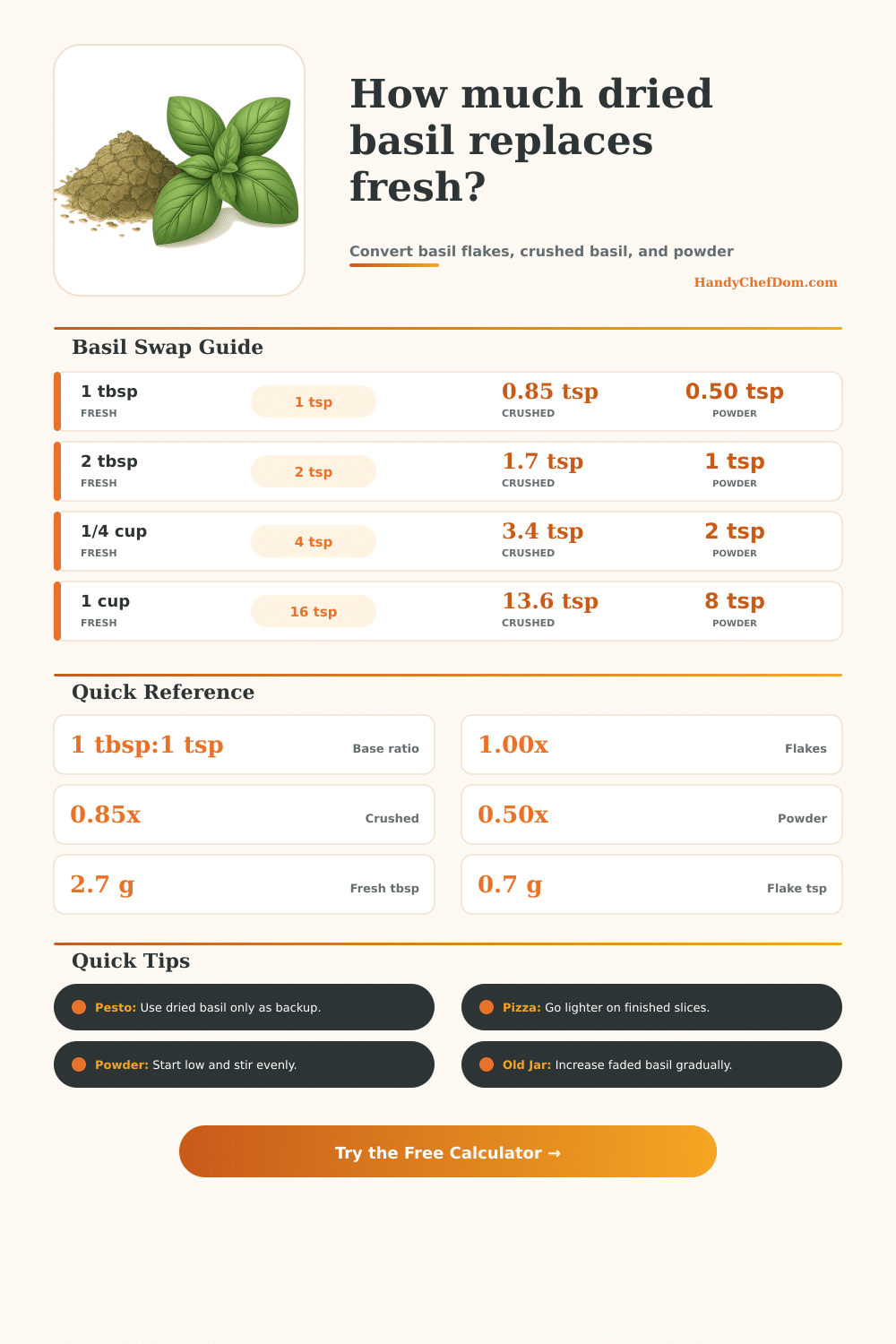
The standard herb substitution is 1 tablespoon chopped fresh basil equals 1 teaspoon dried basil flakes. Basil powder is stronger by volume, and dried basil behaves differently in pesto, garnish, sauce, soup, and pizza uses.
| Fresh basil amount | Dried flakes | Crushed dried basil | Fine basil powder |
|---|---|---|---|
| 1 teaspoon chopped fresh basil | 0.33 teaspoon | 0.28 teaspoon | 0.17 teaspoon |
| 1 tablespoon chopped fresh basil | 1 teaspoon | 0.85 teaspoon | 0.50 teaspoon |
| 2 tablespoons chopped fresh basil | 2 teaspoons | 1.7 teaspoons | 1 teaspoon |
| 1/4 cup chopped fresh basil | 4 teaspoons | 3.4 teaspoons | 2 teaspoons |
| 1/2 cup chopped fresh basil | 8 teaspoons | 6.8 teaspoons | 4 teaspoons |
| 1 cup chopped fresh basil | 16 teaspoons | 13.6 teaspoons | 8 teaspoons |
| Basil form | Approx grams per teaspoon | Volume strength | Measuring habit |
|---|---|---|---|
| Dried basil flakes | 0.70 g | 1.00x baseline | Level the spoon for the classic 3:1 fresh-to-dried swap. |
| Crushed dried basil | 0.85 g | 0.85x spoon volume | Use slightly less because the leaf is compacted. |
| Fine basil powder | 1.20 g | 0.50x spoon volume | Start low because powder coats the whole dish quickly. |
| Fresh chopped basil | 2.70 g per tablespoon | Fresh baseline | Measure after chopping for the closest substitution. |
| Medium fresh basil leaf | 0.20 g each | About 0.075 tbsp | Count leaves only when the recipe gives a loose handful. |
| Loose basil bunch | 54 g each | About 20 tbsp | Useful for scaling a sauce batch or soup kettle. |
| Recipe use | Adjustment | Why it changes | Best dried form |
|---|---|---|---|
| Tomato sauce or pan sauce | 1.00x | Moist heat hydrates flakes and carries basil flavor evenly. | Flakes or crushed basil |
| Pesto emergency substitute | 0.70x | Dried basil cannot replace fresh texture, so start lower. | Powder or crushed basil |
| Soup, stew, or beans | 1.05x | Brothy dishes dilute delicate basil aroma slightly. | Flakes or crushed basil |
| Pizza, flatbread, or focaccia | 0.85x | Dry toppings taste stronger and can seem dusty if overused. | Light flakes |
| Finished garnish | 0.70x | Dried basil lacks the soft bite and color of fresh leaves. | Light flakes only |
| Long simmered sauce | 1.15x | Long heat softens basil aroma, especially with older jars. | Crushed basil |
| Herb | Fresh to dried ratio | Flavor pattern | Substitution caution |
|---|---|---|---|
| Basil | 3:1 by volume | Sweet, peppery, aromatic | Dried is weaker for garnish and pesto. |
| Oregano | 3:1 by volume | Sharp, resinous, savory | Dried oregano can dominate tomato sauces. |
| Thyme | 3:1 by volume | Earthy, steady, woody | Holds up better than basil in long cooking. |
| Parsley | 3:1 by volume | Grassy, mild, green | Dried parsley is mostly visual in quick dishes. |
| Rosemary | 3:1 by volume | Piney, strong, resinous | Chop or crush before substituting. |
| Mint | 3:1 by volume | Cool, bright, sweet | Dried mint changes the finish of salads. |
When you use basil in your cooking, you must decide whether to use fresh basil or dried basil. Basil can come in both fresh and dried form, but each have a slightly different flavor and texture. Fresh basil contain a brighter flavor than dried basil but wilts quick and dont stay fresh for many day.
In contrast, dried basil will last for many months and is easier to store on your spice rack. However, dried basil will behave different than fresh basil when you expose it to heat. Because of the difference in the behavior of dried basil and fresh basil when exposed to heat, it is not possible to directly substitute one for the other without adjusting the amount of basil that you use in your recipe.
How to Use Fresh and Dried Basil
One tablespoon of chopped fresh basil will provide the same flavor as one teaspoon of dried basil flake. However, the flavor may not be exactly the same due to the type of dried basil that you use and how old the dried basil is. For instance, crushed basil are denser than dried basil flakes, so you will need less crushed basil than dried basil flakes to provide the same flavor.
Furthermore, basil powder will disperse quick in a liquid while cooking, so it may impart a slightly different flavor to your dish than dried basil flakes or crushed basil. Therefore, you may have to adjust the amount of basil that you use according to the type of dried basil that you has in your kitchen. The method in which you cook your basil will change the amount of basil that you use.
If you are cooking a sauce that will simmer for a long period, the dried basil will rehydrate, and the dried basil will lose its flavor. However, if you are adding basil to a dish such as a pizza, the heat of the cooking process will not expose the basil. In this case, you will need to use less dried basil.
Furthermore, if you store your dried basil in a jar for a long time, it will lose some of its flavor. Therefore, if you use dried basil that is several year old and stored in a jar, you will have to use more of that dried basil to provide the same flavor to your dish as you would use fresh basil. This calculator will calculate for you the amount of basil of each type that you will need for your recipe.
You will have to enter the amount of fresh basil that you need, the type of dried basil that you use, and the way in which you will cook your recipe. This calculator accounts for the length of cooking and when you will add the basil to your recipe. Using this calculator will allow you to avoid the guesswork of measuring out your basil.
You will not have to worry about using too little basil to flavor your recipe or using too much basil in your cooking. If you want to maintain the flavor of your dried basil, you must store it in a place where it is away from the heat and light in your kitchen. Even with the best of storage habit, the flavor of your dried basil will fade over time.
To ensure that you maintain the flavor of your dried basil, you can taste a small amount before you measure it for your recipe. If the flavor is weak, you will have to use more of the dried basil or replace it with a new jar of dried basil. The texture of fresh basil is also different than the texture of dried basil.
Therefore, you cant use dried basil to replace the texture of fresh basil in a recipe such as a caprese salad or pesto. However, dried basil work well in recipes that contain alot of moisture, such as meatballs, bean stews, or tomato-based braises. The texture of dried basil will easily integrate with the moisture in the recipe.
For recipes that are cooked quick, use less basil so that the basil does not taste like an afterthought in your finished recipe. By understanding how the heat of the recipe, the moisture in the recipe, and the age of the basil affect the basil flavor, you will be able to use basil more effective in your cooking.