🥘 Cornstarch Per Cup of Liquid for Gravy Calculator
Estimate cornstarch, slurry water, serving yield, thickness score, and reheat adjustment for smooth pan gravy, turkey gravy, beef gravy, and glossy sauces.
Use the liquid that will be in the pan after deglazing and straining. The calculator adjusts the cornstarch ratio for current thickness, target body, fat level, simmer reduction, holding time, and gluten-free priority.
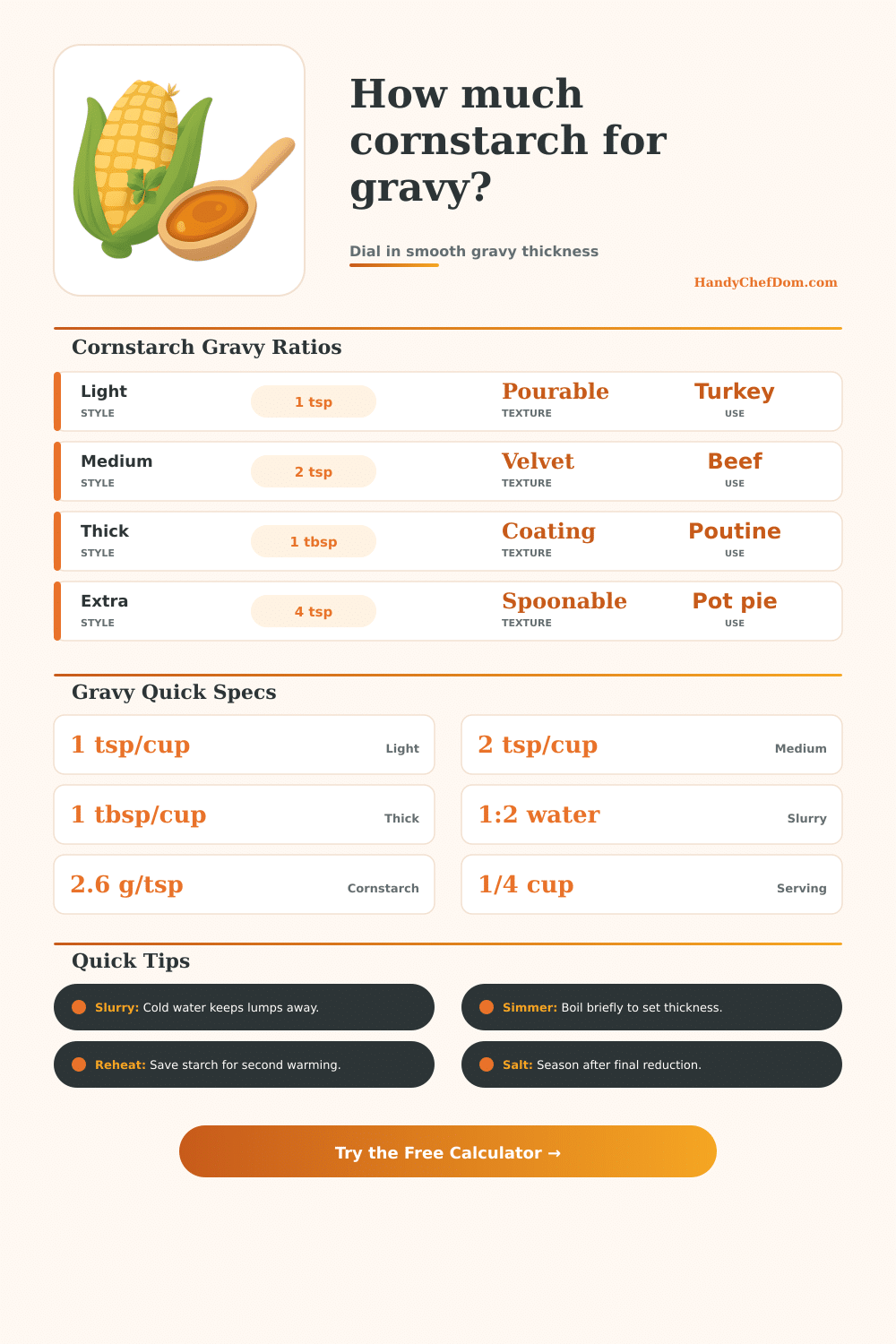
| Target Body | Cornstarch Per Cup | Best Texture | Use Case |
|---|---|---|---|
| Light gravy | 1 tsp | Pourable and glossy | Turkey, chicken, jus-style plates |
| Medium gravy | 2 tsp | Coats a spoon lightly | Mashed potatoes, roast dinners |
| Thick gravy | 1 tbsp | Clings to fries or biscuits | Poutine, breakfast plates |
| Extra thick | 4 tsp | Spoonable after cooling | Pot pie filling or make-ahead trays |
| Cornstarch | Cold Water 1:1 | Cold Water 1:2 | Batch Note |
|---|---|---|---|
| 1 tsp | 1 tsp | 2 tsp | Single cup light adjustment |
| 2 tsp | 2 tsp | 4 tsp | One cup medium gravy |
| 1 tbsp | 1 tbsp | 2 tbsp | One cup thick gravy |
| 2 tbsp | 2 tbsp | 4 tbsp | Large saucepan batch |
| 1/4 cup | 1/4 cup | 1/2 cup | Holiday stockpot slurry |
| Gravy Style | Typical Target | Ratio Range | Adjustment Clue |
|---|---|---|---|
| Turkey pan gravy | Medium | 1.7-2.2 tsp/cup | Skim fat before the slurry |
| Beef roast gravy | Medium-thick | 2.0-2.8 tsp/cup | Gelatin gives extra body |
| Mushroom gravy | Medium | 1.8-2.5 tsp/cup | Mushroom solids add thickness |
| Creamy sausage gravy | Thick | 2.5-3.4 tsp/cup | Dairy may loosen on reheating |
| Clear stock sauce | Light | 0.8-1.5 tsp/cup | Use a thinner slurry and whisk fast |
| Thickener | Per Cup | Look | When It Wins |
|---|---|---|---|
| Cornstarch slurry | 1-3 tsp | Glossy, clear finish | Fast gluten-free thickening |
| Flour roux | 1-2 tbsp flour | Opaque, classic body | Longer simmer and roasted flavor |
| Beurre manie | 1 tbsp flour | Rich and soft | Small last-minute corrections |
| Arrowroot | 1-2 tsp | Very glossy | Delicate sauces with brief heat |
As far as making good gravy, it’s all about thickness of your desired sauce. Whether it’s for chicken or beef, whether you’re feeding 2 people or 8, the key is to add just enough starchy ingredients to make that gravy stick to every mouthful rather than pool in a puddle on plate. The right ratio depend on what you are cooking and how long the gravy needs to hold up.
How much cornstarch should you use? That depends on what’s already in the pan. Did you reduce a lot of drippings? If they’re gelatiny, add less. Are they still thin? Then add more. Fat content matter; lean drippings thicken different than fatty ones, and adding dairy or cream will loosen things up when you reheat it. The variables is taken into account by the calculator, saving you from guessing about when to bring gravy together.
Tips for Making Good Gravy with Cornstarch
One thing folks forget: Holding time is not constant. An hour of holding or a trip to the buffet thin out gravy. That’s why the tool offer a hold-time entry, and a reheat tweak. Why? Because you can top it up with just a little more at the end without diluting what you’ve created. There’s also suggested reserve starch for that reason.
Preparing your slurry is an easy process that can be rushed. The water should of been cold to prevent the starch from clumping. Also, consider the measurements as they will affect how easily the mix form a complete pot. For example: if you’re making a big batch, you want a thinner slurry so you can get it into the pot and whisk fast. If you have maybe a few cups of batter, go thick on slurry and you’ll have more control over it.
How thick? That’s a matter of how your gravy wants to behave. For something like chicken or turkey, light gravy is fine because it allow the meat to shine through. For most roast dinners, medium-thickness gravy go right onto mashed potatoes and doesn’t dribble too much. And thick gravy sticks to fries and biscuit but won’t drip away from them. With this calculator, instead of having to adjust later you can set that goal upfront.
And then there are the trade-offs involved in reheating. If you boil your cornstarch gel once, it will loosen again on later boilings which means reheat count comes into play. Do you plan for gravy that will just get one gentle warm up? Or do you expect that it will hold through transportation and another service? With tool as an adjustment, you don’t have to over-thicken initially only to have it break down later.
On the page, there’s a table of references showing common ratios; a quick glance at how your inputs stack up against typical starting points. This is good if you’d just like to get an idea of what range might be without running through your own numbers. Enter current thickness, liquid volume, holding plan, fat level, and target body. The calculator then show the total slurry water, starch, and a recommended reserve amount in case you need to make corrections.
Unlike a roux made with flour, cornstarch has some interesting characteristics; it’s very quick to thicken and gives the finished product a glossiness, but lacks the depth of toasted flavor that a roux imparts. Fortunately, if the drippings were tasty enough, that purity comes to your rescue. It’s also gluten-free naturaly, which can be helpful for a diverse table. You can remember a number or two, but knowing how to read where you are on that spectrum is true skill. The math should be easy once you understand what kind of food the gravy is for, how much liquid is left, and what the original liquid was.