Lime Juice for Ceviche Calculator
Scale citrus for seafood pounds, dice size, lime yield, citrus blend, coverage, add-ins, servings, acidity target, and rest time.
Choose a preset or enter your own seafood and citrus details. The calculator estimates enough acidic juice to coat the dice, account for watery add-ins, and match your preferred brightness.
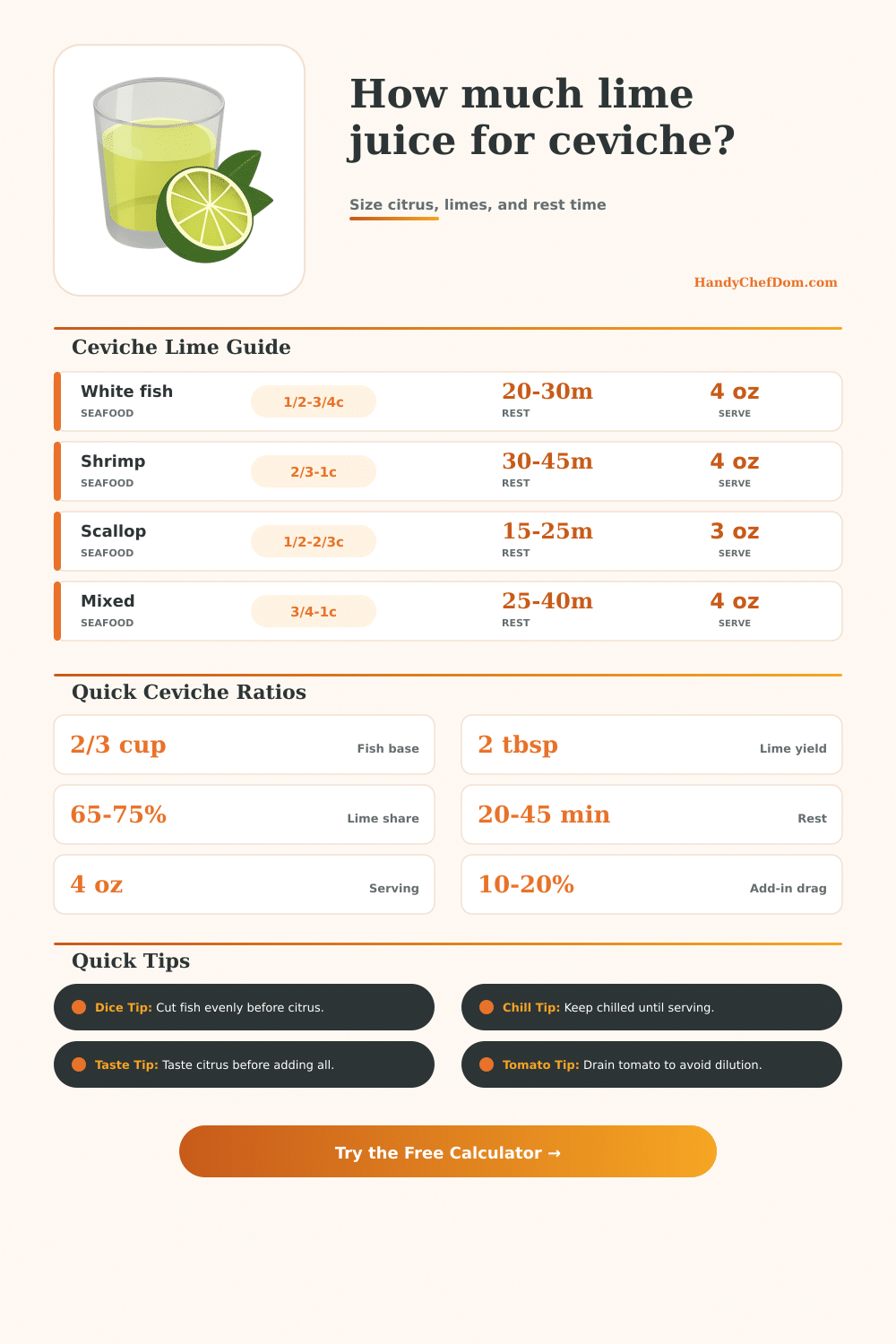
| Seafood | Base citrus per lb | Best dice | Typical rest |
|---|---|---|---|
| Firm white fish | 2/3 cup | 3/8 to 1/2 in | 20 to 35 min |
| Shrimp | 3/4 cup | halved or chopped | 30 to 45 min |
| Sea scallop | 1/2 cup | 1/4 to 3/8 in | 15 to 25 min |
| Tuna or mahi | 2/3 cup | 1/2 in | 15 to 30 min |
| Mixed seafood | 3/4 cup | small mixed cuts | 25 to 40 min |
| Measure | Tablespoons | Cups | Metric |
|---|---|---|---|
| 1 medium lime | 2 tbsp | 1/8 cup | 30 ml |
| 4 medium limes | 8 tbsp | 1/2 cup | 120 ml |
| 8 medium limes | 16 tbsp | 1 cup | 240 ml |
| 1 pound seafood base | 8 to 12 tbsp | 1/2 to 3/4 cup | 120 to 180 ml |
| Dice size | Coverage factor | Rest factor | Planning note |
|---|---|---|---|
| Tiny 1/4 in | 0.92x | 0.65x | Quick, delicate texture |
| Small 3/8 in | 1.00x | 0.85x | Classic spoonable ceviche |
| Medium 1/2 in | 1.08x | 1.00x | Balanced bite and timing |
| Large 3/4 in | 1.18x | 1.22x | Needs more time and liquid |
| Chunky 1 in | 1.32x | 1.45x | Use for hearty entree bowls |
| Serving style | Seafood per serving | Add-ins per lb | Citrus adjustment |
|---|---|---|---|
| Small tostada | 2 to 3 oz | 3/4 cup | Keep bright |
| Appetizer cup | 3 oz | 1 cup | Standard |
| Entree bowl | 4 to 5 oz | 1 to 1 1/2 cups | Generous |
| Party tray | 2 1/2 to 4 oz | 1 1/4 cups | Add 10% reserve |
Adding citrus to the ceviche help ensure that it’s adequately cured in acidic juices. Ideally, the citrus will give a bright taste (not a sour one) while pulling some of moisture out of the fish/shellfish to ensure an even cure. If you add too much juice, your dish will be watery by the time it hits the table; too little, and your ceviche will be raw.
How much juice you’ll want: That depend on what’s going into your bowl, how big the diced pieces are, and what kind of seafood it is. Generally speaking, smaller dices = bigger surface area = quicker curing time + less total liquid needed. On the other hand, bigger chunks = less surface area = longer wait times to get all that acid through, which mean potentially under-seasoned centers if you’re lacking any citrus. If you input your intended resting time, dice size, and type of fish, the calculator take care of that for you. It tweaks basic ratio based off the inputs so you don’t have to estimate their impact.
How Much Juice To Use
The balance gets more complicated with other ingredients: As any tomato, cucumber or piece of fruit sit, it releases water that will dilute marinade and dull its acidity. If you plan for a longer rest or use juicy ingredient, the tool increase the target amount of citrus. And it advises keeping a little reserve of juice to go. That way, you can add just what’s needed to tweak the flavor (taste the first round of the cure). You won’t throw off the whole mix by overdoing it at the start.
Resting time is key. Underrested, your seafood will remain chewy. Overrested, and it’ll be mushy and taste flat. Because there’s no such thing as exactly same conditions, temperature, type of cut, stirring frequency (the calculator offer an estimate), not a number. The reference tables on the page show that actual differences in seafood type and dice size adjust the range. So instead of guessing that last batch was too long, treat each different than before.
When it starts to feel like second nature, that’s where the real win is. Now that you know how drainage, acidity and coverage interact, then the calculator is just one more “do I need more?” check on top of what feels right in your gut. It won’t change whether you choose mellow or sharp, but it will help you be sure that you didn’t add too much or too little juice at the start. The ones that taste done when they get to the table are the winners, not the ones that need the most limes at the end. It just makes them easier to get there with less back-and-forth adjustments.
Actualy, it should of been simpler. You could of also used more lime if you wanted.