Soy Sauce in Stir Fry Calculator
Estimate soy sauce for stir fry by protein pounds, vegetables, sauce thickness, sodium target, aromatics, rice or noodle servings, wok volume, and sauce style.
A balanced stir fry usually needs enough soy sauce for protein seasoning plus extra sauce to coat vegetables and the starch served with it. This calculator caps soy by sodium target, then adds stock, acid, sweetener, aromatics, and thickener so the sauce still coats the wok load.
Stir Fry Soy Sauce Result
Your stir fry sauce estimate will appear here.
| Soy sauce type | Approx sodium per tbsp | Flavor strength | Calculator use |
|---|---|---|---|
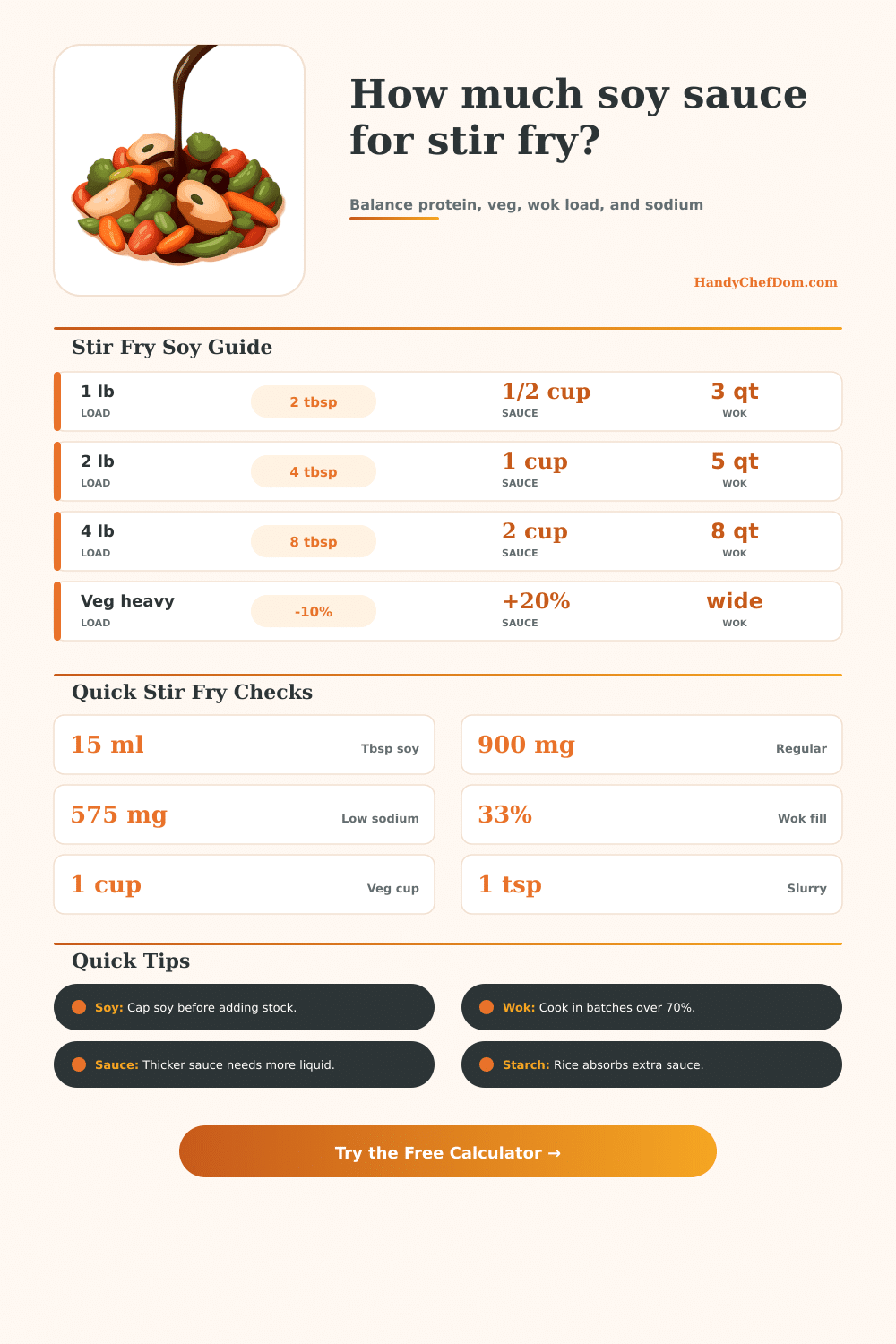
| Regular soy sauce | 900 mg | Classic salty umami | Everyday baseline for chicken, beef, pork, and vegetables. |
| Low sodium soy sauce | 575 mg | Milder salt, clear soy taste | Lets the calculator keep more soy flavor under a sodium cap. |
| Light Chinese soy | 960 mg | Bright, direct, salty | Good for fast wok sauces, but the cap triggers sooner. |
| Tamari | 1000 mg | Deep and rounded | Rich flavor with a high sodium estimate unless labeled low sodium. |
| Dark soy sauce | 650 mg | Darker color, softer salt | Useful for color and gloss, often paired with regular soy. |
| Coconut aminos | 300 mg | Sweet and mild | Needs more volume for salt impact, so sauce may be sweeter. |
| Stir fry load | Soy sauce starting point | Extra liquid cue | Best calculator adjustment |
|---|---|---|---|
| Chicken with mixed vegetables | 1.3 tbsp per lb protein plus 0.2 tbsp per veg cup | About 1/2 cup liquid for four servings | Use glossy thickness and classic aromatics. |
| Beef and broccoli | 1.6 tbsp per lb protein plus 0.25 tbsp per dense veg cup | More stock helps broccoli catch sauce | Use bold aromatics or dark soy support. |
| Shrimp and tender vegetables | 1.1 tbsp per lb protein plus 0.16 tbsp per veg cup | Thin glaze often works best | Reduce soy when the sodium target is low. |
| Tofu or tempeh bowl | 1.2 to 1.45 tbsp per lb protein | Absorbent protein needs extra sauce volume | Use clingy sauce and enough stock. |
| Vegetable-heavy stir fry | 0.22 to 0.30 tbsp per vegetable cup | Leafy greens release water; frozen blends release more | Thicken after vegetables cook down. |
| Thickness target | Sauce feel | Cornstarch per cup sauce | Best use |
|---|---|---|---|
| Thin glaze | Light coating, fast toss | About 1 tsp | Shrimp, tender greens, light rice bowls. |
| Glossy spoon-coating | Balanced restaurant-style gloss | About 1.5 tsp | Chicken, beef, pork, and mixed vegetables. |
| Clingy takeout-style | Holds to broccoli and tofu | About 2 tsp | Dense vegetables and tofu bowls. |
| Thick noodle coating | Strong cling for noodles | About 2.4 tsp | Lo mein, udon, and saucy noodle batches. |
| Brothy stir fry sauce | Loose sauce for rice | About 0.6 tsp | Rice bowls where sauce should soak in. |
| Servings | Typical load | Regular soy estimate | Wok or batch cue |
|---|---|---|---|
| 2 servings | 0.75 lb protein, 3 cups vegetables | 2 to 3 tbsp | 3 quart skillet can work if not crowded. |
| 4 servings | 1.5 lb protein, 5 cups vegetables | 4 to 5 tbsp | 5 quart wok is comfortable for fast tossing. |
| 6 servings | 2.25 lb protein, 8 cups vegetables | 6 to 8 tbsp | Cook protein and vegetables in two batches. |
| 8 servings | 3 lb protein, 10 cups vegetables | 8 to 10 tbsp | Use a wide wok or finish in a large pan. |
| 12 servings | 4.5 lb protein, 16 cups vegetables | 12 to 16 tbsp | Batch cook, then sauce everything together. |
The soy sauce is one of those ingredients that can completely transform flavor of your stir fry. If there’s not enough, the veggies will be bland. But add too much and you’ll end up serving food that is more salty then expected. This doesn’t even count the starch you are pairing it with, like noodles or rice.
It all comes down to weight and kind of protein, which veggies is cooked in skillet, and how those starchy accompaniments soak up liquid. You should start with how much protein is on your plate. Because each food absorb seasoning differently, a pound of shrimp will need less soy sauce then a pound of chicken, which itself will require less than a pound of beef. Shrimp also has more saltiness than other proteins, it sucks it up fast, and too much makes it overbearing; dense pieces of meat take more sauce before they seem well-seasoned enough.
How to Use Soy Sauce Calculator
With the calculator (above), there’s no guesswork in the ratio adjustment for varying ingredient: just plug in weight of your protein and what kind it is. There are also some other factors with veggies added into equation. First, leafy green veggie give off water when cooked, thinning out your sauce and potentially making it seem underseasoned (even though you carefully measured). Sturdier veggies like carrots and broccoli will stay drier, needing a bit more total sauce to get them sufficiently covered. The same goes for frozen veggie mixtures, which add their own moisture. This means the soy sauce that work just fine when you cook fresh veggies may be too weak or too strong once you hit pan.
Rice and noodles is not neutral in terms of how they react with your sauce. Those carbs will suck up some of the liquid. This is why it’s important that final amount of sauce takes into account how much of it gets absorbed by whatever you’re serving it over. Generally speaking, noodles will absorb slightly more than rice, but the calculator include that in its calculations based off what kind of starch you want to end up serving.
The tool asks you to trade off flavor. You can set a maximum sodium level per serving, which limits how much soy sauce you use and suggests adding water or stock to reach the right amount of liquid. It prevents having too much or too little liquid, which ensures that all ingredient are tossed together evenly without making meal overly salty. It also accounts for the fact that certain things, like acids and aromatics; make food seem more (or less) salty than others, not just quantity of soy sauce.
When calculating amount of food that will go into your woks, you realize it matters what size your wok is, and you plan your batches accordingly. If your pan is too full, the temperature will be to low for effective stir-frying, searing rather than steaming, and the sauce won’t coat food as well. This tells you whether you’re making enough to cook all at once, or whether you need to break up the cooking so the sauce realy sticks when done.
The page also features reference tables that compare the sodium content in various ingredients (like coconut aminos, tamari, low- and regular-sodium soy sauces) so you know what to expect if you’re swapping out an ingredient. The tables also let you know how much slurry will be required based on target thicknesses (so you can choose to go with a thicker coating or lighter glaze without having to do the math).
The calculator lets you check if your gut agrees with the amount of food you’re actualy preparing. While it’s no substitute for taste-testing along the way, it takes out guessing how much sauce a batch of beef and broccoli would of actually needed once the rice is on plate.