🍌 Banana Protein Calculator
Calculate the exact protein content in bananas by size, quantity & variety
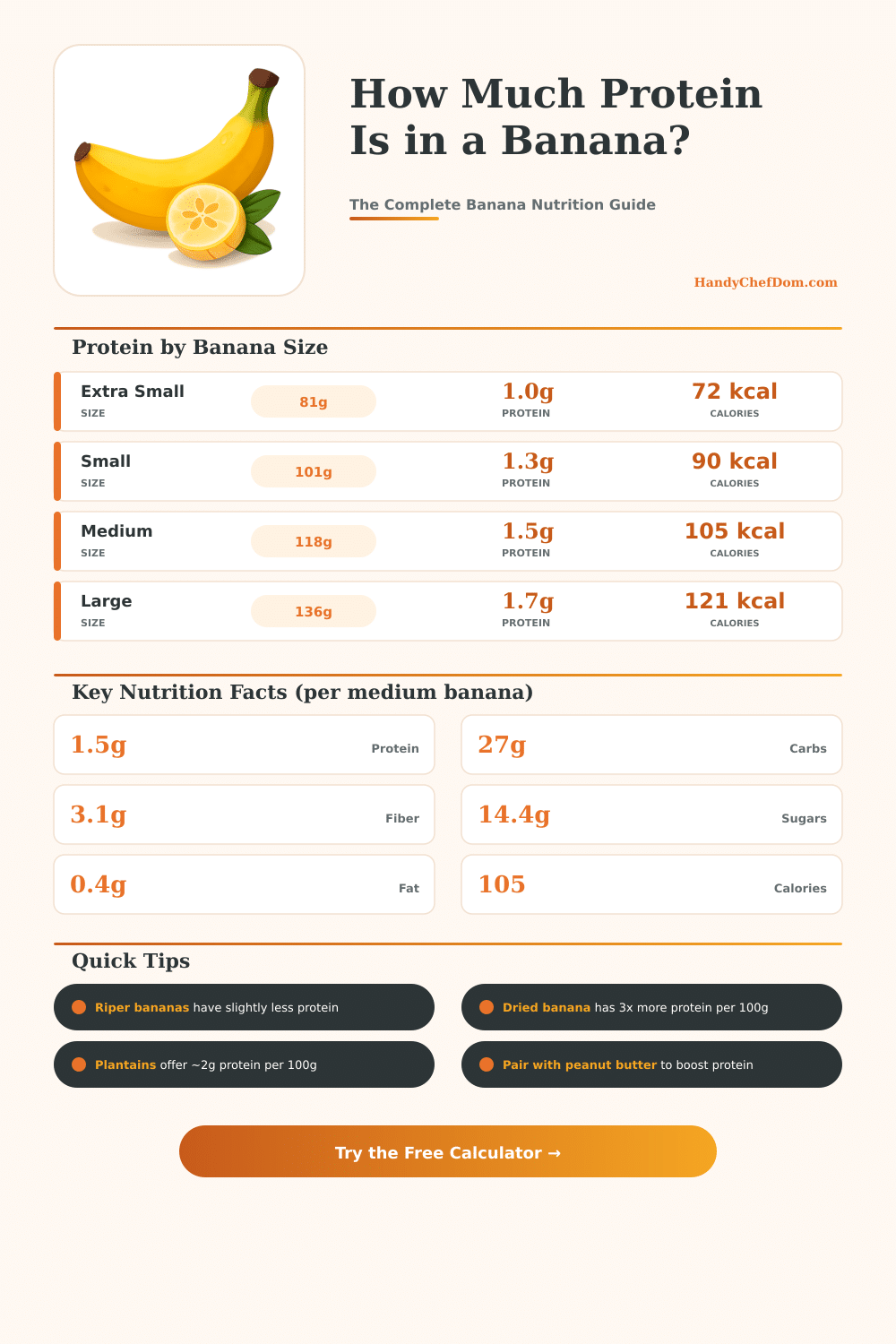
| Size | Length | Weight | Protein | Calories | Carbs |
|---|---|---|---|---|---|
| Extra Small | Under 6 in (15cm) | 81g (2.9 oz) | 0.9g | 72 kcal | 18.5g |
| Small | 6–7 in (15–18cm) | 101g (3.6 oz) | 1.1g | 90 kcal | 23.1g |
| Medium ★ | 7–8 in (18–20cm) | 118g (4.2 oz) | 1.5g | 105 kcal | 27.0g |
| Large | 8–9 in (20–23cm) | 136g (4.8 oz) | 1.7g | 121 kcal | 31.1g |
| Extra Large | 9+ in (23+ cm) | 152g (5.4 oz) | 1.9g | 135 kcal | 34.7g |
| Banana Type | Protein / 100g | Calories / 100g | Carbs / 100g | Notes |
|---|---|---|---|---|
| Fresh Banana (Cavendish) | 1.1g | 89 kcal | 22.8g | Most common variety |
| Dried Banana Chips | 2.3g | 346 kcal | 88.3g | Higher due to water loss |
| Plantain (raw) | 1.3g | 122 kcal | 31.9g | Higher starch content |
| Baby Banana (Nino) | 1.2g | 90 kcal | 23.4g | Sweeter, smaller size |
| Red Banana | 1.3g | 90 kcal | 22.9g | More beta-carotene |
| Frozen Banana | 1.1g | 89 kcal | 22.8g | Same as fresh |
| Serving | Metric | Imperial | Protein | Calories |
|---|---|---|---|---|
| 1 slice (thin) | 9g | 0.3 oz | 0.1g | 8 kcal |
| 1 cup sliced | 150g | 5.3 oz | 1.6g | 134 kcal |
| 1 cup mashed | 225g | 7.9 oz | 2.5g | 200 kcal |
| 1 medium banana | 118g | 4.2 oz | 1.5g | 105 kcal |
| Half a banana | 59g | 2.1 oz | 0.7g | 53 kcal |
| Banana smoothie (1 medium) | 118g banana | 4.2 oz banana | 1.5g | 105 kcal |
| Person | Daily Protein Need | 1 Medium Banana | % of Daily Need |
|---|---|---|---|
| Child (4–8 yrs) | 19g | 1.5g | 7.9% |
| Teen (14–18 yrs) | 52g | 1.5g | 2.9% |
| Adult (avg. 70kg) | 56g | 1.5g | 2.7% |
| Active Adult (0.8g/kg) | 64–80g | 1.5g | 1.9–2.3% |
| Athlete (1.6g/kg, 80kg) | 128g | 1.5g | 1.2% |
Bananas rank between the main fruits grown globally. One grows them mainly in tropical areas, where one usually eats them, but everywhere one values them because of the taste and nutrients. Indeed, Banana is a long, edible berry according to plant science.
It grows on big grasses from the group Musa. The size and colour of that fruit ranges.
All About Bananas
Interesting thing I mention: the plant of Banana itself is not a tree. That is a tall grass that reaches up to 15 metres of height. Around the world exist more than a thousand different types of bananas, that one shares in 50 main groups.
They come from Southeast Asia. Such tropical grasses do best in warm places. Frost destroys the leaves, while strong colds can kill the whole plant.
In some covered places, even so, it can regrow from underground children.
The type Cavendish sometimes gets called Banana for dessert. It becomes sweet when it matures. While you choose bananas, look for green or clearly yellow peels without wounds.
During the fruit maturing, the skin beocmes thinner and flexible than before, when it was thick and rough. Brown spots emerge, until the whole peel becomes dark. Bananas with full yellow colour work for salads or for eating right away.
Little brown marks on Banana still allow you to eat it well. Even so, big splits with bluish-green mold inside are not good four eating.
Bananas have about 100 calories, but that depends on the size of the fruit. They give good potassium, vitamin C and vitamin B6. In them is natural sugar, that helps to lower cravings for other and processed sweet stuff. Eating two to three bananas weekly is a good amount, together with various other fruits.
One big Banana, long around 20 centimetres, matches to one serving of fruit.
In certain lands, one calls cooked bananas plantains, that are more starchy and tough than average bananas. Plantains form the base of many tropical meals everywhere in the world. Bananas fit with every lunch, not only breakfast.
They work surprisingly in smoothies and in bread from bananas. The mix of Banana and squash also truly pleases the taste. Fried bananas, cooked in butter each minute or two for each side until a bit golden, give nice food.
One can make good sauce from bananas with butter, brown sugar, juice of lime, water and cut up bananas, that one cooksgently until almost clear.
Bananas float in water, because they are less dense than water. The World Forum about Bananas works as a place, where members of the global chain of bananas talk about best methods for lasting production and business.