🍕 Biga Pizza Dough Calculator
Calculate exact flour, water & yeast amounts for your biga pre-ferment and final dough
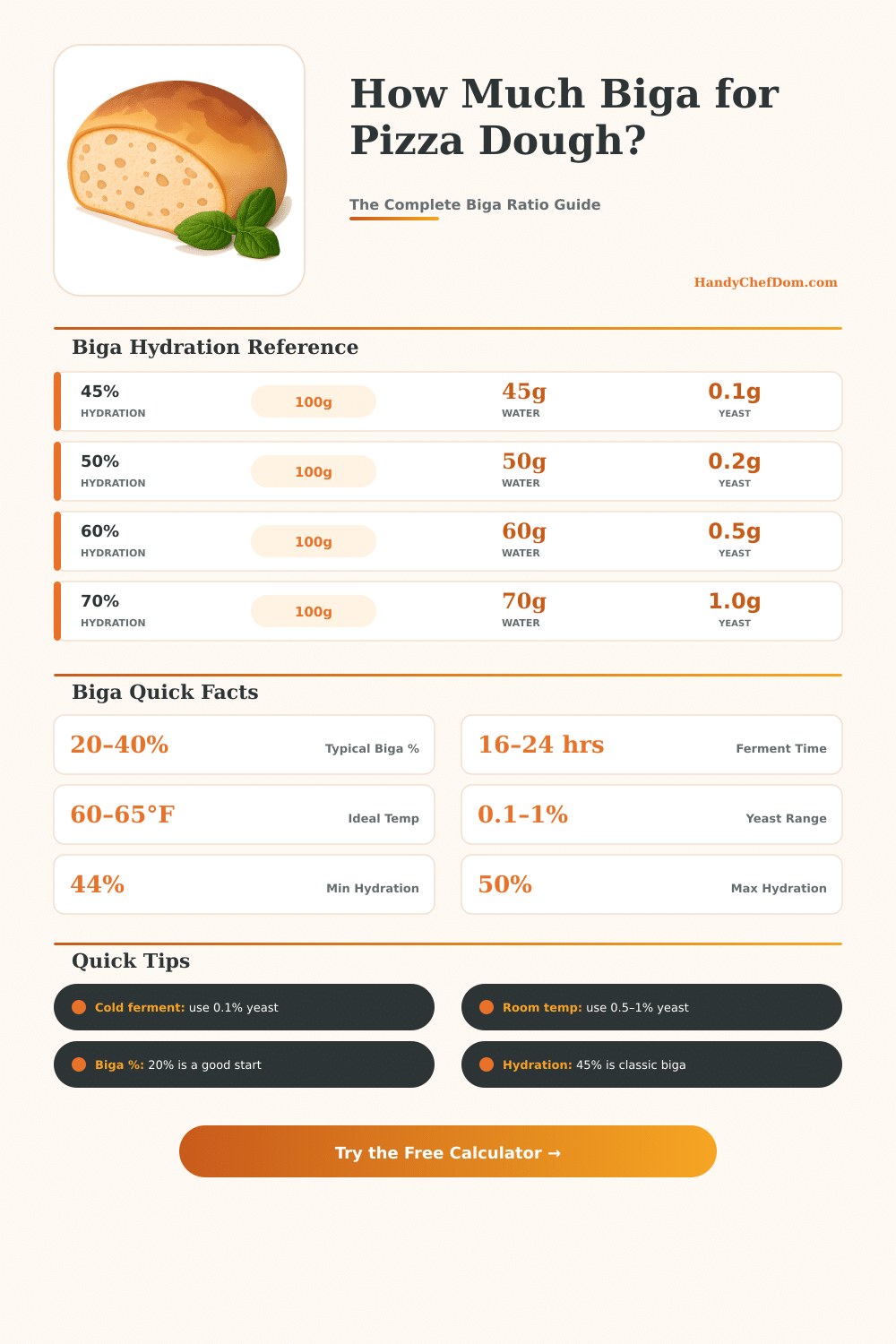
| Biga Hydration | Texture | Ferment Time (Cool) | Best For | Instant Yeast % |
|---|---|---|---|---|
| 44–46% | Very stiff, crumbly | 16–24 hrs | Neapolitan, focaccia | 0.1–0.2% |
| 47–50% | Stiff, firm | 12–18 hrs | Neapolitan, pizza al taglio | 0.2–0.4% |
| 51–55% | Slightly pliable | 10–16 hrs | NY-style, pan pizza | 0.3–0.5% |
| 56–60% | Soft, tacky | 8–12 hrs | Roman, high hydration | 0.4–0.6% |
| 61–70% | Wet, loose | 6–10 hrs | Pinsa, ciabatta | 0.5–1.0% |
| Fresh Yeast | Active Dry Yeast | Instant Dry Yeast | Typical Use (%) |
|---|---|---|---|
| 3.0g | 1.5g | 1.0g | 0.1% (cold, slow) |
| 6.0g | 3.0g | 2.0g | 0.2% (overnight) |
| 10.0g | 5.0g | 3.3g | 0.33% (standard) |
| 15.0g | 7.5g | 5.0g | 0.5% (same-day) |
| 30.0g | 15.0g | 10.0g | 1.0% (quick) |
| Pizza Style | Biga % | Biga Hydration | Final Hydration | Ferment Time |
|---|---|---|---|---|
| Neapolitan | 20–30% | 44–46% | 60–65% | 18–24 hrs |
| Roman (Tonda) | 30–40% | 45–50% | 58–62% | 16–20 hrs |
| Pizza al Taglio | 40–60% | 45–50% | 75–85% | 16–24 hrs |
| NY-Style | 25–35% | 48–52% | 60–65% | 12–18 hrs |
| Sicilian / Pan | 20–30% | 45–50% | 68–75% | 12–16 hrs |
| Pinsa Romana | 50–70% | 50–60% | 75–85% | 24–72 hrs |
| Ingredient | Baker's % | Per 1000g Flour | Notes |
|---|---|---|---|
| Flour (total) | 100% | 1000g | All flour including biga flour |
| Water (total) | 60–80% | 600–800g | Biga water + remaining |
| Salt | 2–3% | 20–30g | Added to final mix only |
| Yeast (instant) | 0.1–0.5% | 1–5g | In biga only (no extra) |
| Olive Oil | 0–3% | 0–30g | Optional, final mix |
| Sugar / Malt | 0–1% | 0–10g | Optional, final mix |
Honestly, pizza dough is not as terrible as it seems. You really only need six ingredients and do not bother with special kinds of flour for each. All-purpose and bread flour work just as well in that task.
You do not need a mixer, although it matters if you have one. Some recipes require only moments of kneading (we talk about seconds here) and can be ready to form in only half an hour.
How to Make Easy Pizza Dough
Start by testing your yeast. Mix together a bit of warm water, pinch of sugar and the yeast, then leave it rest for around ten minutes, until it becomes frothy and bubbling up. Here matters the temperature, the water must be warm, not burning warm.
The list of ingredients is simple: water, yeast, flour, olive oil, a bit of sugar and salt. That is everything. You do not need any fancy tools for this.
Two bowls and a wooden spoon work for the whole process. The dough rises only one time, and from the start until baking you need around one and a half hours. For one pizza, probably only ten minutes of real work, then between thirty and sixty minutes of resting time.
When it enters the oven, you get a perfect mix, soft inside with sharp edges.
The amount of pizza dough depends on the size that you want. For a small pizza about seven ounces is enough. For a twelve-inch, you need about ten ounces.
Fourteen inch? That is around sixteen ounces. The bigger the pizza, the more you must stretch the dough.
Stretch and pull the dough slowly, with pauses between every stretch, that really helps.
A pizza stone does miracles for home baking. It spreads the heat more evenly and gives you a sharp bottom crust. No stone?
A regular baking sheet works almost just as well. Dust your tray or cutting board with cornstarch or flour before laying the dough down, and that reduces the troubles.
For pan pizza, add two tablespoons of olive oil to the dough after everything. A cast iron pan is really ideal for deep plates or pan style variations. Leave the dough rest around thirty minutes after blending; cover it in a bowl with a damp cloth, and everything will be fine.
Cold rising in the refrigerator? Here the taste really develops. Make the dough the prior night, leave it rise slowly in the cold, then take it out the next day.
Give it one or two hours on the table to warm before shaping. But mind, if the dough stays too long, the gluten breaks down and it simply flows out like water. Getting the crust write is probably the most sensitive part of making pizza dough.
Without good rise, the structure falls apart while baking. Dough with higher water content, using flour, yeast, a bit of sugar, salt and olive oil with around ninety minutes of risingtime works well. Baking on parchment paper on the stone gives far better results.