🥦 Protein in Broccoli Calculator
Find out exactly how much protein is in any amount of broccoli — raw or cooked, cups or grams
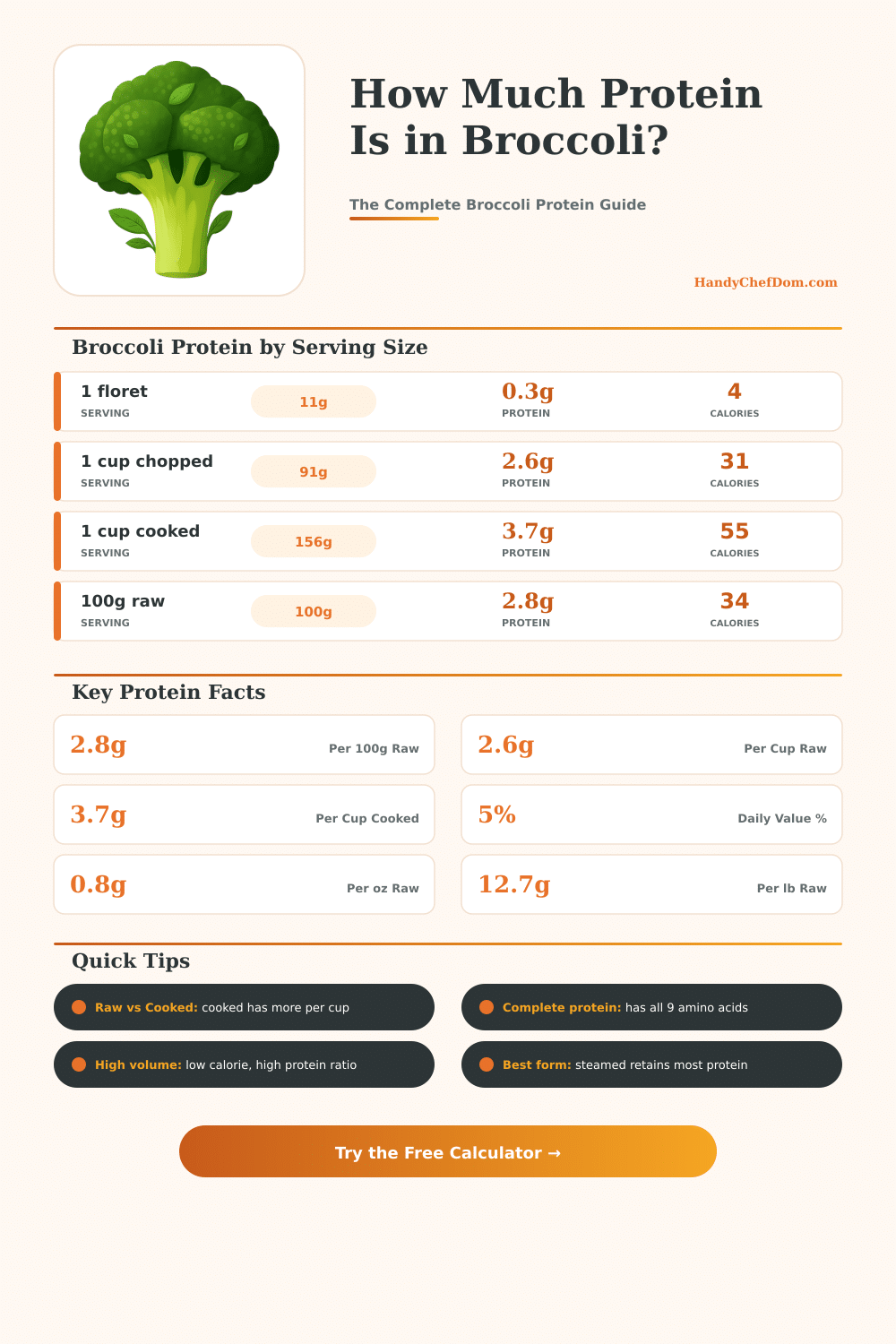
| Serving Size | Weight | Protein | Calories | Protein/Cal Ratio |
|---|---|---|---|---|
| 1 Small Floret | 11g | 0.3g | 4 kcal | 0.075g/kcal |
| 1 Large Floret | 20g | 0.6g | 7 kcal | 0.086g/kcal |
| 1 Cup Raw Chopped | 91g | 2.6g | 31 kcal | 0.084g/kcal |
| 1 Cup Cooked | 156g | 3.7g | 55 kcal | 0.067g/kcal |
| 100g Raw | 100g | 2.8g | 34 kcal | 0.082g/kcal |
| 100g Cooked | 100g | 2.4g | 35 kcal | 0.069g/kcal |
| 1 oz Raw (28g) | 28g | 0.8g | 10 kcal | 0.080g/kcal |
| Half Cup Raw | 46g | 1.3g | 16 kcal | 0.081g/kcal |
| 1 lb Raw | 454g | 12.7g | 154 kcal | 0.082g/kcal |
| Whole Medium Head | 350g | 9.8g | 119 kcal | 0.082g/kcal |
| Form | Protein/100g | Protein/Cup | Calories/Cup |
|---|---|---|---|
| Raw Broccoli | 2.8g | 2.6g | 31 kcal |
| Steamed Broccoli | 2.4g | 3.7g | 55 kcal |
| Boiled Broccoli | 2.2g | 3.4g | 52 kcal |
| Frozen (cooked) | 2.3g | 3.6g | 52 kcal |
| Broccoli Rabe (raw) | 3.2g | 2.9g | 22 kcal |
| Broccoli Sprouts | 2.4g | 0.8g | 10 kcal |
| Vegetable | Protein/100g | Calories/100g | Protein Rank |
|---|---|---|---|
| Edamame (cooked) | 11.9g | 122 kcal | ⭐ Top |
| Peas (green, raw) | 5.4g | 81 kcal | High |
| Spinach (raw) | 2.9g | 23 kcal | High |
| Broccoli (raw) | 2.8g | 34 kcal | High |
| Brussels Sprouts | 3.4g | 43 kcal | High |
| Asparagus (raw) | 2.2g | 20 kcal | Medium |
| Kale (raw) | 2.9g | 35 kcal | High |
| Cauliflower (raw) | 1.9g | 25 kcal | Medium |
| Zucchini (raw) | 1.2g | 17 kcal | Low |
Broccoli is a nutritious green plant from the cabbage family. Its scientific name is Brassica oleracea var. Italica.
The big flower heads, with their thick stem and little leaves, are all used as vegetables. It looks like a little tree.
How to Store, Cook and Eat Broccoli
Green is the most commonly seen colour of broccoli, although purple and white types also exist. It keeps in the refrigerator until you are ready to use it. Good fresh broccoli looks bright and even.
Yellow or brown marks signal that it starts to go bad.
Regular broccoli is made up of around 90 percent water and 10 percent nutrients. It is rich in vitamin C, and one cup is enough for the daily need of an adult. It also offers dietary fiber, folic acid, vitamin B6 and enough potassium.
Every serving carries a bit of magnesium, iron and calcium. Most of all it fills vitamins, minerals and antioxidants, that help for healthy skin. Broccoli ranks among the low calorie foods.
Scientific studies show its potential against cancer.
Too much broccoli can sometimes cause stomach discomfort or bloating, especially if the body did not adjust to that much fiber. Some folks dislike its taste because of a lacking enzyme, that otherwise removes the bitterness. Regularly include broccoli in the everyday meal plan is healthy, but variety in the diet stays important.
To prepare broccoli, start by removing the thick stems until the first cracks in the flowers. The stems you can peel and eat raw or add to salad. Then scatter the flowers by hand or knife.
If you wash them, then dry them well before cooking.
broccoli works raw, roasted, fried or steamed. Fry, toss, stir-fry or roast to keep the nutrients best, because the cooking is fast. During cooking aim four a slightly crisp result.
Steamed broccoli commonly becomes soft or wet. Blanch and right away cool in iced water to keep the nice green colour. High heat roasting brings out the flavours, and it goes well with garlic, lemon, olive oil, salt and pepper.
Add parmesan or feta cheese after cooking for extra taste. Broccoli goes in salads, stir-fries, pasta dishes, soups and omelettes. As broccoli rice it works well for a low carb option.
The stemsthemselves are delicious, so better keep them than dump.