🧀 Cheddar Cheese Protein Calculator
Calculate exact protein content in any amount of cheddar cheese — in ounces or grams
| Serving Description | Weight | Protein (Regular) | Calories |
|---|---|---|---|
| 1 thin slice | 17g / 0.6 oz | 3.9g | 68 kcal |
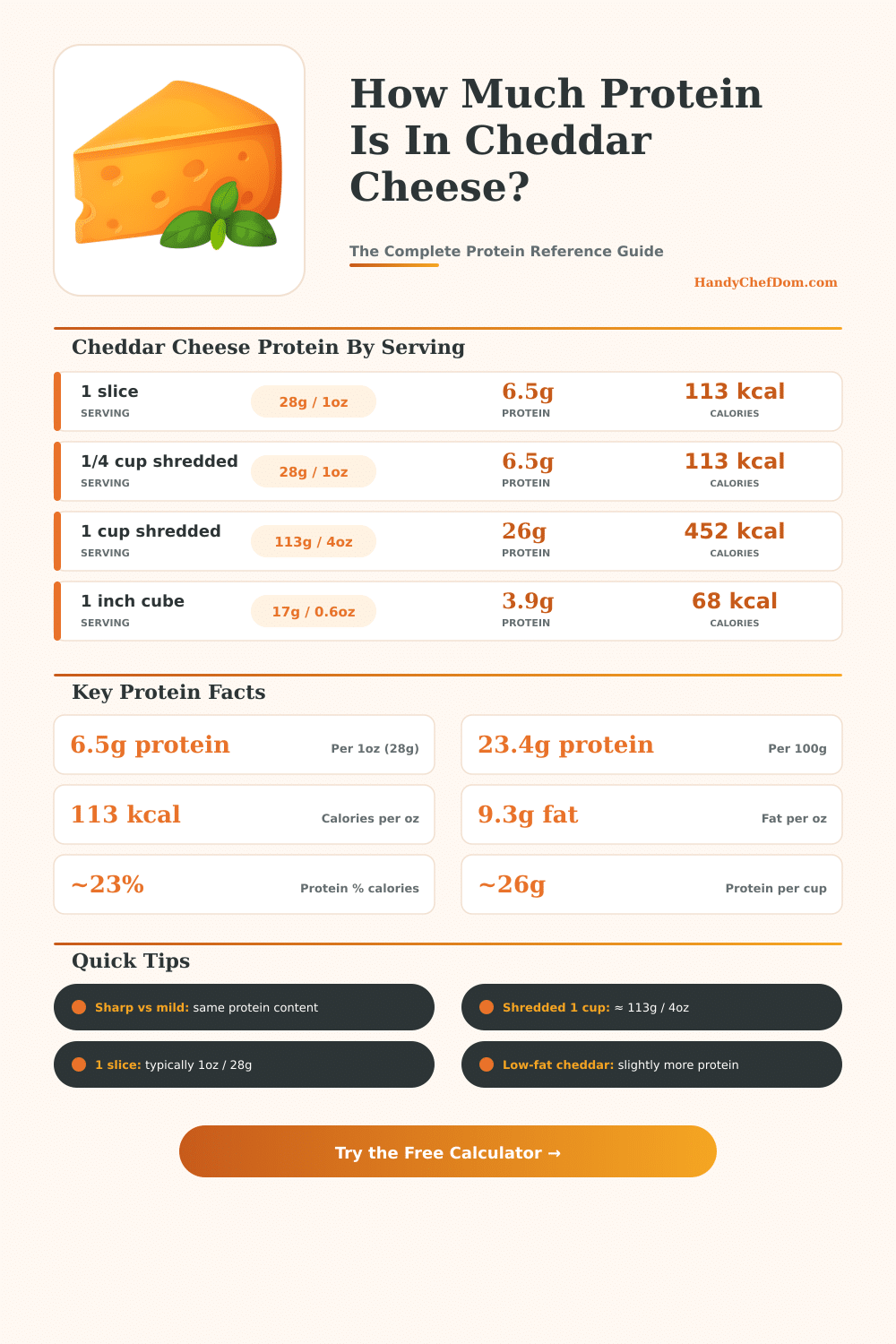
| 1 standard slice | 28g / 1 oz | 6.5g | 113 kcal |
| 2 slices | 56g / 2 oz | 13.1g | 226 kcal |
| 1 inch cube | 17g / 0.6 oz | 3.9g | 68 kcal |
| 1/4 cup shredded | 28g / 1 oz | 6.5g | 113 kcal |
| 1/2 cup shredded | 57g / 2 oz | 13.3g | 228 kcal |
| 1 cup shredded | 113g / 4 oz | 26.4g | 452 kcal |
| 100g (metric standard) | 100g / 3.5 oz | 23.4g | 402 kcal |
| 4 oz block | 113g / 4 oz | 26.4g | 452 kcal |
| Half pound (8 oz) | 227g / 8 oz | 53.1g | 913 kcal |
| 1 pound block | 454g / 16 oz | 106.3g | 1825 kcal |
| Cheddar Type | Protein per oz | Protein per 100g | Fat per 100g |
|---|---|---|---|
| Regular / Medium Cheddar | 6.5g | 23.4g | 33.1g |
| Mild Cheddar | 6.4g | 22.9g | 33.7g |
| Sharp / Mature Cheddar | 6.6g | 23.7g | 33.3g |
| Extra Mature / Aged Cheddar | 6.8g | 24.5g | 34.1g |
| Low-Fat Cheddar (reduced fat) | 7.8g | 27.5g | 16.0g |
| Processed Cheddar Slices | 5.3g | 18.9g | 25.0g |
| Protein Goal | From Cheddar Alone | Oz Needed | Grams Needed |
|---|---|---|---|
| 10g protein | ~1.5 standard slices | 1.5 oz | 43g |
| 20g protein | ~3 standard slices | 3 oz | 85g |
| 25g protein | ~1 cup shredded | 4 oz | 113g |
| 50g protein | ~7.5 oz block | 7.5 oz | 213g |
Cheddar Cheese is made from milk, that has a slightly firm texture and sometimes tasty bitterness. It appears white or orange when one adds coloring like annatto. The cheese comes from the English village Cheddar, that sits in Somerset, southwest of England.
Currently one makes it everywhere across the world and it ranks between the most commonly bought and eaten cheeses around the globe.
All About Cheddar Cheese
The term “cheddar” works as noun and verb. In the process of cheese making, one “cheddars” the curds to create that creamy, sharp and favorite product. The cheddar method is made up of turning the slices of curds every fifteen minutes for around two hours, keeping the heat at about 38°C. That stage gives the cheese its special flavor.
Golden cheddar is the usual sight, although white variant also exists. Between white and orange types differ only the added coloring. It offers rich nutty aroma, that gets stronger over time.
The texture stays smooth and solid when young, but later it gets grainy and easy to crumble. One calls it sharp, if it passes nine months of age. The older the cheddar, the less gentle it tastes.
During the aging of cheddar, water dries out, and the flavors get stronger. Cultures with enzymes break the Protein in the process, which changes the texture. Cheese at three months has buttery and creamy taste.
As the months pass, complex umami-notes appear. Some cheddars mature even untill twenty-seven years.
Well made cheddars have creamy, smooth structure without crumbling or cracking. They should melt without problems. As hard cheese, it necessarily is dense.
Properly aged cheddar will bare deep, rich and wild taste.
Cheddar Cheese belongs to the most ancient between at least two thousand types of cheeses. Only for this one uses the cheddar method, that presses the curds and squeezes the extra moisture. The first stage in each cheese making is called ripening, where bacteria of lactic acid are added to change lactose into lactic acid.
During pressing of cheddar, if the curds not already firmed, they too dry were. Bigger and sharp curds give moist cheese and less aging problems. After the pressing, one can wax the cheese or wrap it with fat.
Cheddar works well for many foods. Pasta dishes with cheese, fondue, grilled sandwiches with cheese, soup from broccoli and cheese or from cauliflower with cheddar all work well. It goes great with fruit chutneys and crisp apples.
Because in pasta cheesedishes, one uses cheddar, that not too long aged, so that the sauce does not easily separate the fat from the milk.