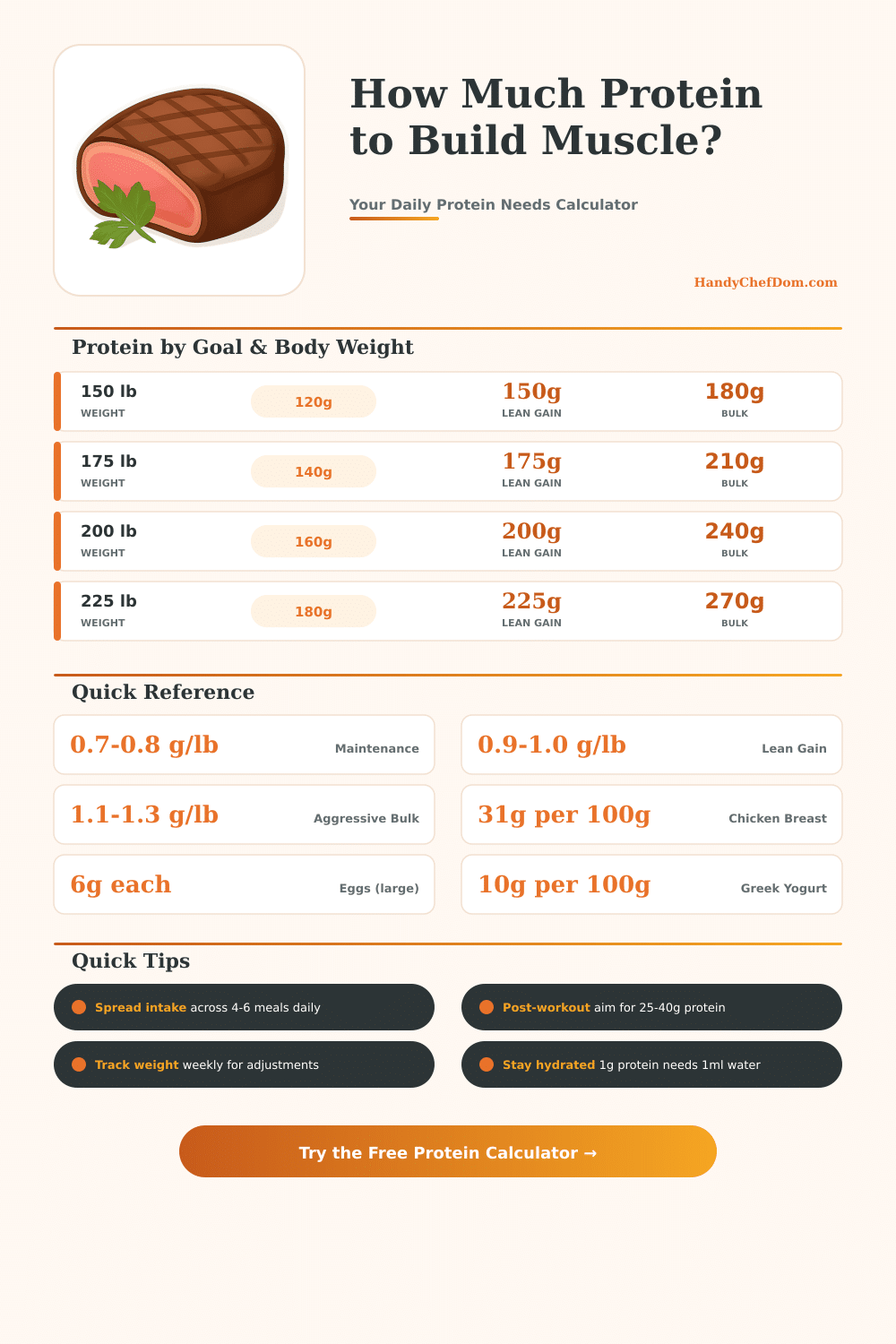
💪 Muscle Gain Protein Calculator
Calculate your optimal daily protein intake for building muscle
| Goal | g per lb | g per kg | Notes |
|---|---|---|---|
| Maintain Muscle | 0.7 – 0.8 | 1.6 – 1.8 | Sufficient for muscle preservation |
| Lean Muscle Gain | 0.8 – 1.0 | 1.8 – 2.2 | Optimal for progressive overload |
| Bulk / Mass Gain | 1.0 – 1.2 | 2.2 – 2.6 | Higher surplus with heavy training |
| Cutting (Preserve) | 1.0 – 1.3 | 2.2 – 2.8 | Higher protein protects lean mass |
| Athlete (Elite) | 1.0 – 1.4 | 2.2 – 3.0 | Very high volume training |
| Food Source | Serving Size | Protein (g) | Calories |
|---|---|---|---|
| Chicken Breast (cooked) | 4 oz / 113g | 26g | 130 |
| Ground Turkey (93% lean) | 4 oz / 113g | 22g | 170 |
| Salmon (Atlantic) | 4 oz / 113g | 23g | 210 |
| Lean Ground Beef (90%) | 4 oz / 113g | 28g | 200 |
| Eggs | 2 large | 12g | 140 |
| Egg Whites | 4 large | 14g | 68 |
| Greek Yogurt (nonfat) | 1 cup / 245g | 20g | 130 |
| Cottage Cheese (2%) | ½ cup / 113g | 14g | 90 |
| Whey Protein Isolate | 1 scoop / 30g | 25g | 110 |
| Casein Protein | 1 scoop / 33g | 24g | 120 |
| Tofu (firm) | ½ cup / 126g | 10g | 88 |
| Lentils (cooked) | 1 cup / 198g | 18g | 230 |
| Tuna (canned, drained) | 3 oz / 85g | 20g | 90 |
| Shrimp (cooked) | 4 oz / 113g | 24g | 112 |
| Meal Timing | Protein Target | Best Sources | Purpose |
|---|---|---|---|
| Breakfast | 25–35g | Eggs, yogurt, whey | Break overnight fast |
| Pre-Workout (1–2h before) | 20–30g | Chicken, protein shake | Fuel training session |
| Post-Workout (within 2h) | 25–40g | Whey, lean meat, eggs | Maximize muscle protein synthesis |
| Lunch / Dinner | 30–40g | Meat, fish, legumes | Sustained amino acid supply |
| Before Bed | 20–30g | Casein, cottage cheese | Slow-release overnight recovery |
Proteins are present everywhere in the body. They are in muscles, bones, skin, hair and almost every other organ or tissue. They form the enzymes that help many chemical processes, and the hemoglobin that carries oxygen through the blood.
Many consider proteins the basic building blocks of life because they break into amino acids, that helps the body grow and fix itself.
Protein: What It Is and How Much You Need
Proteins form from basic units called amino acids. Around 20 different amino acids combine in various sequences. The body uses them to produce fresh proteins, for instance in muscles and bones.
In short, protein is a long sequence of amino acids joined by means of peptide links.
Meat, poultry, seafood, beans, peas, lentils, eggs, nuts, seeds and soy products provide the body many nutrients. Among them is protein, B vitamins like niacin, thiamine, riboflavin and B6, together with vitamin E, iron, zinc and magnesium. Animal sources of protein deliver complete proteins together with plenty of vitamins and minerals, even so there is concern about the high level of packed fat in those foods compared to plant sources.
One can receive protein without meat quite easily. Combinations of grains, beans and vegetables, as beans with rice or quinoa, work well. Tofu works for stir-fries, air-fried nuggets or shredded in a burrito.
Textured plant protein is useful for tacos and sauces. Cheese, lentils, vegetables and mushrooms all carry protein and cost fairly little. Plain soy protein has a neutral taste and gives a protein boost too smoothies or soups.
The advised everyday amount for a normal adult is 0.8 grams of protein for every kilo of body weight. This matches around 0.36 grams per pound. Like this, folk weighing 165 pounds need to eat about 60 grams of protein daily.
Growing children and pregnant or nursing women need a bit more than the average adult, because their bodies build more muscle. People with lowered kidney function should stay at the advised 0.8 grams per kilo per day, to avoid adding extra load to the kidneys.
An average three-ounce piece of chicken stores around 26 grams of protein, what beats the half of the minimal daily amount. Getting 15 to 30 grams per meal is simple for most folks, even for athletes. A portion from every meal and a bit of meat the size of a card deck during lunch and dinnner usually is enough to cover that.
protein powders usually carry 20 to 30 grams of protein per portion, while protein bars can have 40 grams or more. For good quality, one should aim for 70 to 80 percent protein. They come in flavors like chocolate, vanilla and strawberry.
Active folks that lift heavy weights commonly aimfor higher protein intake to help the muscle growth.