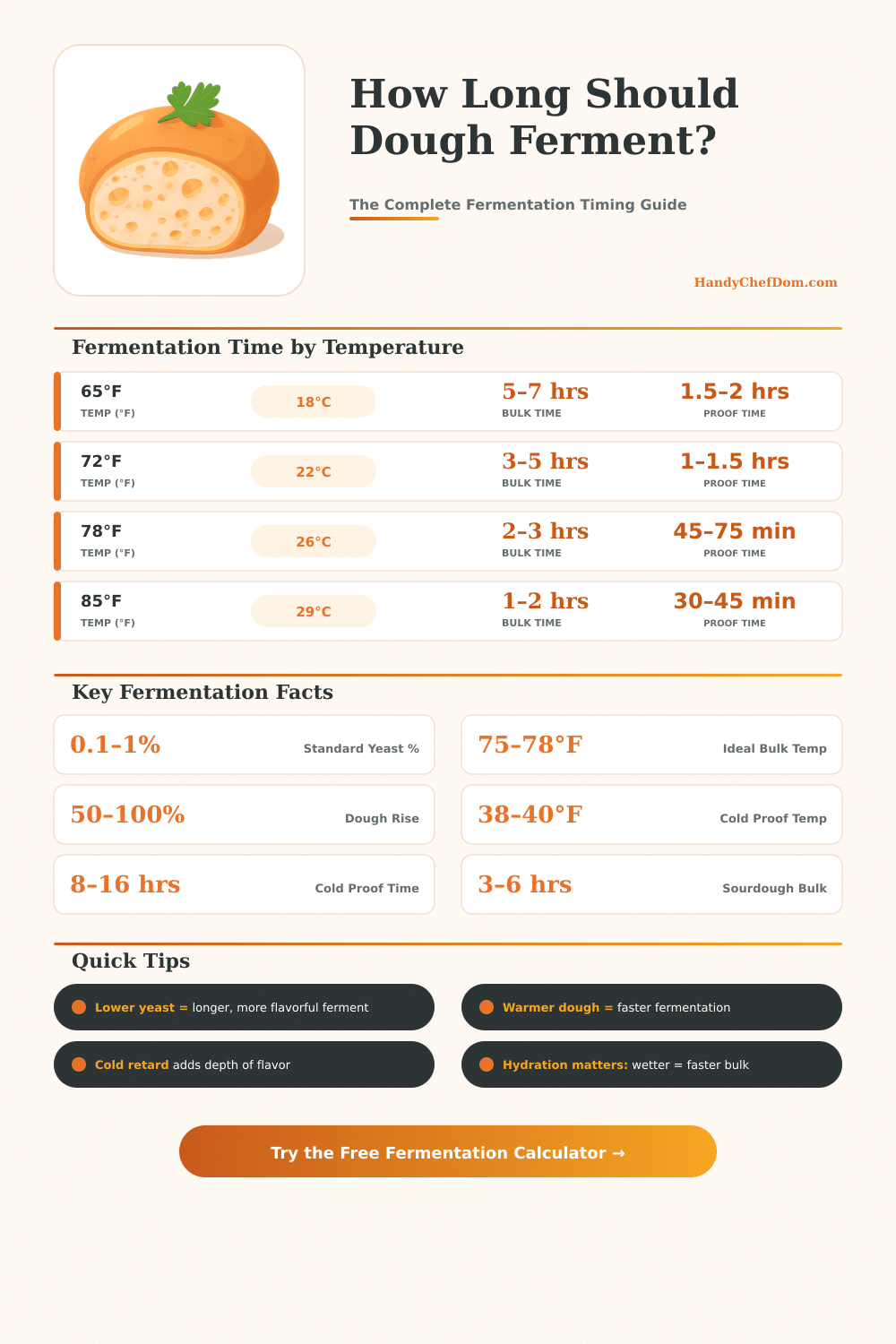
🍞 Dough Fermentation Calculator
Calculate bulk fermentation & proof times by yeast %, temperature & dough type
| Temp (°C) | Temp (°F) | 0.5% Instant Yeast | 0.1% Instant Yeast | 20% Starter |
|---|---|---|---|---|
| 16°C | 61°F | 6–8 hrs | 12–16 hrs | 8–12 hrs |
| 18°C | 64°F | 5–7 hrs | 10–14 hrs | 6–10 hrs |
| 21°C | 70°F | 4–5 hrs | 8–10 hrs | 4–7 hrs |
| 24°C | 75°F | 2.5–4 hrs | 5–8 hrs | 3–5 hrs |
| 27°C | 81°F | 1.5–2.5 hrs | 3–5 hrs | 2–3.5 hrs |
| 30°C | 86°F | 1–1.5 hrs | 2–3 hrs | 1.5–2.5 hrs |
| 4°C (fridge) | 39°F | 10–14 hrs | 14–20 hrs | 10–18 hrs |
| Yeast Type | Amount for 500g Flour | Baker's % Range | Relative Activity |
|---|---|---|---|
| Instant Dry Yeast | 0.5g – 5g | 0.1% – 1% | 100% (reference) |
| Active Dry Yeast | 0.6g – 6g | 0.12% – 1.2% | ~80% of instant |
| Fresh Yeast | 1.5g – 15g | 0.3% – 3% | ~50% of instant |
| Sourdough Starter | 50g – 200g | 10% – 40% | variable (20% typical) |
| Hydration Level | Hydration % | Fermentation Speed | Typical Use |
|---|---|---|---|
| Stiff Dough | 55–65% | Slowest (–15%) | Bagels, pretzels |
| Standard | 65–72% | Baseline | Sandwich bread |
| High Hydration | 72–82% | Faster (+10%) | Ciabatta, focaccia |
| Very High | 82–95% | Fastest (+20%) | Baguette, rustic loaves |
| Method | Temperature | Time Range | Visual Cue |
|---|---|---|---|
| Room Temp Proof | 22–26°C (72–78°F) | 45 min – 2 hrs | Poke test springs back slowly |
| Warm Proof | 27–32°C (80–90°F) | 30 – 60 min | Dough is jiggly, nearly doubled |
| Cold Proof | 3–5°C (38–41°F) | 8 – 18 hrs | Firm, holds shape, slow spring |
| Retarded Proof | 8–12°C (46–54°F) | 4 – 10 hrs | Gradual expansion visible |
At the core, dough is simply soft and handy stuff… Flour mixed with only so much liquid that it forms something that you can truly shape. The base of flour can come from grains, vegetables or even chestnuts.
Usually the liquid is water or milk well mixed until the dough gets firm texture, ready to either roll. Fermentation and other agents for fermentation commonly enter also, together with various extras, that improve the flavor or the structure ultimately.
Dough and Batter Explained
The world of dough is very varied. There is dough for pizza, for bread, sweet versions for sweets as grooved rolls, dough for pasta products and many kinds of crusts for pies. Quick ones as Irish soda bread, muffins either banana breads start from those.
Dough for dumplings is commonly only simple mix of flour and water, a bit of egg sometimes added. Some of them even ferment and turn into fried or puffed buns. Flour binds everything, but teh uses differ greatly.
Now, batter is entirely other thing. It stays lightweight and easy, and surely you do not knead it. Cakes, crepes, souffles, everything from them is born from batter, not from dough.
When one compares different bread kinds, the structure truly separates them. White bread taste and feel nothing like rye bread ore as biscuit.
The wetness changes from dough to dough. When dough becomes truly wet and easy, bakers call it easy dough. That means high hydration.
It is harder to handle, more tough for the hands. Recipes without kneading got popular by means of such easy dough. Focaccia commonly requires very wet dough; one famous recipe aims at 80% hydration.
Dead dough has its own place. It is meant for decoration… Sculptures from bread, baskets, those little grape and leaf decorations for buffet tables.
Not for eating. That dough is done to not rise again, after it enters the oven.
For real size, one own pizza (think main plate sizes) usually requires between 240 and 290 grams of dough. Thin 16-inch pizza requires around 350 grams and can feed two hungry folks, maybe three with sides. It splits to about 125 until 175 grams for one person.
French rolls from bakery weigh around 140 grams each, what makes sense, because a 550-gram baguette splits infour parts.
Kneading by hand small amounts helps you feel, whether you reached the right wetness or erred. The testing by means of tools is good way to check, whether your dough reached the needed stretch. Do not leave it rest too long, because it probably over-ferments and weakens.
Lay it quickly in the refrigerator, later take it out fresh the next day? That commonly works more well.
“dough” sounds like “doe”. As slang, it points to money from the 1840s or so. The tie probably comes from bread, that is linked to everyday life and wages.
One simply swapped the words.