🌾 Fresh Milled Flour Conversion Calculator
Convert store-bought flour measurements to fresh milled flour & wheat berries
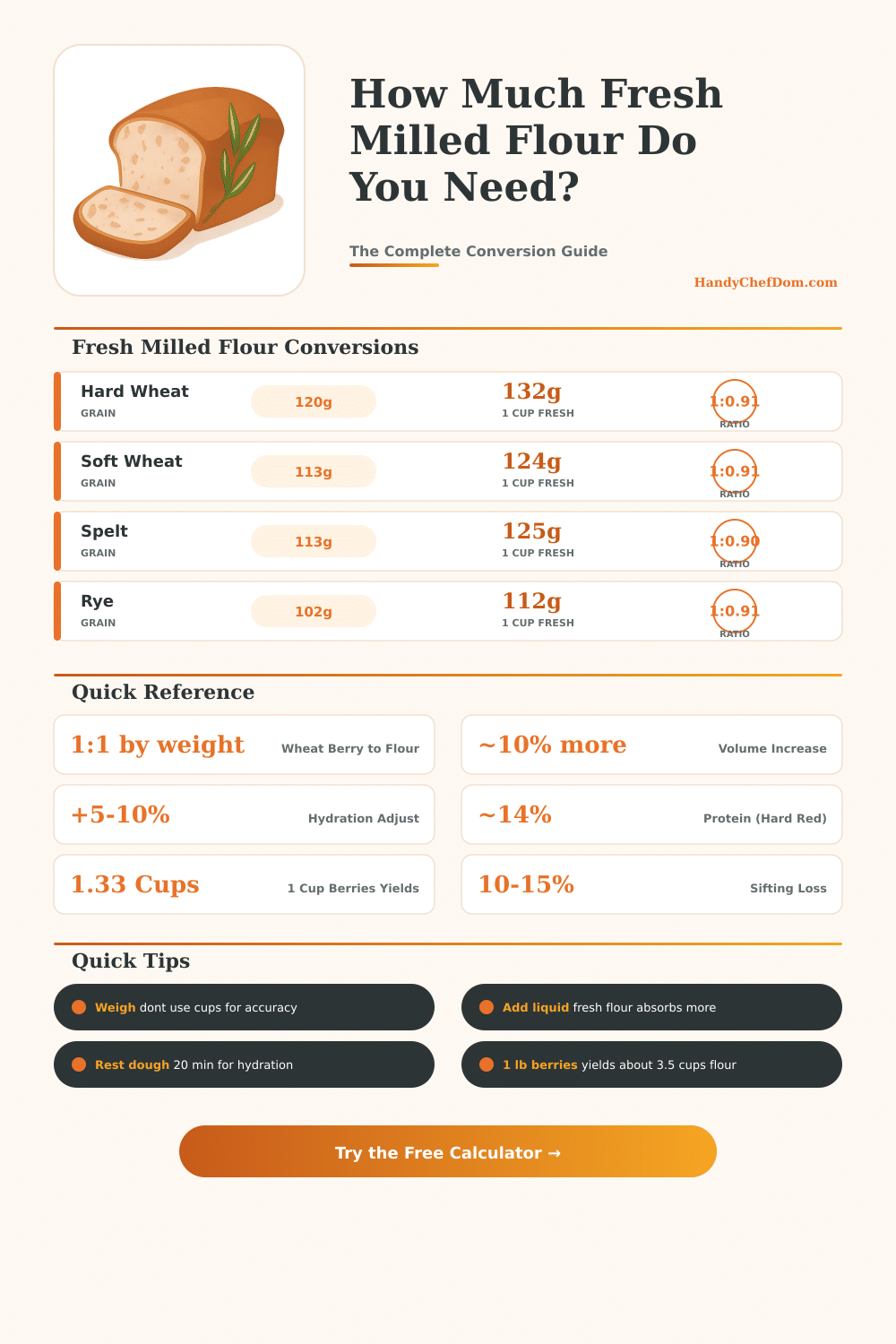
| Flour Type | Store-Bought (g/cup) | Fresh Milled (g/cup) | Difference |
|---|---|---|---|
| All-Purpose (Hard Red Wheat) | 120g | 132g | +10% |
| Bread Flour (Hard Red Wheat) | 127g | 138g | +9% |
| Whole Wheat (Hard Red Wheat) | 128g | 132g | +3% |
| Pastry (Soft White Wheat) | 113g | 124g | +10% |
| Cake Flour (Soft White) | 114g | 125g | +10% |
| Spelt Flour | 113g | 125g | +11% |
| Rye Flour | 102g | 112g | +10% |
| Einkorn Flour | 106g | 118g | +11% |
| Wheat Berries | Flour Yield (Unsifted) | Flour Yield (Sifted) | Volume Yield |
|---|---|---|---|
| 100g (3.5 oz) | 100g (3.5 oz) | 85–90g (3–3.2 oz) | ~0.75 cups |
| 1 cup (180g) | 180g (6.3 oz) | 153–162g (5.4–5.7 oz) | ~1.33 cups |
| 1 lb (454g) | 454g (1 lb) | 386–409g (13.6–14.4 oz) | ~3.4 cups |
| 1 kg (2.2 lb) | 1 kg (2.2 lb) | 850–900g (1.87–1.98 lb) | ~7.5 cups |
| 5 lb (2.27 kg) | 5 lb (2.27 kg) | 4.25–4.5 lb (1.93–2.04 kg) | ~17 cups |
| Recipe Type | Extra Liquid Needed | Per Cup Flour | Notes |
|---|---|---|---|
| Bread / Yeasted Dough | +5–10% | +1–2 tbsp | Let dough rest 20–30 min to hydrate |
| Cookies | +5% | +1 tsp to 1 tbsp | Dough may seem dry at first |
| Muffins / Quick Breads | +5–8% | +1–1.5 tbsp | Batter should still be thick |
| Cakes | +8–12% | +1.5–2 tbsp | Sift fresh flour for lighter texture |
| Pancakes / Waffles | +10% | +2 tbsp | Rest batter 10 min before cooking |
| Pasta | +5–8% | +1–1.5 tbsp | Add liquid gradually |
| Grain | Protein % | Best For | Gluten Strength |
|---|---|---|---|
| Hard Red Wheat | 12–15% | Bread, pizza, bagels | Strong |
| Hard White Wheat | 11–14% | All-purpose, sandwich bread | Moderate-Strong |
| Soft White Wheat | 8–11% | Pastry, cake, cookies | Weak |
| Spelt | 12–15% | Bread, muffins | Moderate (fragile) |
| Einkorn | 12–18% | Pancakes, pasta, flatbreads | Weak (different gluten) |
| Kamut / Khorasan | 12–18% | Bread, pasta | Moderate |
| Rye | 8–12% | Rye bread, crackers | Very Weak |
| Oat Groats | 11–17% | Oat flour baking, thickener | None (gluten-free) |
Fresh ground flour weighs around 10% more for one cup than store bought… 132 g instead of 120 g for all-purpose flour from hard red wheat. That surprised me during my first baking with it.
By weight, it simply exchanges 1:1. One pound of wheat grains gives one pound of unsifted flour, which comes to around 3.4 cups by volume.
How Fresh Flour Is Different from Store Flour
Sifting changes everything. One loses about 10 to 15% as bran, so for 500 g of sifted flour you really need closer to 575 g of grains. Water also matters a lot, I found that dough needs 5 to 10% more water.
Cakes are even more thristy, sometimes needing 12% extra. Hard red wheat has 12 to 15% protein, while soft white wheat sits between 8 and 11%, which explains why cake flour feels totally different than bread flour.
The info below does not come from a calculator or converter. It is based on real usage, reviews, forum talks and experiences of cooking communities across the net.
flour is powder from ground grains, beans, nuts, seeds, roots or vegetables using a grinder. One uses it four many kinds of foods, including baked products, and it also thickens dishes. Flour from wheat is the main ingredient for bread, which people eat everywhere in the world.
As a verb, to flour means to dust flour on a surface, for example for rolling dough.
Nothing bad is about flour itself. It depends on the process and how one eats it. Flour ranges from almost unprocessed, like home milling, to extremely processed, like in many store bought baked products.
Unbleached, whole grain and stone ground flour commonly are better than enriched white flour, though not regarding carb content. The only real difference between fancy and standard flour is the trouble that it lacks fat. The main lack is fiber.
Health food stores offer a range of flours from different wheats for various purposes. Bread flour is white flour from hard, high protein wheat, with usual protein around 12 or 13 percent. Cake flour has 5 to 8 percent protein.
Pastry flour sits between 8 and 9 percent. All-purpose flour ranges from 9 to 12 percent. Pastry flour and softer all-purpose flour work best for pie crusts.
Cake flour is too soft for such a task.
Flours from rice, soy, rye, pea and oats all work for breads, cookies and cakes. But only wheat flour can hold risen gases, bind cakes and give creamy structure. Cornstarch comes from corn, while all-purpose flour comes from wheat, and they do not swap in recipes.
There is no one best flour for everyday cooking and baking, because each has its own traits and uses.
High quality flours, that are unbleached and without bromate or fake preservatives, give steady results in baking. King Arthur and Bob’s Red Mill are known brands in supermarkets. Buying big bags of basic flour also works for regular baking.
Mixing oat flour with whole wheat and white flour can create really good texture in cakes, almost like using pastryflour.
Plain flour taste in baked products commonly comes because of lack of salt. Even sweet baked stuff needs salt. Adding strong tastes to batter or filling helps to hide that taste.
Acids break starch-thickened sauces during long cooks, and starch gives clear sauce, while flour does not.