🎂 All Purpose to Cake Flour Converter
Instantly calculate how to substitute all purpose flour for cake flour with the right cornstarch ratio
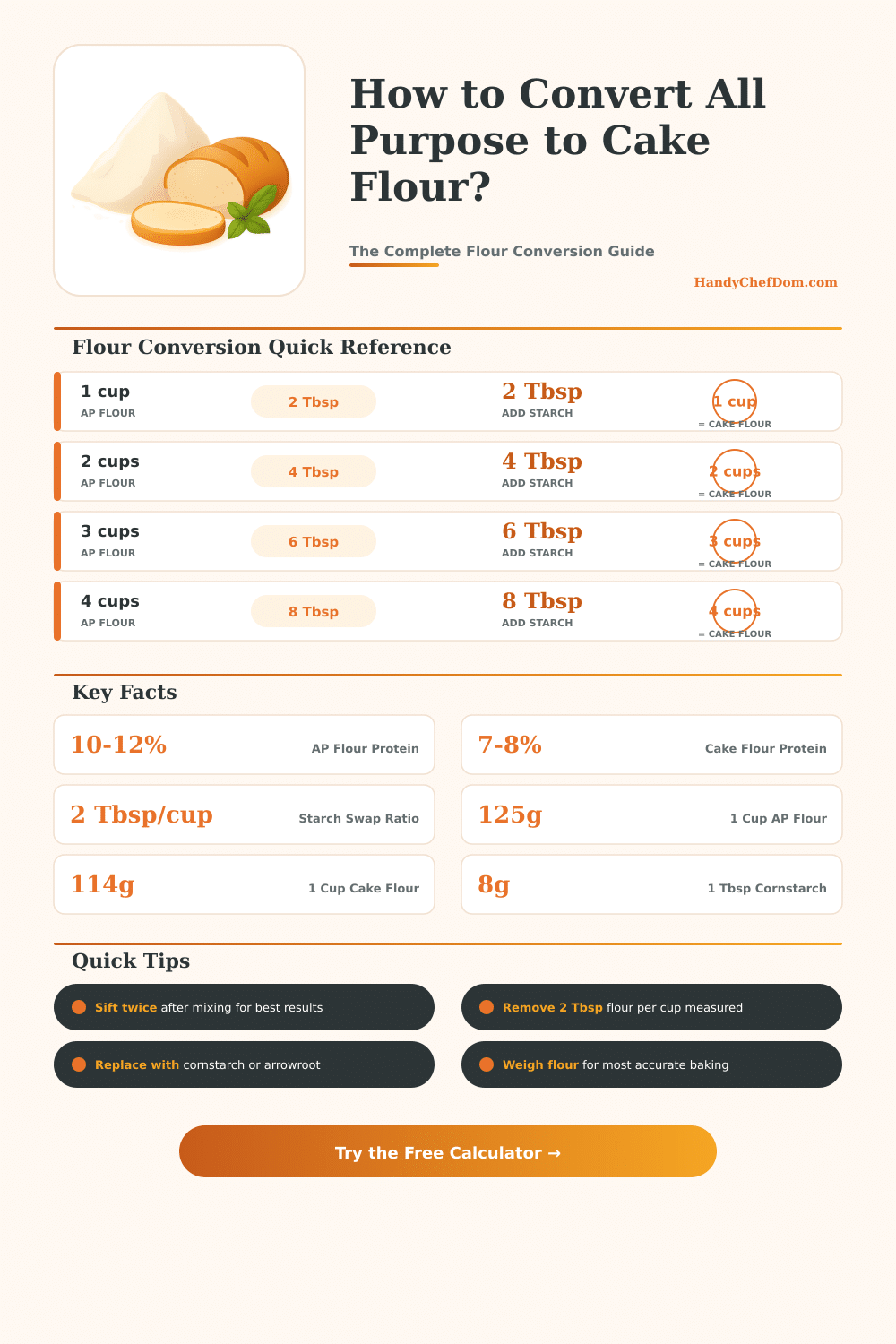
| AP Flour | Remove (Flour) | Add (Starch) | = Cake Flour |
|---|---|---|---|
| 1 cup (125g) | 2 Tbsp (16g) | 2 Tbsp (16g) | 1 cup (114g) |
| 1½ cups (188g) | 3 Tbsp (24g) | 3 Tbsp (24g) | 1½ cups (171g) |
| 2 cups (250g) | 4 Tbsp (31g) | 4 Tbsp (31g) | 2 cups (228g) |
| 2½ cups (313g) | 5 Tbsp (39g) | 5 Tbsp (39g) | 2½ cups (285g) |
| 3 cups (375g) | 6 Tbsp (47g) | 6 Tbsp (47g) | 3 cups (342g) |
| 4 cups (500g) | 8 Tbsp (63g) | 8 Tbsp (63g) | 4 cups (456g) |
| Measurement | All Purpose Flour | Cake Flour | Cornstarch |
|---|---|---|---|
| 1 Cup | 125g / 4.4 oz | 114g / 4.0 oz | 128g / 4.5 oz |
| 1 Tablespoon | 8g / 0.28 oz | 7g / 0.25 oz | 8g / 0.28 oz |
| 1 Teaspoon | 2.6g / 0.09 oz | 2.3g / 0.08 oz | 2.7g / 0.09 oz |
| ¼ Cup | 31g / 1.1 oz | 28g / 1.0 oz | 32g / 1.1 oz |
| ⅓ Cup | 42g / 1.5 oz | 38g / 1.3 oz | 43g / 1.5 oz |
| ½ Cup | 63g / 2.2 oz | 57g / 2.0 oz | 64g / 2.3 oz |
| Recipe Type | Flour (Cups) | Flour (Grams) | Servings |
|---|---|---|---|
| Single Layer Cake | 1 – 1½ | 125 – 188 | 8 – 10 |
| Two Layer Cake | 2 – 3 | 250 – 375 | 12 – 16 |
| Cupcakes (12) | 1½ | 188 | 12 |
| Sheet Cake | 3 – 4 | 375 – 500 | 24 – 30 |
| Pound Cake | 2 | 250 | 10 – 12 |
| Muffins (12) | 2 | 250 | 12 |
The whole effect is based on a simple change: one swaps two spoons of cornstarch instead of two spoons of regular flour for each measured cup. Here is everything. Cake flour has only 7 to 8 percent protein while regular flour has between 10 and 12 percent, depending on the brand.
Those 3-4 percent points of difference cause the cake to become soft or tough.
Make Cake Flour from Regular Flour
One cup regular flour weighs almost 125 grams. And cake flour? It is more lightweight (almost 114 grams for one cup).
I did not expect that that 11-gram difference would matter a lot, but it does matter. For a two-layer cake that requires 3 cups, you dump 6 spoons of flour and add 6 spoons of cornstarch; around 47 grams exchanged. Big sifitng two or three times after blending is needed, if you want the right texture.
The information below does not come from a calculator or converter. It is based on actual usage, reviews, forum talks and experiences of cooking groups across the net.
flour is made up of powder that one makes by grinding grains, beans, nuts, seeds, roots or vegetables by means of a grinder. One uses it too prepare many kinds of foods, among them are baked products, and it also thickens dishes. Wheat flour forms the main ingredient of bread, that stays a basic food everywhere in the world.
Any single flour answers most for everyday cooking and baking. Every type has its own traits and uses. White flour for bread comes from hard, protein-rich wheat.
The proteins can reach even 14 percent, but usually they stay around 12 or 13. Regular flour is wheat flour with middle protein and gluten level. It suits for many uses, for instance cakes, cookies, bread, pie crust and sauce thickening.
Cake flour and regular flour differ, and swapping them in recipes will change the result.
flours from rice, soy, rye, pea and oat are used to prepare breads, cookies and cakes. Even so only wheat has the element needed to trap gases, bind cookies and give a creamy rise to structure. Cornstarch comes from corn, regular flour from wheat.
They are not swappable in recipes.
flour itself is not naturally bad. Carbs are not bad. Unbleached, whole grain and stone ground versions widely beat enriched white flours, although not regarding carb content.
The health of flour depends on its processing and how much you eat. It ranges from almost unmixed, like home ground, to extremely processed, like many store bought baked products.
The only real difference between fancy and normal flour is the grinding strength. The main cost deals about fibers. Adding salt to baked products matters.
The flour taste in baking commonly comes because of lack of enough salt. Flavors in batter or dough can also mask plain flourtaste.
flours of high quality, that are not bleached and do not carry bromate or fake preservatives, answer for steady baking results. Mixing cake flour with regular flour in equal parts gives good pastry flour at home. Another effect is swapping by means of cornstarch to turn regular flour into something more alike to crust or pastry flour.
Oat flour with whole wheat and white flours can create cake with good texture. Acidic sauces break starch-thickened sauces during long cooking, and starch gives clear sauce, while flour does not.