🟤 Lentil Bean Protein Calculator
Find out exactly how much protein is in any serving of lentil beans — cooked or dry
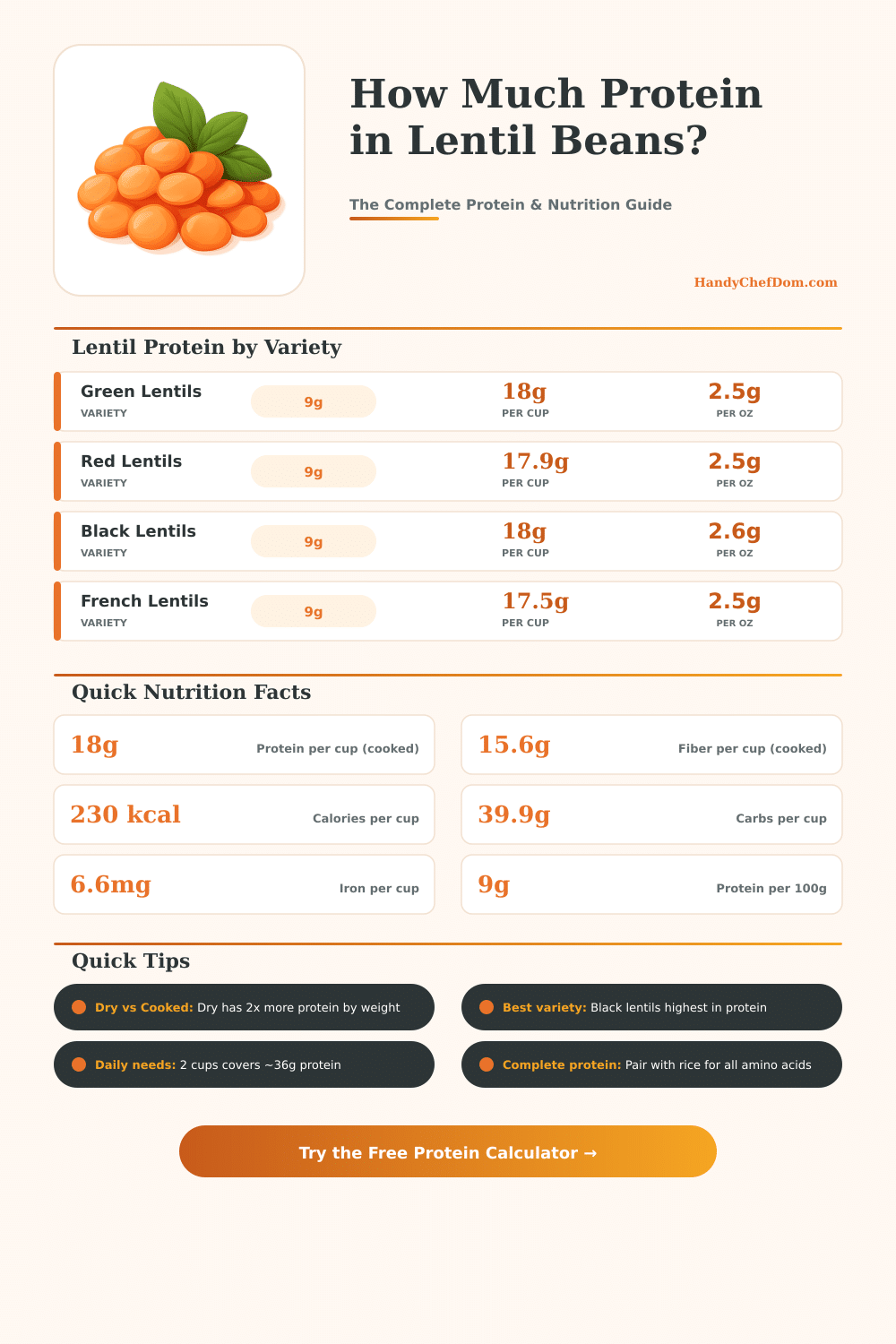
| Variety | Protein | Calories | Carbs | Fiber | Fat |
|---|---|---|---|---|---|
| Green Lentils | 9.0g | 116 kcal | 20.1g | 7.9g | 0.4g |
| Red Lentils | 9.0g | 116 kcal | 20.1g | 7.9g | 0.4g |
| Black (Beluga) | 9.0g | 116 kcal | 20.1g | 8.0g | 0.4g |
| French (Puy) | 8.8g | 112 kcal | 19.6g | 7.6g | 0.3g |
| Brown Lentils | 9.0g | 116 kcal | 20.1g | 7.9g | 0.4g |
| Yellow Lentils | 8.6g | 114 kcal | 20.4g | 7.3g | 0.4g |
| Serving | Weight | Protein | Calories | % Daily Value* |
|---|---|---|---|---|
| 1 Tablespoon | ~12g | 1.1g | 14 kcal | 2% |
| 1 oz (28g) | 28g | 2.5g | 32 kcal | 5% |
| 1/4 Cup | ~50g | 4.5g | 58 kcal | 9% |
| 1/2 Cup | ~99g | 8.9g | 115 kcal | 18% |
| 3/4 Cup | ~148g | 13.3g | 172 kcal | 27% |
| 1 Cup | ~198g | 17.9g | 230 kcal | 36% |
| 1.5 Cups | ~297g | 26.7g | 345 kcal | 53% |
| 2 Cups | ~396g | 35.6g | 460 kcal | 71% |
| Dry Amount | Cooked Yield | Protein (Dry) | Protein (Cooked) |
|---|---|---|---|
| 1/4 cup dry | ~0.6 cups cooked | 10.7g | 10.7g |
| 1/2 cup dry | ~1.25 cups cooked | 21.3g | 21.3g |
| 1 cup dry | ~2.5 cups cooked | 42.5g | 42.5g |
| 100g dry | ~250g cooked | 25.8g | 25.8g |
| 200g dry | ~500g cooked | 51.5g | 51.5g |
Lentils are little oval members of the legume family. One sometimes calls them pulse vegetables, that is legumes grown mainly because of their dried seeds. To that group belong also kidney beans, lima beans, navy beans, peas and chickpeas.
The scientific name of them is Lens culinaris. The word “lentil” comes directly from the Latin word for lens because they have the form of a lens. All lentils rank between pulse vegetables, and all pulse vegetables are legumes, even so not all legumes are pulses or lentils.
All About Lentils
Lentil Beans and lentils are like cousins. They both belong to the legume family, but they are not the same. Lentils are much smaller than most average beans.
That results in big surface area regarding the content inside, what gives more struceture and less wet makeup.
Various kinds of lentils exist. Brown, green and black lentils stay whole. Green lentils are the most common.
Split lentils, for instance red, lack skin. Red lentils own gentle taste with a bit of tenderness and split during the cook. They work great for soups, stews, curries and dals.
A big bonus of lentils is, that one does not need to soak them before cooking. Lentil Beans usually require overnight soaking in water, what doubles there volume during the night. Lentils fully skip that stage.
They save time, when one lacks time for soaking beans long and cooking them for an hour. Simply add water until half in a big pot, boil it, add the lentils and leave to cook until done. Green and brown whole lentils benefit from soaking, because without it they cook sometimes unevenly, but split lentils never need that.
Green or brown lentils work well as a replacement for ground meat. They work in tacos, spaghetti, shepherd’s pie and chili. Their taste and makeup is gentler and less “beany” than that of other legumes.
Salad from lentils offers another option, cook bigger lentils only until done, later mix with oil and a sour part like lemon or vinegar, while one cools it.
Lentils are rich in Protein. They have the third highest Protein amount between all legumes, after beans and soy. Combined with whole grains, lentils deliver Protein just as good as in meat.
Lentil Beans and lentils with grains like rice or wheat create complete Protein. They well provide carbohydrates, Protein and fiber, plus many vitamins and minerals. Lentils serve also as a good source of fiber.
They work as glutenfree addition to salads and meatless soups, and they work alone or as a side to fish or roasted vegetables.