🧂 Meat Brine Calculator
Calculate the perfect salt & water ratio for any meat brine — wet or dry
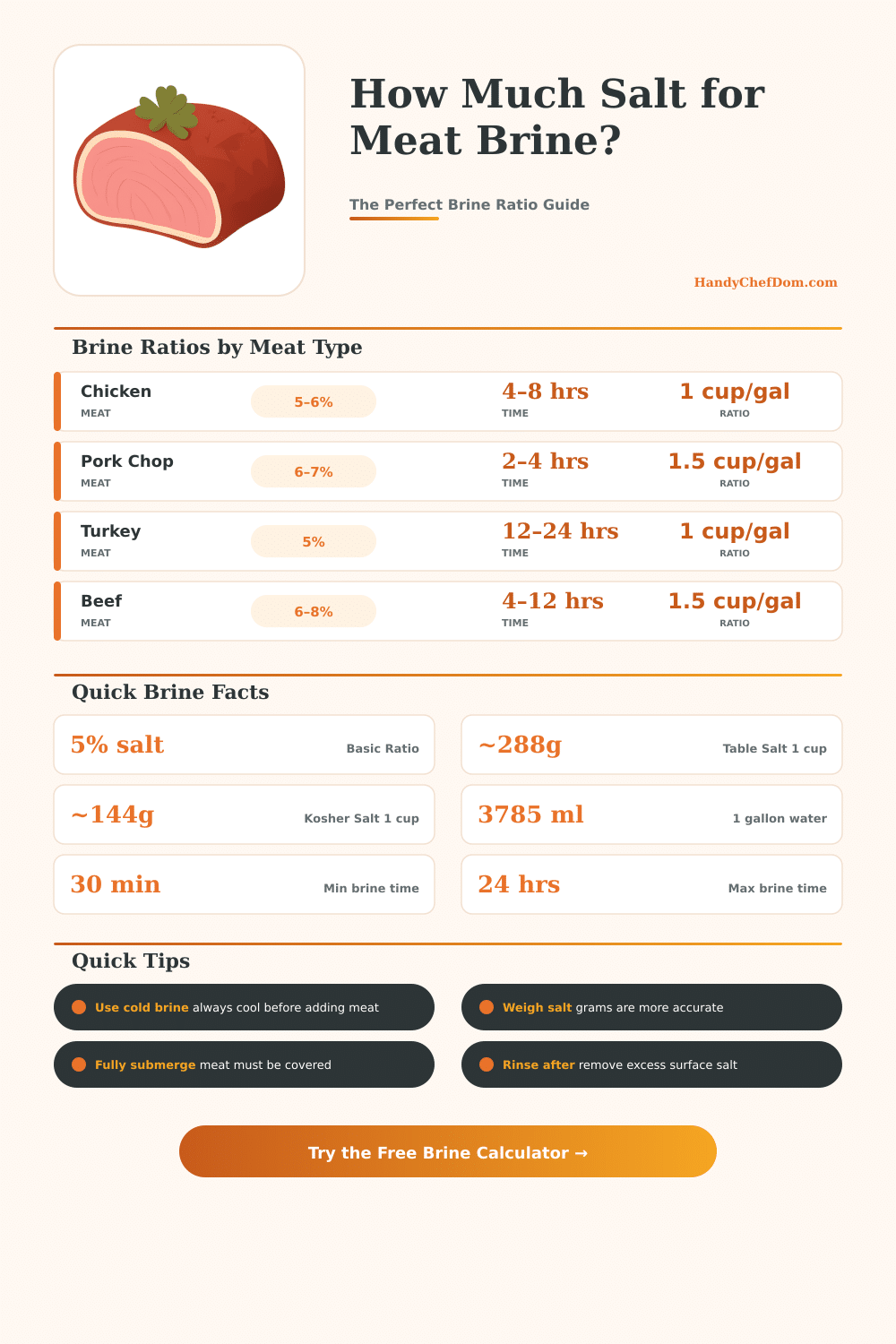
| Meat | Brine Type | Salt % (Wet) | Salt % (Dry) | Min Time | Max Time |
|---|---|---|---|---|---|
| Whole Chicken | Wet or Dry | 5–6% | 1.5–2% | 4 hrs | 12 hrs |
| Chicken Breasts | Wet | 5–6% | 1.5% | 30 min | 4 hrs |
| Whole Turkey | Wet or Dry | 5% | 1.5–2% | 12 hrs | 48 hrs |
| Pork Chops | Wet | 6–7% | 2% | 1 hr | 6 hrs |
| Pork Tenderloin | Wet | 5–6% | 1.5–2% | 2 hrs | 8 hrs |
| Pork Ribs | Wet | 6% | 2% | 4 hrs | 12 hrs |
| Beef Steak | Dry | 6–8% | 2–3% | 1 hr | 24 hrs |
| Shrimp | Wet | 3–5% | — | 15 min | 1 hr |
| Salmon / Fish | Wet or Dry | 3–5% | 1–2% | 30 min | 4 hrs |
| Duck | Wet or Dry | 5–6% | 2% | 8 hrs | 24 hrs |
| Lamb | Wet | 5–6% | 1.5–2% | 4 hrs | 12 hrs |
| Brisket | Wet (Corned) | 6–8% | — | 5 days | 10 days |
(Diamond Crystal)
(Morton)
(iodized)
(per cup)
(per cup)
(per cup)
(per tsp)
(per tsp)
| US Gallons | US Quarts | US Cups | Liters | Milliliters | Fluid Oz |
|---|---|---|---|---|---|
| 0.25 gal | 1 qt | 4 cups | 0.946 L | 946 ml | 32 fl oz |
| 0.5 gal | 2 qt | 8 cups | 1.893 L | 1893 ml | 64 fl oz |
| 1 gal | 4 qt | 16 cups | 3.785 L | 3785 ml | 128 fl oz |
| 2 gal | 8 qt | 32 cups | 7.571 L | 7571 ml | 256 fl oz |
| 3 gal | 12 qt | 48 cups | 11.356 L | 11356 ml | 384 fl oz |
For ages, folks covered meat and fish with salt to keep them, because fridges did not exist yet. Today however brine has a whole other benefit. It mainly serves to add taste and keep the moisture inside the meat during cooking.
Here is the key: the salty mix holds water in the tissues of the meat. During cooking, that moisture stays there, instead of leaving. Through osmosis, the salt first exits from the cells, later enters again with more water and salt.
How to Brine Meat for Juicy, Tasty Results
Soaking meat in brine is one of the simplest ways to reach surprisingly juicy and tasty results when you cook. It goes into the meat with flavors and at the same time softens it until almost butter-soft texture. The whole process seems fully easy, you simply soak the meat in brine, commonly overnight.
During that time in the brine the salt goes across the whole meat inward, not only stay on the skin.
For ages, folks covered meat and fish with salt to keep them, because fridges did not exist yet. Today however brine has a whole other benefit. It mainly serves to add taste and keep the moisture inside the meat during cooking.
Here is the key: the salty mix holds water in the tissues of the meat. During cooking, that mositure stays there, instead of leaving. Through osmosis, the salt first exits from the cells, later enters again with more water and salt.
To make your own brine? Very easily. Take dry things like salt, sugar and spices, later dissolve them in hot water.
Leave everything to cool below 40 degrees before use. Use a big glass bowl, a jar or even a five-gallon bucket, that size works well for turkeys. Add herbs, spices, sugar, honey or vinegar for richer taste.
Pork likes fruits, so attempt with orange juice or lemonade in the brine for sure. Even sew recall; pork does not like vinegar too much.
The meats that benefit most are those that dry easily, like chicken and turkey. Fried chicken in brine from pickles? It truly changes the taste a lot.
Pork chops commonly have a bad name because of dryness, but brine makes them surprisingly juicy bits that really impress. Brine works best for meats that will cook all the way through. Steak does not need it, because you do not cook it all the way.
Buttermilk brine is another surprisingly simple method. Only salt, pepper and buttermilk; the sourness helps soften and give tender tang to the meat. When chicken is brined, the salt changes the protein cells, so that they can absorb more liquid during cooking.
Dry brine deserves a try also. Rub a chicken piece with salt and leave it in the fridge, which draws moisture to the surface where the salt sits, later it absorbs back in. Thicker pieces like beef can last a dry brine overnight without problems.
Coarse salt works more for that method, whiletable salt commonly makes the meat too salty and tough.
Give the meat around one hour each pound in the brine. Whatever you do, do not reuse the brine later. Wash the meat well to remove extra salt before cooking starts.
The brine itself never must serve as cooking liquid. Brined food cooks also more quickly than one expects.