🥩 Pork Roast Cooking Time Calculator
Calculate the perfect cooking time for any pork roast by weight, cut, and desired doneness
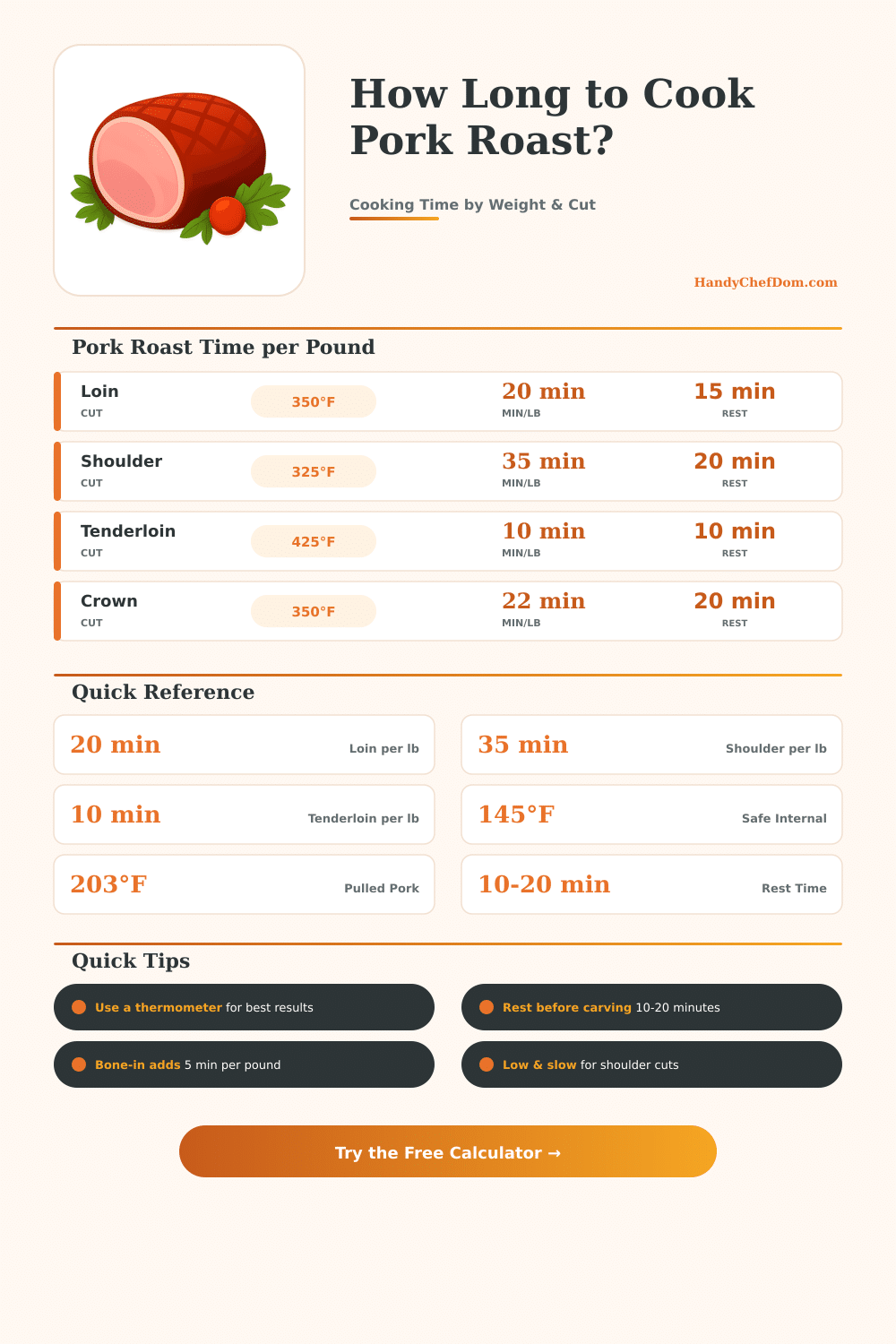
| Cut | Oven Temp | Min / lb | Min / kg | Target Internal |
|---|---|---|---|---|
| Pork Loin (boneless) | 350°F / 177°C | 20 min | 44 min | 145°F / 63°C |
| Pork Loin (bone-in) | 350°F / 177°C | 25 min | 55 min | 145°F / 63°C |
| Shoulder / Butt (pulled) | 275°F / 135°C | 35 min | 77 min | 203°F / 95°C |
| Tenderloin | 425°F / 218°C | 10 min | 22 min | 145°F / 63°C |
| Crown Roast | 350°F / 177°C | 22 min | 48 min | 145°F / 63°C |
| Leg / Fresh Ham | 325°F / 163°C | 25 min | 55 min | 145°F / 63°C |
| Pork Belly | 325°F / 163°C | 30 min | 66 min | 160°F / 71°C |
| Sirloin Roast | 350°F / 177°C | 22 min | 48 min | 145°F / 63°C |
| Rack / Rib Roast | 350°F / 177°C | 23 min | 51 min | 145°F / 63°C |
| Context | Cooked / Person | Raw Needed | Metric Raw |
|---|---|---|---|
| Main Course (boneless) | 6 oz | 8 oz | 227 g |
| Main Course (bone-in) | 6 oz | 12 oz | 340 g |
| Pulled Pork Sandwich | 5 oz | 10 oz | 283 g |
| Buffet (one of 2+ meats) | 4 oz | 6 oz | 170 g |
| Formal Dinner | 5 oz | 7 oz | 198 g |
| Appetizer Portions | 2 oz | 3 oz | 85 g |
| Cut | Cooked Yield | Shrinkage | Trim Loss |
|---|---|---|---|
| Pork Loin (boneless) | 75% | 25% | 5% |
| Pork Loin (bone-in) | 65% | 20% | 15% |
| Shoulder / Butt | 50% | 35% | 15% |
| Tenderloin | 78% | 22% | 3% |
| Crown Roast | 60% | 22% | 18% |
| Leg (bone-in) | 55% | 25% | 20% |
| Pork Belly | 65% | 35% | 0% |
| Rack / Rib Roast | 62% | 20% | 18% |
| Roast Weight | Rest Time | Temp Rise | Metric Weight |
|---|---|---|---|
| Under 2 lbs | 5–10 min | 3–5°F | Under 0.9 kg |
| 2–4 lbs | 10–15 min | 5–7°F | 0.9–1.8 kg |
| 4–8 lbs | 15–20 min | 5–10°F | 1.8–3.6 kg |
| 8–12 lbs | 20–30 min | 7–12°F | 3.6–5.4 kg |
| Over 12 lbs | 30–45 min | 10–15°F | Over 5.4 kg |
A boneless pork loin runs about 20 minutes per pound at 350 degrees Fahrenheit, but bone-in bumps that to 25. Shoulder for pulled pork needs around 35 minutes per pound at 275, and Ive found the yield drops to roughly 50% cooked weight. Tenderloin is the fastest at 10 minutes a pound.
The information below does not come from some computer program or automatic translator. It is based on real cooking experiences, discussions in forums and shared cooking ideas found through the net.
How to Cook Pork Roast
Pork Roast ranks between the simplest dishes to prepare. One rubs the meat with various spices and later puts it in the oven until it cooks. Easy mode is made up of salt black pepper and garlic powder, that one puts on the roast, later one cooks it in a covered jar or roaster at 325 degrees Fahrenheit for some hours.
Extra favourite version applies a mix of rosemary, garlic and thyme on pork loin before roasting it in the oven until it becomes soft and juicy.
In a slow cooker one can prepare Pork Roast with only three ingredients to reach a wet and delicous result. Pork shoulder roast works well in such device, surrounded by carrots and potatoes, what makes it a one-pot dinner. This combo is naturally gluten-free and soy-free.
The lovely smells fill the whole home during the cook, what makes it ideal for simple Sunday dinner.
To choose the right cut matters a lot. The best part is boneless and rolled pork shoulder or even stuffed and rolled pork belly. The meat needs to have enough fat, and the skin should stay flatly bound if one wants crisp skin.
Pork butt and pork shoulder both come from the shoulder region of the pig. The butt is cut from the upper part, while the shoulder from the bottom area. Both have stronger texture and more fat, so they perfectly suit for slow cooking methods like roasting, braising ore stewing.
Moreover, the butt is especially cheap cut.
Thin parts, like pork loin, can dry out if too cooked. When a cut has a trend to dry during roasting, that usually points that the fat content is too low for this method. Fat amount matters a good deal.
Nice Pork Roast with thick layer of fat on one side roasts very well. Pork loin best cooks in middle heat, not braised for long Time. The old fear about not quite enough cooked pork yet exists in many heads, but most store pigs are treated to escape parasites.
Height of heat first tightens the muscle fibers and pushes out the moisture. Low and stable warmth allows the pork to cook evenly from the edge to the center. Roast at 300 to 325 degrees and cook until the internal temperature reaches 135 to 140 degrees works well.
The reverse sear method is another good option. The roast enters the oven at 225 degrees until it reaches 140 inside, later rests while the oven warms to maximum, and fast high heat gives nice brown crust outside, while the inside stays juicy and wet.
Cut the roast and serve it with sauce is the classic mode. First sear the meat and cover it with fresh herbs to give a good base for the finish. Roasted or mashed potatoes work as good sides.
The golden rule toserve meat to guests is around eight pieces each person.