🍖 Pork Shoulder Cooking Time Calculator
Calculate exact cook times for pulled pork, roasts & more by weight and method
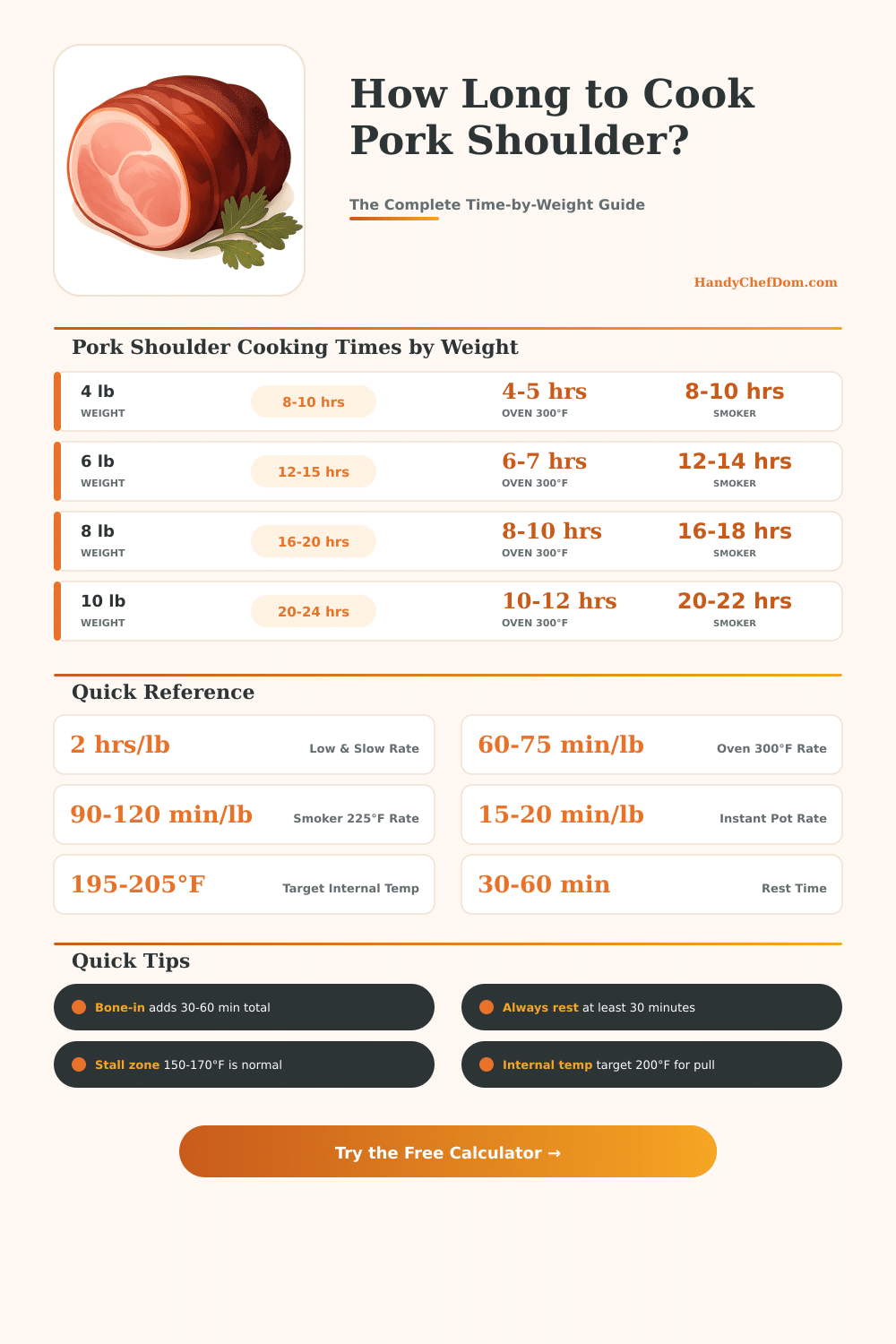
| Weight | Low & Slow (225°F) | Oven (300°F) | Smoker (225–250°F) | Instant Pot |
|---|---|---|---|---|
| 3 lb (1.4 kg) | 6–7.5 hrs | 3–3.75 hrs | 5.5–7 hrs | 45–60 min |
| 4 lb (1.8 kg) | 8–10 hrs | 4–5 hrs | 7.5–9 hrs | 60–80 min |
| 5 lb (2.3 kg) | 10–12.5 hrs | 5–6.25 hrs | 9–11 hrs | 75–100 min |
| 6 lb (2.7 kg) | 12–15 hrs | 6–7.5 hrs | 11–13.5 hrs | 90–120 min |
| 8 lb (3.6 kg) | 16–20 hrs | 8–10 hrs | 14.5–18 hrs | 120–160 min |
| 10 lb (4.5 kg) | 20–25 hrs | 10–12.5 hrs | 18–22.5 hrs | 150–200 min |
| 12 lb (5.4 kg) | 24–30 hrs | 12–15 hrs | 22–27 hrs | 180–240 min |
| Cut Type | Raw-to-Cooked Yield | Bone/Trim Loss | Servings per lb Raw |
|---|---|---|---|
| Bone-In Shoulder (Butt) | 50–55% | 15–20% bone | 2–2.5 |
| Boneless Shoulder | 55–60% | 5–8% trim | 2.5–3 |
| Bone-In Picnic | 45–50% | 20–25% bone/skin | 1.5–2 |
| Boneless Picnic | 50–55% | 8–12% trim | 2–2.5 |
| Guests | Cooked Meat Needed | Raw Bone-In Needed | Raw Boneless Needed |
|---|---|---|---|
| 5 | 1.7 lb (0.75 kg) | 3.3 lb (1.5 kg) | 2.8 lb (1.3 kg) |
| 10 | 3.3 lb (1.5 kg) | 6.7 lb (3 kg) | 5.6 lb (2.5 kg) |
| 15 | 5 lb (2.3 kg) | 10 lb (4.5 kg) | 8.3 lb (3.8 kg) |
| 20 | 6.7 lb (3 kg) | 13.3 lb (6 kg) | 11.1 lb (5 kg) |
| 25 | 8.3 lb (3.8 kg) | 16.7 lb (7.5 kg) | 13.9 lb (6.3 kg) |
| 50 | 16.7 lb (7.5 kg) | 33.3 lb (15 kg) | 27.8 lb (12.6 kg) |
| Pounds (lbs) | Kilograms (kg) | Ounces (oz) | Grams (g) |
|---|---|---|---|
| 1 | 0.45 | 16 | 454 |
| 2 | 0.91 | 32 | 907 |
| 3 | 1.36 | 48 | 1,361 |
| 5 | 2.27 | 80 | 2,268 |
| 8 | 3.63 | 128 | 3,629 |
| 10 | 4.54 | 160 | 4,536 |
| 12 | 5.44 | 192 | 5,443 |
| 15 | 6.80 | 240 | 6,804 |
Pork Shoulder comes from the front part of the pig. Although one sometimes calls it pork butt, it genuinely comes from the shoulder region. The real back part of the pig is called the ham.
So pork butt and Pork Shoulder are basically the same, although stores sometimes label them wrong. One commonly will sell the upper section of the pig as Pork Shoulder with bone. Pork butt has usually more evenly spread fat, what makes it good for making stuffings or pulled meats.
What Is Pork Shoulder and How to Cook It
Pork Shoulder is rich in flavor and best suited for its final form: pulled pork. Even so it is possible many other uses for it. Carnitas, Filipino pork adobo, tacos al pastor, teriyaki, pozole and chashu for ramen all work well.
One can cut it in steaks, cubes, roasts or thin slices for dishes as well. Mexican style green chili works also well, simply just cut the pig in cubes, mix with flour and brown so that they stay together.
Full Pork Shoulder genuinely suffices for one person alone. A practical idea is share it in bits and pack in bags for the freezer. Like this it helps with planning of meals.
Low and slow cooking best works four Pork Shoulder thanks to all that thick and connecting tissue. Those parts must break down so that the meat gets soft enough to fork pull it. Ideal oven heat is around 230 degrees.
Cooking Time in 250 degrees also works well. For a 12-pound shoulder, laid in the oven early in the morning, reaching 160 degrees inside and lasting until 204 degrees inside gives good results. The inner temperature for tender pulled pork is around 200 until 205 degrees.
Pork braised in milk forms a traditional food from Bologna. Boneless Pork Shoulder, that is fatter, gives a softer result after slow braising in the oven. Another good recipe means to first burn the Pork Shoulder, later lay it above tomatillos, jalapenos, coriander, white onion and cut lemon and cook several hours until tender.
Because it feeds many, standard serving size is around 4 until 6 ounces per person. Around 16 pounds of Pork Shoulder suffices for 20 people. A shoulder of 7 until 10 pounds can easily feed 10 until 14 folks, when one serves it with many side dishes.
Expect about 40 percent of shrinking after cooking. One pound of cooked pulled pork feeds about three adults and makes between three and four sandwiches, depending on the size ofthe roll.
A double layer mustard spread method creates strong taste. Light layer of rub, then light touch of mustard, later more rub works better than simply one layer and rub.