🥫 Prepper Food Storage Calculator
Calculate exactly how much food & water to store for your household emergency preparedness plan
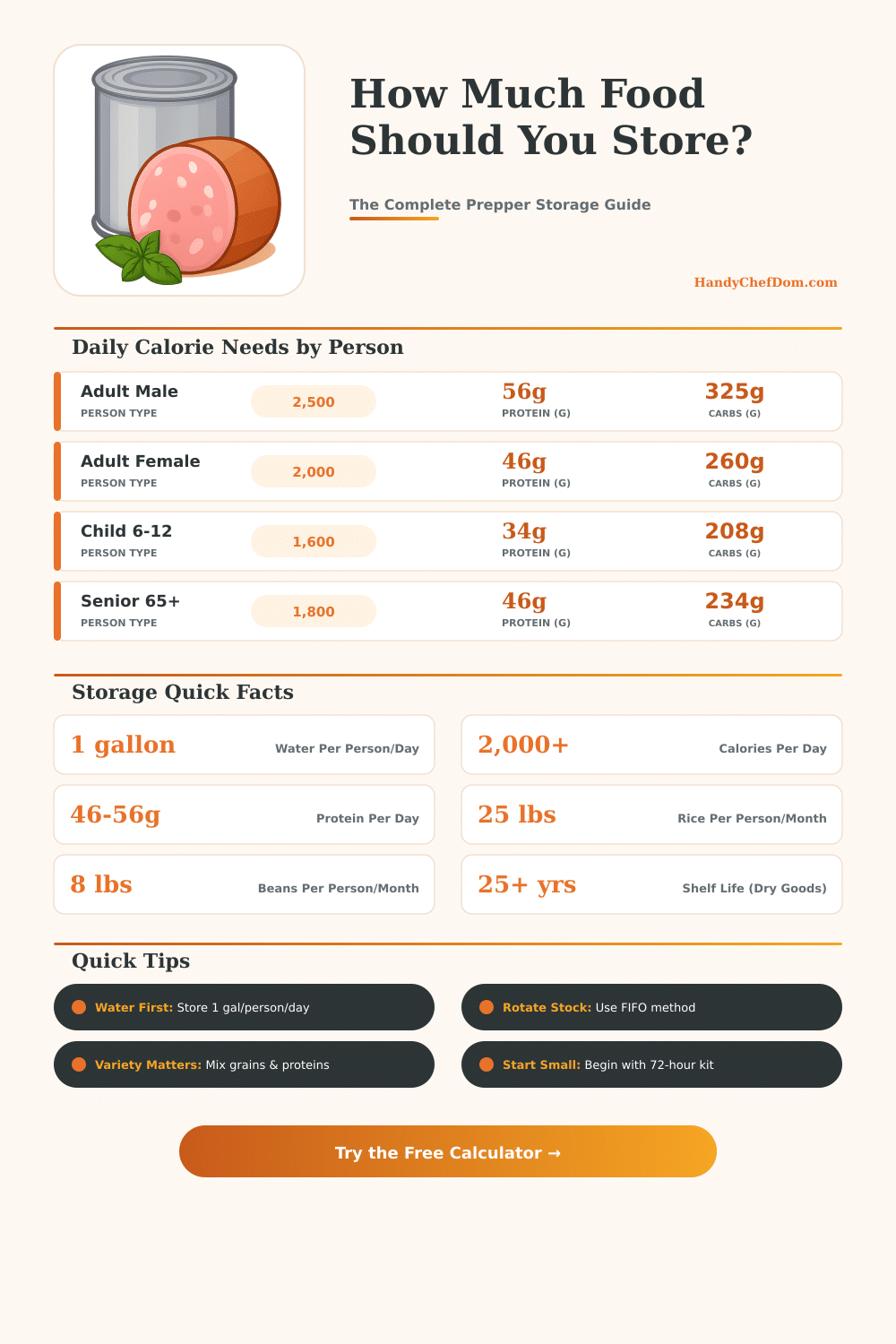
| Person Type | Sedentary | Moderate | Active / Stressed | Protein / Day |
|---|---|---|---|---|
| Adult Male (19–50) | 2,000 kcal | 2,500 kcal | 3,000 kcal | 56g |
| Adult Female (19–50) | 1,600 kcal | 2,000 kcal | 2,400 kcal | 46g |
| Child (2–5) | 1,000 kcal | 1,200 kcal | 1,400 kcal | 19g |
| Child (6–12) | 1,400 kcal | 1,600 kcal | 1,900 kcal | 28g |
| Teen (13–18) | 1,800 kcal | 2,200 kcal | 2,600 kcal | 46–52g |
| Senior Male (65+) | 1,800 kcal | 2,000 kcal | 2,200 kcal | 56g |
| Senior Female (65+) | 1,600 kcal | 1,800 kcal | 2,000 kcal | 46g |
| Food Category | lbs / Month | kg / Month | Shelf Life | Calories / lb |
|---|---|---|---|---|
| Grains (rice, wheat, oats) | 25 lbs | 11.3 kg | 25–30 yrs | ~1,600 |
| Legumes (beans, lentils) | 8 lbs | 3.6 kg | 25–30 yrs | ~1,550 |
| Fats & Oils | 2 lbs | 0.9 kg | 2–5 yrs | ~3,500 |
| Sugars & Sweeteners | 3 lbs | 1.4 kg | Indefinite | ~1,700 |
| Dairy (powdered milk) | 4 lbs | 1.8 kg | 2–10 yrs | ~1,600 |
| Canned Proteins (meat/fish) | 4 lbs | 1.8 kg | 2–5 yrs | ~900 |
| Fruits & Vegetables (canned/dried) | 6 lbs | 2.7 kg | 2–25 yrs | ~400 |
| Salt & Seasonings | 0.5 lbs | 0.23 kg | Indefinite | 0 |
| Scenario | Per Person / Day | Liters / Day | Per Person / Month |
|---|---|---|---|
| Minimum (drinking only) | 0.5 gal | 1.9 L | 15 gal / 57 L |
| FEMA Recommended | 1 gal | 3.8 L | 30 gal / 114 L |
| Comfortable (drinking + hygiene) | 2 gal | 7.6 L | 60 gal / 227 L |
| Pet (per medium dog) | 0.5 gal | 1.9 L | 15 gal / 57 L |
| Hot climate / nursing mother | 1.5 gal | 5.7 L | 45 gal / 170 L |
| Container | Capacity | Best For | Approx. Weight When Full |
|---|---|---|---|
| 5-gallon food bucket | 33 lbs rice / 36 lbs wheat | Grains & legumes | 33–36 lbs (15–16 kg) |
| #10 can (1 gallon) | 5–6 lbs dry food | Sealed long-term | 5–6 lbs (2.3–2.7 kg) |
| Mylar bag (1 gallon) | 5–7 lbs dry food | Sealed in bucket | 5–7 lbs (2.3–3.2 kg) |
| 55-gallon water barrel | 55 gal water | Long-term water | 459 lbs (208 kg) |
| 7-gallon water jug | 7 gal water | Portable water | 58 lbs (26 kg) |
Keeping food fresh is made up of resources for keeping the food fresh, so that it stays edible for weeks or even months after the purchase or harvest. That helps to reduce the waste in the kitchen, because one can store unused or leftover parts for later use. Whether dealing with a big household party or simply a daily meal, the right containers and methods truly change the results.
Many kinds of containers are available. Both glass and plastic food containers beat the simplicity of average boxes. They have smart forms, designed for use and practice in the kitchen.
How to Keep Food Fresh
Tight seals preserve the freshness of the foods, while glass tins allow you to see the content at first look. Tins of Tupperware use brilliant material with air locks, that protects the taste and stops spoiling. Also glass tins of Anchor Glass, especially the round, last years long.
Pyrex offer sets of glass containers with separate seals, and various sizes can use the same seal, what truly simplifies the life. They do not easily break or chip although the plastic closing hinges wear out over time.
Also metallic options are available. Steel lunch boxes, bento-tins and portable containers work for meals, soups or anything warm or cold. They well serve for making snacks or bringing lunch.
Tins without BPA give healthy options for the food box, refrigerator or freezer. Some of them work for microwave and dishwasher for simple cleaning. Stackable tins with seals and drawers help to use every bit of the kitchen space.
For long-term storage, shelf items like flour, rice, pasta, canned meat, oats, sugar, beans and broth commonly cost very little. Keeping them stored without insects is important. Tight tins work well for dry goods.
Bags from Mylar with oxygen absorbers form another way for long storage of basic stuff. Buying dried ingredients instead of hole meals brings more freedom, almost as if one buys for home storage.
Vacuum sealing forms a useful option. A vacuum sealer removes the damp air from bags, and the meats with vegetables stay a lot more time than in a normal bag. Mason jars can be vacuum sealed too and stored in dark cool places.
Freeze flat bags with food and later store them standing like books to spare a lot of space compared to containers.
food storage also covers drying of fruits and vegetables, pickling of vegetables in brine, and making of cheese blocks. A chest freezer beats the vertical freezer for long cool storage because of the fewer defrost cycles. Better access to energy aids helps improve the keeping of foods, especially the cold, that stops waste.
Cooked fat lasts for three months in the refrigerator andalmost forever when frozen.