🥩 Prime Rib Cooking Time Calculator
Calculate exact roasting time based on weight, doneness, and bone type
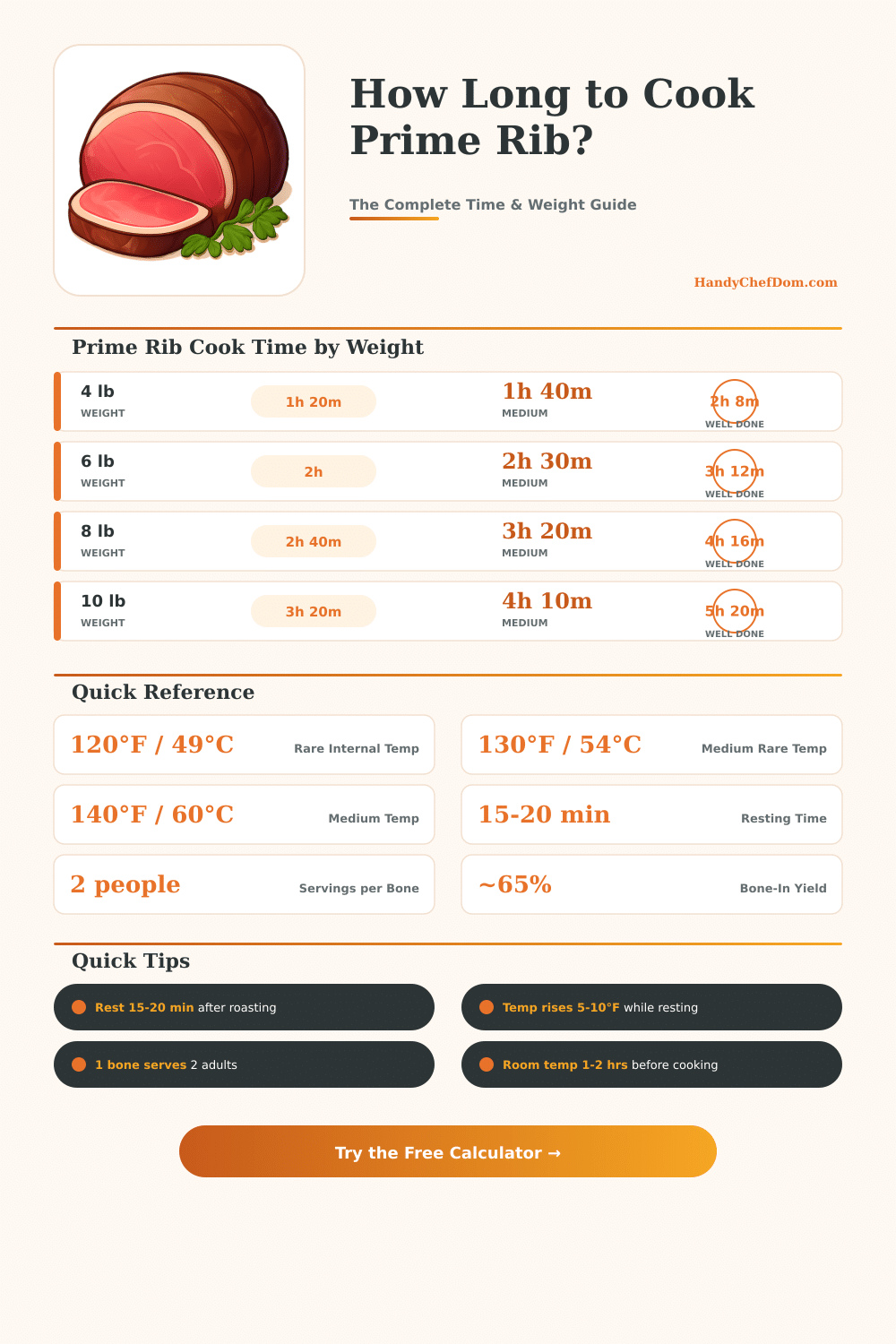
| Weight | Rare | Med Rare | Medium | Well Done |
|---|---|---|---|---|
| 3 lb / 1.4 kg | 1h 0m | 1h 15m | 1h 30m | 1h 36m |
| 4 lb / 1.8 kg | 1h 20m | 1h 40m | 2h 0m | 2h 8m |
| 5 lb / 2.3 kg | 1h 40m | 2h 5m | 2h 30m | 2h 40m |
| 6 lb / 2.7 kg | 2h 0m | 2h 30m | 3h 0m | 3h 12m |
| 8 lb / 3.6 kg | 2h 40m | 3h 20m | 4h 0m | 4h 16m |
| 10 lb / 4.5 kg | 3h 20m | 4h 10m | 5h 0m | 5h 20m |
| 12 lb / 5.4 kg | 4h 0m | 5h 0m | 6h 0m | 6h 24m |
| Scenario | Per Person (Bone-In) | Per Person (Boneless) | Notes |
|---|---|---|---|
| Main Course (Adults) | 1 lb / 454 g | 0.5 lb / 227 g | 1 bone per 2 guests |
| Generous / Formal | 1.25 lb / 567 g | 0.75 lb / 340 g | Thick-cut slices |
| Buffet Style | 0.75 lb / 340 g | 0.4 lb / 181 g | Multiple dishes served |
| Appetizer / Small Plate | — | 0.25 lb / 113 g | Thin sliced |
| Kids (Under 12) | 0.5 lb / 227 g | 0.25 lb / 113 g | About 50–60% of adult |
| Doneness | Pull Temp | Final Temp (After Rest) | Appearance |
|---|---|---|---|
| Rare | 115°F / 46°C | 120–125°F / 49–52°C | Cool red center |
| Medium Rare | 125°F / 52°C | 130–135°F / 54–57°C | Warm red center |
| Medium | 135°F / 57°C | 140–145°F / 60–63°C | Warm pink center |
| Medium Well | 145°F / 63°C | 150–155°F / 66–68°C | Slightly pink |
| Well Done | 155°F / 68°C | 160°F+ / 71°C+ | No pink |
| Guests | Roast Weight (Bone-In) | Approx. Bones | Servings Yield |
|---|---|---|---|
| 4 | 4 lb / 1.8 kg | 2 bone | 4 servings |
| 6 | 6 lb / 2.7 kg | 3 bone | 6 servings |
| 8 | 8 lb / 3.6 kg | 4 bone | 8 servings |
| 10 | 10 lb / 4.5 kg | 5 bone | 10 servings |
| 15 | 15 lb / 6.8 kg | 7 bone | 15 servings |
| 20 | 20 lb / 9.1 kg | 10 bone | 20 servings |
| 25 | 25 lb / 11.3 kg | 12–13 bone | 25 servings |
Bone-in prime rib cooks at 325 degrees last around 20 minutes per pound if rare, and around 25 for medium rare. This time I carefully kept in memory. For 6-pound weight it results in almost 2 hours and 30 minutes for medium rare…
Not bad. Boneless roast cook around 10% more long per pound, because lack bones that spread the heat, what genuinely surprised me.
Prime Rib: Cooking Time, How Much Meat You Get, and Easy Tips
Yield does the cause genuinely interesting. With bones you receive around 65% edible meat after cooking. So for 10-pound roast?
You expect roughly 6.5 pounds of sliceable meat, so around 13 servings at half pound each. Boneless version reaches more closely 75-80% from product. For 20 guests I saw plan provide with 20-pound bone-in.
Around 10 bones. Children eat maybe 55% of adult serving, so take that in thought.
The information below does not come from some calculator or converter tool. It bases on actual usage, looking back, forum debates and experiences of cooking communities through the net.
prime rib is a kind of rib roast. The name can confuse, because word “prime” does not point that the meat is USDA prime grade. It is simply a nickname that restaurants use for that cut of roast.
In United States beef is graded according to quality, especially the fat marbling. Grades from most bottom until most top is USDA Select, Choice and Prime. More fat gives more flavor and higher grade.
That same cut is also the origin of rib steaks. Rib-eye steaks are cut form standing rib, without bones and with the most of thick muscles removed.
Standing rib roast is bone-in prime rib. The bones strengthen the taste, because they carry marrow that flavors the meat during cooking. They also help to keep the meat more moist and protect the surface against burning and drying.
On the other hand, boneless prime rib cooks more quickly, cuts more easily and is much less complex. One downside of boneless is that the side that rests on the bone spot does not brown well. It becomes dry and gray instead of brown and nice.
When talking about serving size, eight ounces of cooked prime rib for one person is good amount. For full meal plan around one pound per person or one rib for every two eaters. Four-bone roast commonly can serve eight guests.
Restaurants usually offer servings between eight and sixteen ounces.
Spices matter a lot. Rubbing with garlic and herbs creates tasty crust on the surface. But if you season only outside, many bites stay without salt except at the edges.
Getting the salt more deeply in the meat is very important. The two main problems with prime rib are absence of good crust and absence of salt inside.
Medium rare is the ideal for prime rib. Fat, well marbled cuts benefit from cooking at least until the fat starts melting and loosening. That gives flavor and juiciness.
Rare cooking works more for thin cuts like filet, that dries at higher heats. When won cooks it whole and slowly, the meat has other texture than steak. Not better, only different.
Meat thermometer is absolutely needed. One famous method is to preheat the oven to 500 degrees, cook seven minutes per pound, later turn off the oven and do not open the door during two hours. After that the roast rests ten to fifteen minutes before cutting.
Searing it last instead of first helps with temperature, because always there are delays before service. Commercial ovens like those of Alto-Shaam give wonderful results for keeping prime rib at the right heat. Smoking is another option for lovers of that flavor.
Dutch oven works also, allowing the meat to braise above vegetables and spices.
Ask the butcher to cut the ribs and tie them under the roast to make cooking and slicing simpler. Having leftover ribs to chew the next day is nice too. Prime rib goes well with horseradish sauce, au jus and gravy forbig feasts.