🥩 Slow Cooker Roast Beef Calculator
Calculate exact cooking times based on weight, cut, and heat setting
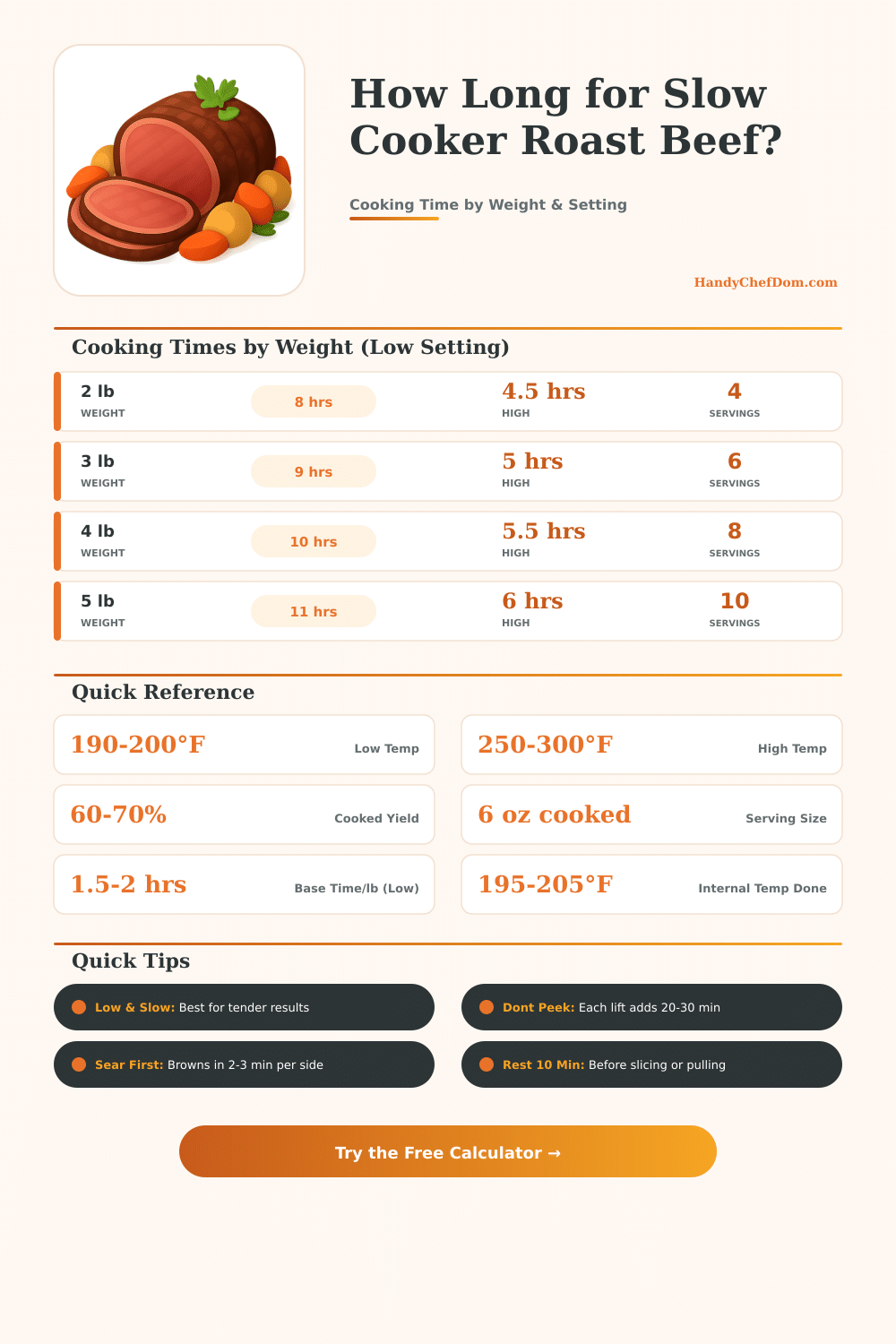
| Weight (lb) | Weight (kg) | Low Time (hrs) | High Time (hrs) |
|---|---|---|---|
| 1.5 | 0.7 | 7 – 8 | 4 – 4.5 |
| 2 | 0.9 | 7.5 – 8.5 | 4 – 5 |
| 2.5 | 1.1 | 8 – 9 | 4.5 – 5 |
| 3 | 1.4 | 8.5 – 9.5 | 5 – 5.5 |
| 3.5 | 1.6 | 9 – 10 | 5 – 5.5 |
| 4 | 1.8 | 9.5 – 10.5 | 5.5 – 6 |
| 5 | 2.3 | 10 – 11 | 5.5 – 6.5 |
| 6 | 2.7 | 10.5 – 12 | 6 – 7 |
| Cut | Time Modifier | Yield % | Best For |
|---|---|---|---|
| Chuck Roast | Base (no change) | 65% | Shredding |
| Brisket | +10% | 60% | Slicing/Shredding |
| Bottom Round | -5% | 70% | Slicing |
| Rump Roast | Base | 65% | Shredding |
| Sirloin Tip | -10% | 72% | Slicing |
| Eye of Round | -10% | 75% | Slicing |
| Context | Cooked Per Person | Raw Needed | Metric (Raw) |
|---|---|---|---|
| Main Course (Adult) | 6 oz | 9 oz | 255 g |
| Hearty/Buffet | 8 oz | 12 oz | 340 g |
| Sandwiches | 4 oz | 6 oz | 170 g |
| Side/Appetizer | 3 oz | 4.5 oz | 128 g |
| Children (4–12) | 3 oz | 4.5 oz | 128 g |
| Cut | Raw Weight | Cooked Yield | Loss % |
|---|---|---|---|
| Chuck Roast | 1 lb (454 g) | 10.4 oz (295 g) | 35% |
| Brisket | 1 lb (454 g) | 9.6 oz (272 g) | 40% |
| Bottom Round | 1 lb (454 g) | 11.2 oz (318 g) | 30% |
| Rump Roast | 1 lb (454 g) | 10.4 oz (295 g) | 35% |
| Sirloin Tip | 1 lb (454 g) | 11.5 oz (326 g) | 28% |
| Eye of Round | 1 lb (454 g) | 12 oz (340 g) | 25% |
| Guests | Raw Weight Needed | Metric | Cook Time (Low) |
|---|---|---|---|
| 4 | 2.25 lb | 1 kg | 8 – 9 hrs |
| 6 | 3.4 lb | 1.5 kg | 9 – 10 hrs |
| 8 | 4.5 lb | 2 kg | 10 – 11 hrs |
| 10 | 5.6 lb | 2.5 kg | 10.5 – 11.5 hrs |
| 15 | 8.4 lb | 3.8 kg | 2 roasts, 10 hrs ea |
| 20 | 11.25 lb | 5.1 kg | 2–3 roasts, 10 hrs ea |
A 3 lb chuck roast on low needs about 8.5 to 9.5 hours, and that 35% weight loss means youre left with roughly 1.95 lb cooked. Servings land around 6 oz each, so thats 5 ish portions from one roast. Brisket loses closer to 40%, which caught me off guard.
For 10 guests I kept landing on 5.6 lb raw.
How to Cook Roast Beef and How Much to Serve
The information below does not come from a calculator or translator. It is based on real using experiences, forum changes and shared cooking ideas from the whole net.
Roasted Beef forms basic food from meat, that cooks in a boiler and usually involves the main role at the table. In the Anglo-Saxon world, it ranks between the favourite meats for Sunday dinners or festive occasions. Yorkshire-pudding accompanies it commonly as a side dish.
One also sells cut roast as cold meat for sandwiches. It goes well with roasting vegetables and thick sauce.
Two main modes exist for preparing roasted Beef. One of them implies braising or stewing, that gives the meat tenderness for cutting by means of a fork, similar to pot roast. The second focuses on drying, where the meat cooks until medium-rare and later gets sliced for serving, as prime rib.
Prime rib best eats medium-rare unlike pot roast that cooks slowly during long time and reaches full maturity, a bit more near grilling.
Picking the right meat cut is important. Upper round cut belongs to the soft parts of the Beef round, that sits in the back forty. Chuck roast, round roast and sirloin roast equally work for the task.
Rib roast costs the most, but it deserves the expense. Boneless rib roasts cook more evenly. Tenderloin comes from teh area between ribs and the back part of the cow.
It offers tender quality and is very lean, so it does not shrink a lot. If you search good balance of price and quality, try shoulder blade or upper blade, that gives fairly soft texture with good flavor.
Slow roasting in low temperatures does miracles for tougher bits and produces the most tender Beef roast. Even so, applying it to round roast, one risks to make it dry, because only fat-rich cuts last long slow Cooking Time. Prime rib usually requires strong heat during the first thirty until forty-five minutes, later follows slow roasting in lower heat during some hours.
A practical method is first warm the Beef until room temperature. Season it with salt, pepper and optional herbs like rosemary or thyme. Olive oil with garlic paste and herbs in form of a mix can cover the surface of the roast.
Quick marinade strengthens the taste. Burn the sides until brown before the main roasting shows excellent results.
Using a thermometer for meat really is useful. The USDA suggests final inner heat of 145 degrees Fahrenheit, pulling the roast out at 135, because it will keep cooking during the rest. Even rare steak is considered fully cooked, if they reach the safe internal heat.
For portions, plan around half until three quarters of a pound each person, according to the number of sidedishes.