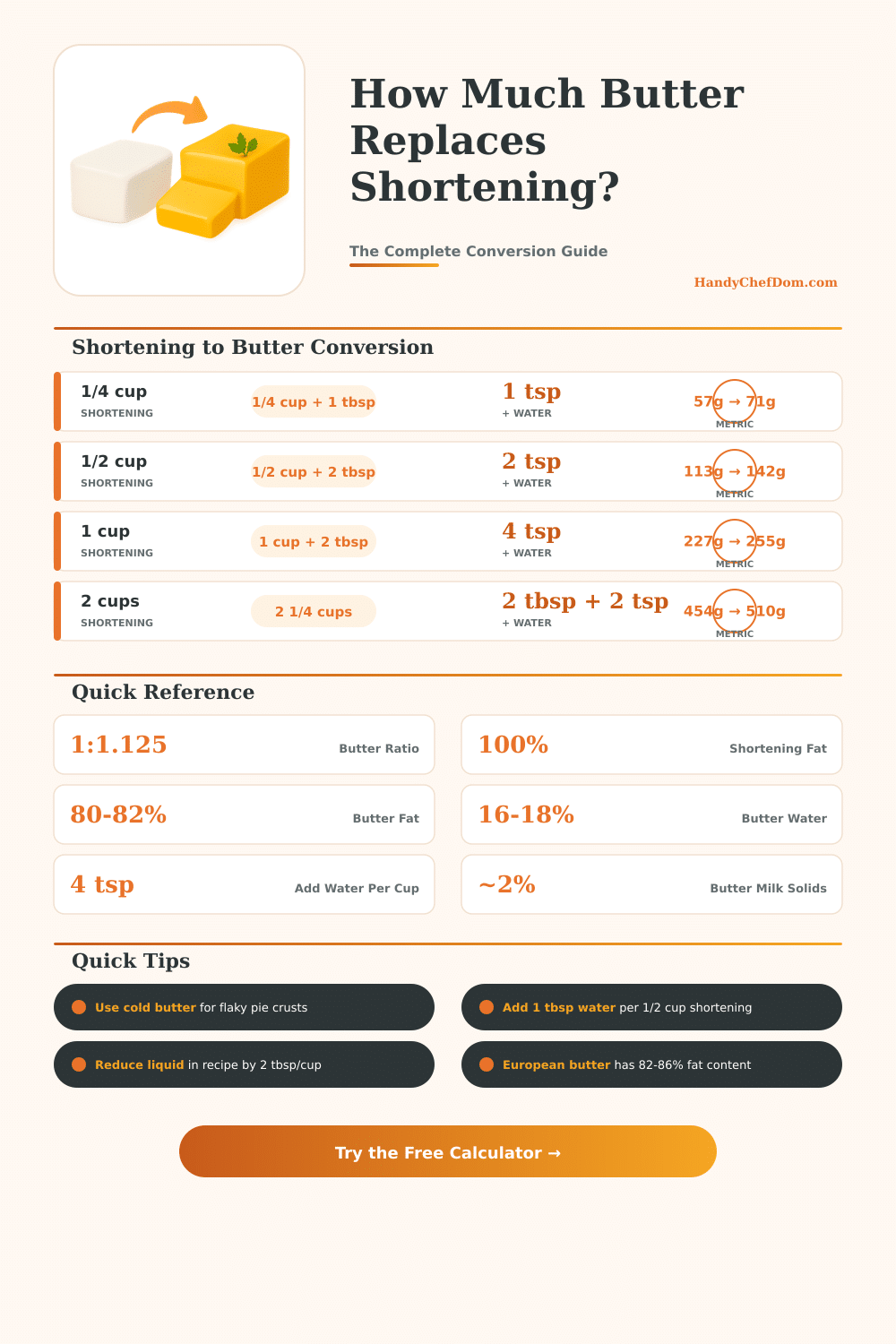
🧈 Shortening to Butter Converter
Instantly convert shortening amounts to butter with liquid adjustments for perfect baking
| Shortening | Butter (Regular) | Add Water | Metric (Butter) |
|---|---|---|---|
| 1 tsp (4.5 g) | 1 tsp + 1/4 tsp | 1/4 tsp | 5.3 g |
| 1 tbsp (12.8 g) | 1 tbsp + 1/4 tsp | 3/4 tsp | 15.8 g |
| 2 tbsp (25.5 g) | 2 tbsp + 1/2 tsp | 1 1/2 tsp | 31.6 g |
| 1/4 cup (56.8 g) | 1/4 cup + 1 tbsp | 1 tsp | 63.2 g |
| 1/3 cup (75.7 g) | 1/3 cup + 1 1/2 tbsp | 1 1/3 tsp | 84.2 g |
| 1/2 cup (113.5 g) | 1/2 cup + 2 tbsp | 2 tsp | 126.4 g |
| 2/3 cup (151.3 g) | 2/3 cup + 2 2/3 tbsp | 2 2/3 tsp | 168.5 g |
| 3/4 cup (170.3 g) | 3/4 cup + 3 tbsp | 1 tbsp | 189.6 g |
| 1 cup (227 g) | 1 cup + 2 tbsp | 4 tsp | 252.8 g |
| 2 cups (454 g) | 2 1/4 cups | 2 tbsp + 2 tsp | 505.6 g |
| Measurement | Shortening (g) | Butter (g) | Butter (sticks) |
|---|---|---|---|
| 1 teaspoon | 4.5 g | 4.7 g | — |
| 1 tablespoon | 12.8 g | 14.2 g | — |
| 1/4 cup | 56.8 g | 56.7 g | 1/2 stick |
| 1/2 cup | 113.5 g | 113.4 g | 1 stick |
| 1 cup | 227 g | 226.8 g | 2 sticks |
| 1 pound | 454 g | 453.6 g | 4 sticks |
| Butter Type | Fat % | Water % | Milk Solids % |
|---|---|---|---|
| Vegetable Shortening | 100% | 0% | 0% |
| Regular US Butter | 80% | 16–18% | 2% |
| European Butter | 82–86% | 12–16% | 2% |
| Clarified Butter / Ghee | 99.5% | 0.5% | 0% |
| Light Butter | 40% | 55–58% | 2–5% |
| Whipped Butter | 60–65% | 30–35% | 2–3% |
The usual ratio that I use is one cup of shortening for every one cup of butter plus two spoons of butter. It weighs about 227 grams while butter reaches 253 grams. Here is the reason: shortening is made up of 100% fat, compared to usual American butter that has only 80% fat, with 16 to 18% of water inside.
European-style butter has 82 to 86% of fat so one must use a bit less.
How to Use and Swap Shortening and Butter
One stick of butter has 113 grams and matches half a cup. Four sticks form a pound. One spoon of shortening weighs around 12.8 grams against 14.2 for butter, no big difference, but it adds up in big amounts.
For every half cup of butter that one replaces, I reduce otehr liquids in the recipe by around one spoon, to make up for the extra water. About calories, one cup of shortening stores 1 812 calories and 205 grams of fat, compared with butter at 1 628 calories and 184 grams.
The info below does not come from some calculator or converter. It is based on actual usage, reviews, forum talks and experiences of cooking communities across the net.
shortening is any fat that stays solid at room temperature. It covers butter, margarine, lard and plant-based shortening like Crisco. Usually though, if a recipe mentions “shortening”, it means the plant-based kind.
Plant-based shortening is the most common in modern kitchens.
The idea of shortening dates at least from the 18th century, long before modern plant-based shortening existed. Then people used lard as the main fat too shorten the dough. The word “shortening” comes from the fact that it makes baked goods crumbly, as if with short fibers.
It works by creating barriers between gluten molecules in the dough. Gluten usually gives elastic and chewy texture, good for pie crust. When shortening is mixed or cut into dough, it stops gluten from forming.
This way one gets tender pie crusts and soft cookies.
Crisco is probably the most known brand. It carries 50 percent less packed fat than butter and zero grams of trans fat per serving. One spoon has 12 grams of total fat and 3.5 grams of packed fat.
Crisco offers also a version with butter taste, that works the same, but adds rich butter flavor. It is gluten free also.
Spectrum Organic shortening is another favorite choice. It is made from organic palm oil and is not hydrogenated, so it works for tender crusts and crisp fried foods. Some organic shortening has zero grams of trans fat per serving and is never hydrogenated.
You can swap shortening and butter in recipes, but the texture and the taste will change. Do not replace butter with shortening if butter is the main flavor source or acts as a lever. When you replace shortening with butter, add a spoon of water, because butter has more water.
Shortening can go bad over time.
Frying is another important use for shortening. Its high smoke point works for crisp fried chicken, golden rings and homemade French fries. Thanks to its high melting point and burn point, plant-based shortening allows you to make foods that you hardly can withbutter or oil.
High-ratio shortening is a special kind, mostly for icing and cookies with a lot of sugar. Mixing it into butter cream icing, you help to keep the color fresh and stop melting in warm weather. In cake batter, a mix of shortening and butter gives a tender result.
A mix of shortening and butter in cookies stops them from going too flat or too hard. Lard also swaps one-for-one with shortening and was the usual choice before the creation of hydrogenated shortening.