🥩 Steak Cooking Time Calculator
Enter your steak details to get exact cooking times for your preferred doneness level
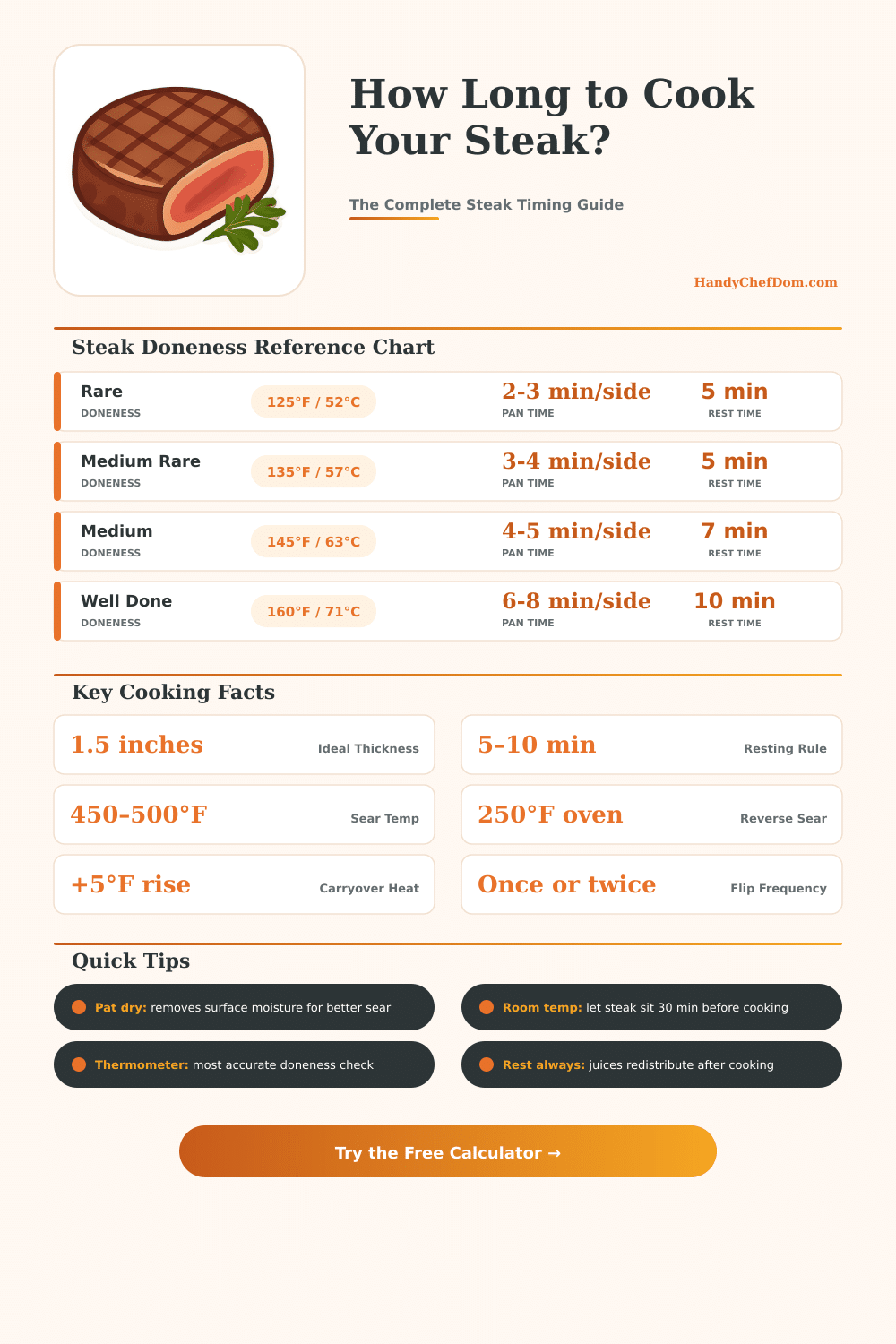
| Doneness | Internal Temp (°F) | Internal Temp (°C) | Texture & Color | Rest Time |
|---|---|---|---|---|
| Rare | 120–125°F | 49–52°C | Cool red center, very soft | 5 min |
| Medium Rare | 130–135°F | 54–57°C | Warm red/pink center, soft | 5 min |
| Medium | 140–145°F | 60–63°C | Pink center, slightly firm | 7 min |
| Medium Well | 150–155°F | 66–68°C | Slightly pink, firm | 8 min |
| Well Done | 160+°F | 71+°C | No pink, very firm | 10 min |
| Thickness | Thickness (cm) | Time Per Side | Total Cook Time | Method Note |
|---|---|---|---|---|
| ½ inch | 1.3 cm | 1.5–2 min | 3–4 min | High heat, watch closely |
| ¾ inch | 1.9 cm | 2–2.5 min | 4–5 min | High heat |
| 1 inch | 2.5 cm | 2.5–3 min | 5–6 min | High heat |
| 1.25 inches | 3.2 cm | 3–3.5 min | 6–7 min | High to med-high |
| 1.5 inches | 3.8 cm | 3.5–4 min | 7–8 min | High heat + baste |
| 2 inches | 5.1 cm | 4.5–5 min | 9–10 min | Sear + oven finish |
| 2.5 inches | 6.4 cm | — | Reverse sear | Oven first, sear last |
| Method | Heat / Temp | Best Thickness | Best Doneness |
|---|---|---|---|
| Pan Sear | 450–500°F (232–260°C) | 0.75–1.5 in | Rare to Medium Well |
| Grill – Direct | 450–550°F (232–288°C) | 0.75–2 in | Rare to Medium |
| Oven Roast | 275–325°F (135–163°C) | 1.5–3 in | Medium to Well |
| Reverse Sear | 225–250°F oven + pan sear | 1.5–3 in | Rare to Medium |
| Broil | 4–6 inches from element | 0.75–1.5 in | Medium Rare to Medium |
Remove your steak 5°F (3°C) before your target temperature. Internal temperature rises during resting due to carryover heat. A meat thermometer is the most reliable way to verify doneness — insert it into the thickest part of the steak, away from bone.
Steak is simply a slice of meat, cut directly against the fibers of the muscles, sometimes with bone, sometimes without it. Many folks grill or fry it, although one can use it for soup or stuffing in sauce. When some talk about steak, one usually thinks of beef.
But here is the secret: steak can come from various creatures. Bison, buffalo, camel, goat, horse, kangaroo, sheep, ostrich, all of them can give slices for steaks. So the word steak does not always mean that it is beef.
All About Steak
Cooking styles become genuinely personal when dealing with steak. Some want it almost raw, as if it still roars, while others want it fully cooked without some pink color. Medium rare falls in between and commonly is the most liked.
Thicker slices handle rare cook well. Boneless steak grilled raw? It will stay chewy, none can deny that.
And thin bits are genuinely tricky, cooking them exactly is more hard then one imagines.
Various slices bring different qualities to the table. Tenderloin, like filet mignon, is extremely soft, but it does not have a lot of beef taste, because it lacks thick fat marbling. Rather, ribeye, especially if dry-aged, which deepens the flavor and keeps it moist.
There is also the hanger steak, that receives little attention, but it shines in some wonderful sandwiches with steak, usually covered with shallots cooked in butter and garlic.
The reverse sear method became genuinely popular, and that for fare reasons. It starts with slow cook of the inside at low temperature, in an oven, in a pan or on a grill, according to your choice. Later you give it a blast of high heat for good crust at the end.
A cast iron pan works perfectly for that. Before cooking, carry the steaks from the refrigerator and leave them stand at least half an hour (like this they will cook more evenly). Season them, hit with salt and pepper, and do not hesitate.
When the pan is extremely warm and you add oil with a high smoke point (grapeseed oil works well), sear both sides strongly. Steak seared in a pan, finished with garlic butter, comes out golden outside and stays surprisingly juicy inside.
Here is what can destroy your steak: cutting it during cooking. That lets all the juice leak out, and you end with something dry. After cooking, always leave it rest…
Big bits need more time than small ones. And leave it without cover, because cover will remove that crisp crust that you just created.
When dealing with portions, a normal portion is around three ounces. For a real meal, many plan eight ounces each person. For company events or lighter parties?
Four to six ounces each works. Pairing steak with sides can mean cutting down to six ounces. Ordering one big slice for thewhole group and sharing it family style is another good idea.
A good steakhouse provides prime meat with enough fat marbling, then it dry-ages it quite a long time, so that the proteins genuinely break down. Here is what separates a good steak from a great one.