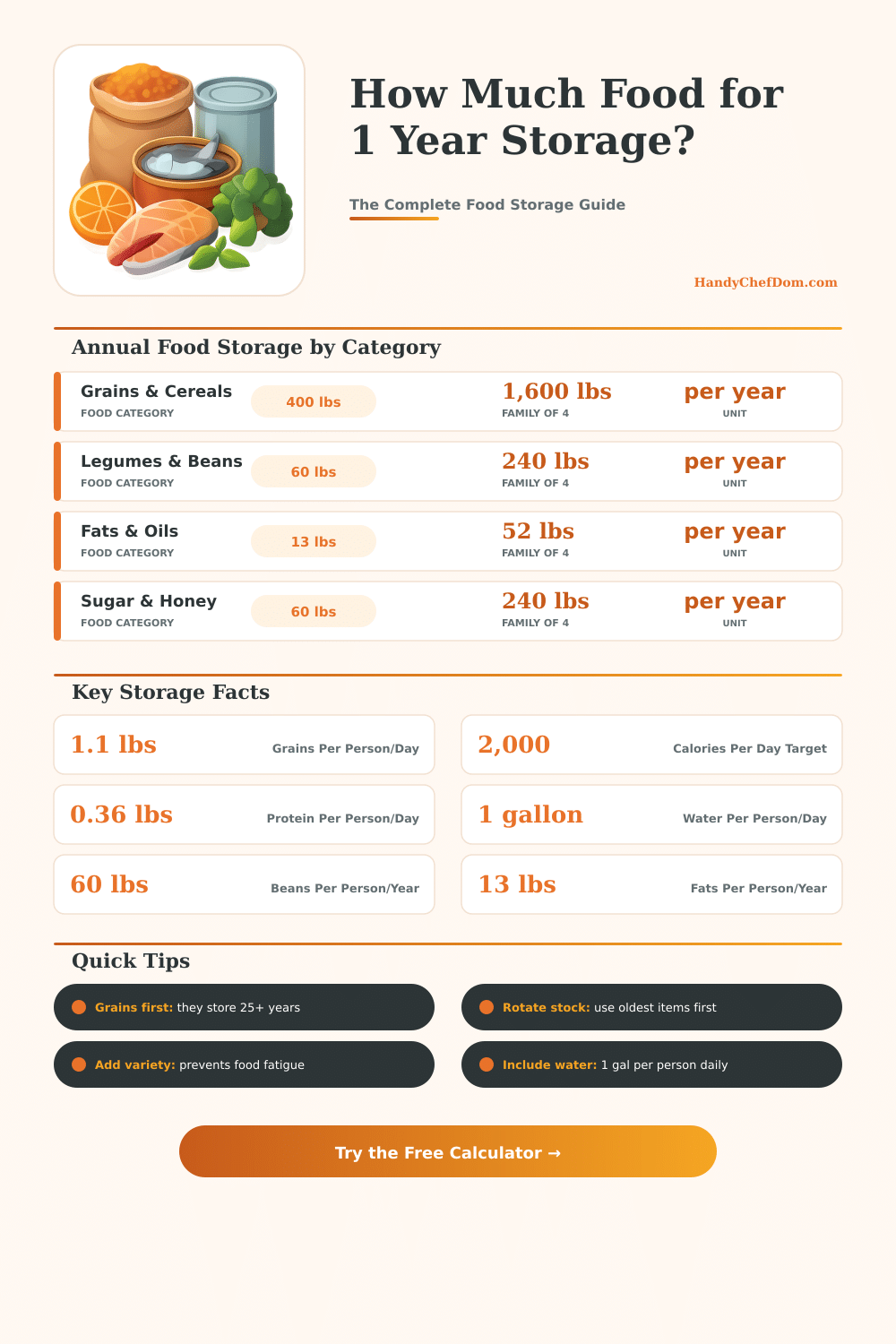
🥫 1 Year Food Storage Calculator
Calculate exactly how much food your household needs for a full year of storage
| Food Category | Per Person / Year (lbs) | Per Person / Year (kg) | Daily Amount |
|---|---|---|---|
| Wheat / Whole Grains | 300 lbs | 136 kg | 13.1 oz / day |
| White Rice | 100 lbs | 45 kg | 4.4 oz / day |
| Pasta & Noodles | 40 lbs | 18 kg | 1.7 oz / day |
| Rolled Oats | 33 lbs | 15 kg | 1.4 oz / day |
| Dry Beans (all types) | 60 lbs | 27 kg | 2.6 oz / day |
| Lentils & Split Peas | 15 lbs | 7 kg | 0.66 oz / day |
| Canned Meat / Protein | 24 lbs | 11 kg | 1 oz / day |
| Cooking Oil / Fats | 13 lbs | 6 kg | 0.57 oz / day |
| Sugar / Honey | 60 lbs | 27 kg | 2.6 oz / day |
| Salt | 8 lbs | 3.6 kg | 0.35 oz / day |
| Powdered Milk | 16 lbs | 7 kg | 0.7 oz / day |
| Canned Fruits & Veg | 90 lbs | 41 kg | 3.9 oz / day |
| Freeze-Dried Foods | 20 lbs | 9 kg | 0.87 oz / day |
| Baking Essentials | 10 lbs | 4.5 kg | 0.43 oz / day |
| Food Item | Shelf Life (sealed) | Serving Size | Cal / Serving |
|---|---|---|---|
| White Rice | 25–30 years | 1/4 cup dry (45g) | 160 cal |
| Hard Wheat / Flour | 25–30 years | 1/4 cup (30g) | 110 cal |
| Rolled Oats | 30 years | 1/2 cup dry (40g) | 150 cal |
| Pasta (dried) | 8–10 years | 2 oz dry (57g) | 200 cal |
| Pinto Beans (dry) | 30 years | 1/4 cup dry (45g) | 160 cal |
| Lentils (dry) | 30 years | 1/4 cup dry (48g) | 170 cal |
| Canned Tuna | 3–5 years | 3 oz (85g) | 100 cal |
| Canned Chicken | 3–5 years | 3 oz (85g) | 120 cal |
| Vegetable Oil | 1–4 years | 1 tbsp (14g) | 120 cal |
| Honey | Indefinite | 1 tbsp (21g) | 60 cal |
| Powdered Milk | 20–25 years | 1/4 cup (23g) | 100 cal |
| Salt | Indefinite | 1/4 tsp (1.5g) | 0 cal |
| Measurement | Imperial | Metric | Notes |
|---|---|---|---|
| 1 lb (pound) | 16 oz | 453.6 g | Standard weight |
| 1 kg | 2.205 lbs | 1,000 g | Standard metric |
| 1 gallon water | 8.34 lbs | 3.79 kg | Per person / day |
| 1 #10 Can | ~6.5 lbs | ~2.95 kg | Large storage can |
| 5 gal bucket (grain) | ~33 lbs | ~15 kg | Depends on grain |
| 50 lb bag grain | 50 lbs | 22.7 kg | Bulk purchase |
food storage twists around the task to preserve foods fresh, so that one can use them during weeks or even months after purchase or harvest. That helps to reduce waste in the kitchen, because one can preserve unused or leftover foods for later use. Organization is a key part of all that and stackable tins with seals, drawers for sorting and various organizing tools allow to use every shelf in the kitchen space.
Both glass and plastic tins work well. Glass tins allow you to see the content in one look, which is practical. Tight seals on both kinds help to preserve the freshness of foods.
How to Store Food to Keep It Fresh
Also glass tins, for instance, can last during years. Pyrex offer rectangular glass containers in various sizes, and some sets include seals, that works for several tin sizes, really practical option. The glass does not stian or break easily.
Plastic became the favorite option during the last years. Tins from plastic without BPA give a healthy choice for food storage in cupboard, refrigerator or freezer. Many of them work for microwave and dishwasher, what simplifies the cleaning.
Tupperware tins have tight seals, that lock the taste and stop slime. More little portion tins well serve for healthy snacks and vegetables, while one prepares the dinner.
Steel lunch boxes and bento tins form another option, ideal for packing meals, lunches or preserving leftovers. They work four warm or cold foods, including soup.
For long term preservation, dry basics like flour, rice, pasta, canned meat, oats, sugar, beans and potatoes commonly come at low price. Preserving them without insects is really important. Tight containers work well for dry products.
Bags from Mylar with oxygen absorbers in food grade quality, in buckets with tight seals set up, form a reliable way for long food storage. Control of insects and rodents also deserves attention.
Vacuum sealing forms another practical method. A vacuum bag sealer removes the air loaded with humidity from bags, and that does that meat and vegetables stay lot longer in the long term than if one would use only a regular zip bag. Mason jars also can vacuum close and sit in a cold dark place.
Freeze flat bags and later stand them upright like books spare much more space thanregular tins.
food storage does not limit to simple tins. Dry fruits, vegetables and other foods form one of the ways. Salting of vegetables and making of preserves from fruits are traditional ways also.
Chest freezers beat vertical refrigerators for long term freezing, because the defrost cycles in modern refrigerators stop that. Better access to energy sources modernize the chain of foods, especially by means of allowing colder preservation and reduction of waste.
Cooked fats stay until three months in the refrigerator and almost forever when frozen. Cheese one should preserve away from strongly scented foods, because it grabs smells while it breathes.